South Australian Premier Stephen Marshall carrying out the Liberal agenda – Cuts Access To Solar Batteries For Low Income Households.
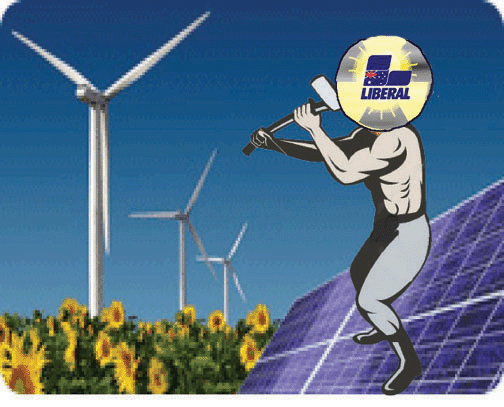 SA’s New Premier Cuts Access To Solar Batteries For Low Income Households. Gizmodo, Hayley Williams Mar 19, 2018
Protect South Australia from Nuclear Trash – the fight continues – theme for March 18
The South Australian election result by no means is a triumph for the nuclear lobby. The politicians and media managed to side-step the vital issue of nuclear waste dumping – so the public at large seemed unaware of this issue. South Australians have historically fought back, and won, against this nuclear threat, when they were clearly confronted with it.
South Australia now has a Premier Stephen Marshall, who says that he will destroy the Tesla big battery scheme, leading a Liberal government that no doubt would like to carry out the mission of the Federal Liberal government – to stop the transition to renewable energy.
Sorry, Mr Marshall and Mr Turnbull, but that horse has already bolted away. The nuclear and coal lobbies are not going to stop the global movement towards clean energy, with places like South Australia and Australian capital Territory (ACT) in a leadership position.
As for the fraudulent claim that Kimba, South Australia must host nuclear trash as a “medical necessity”- South Australia, and all Australians will see through this, when they properly get the facts.
It is up to Australian who care – to expose the lies, and to explain the unwisdom of toting the Lucas Heights toxic radioactive trash for 1700 km to Kimba. Also the mysterious and mingled radioactive trash at Woomera should stay where it is – and not pollute the Kimba agricultural region.

South Australia’s new Premier vows to kill the Tesla battery storage plan
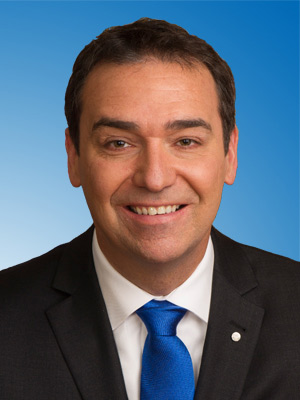 Marshall’s first promise as SA premier: Kill Tesla battery plan http://reneweconomy.com.au/marshalls-first-promise-as-sa-premier-kill-tesla-battery-plan-68601/ By Giles Parkinson on 19 March 2018
The newly elected South Australia premier, the Liberal Steven Marshall, has made his first promise – his government intends to kill the Tesla plan for the world’s biggest “virtual power plant” that would install batteries in low income households for no cost.
The Tesla plan – which aimed to install 5kW of solar and a 13.5kWh Tesla Powerwall 2 battery storage unit in 50,000 homes – would have created a virtual power plant with 250MW of capacity and 650MWh of storage.
The Tesla plan was announced just before the official start of the election campaign. The first two stages of the proposal – for 1,100 Housing Trust homes – is apparently locked in with a $2 million grant and a $30 million loan, but the broader third phase is not yet set in stone.
“No, that’s not part of our agenda,” Marshall told ABC’s Radio National breakfast program, just minutes before being sworn in as premier.
Instead, Marshall said his government would proceed with his previously announced commitment to a $100 million subsidy to 40,000 homes, where he would offer $2,500 for each battery storage unit installed.
“(Former premier Jay Weatherill) was doing it for Housing Trust homes in South Australia … that’s not part of our plan. What we are going to do is provide a subsidy to get (those with) solar rooftops systems with some storage capacity.”
Marshall’s plans would, of course, be very difficult to access for low-income households because it would still require an upfront capital payments that they would likely be unable to afford. And they do not already have rooftop solar.
It’s an extraordinary start for the new Liberal government – promising to ditch a private initiative that would provide loans to low-income households in favour of a $100 million government subsidy that would be out of reach of those households most in need of it.
So much for free markets. But it also raises the issue of sovereign risk.
If the Liberal Party is to do back-flips on initiatives like this, will it also renege on the other contracts entered into by Labor’s Renewable Technology Fund – and there are many of those, for larger-scale storage developments, and for a variety of smaller and micro-grid proposals.
It could be that the Tesla virtual power plant could go ahead, seeing that it is privately funded and requires a retailer to be chosen to help roll out the scheme and act as an intermediary.
The idea was to install the solar and battery storage for free, and deliver a reduction of around one-third in the electricity bills of 25,000 Housing Trust homes, and another 25,000 private low-income households. Investors would provide the capital.
However, given the new government’s antipathy to the scheme, it is entirely possible the tender process may be delayed and the private investors would not want to go ahead in such a hostile political environment.
It could also have an impact on Australia’s only solar manufacturer, Tindo Solar, which was looking to significantly increase its production capacity at its Adelaide manufacturing plant, and hire more employees, of course.
That’s because the Tesla plan would require half of the solar capacity to come from local manufacturers. It was also seen as an excellent platform for a new retailer to enter the South Australian market. The lack of competition in South Australia is one of the principal reasons for its high electricity prices.
The irony is that Marshall admitted he could see the benefits of battery storage – both at utility level and in households.
But he re-iterated his intent to scrap the state’s renewable energy target, because it would push up prices – even though the amount of projects under construction and promised by the new owner of the Whyalla steelworks would likely take the stake to Weatherill’s 75 per cent target, probably several years earlier.
Marshall also plans a new interconnector to NSW. Marshall says this will add to the “affordable reliable baseload” the state could access “when it’s not windy or sunny” in South Australia.
But appears to ignore the fact that NSW is already the state with the highest dependence on imports, even more than South Australia and may not been a position to export power to anyone.
But he also said the interconnector would allow for the “excess renewables” from South Australia to be exported to other states, “lowering prices across the entire nation.”
Hang on, didn’t you just say that the investment in renewables would push prices up? You can’t have it both ways.
Update: Marshall later told a news conference he would not rescind contacts entered into by previous government. This however protects only the first two stages of the Tesla virtual power plant, affecting 1,100 households. The third phase, involving 49,000 other low income households, was not subject to a signed contract, RenewEconomy understands, because it would source private funding.
Can Stephen Marshall stop South Australia’s transition to clean energy? Probably not
Speed of Australia’s energy transition hostage to Marshall law http://reneweconomy.com.au/speed-of-australias-energy-transition-hostage-to-marshall-law-65325/By Giles Parkinson on 19 March 2018
The consequences of South Australia’s election result on Saturday will be felt far beyond the state’s borders.
It was barely minutes after the SA Liberals – led by Steven Marshall – were declared winners that the federal Coalition began crowing that this was good news for Malcolm Turnbull’s signature policy, the National Energy Guarantee.
Senator Simon Birmingham said so almost immediately on ABC News 24, and the level of expectation that Marshall should serve as a vassal of the federal Coalition’s policy objectives was repeated by Turnbull, energy minister Josh Frydenberg and finance minister Matthias Cormann.
It seems unlikely that the NEG, or even Marshall, could do much to slow down the pace of the transition in South Australia, for reasons I will explain below. Continue reading
South Australia rejects the nuclear industry – as shown in poor vote for Cory ‘s Australian Conservatives
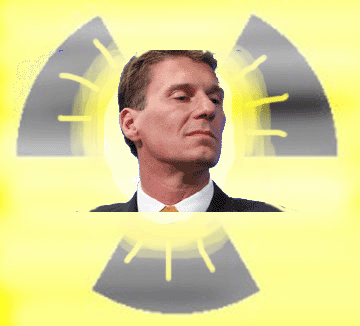
Zac Eagle 18 Mar 18, Australian Conservatives with their “All Nuclear” policy managed to get about 3% of the vote in the South Australian state election. Overwhelming rejection of nuclear industry. Bravo SA
Nuclear waste dump for South Australia? Deafening silence by politicians and journalists
MOSS, No Nuclear Waste Dump Anywhere in South Australia
16 Mar 18 You could be forgiven for thinking that even the journalists are too afraid to ask this question, the silence has been deafening.
“What is each party’s position when it comes to defending the South Australian Nuclear Waste Storage (Prohibition) Act 2000?”
 The single most important issue in the history of South Australia, as it has significant impact on our future generations, has been ignored by all parties as an election issue. South Australia has a law prohibiting the development of a nuclear waste dump, yet the Federal Government is currently making plans to override it and build a nuclear waste facility in the heart of our prime farming land in Kimba, South Australia and also the Flinders Ranges only 40km from Wilpena Pound. Which party will uphold this law and why hasn’t any party put it on the agenda for this election. Please don’t suggest it’s a Federal issue, because it’s not. A nuclear waste dump for South Australia is breaking one of our own existing laws so it is very much a State Government issue.
We heard Nick Xenophon, Steven Marshall and Jay Weatherill on the ABC Adelaidethis morning and thought some hard hitting questions would be asked but instead heard a continuation of the “Cat Fight” we have been hearing for some time now. I’m thinking we need another Laurie Oaks.
Nuclear Waste Storage (Prohibition) Act 2000
We kindly ask that you please share this post to assist broader support.
7 News Adelaide 9 News Adelaide Ten Eyewitness News Adelaide A Current Affair 60 Minutes Australia Wilpena Pound Resort – Flinders Ranges, SA No Dump Alliance No Nuclear Waste Dump in Flinders Ranges Nuclear Free Adelaide – No Nukes HereFlinders Local Action Group: FLAG, Dr Helen Caldicott
South Australia’s renewable energy future hanging by a thread
 http://reneweconomy.com.au/south-australias-renewable-energy-
 future-hanging-thread-81721/ By Giles Parkinson on 15 March 2018
It’s an election that is impossible to call. And too important to ignore.
Just two days out from the South Australia state poll, the result is in the balance, and so too is the fate of South Australia’s status as a world leader in renewable energy. It’s an outcome that could have a huge bearing on the pace of the energy transition for the whole of the country.
It was supposed to be a three-horse race between Labor – facing the monumental task of trying to secure a fifth consecutive term after 16 years in power – the SA Liberals, and Nick Xenophon’s newly formed SA Best.
Xenophon – hugely popular three months ago – has slipped back in the polls, but his party could still be kingmaker early next week, choosing to support a minority government of either Labor or the Liberals, based on the number of seats, votes, or some other criteria.
For what it’s worth, SportsBet is favouring a Labor victory, saying the odds have come in at $1.78 from $2.30), compared to the Liberals ($2.10, out from $1.57) and SA Best ($16, out from $6.50). The best odds are for a hung parliament ($1.33, in from $1.45).
More relevant, perhaps, is the assessment of ABC election analyst Anthony Green, who says that due to a redistribution of seats since the 2014 poll, the Liberals are already sitting on a notional majority of 24 seats.
That means Labor would need a 3 per cent swing in its favour, not counting the influence of SA Best, to displace them. On local radio on Thursday morning, the local pundits weren’t seeing it – putting Labor at 18-19 seats, well short of the 24 they will need to govern in their own account.
This is a troubling prospect for the clean energy industry, and for those who want to see South Australia continue its world-leading transition to a renewables-based economy, and to set an example for the rest of the country.
If renewables were to be the deciding factor in this election, then Labor would be a shoe-in.
Renewables – despite the repeated attempts to demonise wind and solar – remain hugely popular, even among Liberal voters. But Labor is the only party to fully articulate how it sees the state’s energy future unfolding, and how it will manage it.
Premier Jay Weatherill has outlined a 75 per cent renewable energy target for 2025, along with a 25 per cent “renewable storage” target, and has made it clear that he will not be cowed by the right-wing bully boys in Canberra, or the coal lobby. He has set the state’s own agenda and is sticking to it.
His policy is to focus on embracing this energy transition with world-leading and world-biggest initiatives such as the Tesla big battery, the world’s biggest solar tower at Port Augusta, the world’s biggest “virtual power plant”, and the biggest wind and solar-powered hydrogen electrolyser, among a host of other projects.
Crucially, this renewables vision is backed up by the actions of business people like Sanjeev Gupta, who says the future of manufacturing and other energy intensive industries depend on cheap green energy, and Germany’s sonnen, which intends to build a battery storage manufacturing plant in Australia.
The Liberals, on the other hand, are all over the shop. Their campaign – much of it based around the sort of conservative myths we outline here – has already been censured by the SA electoral commission, which accuses them of being “inaccurate and misleading.”
The Liberals issued a fleeting and begrudging apology over its claim of huge bill reductions. (Most of the reductions will be delivered by Labor’s in-place policies). But if the Liberals win, the energy industry is not sure what to expect, apart from more myth making.
The Liberals policy document constantly refers to out-dated solutions such as “baseload”, without ever explaining what that might be: in South Australia, that cannot mean coal, nor should it mean expensive gas.
They vow to scrap the state-based target, and they declare support for the federal Coalition’s National Energy Guarantee, despite fears it would worsen South Australia’s principal problem – the lack of competition and the resultant high prices.
The inconsistency of the Liberals position is perhaps best summed up by the blogger Ronald Brakels, who noted in this piece on SolarQuotes:
- They (the Liberals) blame Labor for not having enough back up power but are against the state-owned power plant that provides back up power.
- They say they support free market policies but blame Labor for not interfering in the market to prevent a private company from closing a coal power station.
- The (Liberal policy) document claims the SA grid is unreliable but also says the state-owned power plant is a waste of money because the grid is so reliable it will only get used an average of once every 10 years.
- They have nothing good to say about Labor, but many policies they say they will follow are similar to what Labor is doing.
It is this last point that is most salient to the industry.
The state – with the projects under construction – is already committed to well in excess of 50 per cent renewables. It is the lack of vision, and the sort of mindless opposition to new technologies that pervades their federal counterparts, that scares participants the most.
The Liberals don’t support a state-based target, but Marshall himself has admitted that reaching 75 per cent by 2025 is certainly achievable.
In fact, apart from deliberately blocking the likes of Gupta from building huge solar plants to protect the future of industries like the Whyalla steel works, it’s hard to see how South Australia could fail to meet that target.
The Australian Energy Market Operator, for instance, says that S.A. could reach 73 per cent renewables by 2020/21, and doesn’t seem concerned about being able to manage this, talking enthusiastically of the new technologies like the Tesla big battery.
But stopping people from reaching targets is what the Coalition has proved adept at doing.
The national RET effectively came to a halt for three years – a major cause for the recent price spikes on the wholesale market – as the Coalition looked to trash the scheme altogether. And the NEG appears to be designed with the intent to stifle wind and solar projects over the next decade.
Ominously, the SA Liberals talk of requiring solar and wind developers to provide “market impact” studies for renewable projects.
The Liberals openly agree with Labor only on their support for the proposed solar tower and molten salt storage project in South Australia (it’s in the electorate of the Liberals energy spokesman, Dan van Holst Pellekaan), and on delivering battery storage for households.
The Liberals target 40,000 households in a means-tested grant program offering $2,500 for each installation, while Labor targets 60,000 households in two different schemes targeting low-income households with zero upfront payments.
Liberals wants an interconnector to NSW to be built soon, Labor is happy to wait. The Liberals don’t seem to have a plan of what to do with excess wind and solar capacity.
Labor is looking at battery storage and pumped hydro, and its Renewable Technology Fund has probably already locked in about 400MW of storage capacity. It is also looking to see if hydrogen can deliver the promise of green energy exports.
As for the others, Xenophon’s SA Best remains vague on its details, and how to manage this energy transition, but it accepts that it is inevitable, and that 90 per cent renewables by 2030 is possible,although not a target.
The Greens want to go the whole hog, to 100 per cent by 2025, but do not appear to have much traction in this poll. Cory Bernardi’s Conservatives propose the usual right-wing nonsense – wanting to build a 1GW coal plant and create a nuclear waste dump.
So, what does the renewable and storage industry want? Without doubt, another Weatherill government.
Liberals leader Steve Marshall and energy spokesman Pellekaan, a former BP executive, have railed long and hard against wind. Pellekaan himself blamed it for power surges that caused outages, and has echoed federal resource minister Matt Canavan’s call for the Northern coal generator to be re-opened.
Labor has mis-stepped – its energy security target was misguided, but it had the sense to dump it; it probably didn’t need to buy the emergency back-up diesel generators when a lease might have been better value; and its pro-gas drilling agenda is troubling for many.
But Weatherill’s vision is clear.
“People are proud of our leadership on renewable energy,” he noted in the recent interview in the popular Energy Insiders podcast. Even people who are not completely convinced about climate change believe that renewables are the technologies of the future.”
But he’s not getting much support in the mainstream media. The Murdoch press, dominant in South Australia, firmly supports the Liberals. Even the Guardian, in its main electoral wrap – slugged “It’s time for change” when first published – ignored the energy issue.
But Weatherill’s fear is that if Labor loses, it will be termed as a defeat for renewables, and an excuse to wind back policies.
“What will happen, should we not be successful, the opponents of renewable energy will say South Australia’s leadership in renewable energy was the cause of their demise. That will be used against any other government that wants to push deeply into renewable energy.”
And that’s a prospect that makes you feel ill.
New York Times buys into ANSTO’s nuclear spin about Kimba?

This New York Times author gives a fair coverage to the Kimba radioactive waste dump issue. But it’s misleading in 3 important ways, as if the author completely buys the nuclear lobby’s propaganda.:
- States that “The country has no nuclear power plants.” But fails to mention the Lucas Heights nuclear reactor [which is the source of the really important radioactive trash for Kimba]
- Fails to mention the fact that South Australia has a clear law prohibiting establishment of any nuclear waste facility
- Seems unaware of the huge distances (2000 km) involved, which would mean that the vast majority of medical wastes would no longer be radioactive, in transport from the main points of production and use.
A Farming Town Divided: Do We Want a Nuclear Site that Brings Jobs?, NYT, By MARCH 7, 2018 “……… Now, as the federal government considers whether to build the site on one of these two farms in Kimba, this community of about 650 people finds itself divided and angry. The prospect of jobs and subsidies that the site would bring has split locals between those who want to preserve rural Australia’s way of life and those who say the glory days of farming are over…..
Despite the distances, locals say Kimba always had a strong sense of community, at least until the nuclear site was proposed. Some said the allure of millions of dollars’ worth of grants and subsidies that the government was offering the host community had blinded people to the risks.
Protesters unite against nuclear waste in Port Augusta
https://www.transcontinental.com.au/story/5271501/protesters-unite-against-nuclear/ Marco Balsamo
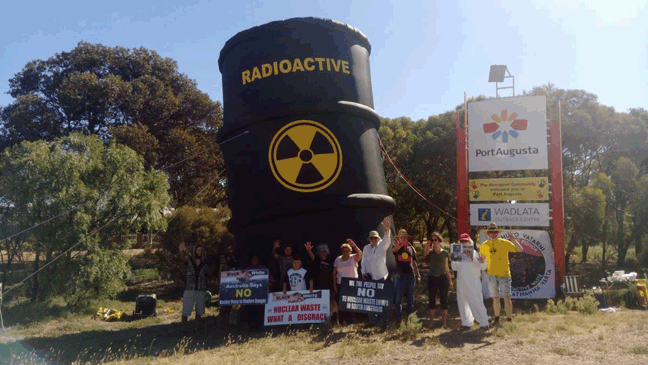
Members of the Flinders Local Action Group (FLAG) stood side-by-side with Adelaide-based group Don’t Dump on SA in Port Augusta to protest against a potential radioactive waste facility in South Australia.
The two groups, together with local Adnyamathanha and Barngarla people, joined forces on the Princes Highway ahead of the state election, highlighting their concerns to locals and passing traffic with signs and information packs.
With a large inflatable radioactive waste barrel and a lime green three-headed kangaroo on display, protesters made their disapproval of the potential facility in either Wallerberdina Station or Kimba very clear.
The protesters also encouraged locals to get involved by sending submissions to the Senate Inquiry into the selection process for a national radioactive waste management facility.
FLAG member and Hawker general practitioner Dr Susi Andersson said the broader community needed to know about the issue.
“The federal government is treating this as an issue for the local people only, but many people visit and care about the Flinders Ranges and don’t want a dump there,” Dr Andersson said.
-
Parliament passed the Nuclear Waste Facility (Prohibition) Act 2000 in order to “protect the safety and welfare of the people of South Australia” and the protesters encouraged locals to vote for parties who would defend this legislation.
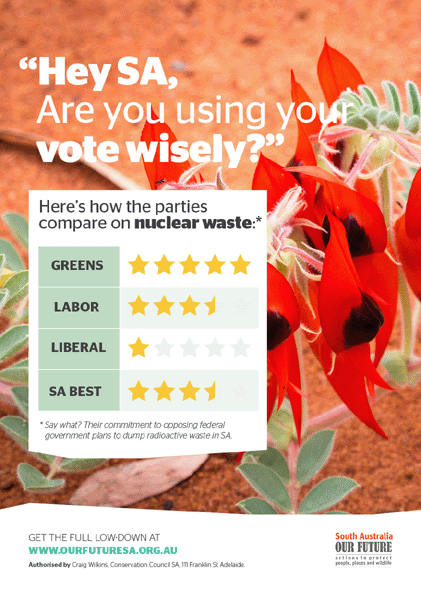
The Greens scored a five-star rating in a scoreboard conducted by an alliance of environment and community organisations across the state.
The scoreboard was based on responses to a survey sent to the leaders of the state’s five parties, rating them on their commitment to stopping climate pollution, ramping up clean energy and protecting nature.
SA Best scored second-best with a three-star rating, while Labor scored two stars followed by Liberal with 1.5 stars.
The Australian Conservatives, who recently backed a nuclear waste facility in SA, did not respond to the survey.
ANSTO spin and lies : Kimba nuclear fans shouted a visit to Lucas Heights
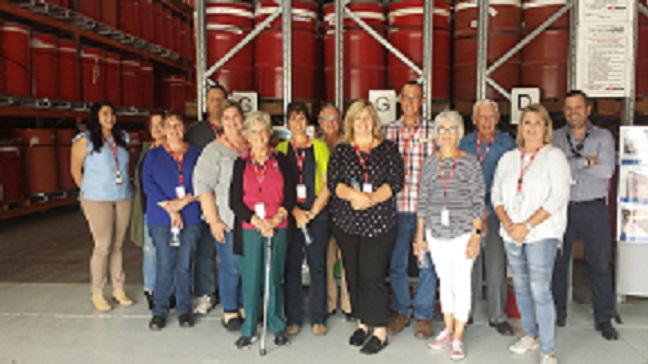
“Australia does not produce any high level waste.” [???] said Bruce McCleary, the General Manager of the National Radioactive Waste 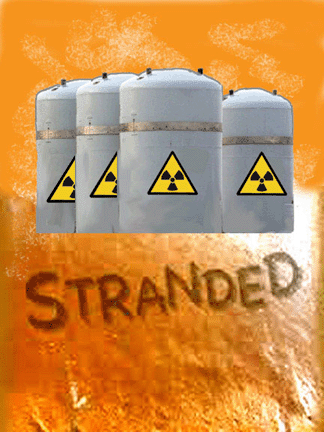 Management Taskforce
[He also did not mention that these wastes for Kimba will be temporary, i.e. STRANDED WASTES]
ANational Radioactive Waste Management Facility:
Kimba locals welcomed to Australia’s nuclear facility Eleven members of the Kimba community were on site at Lucas Heights yesterday, to see first-hand Australia’s nuclear technology and radioactive waste management expertise.
The delegation to the Australian Nuclear Science and Technology Organisation (ANSTO) included people with a variety of views on Kimba hosting the National Radioactive Waste Management Facility.
It included four neighbours of the two volunteered sites in Kimba, and three members of the Kimba Consultative Committee (KCC), as well as other interested community members.
Patricia Beinke saw the OPAL multi-purpose reactor, where ANSTO stores low and intermediate level radioactive waste, and how waste is prepared for transportation.
“It was a much bigger campus and complex than I had ever envisaged. I read all the information that comes my way, but wasn’t expecting this scale,” Mrs Beinke, who is a member of the KCC, said.
“I just found the trip so good. The scientists and engineers spoke on a level that everyone could understand.
“I saw the reactor, and we had a great discussion about how the waste is prepared for transportation, including the processes it would go through before being sent to a national facility.”
Austen Eatts has property that neighbours one of the volunteered sites, and is opposed to the facility, but was pleased to have seen ANSTO’s campus.
“I have always had a reasonable idea of what happens at ANSTO regarding medicine and industry, and what they are doing there is very good actually,” Mr Eatts said.
“The waste has to be put somewhere. I am still of two minds about whether it should be located in Kimba, but I found the trip very informative.”
Mr Eatts stressed that he is against the idea of a facility anywhere in Australia that could store high level, imported waste from overseas – a proposition not being put forward by the Federal Government.
Bruce McCleary is the General Manager of the National Radioactive Waste Management Taskforce, and said it was great to host people with a variety of views on trips such as this.
“Tours of ANSTO’s medicine manufacturing and radioactive waste facilities are a great information tool for communities considering if they want to host a radioactive waste industry,” Mr McCleary said.
“They are also a way of us establishing what questions the community still has, and for them to see and hear from experts who work with this material every day, first-hand.
“I can confirm for Mr Eatts – and anyone else who shares his concern – that the national facility will not hold international or high level waste, because it is for Australian waste only, and Australia does not produce any high level waste. [????]
“Our national facility needs 100-hectares for an above ground low-level waste disposal and temporary storage of intermediate-level waste, whereas an international high-level facility would need to be far larger and would require a deep underground facility in order to be safe and economically viable.”
For more project information: www.radioactivewaste.gov.au
Which South Australian parties have the guts to say NO to the Federal nuclear waste dump plan? – theme for March 18
 Is there some reason why the greedy nuclear lobby, the secretive agency ANSTO, and the weak Australian government all seem to think that it’s OK to transport nuclear reactor trash for thousands of km across the land, and dump it on agricultural land in South Australia?
Is it because they’ve decided that South Australia is already radioactively trashed, because the Australian government allowed the British to test 12 major nuclear weapons and hundreds of “minor” ones on Maralinga, S.A.?
It is some sort of weird payback because this State never had convicts dumped on them – so the dominant Eastern States want to put the South Australians in their place?
South Australia is a beautiful place. It has never generated nuclear trash. Let the nuclear trash be kept, (as international conventions and best practice dictate) near to the point of production – AT LUCAS HEIGHTS in Sydney. And then let Australia come to its senses and stop making the foul stuff.
This is NOT a “Kimba” issue, not just a regional issue, – it’s certainly a STATE issue, and a NATIONAL issue.
Aware citizens in Australia are waiting to see if the South Australian Labor Party, Liberal Party, SA Best Party have the guts to join the Greens in saying NO to the Federal nuclear waste dump plan.
South Australia election: Greens OPPOSE, SA Best nearly oppose, nuclear waste dump in SA: Labor and Liberal vacillate
SOUTH AUSTRALIA: OUR FUTURE: SCORECARD , 5 March 2018
All of the four party responses are signed by the leader and are dated 28 Feb 2018.
Cory Bernardi’s Australian Conservatives
Note: The “Australian Conservatives” were invited to respond and did not provide any response.
 “SA Best is pleased to provide the following response to … :
11a Categorically rule out the creation of an international high and/or intermediate
level radioactive waste storage and disposal facility
Yes
level radioactive waste storage and disposal facility
Yes
11b Actively oppose the federal government plan for a radioactive waste facility in SA.
Refer to SA-BEST environment policy.
We do not oppose a low-level waste facility in principle, recognising the benefits of nuclear medicine and research and the need to dispose of this waste.
However, until such time as the federal government demonstrates full transparency around the consultation and selection process, SA-BEST would not be supportive.
We would use legislation in SA to block it if the process is not acceptable.
11c. Actively support the state Nuclear Waste Storage Facility (Prohibition) Act 2000.
Commit to further strengthen this legislation by removing the modified section
Question 11c on the High level nuclear waste..
We support and commit the current legislation as it now stands.
My understanding is the modifications have already been put in place.
Yours sincerely
Nick Xenophon
“The Liberal Party of SA makes the following commitments in response to…
11a Categorically rule out the creation of an international high and/or intermediate
level radioactive waste storage and disposal facility
Yes
level radioactive waste storage and disposal facility
Yes
11c. Actively support the state Nuclear Waste Storage Facility (Prohibition) Act 2000.
Commit to further strengthen this legislation by removing the modified section
Commit to further strengthen this legislation by removing the modified section
Other: The Liuberal Party supports the current Nuclear Waste Storage Facility (Prohibition) Act 2000.
Yours Sincerely
Steven Marshall MP
State liberal Leader
 Note: The Liberal response (as published) does not provide an answer to Q 11b:
Actively oppose the federal government plan for a radioactive waste facility in SA.
“The Greens have made the following commitments in response to … :
 11a Categorically rule out the creation of an international high and/or intermediate
level radioactive waste storage and disposal facility
Yes
11b Actively oppose the federal government plan for a radioactive waste facility in SA.
Yes
11c. Actively support the state Nuclear Waste Storage Facility (Prohibition) Act 2000.
Commit to further strengthen this legislation by removing the modified section
Commit to further strengthen this legislation by removing the modified section
Yes. Done, Thanks to a Greens bill.
Yours sincerely
Mark Parnell MLC
Parliamentary Leader Greens SA
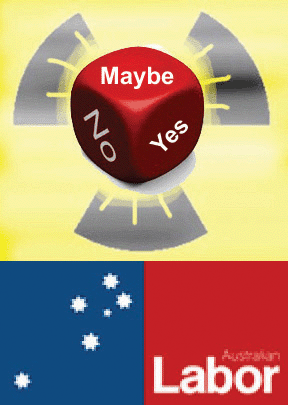 Labor: “Thanks for opportunity to outline our position. A detailed response to your questions is attached:
see p.36 of doc, extract:
“We have written to Turnbull government outlining our strong expectation around community support for any proposed facility, including a veto for the local Aboriginal community. …”
Hon. Jay Weatherill MP
Premier of SA
Note: The Labor response (as published) does not provide an answer to Q 11a:
Categorically rule out the creation of an international high and/or intermediate
level radioactive waste storage and disposal facility more https://www.ourfuturesa.org.au/scorecard
level radioactive waste storage and disposal facility more https://www.ourfuturesa.org.au/scorecard

Nuclear Waste issue highlighted in Port Augusta ahead of state election
 Mara Bonacci, 5 March 2018 On Saturday 3rd March, members of Adelaide-based group Don’t Dump on SA joined Adnyamathanha and Barngarla people and members of the Flinders Local Action Group (FLAG) on the Princes Highway in Port Augusta to highlight concerns over the Federal government’s plan to site a radioactive waste facility in South Australia.
The lively and colourful event involved a giant inflatable radioactive waste barrel, music, free cuppas and a lime green three-headed kangaroo. It received a positive response and lots of encouragement from locals and passing traffic.
Locals who stopped for a chat were given showbag-style information packs and encouraged to send a submission to the federal Senate Inquiry into the selection process for a national radioactive waste management facility in South Australia. An online submission template can be found athttps://nowastedump.good.do/wastedumpsenateinquiry/submission/.
Barngarla woman Linda Dare said “We’re here today to tell people that we don’t want a radioactive waste facility in South Australia. We want people to support us in the fight to stop it”.
FLAG member and Hawker GP, Dr Susi Andersson, said “The federal government is treating this as an issue for the local people only, but many people visit and care about the Flinders Ranges and don’t want a dump there. I feel the broader community need to know about and discuss this issue”.
In response to earlier federal moves to dump radioactive waste in SA our Parliament passed the Nuclear Waste Facility (Prohibition) Act 2000. The objects of this Act are “to protect the health, safety and welfare of the people of South Australia and to protect the environment in which they live by prohibiting the establishment of certain nuclear waste storage facilities in this state.”
In the lead up to the state election on 17 March, people concerned about the imposition of a nuclear waste facility in SA are being encouraged to vote for parties who will defend this legislation. Information can be found at https://www.ourfuturesa.org.au/scorecard.
Federal govt cannot override South Australia law against nuclear waste dump
 Cameron Scott, Submission to ARPANSA on draft Code for Radioactive Waste, 4 Mar 18 It needs to be stated in the Code for Disposal of radioactive Waste that the Federal Government can not override state legislation for building a national facility. The code needs to include a clause protecting farming land from becoming home to hazardous waste. Licensing should require communities to nominate land not individuals.
1 This month

of the week – Australians for War Powers Reform (AWPR)
To see nuclear-related stories in greater depth and intensity
 Antinuclear