Nuclear Commission Special this week – some other news, too
Nuclear dump investigation by Committee For Adelaide backs SA waste storage plan, ABC News, 6 May 16 By Nathan Stitt and Simon Royal An Adelaide team has returned from an overseas investigation of a nuclear fuel dump having concluded South Australia has an extraordinary opportunity to follow the same path.
“I don’t think there’s any doubt that the science is safe (!!) ,” delegation leader Matt Clemow said. The former journalist and political adviser now heads up the Committee For Adelaide, a group of community and business leaders which promotes investment in Adelaide.

They visited Finland to investigate the handling of nuclear waste, visiting facilities which deal with low and medium-level waste. “The high-level [facility] is yet to be built (!!) alongside the site. We went into the facility 448 metres underground and were standing where the waste would be delivered into,” Mr Clemow said.
“It was a warehouse-type facility, largely computer-operated.” Mr Clemow said safety standards were high. “You essentially have a fuel rod which is put in a canister, which is then embedded into a type of clay which is scientifically proven to last hundreds of thousands of years (!!) ,” he said.
Mr Clemow said it remained vital the wider community became as convinced of the benefits as the delegation had been…….http://www.abc.net.au/news/2016-05-06/nuclear-dump-investigation-committee-for-adelaide/7391554
Woman arrested in SA nuclear protest , 9 News 6 May 16 An anti-nuclear protester has been detained by security as South Australia’s nuclear royal commission handed over its final report.
The 65-year-old woman attempted to walk through the gates of Adelaide’s Government House shortly before Royal Commissioner Kevin Scarce delivered his final report to Governor Hieu Van Le on Friday.Police said the woman had been reported for trespass and would be summonsed to face court at a later date….. The ceremonial handover marked the end of SA’s nuclear fuel cycle royal commission…….. http://www.9news.com.au/national/2016/05/06/03/46/sa-nuclear-royal-commission-report-due#BAvriHKbizdAMBy3.99
Locals at nominated nuclear dump site share concerns in fiery public meeting, ABC Radio AM Natalie Whiting reported this story on Saturday, May 7, 2016 ELIZABETH JACKSON: It’s been a week now since the Federal Government named a South Australian cattle station as the preferred site for its nuclear waste dump. Last night, the first public meeting since the announcement was held in the nearby town of Hawker – and it was at times a fiery event.
Government representatives faced a barrage of questions from people opposing the proposal, including several traditional owners who say important cultural sites will be put at risk.
It’s the start of an extended consultation period, but some locals are concerned that the waste facility is already a done deal, despite Government assurances to the contrary. Our reporter, Natalie Whiting, attended the meeting and filed this report from Hawker:……http://www.abc.net.au/am/content/2016/s4457862.htm
Senator Scott Ludlam – jobs, economics, national aspects of Nuclear Royal Commission’s findings
 SENATOR SCOTT LUDLAM AUSTRALIAN GREENS SENATOR FOR WESTERN AUSTRALIA – Response to the Tentative Findings of the South Australian Nuclear Fuel Cycle Royal Commission
“………I would like to point to some research conducted by the Climate Institute that was done in collaboration with Ernst and Young and identifies that there is potential in South Australia to produce enough renewable energy to power 3,000,000 homes, remove pollution equivalent to 450,000 cars, and create close to 5,000 new jobs.
The report suggests that if a renewable energy industry were pursued there could be the creation of 5,178 new jobs including 1,300 permanent ongoing jobs, 2,688 jobs during construction and over 1,189 jobs in manufacturing.
It was very encouraging in December 2015 to see the South Australian Government release the “Low Carbon Investment Plan for South Australia” which looked at a $10 billion investment in low carbon energy – with the hope that by 2025 renewable energy would power 50% of South Australia and 100% by 2050ii . It seems that South Australia is making leaps and bounds, even without this significant investment. It was also encouraging to hear Premier Jay Weatherill’s commitment to renewable energy at the Paris climate summit. Being at the cutting edge of renewable energy technology suits South Australia. I welcome the commitment, enthusiasm and the exciting opportunities this presents to the state……..
While we welcome the preliminary finding that there are no prospects for nuclear power it is disturbing the preliminary findings ignore many serious and ongoing issues with the industry. While the economics are a clear barrier to nuclear power there are a range of safety issues that should be considered as well as suite of safeguards and proliferation considerations that do not appear to have been addressed by the NFCRC……..The world’s only deep geological repository that contains waste is the Waste Isolation Pilot Plant in New Mexico, USA. The Onkalo facility in Finland has been in the pipeline since 1983, and the total expected costs for the waste disposal is upward ofAUD $4.4 billion. The Sure facility in France is still under construction but earlier this year there was a collapse in the tunnel killing one worker and injuring and trapping another.
The WIPP facility, designed to contain radioactive waste for 10,000 years had a major radiological incident due to a chemical explosion within the first decade. 21 individuals received low level internal contamination; and there was a measurable leak of waste from the site discharged directly into the environment. The trial facility cost $19 billion to establish and will cost another half a billion to clean up after the 2014 radiation leak. The facility is still closed as the clean-up continues two years later.The preliminary findings of the NFCRC make no mention of the issues at WIPP or other facilities. This lack of consideration of real examples of waste management failures is a clear diversion from the fact based premise of the Royal Commission.Consideration of deep borehole waste storage also relies on optimism rather than evidence. There is no operating or trial deep borehole waste storage globally. There is one proposed trial in the US that will not be using radioactive waste.
The economic scenario put forward by Senator Sean Edwards to take International waste has been heavily criticised. Some of the issues with the Senator Edwards proposal identified by leading Australian economists include:• There is no plan for the management o fthe 56,000 tonnes of waste out of the 60,000 tonnes of waste proposed to be imported.
• There is no plausible case for the suggestion that another country would pay Australia US $lmillion per tonne to dispose of waste
- The proposal to convert nuclear waste into fuel for PRISM reactors is not warranted given that PRISM reactors don’t exist, and trials of PRISM reactors have been abandoned due to unacceptable risks
Over the last 30 years Australia has failed to come up with an acceptable solution for managing our own nuclear waste. The proposal to store international radioactive waste relies on Australia doing what other countries have failed to do since the inception of the industrial nuclear industry.
This issue is not just an issue for South Australia but has relevance for all Australians and for people globally. http://nuclearrc.sa.gov.au/app/uploads/2016/04/Ludlam-Scott.pdf
Adelaide University questions the Nuclear Royal Commission’s attitude to Aborigines
 Comments on the Nuclear Fuel Cycle Royal Commission Tentative Findings of 15 February 2016 – University of Adelaide , Consent and the Siting of a Nuclear Waste Storage Facility By Mr John Podgorelec*, Dr Alex Wawryk and Dr Peter Burdon†
“……Given many Indigenous communites have already expressed opposition to a storage facility, potential conflict lies ahead. While the finding that free, prior and informed consent must be obtained is welcome, the question remains as to whether this will be followed by the existing, or future, governments. Although intended to guide government, the Tentative Findings arguably provide no strong assurance to communities. For example, they fall well short of making a finding that specific legislation be passed, or the Native Title Act be amended, to provide a right of veto over nuclear activities, including the storage of toxic wastes. ….
Michael Wallis-Smith examines indigenous, ethical, economic aspects of the Nuclear Royal Commission’s findings
SUBMISSION TO THE NUCLEAR FUEL CYCLE ROYAL COMMISSION TENTATIVE FINDINGS, Michael Wallis Smith A sad little Submission to the Nuclear Royal Commission – from Terrestrial Energy
Response to the Tentative Findings of the South Australian Nuclear Fuel Cycle Royal Commission – Terrestrial Energy
(Terrestrial Energy is a company marketing the not yet existent Generation IV nuclear reactors, such as , the Integral Molten Salt Reactor (IMSR))
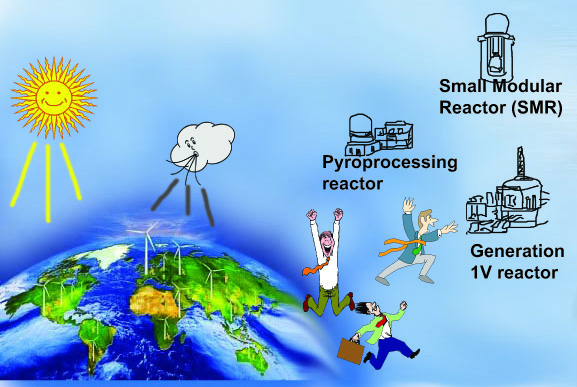
“……There is little in the Tentative Findings to reflect the exciting commercial and manufacturing opportunities available in advanced nuclear technologies. South Australia might be well-positioned to proactively engage with this sector yet it appears to have been overlooked.
Terrestrial Energy strongly disagrees with the statement that innovative, non-lWR designs will not be
available for the foreseeable future…….http://nuclearrc.sa.gov.au/app/uploads/2016/04/Terrestrial-Energy.pdf
Humphrey Hunt calls for a federal referendum on The Royal Commission’s nuclear waste import plan
 Humphrey Hunt’s Hand- written submission – recommends that there should be a federal referendum on the question of importing nuclear wastes, and he warns of the dangers to prsent and future generations http://nuclearrc.sa.gov.au/app/uploads/2016/05/Hunt-Humphrey.pdf

Nuclear Royal Commission: it is a National, not a State matter – Robin Foley
Nuclear Fuel Cycle Royal Commission Response – Robin Foley
Nuclear Royal Commission downplays the safety and environmental risks of importing nuclear wastes – Gil Anaf
 Gil M Anaf Response To: Nuclear Fuel Cycle Royal Commission 18 May 2016
Royal Commission seems unaware of the toll of nuclear industries on scarce water supplies
 Deidre Allen – response to Nuclear Fuel Cycle Tentative Findings
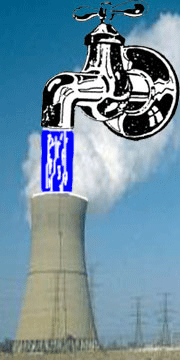
“………Nuclear energy requires extreme amounts of water in every stage of development.
Given that SA is the driest state in the driest continent we can not use this essential resource wastefully. http://www.answers.comlQlIs_South_Australia_the_driescstate_in_Australia.…..
- 56. 95. 141.
The idea of planning changes to current regulations in advance of public acceptance for any part of the nuclear industry is premature,
Surely parliament must first deliberate and decide whether to accept the nuclear industry, before changes are made to legislative requirements; that would allow the industry to proceed with any new developments….
74
There is no substantiated evidence that ‘Finland or Sweden have successfully developed long term domestic solutions’, neither project has begun.
There is no opportunity to say that their models are proven safe for a ten or even a fifty year period; let alone for the extended time of 250,000 or several hundred thousands of years, that is required…..
I’d like to submit that you have neglected to consider the impact of climate change. Sea water levels are predicted to rise. Land that for millions of years has been dry could again become submerged. http://www.theguardian.com/environment/2015/jul/10/scientists-predict-huge-sea-Ievel-rise-even-if-we-limit-climate-ehange
Without having to factor in climate change, an article in the Sunday Mail on Feb 21 quoted a Flinders University groundwater scientist, Professor Craig Simmons who has said “we need to think much longer term, 10,000 plus years, which is actually on geological time scales… Sea levels go up,
not one metre but hundreds of metres on these time scales, it’s totally different.”….
146a
With a 20- 30 year period of construction the likelihood of future politicians reversing any decision must not be prevented.
If a better safer option for disposing of nuclear waste was known to exist and to be achievable then it must be allowed to be adopted.
150 If the nuclear waste repository was breached and irradiated vast areas of land and water, all royalties earned by the SA Government would be lost in trying to repair the disaster. Indeed the cost to both the SA and Federal Governments would be inexhaustible……http://nuclearrc.sa.gov.au/app/uploads/2016/04/Allen-Deidree.pdf
Biased Nuclear Fuel Chain Royal Commission – will it sink like a rock?
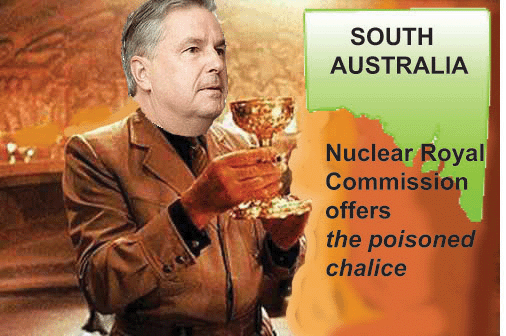 To make Australia the toilet for the world’s radioactive trash – this is an extraordinary aim!
To pretend that it’ s just a little local issue – to (supposedly) bring jobs to south Australia – is ludicrous!
By the way – those dirty and dangerous jobs wouldn’t come for decades. Meanwhile South Australia would miss out on its opportunities to be a hub of jobs in renewable energy and clean agriculture, fisheries wine-making, tourism. If South Australia were to become that global radioactive trash toilet – goodbye to its clean green image!
Of course it’s a National issue – however much our bought politicians of both Liberal and Labor pretend that it doesn’t matter – not an election issue – keep it hush hush till December.
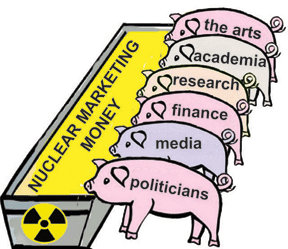
Look out for all the pro nuclear tripe from those drinking at the corporate trough.
Holly-Kate Whittenbury finds the Nuclear Royal Commission UNETHICAL
What is also extremely unethical is how the Commission has twisted the words of experts in favour of the dump; an example of this would be its claims, in tentative finding 78, p. 16, that the proposed areas are seismically suitable.
Submission response to ‘Tentative Findings’ – Holly-Kate Whittenbury
“……The Nuclear Fuel Cycle Royal Commission Tentative Findings Report contains many generously overstated ambitions, almost no analysis of the environmental, tourism or agricultural consequences with its focus on narrowly supported economic benefits. The media has claimed that there is ‘scientific consensus’ on supporting a waste facility for South Australia, despite there being many scientific professionals disagreeing with it.
Advocates for the facility have stated that as a state which supposedly ‘benefits’ from uranium mining in its far north, shipping the extracted products out to other countries, that we have a responsibility to deal with the waste created from such products. I disagree; it is questionable whether South Australia actually has benefited from mining as much as we are led to believe, with 83% of all mining profits going to overseas companies according to the Australian Institute’s paper #7, ‘Mining the Truth’ (Richardson, D. Denniss, R. 2011, p. 17).
This is a topic that we recently explored at University during our Environment: A Human Perspective course; it is what is known as ‘Privatizing profits, socializing losses’. Continue reading
Graham Glover scrutinises the language of the Nuclear Fuel Cycle Royal Commission
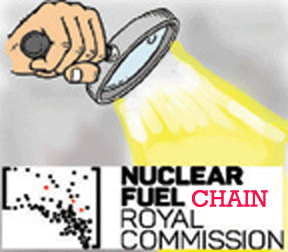 Tentative Findings Response – Graham Glover http://nuclearrc.sa.gov.au/app/uploads/2016/04/Glover-Graham.pdf
Item 73 The risks associated with storing nuclear waste for many hundreds of thousands of years cannot be adequately assessed, considering the potential changes in geological, political, social, economical, environmental and global issues.
A not particularly anti-nuclear Submission still objects to #NuclearCommissionSAust ‘s bias
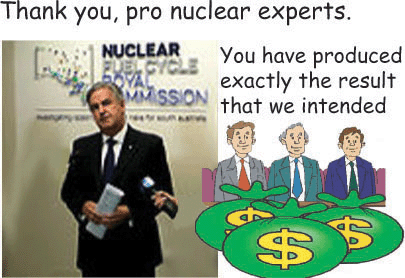 Response to Tentative Findings of Royal Commission into the nuclear fuel cycle Submission by Gary Rowbottom,
“…….there is very little information on ILW [Intermediate Level Waste] presented in the Royal Commission Issue Paper (No.4) on the hazard level and required safe containment/storage method or duration required for ILW.
During the tentative fmding delivery by Mr. Kevin Scarce in Port Augusta in February, the day following the release of the tentative fmdings, I asked Mr. Scarce of the SA Government Royal Commission, “how long ILW was dangerous for, and needed to be stored safely for” – he replied “hundreds of years”, but one of his advisors piped up at that point & said, “No, there is no specific figure, it depends on the specific radionuclides involved etc., but is generally in the thousands of years”. The FederalGoverment National Radioactive Waste Management Project information indicates hundreds of thousands of years.
I am very concerned at this disparity of information. I think that whole ILW question needs better thinking and collaboration between the SA Government and Federal Government investigating agencies on this issue, to establish the truth and to then represent this true story to the public…….
I am further a little concerned too that Mr. Scarce, in his delivery of the tentative findings, a mere day after the release of these findings, seemed to be critical of any comments made in opposition to deepening Australia’s involvement in the nuclear fuel cycle, often citing lack of evidence for viewpoints expressed. ……
I would have to say that it seems there is a fair bit of evidence that the commission members themselves are in the majority, clearly quite pro nuclear. I am not happy at the lack of subjectivity that may have brought to the findings, particularly on the waste issue. Whilst Mr. Scarce did say that they did look at the negative sides of all the Issue papers, there is not much evidence of that in the Tentative Findings Report…….http://nuclearrc.sa.gov.au/app/uploads/2016/05/Rowbottom-Gary.pdf
Mothers for a Sustainable South Australia outline 8 risks of #NuclearCommissionSAust
Mothers for a Sustainable South Australia: Our Response to the Tentative Findings of the Nuclear Fuel Cycle Royal Commission • Maureen Graney • Mary Houlahan • Tracey Kermond • Michelle Parsons • Barbara Pocock 18 March 2016
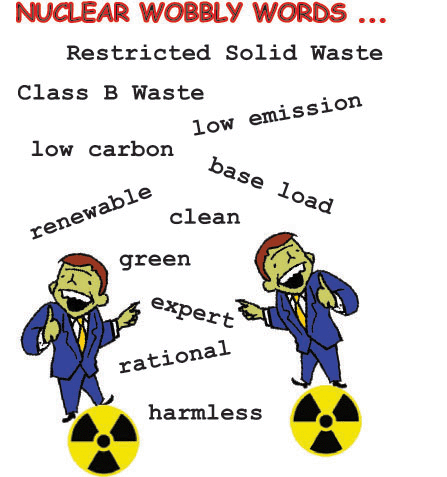 “……..Language We understand from public hearings and the text of the Tentative Report that the Commission does not like the word ‘dump’ and would prefer the language of ‘waste disposal’. We believe that language is important: it needs to reflect reality, not cloak it in a preferred – or deceptive – ambiguity. The Oxford dictionary defines a dump as ‘a site for depositing rubbish’ and, more specifically ‘A place where particular kind of waste, especially dangerous waste is left: a nuclear waste dump’. (http://www.oxforddictionaries.com/definition/english/dump…). In this light, in the interests of clarity, we deliberately use the word ‘dump’ in responding to the recommendation that South Australia should build one for high-level nuclear waste.
Abandon all thoughts of this nuclear waste import scheme – Ngoppon Together
The Commission states that there ‘is no existing market to ascertain the price a customer may be willing to pay for the permanent disposal of used fuel’ so such estimates are simply conjectures with no genuine basis in reality
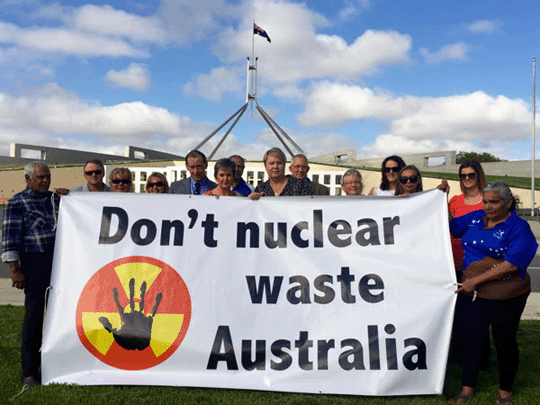
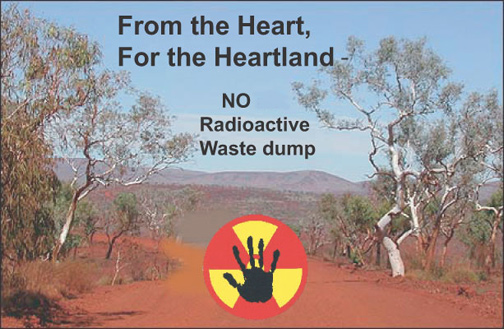 Our members plead with Commissioner Scarce and the members of the Royal Commission, with Premier Weatherill and all Members of Parliament and Members of the Legislative Assembly: for the sake of our common humanity abandon all thoughts of this scheme. As fellow South Australians, Australians and as fellow human beings together, the implications and consequences of importing the world’s radioactive waste in its highly toxic form is indeed terrifying; and, it must be said, a totally irresponsible legacy, for our generation to leave to the grandchildren, great grand children and every generation to come in our state of South Australia
Ngoppon Together Inc. (Walking Together Reconciliation Group Murray Bridge SA) RESPONSE to the NUCLEAR FUEL CYCLE ROYAL COMMISSION TENTATIVE FINDINGS – due March 18th, 2016
1 This month


Help Aunty Sue Protect Her Land and Sacred Sites From Destructive Rocket Testing.
.

Australians deserve the truth
about
AUKUS – https://aukuspublicinquiry.com/

PETITION – To: Prime Minister Anthony Albanese and the Australian Labor Government

of the week – Australians for War Powers Reform (AWPR)
To see nuclear-related stories in greater depth and intensity

