World’s Biggest Wave Energy Turbine for Victoria
 World’s Largest Wave Turbine Gets New Grant from Australian Government Clean Technica, JULY 3, 2012 BY GILES PARKINSON The Australian government as upped its investment in two nascent, Australian-developed wave energy technologies, announcing new grants worth almost $10 million to help bring the two new systems to the market, including what is believed to be the world’s biggest wave energy turbine.
The government is providing $5.6 million to BioPower Systems to install a 250kW full-scale pilot plant of its bioWAVE technology off the coast of Victoria, and is also providing just under $4 million to Oceanlinx, to install a 1MW demonstration plan of its Greenwave technology in South Australia.
Both grants are being made under the $126 million Emerging Renewables program, and follow an earlier $9 million grant to Carnegie Wave Energy, which is building a $31 million, 2MW grid-connected demonstration of its CETO technology near Fremantle in Western Australia.
BioPower CEO Tim Finnigan said the grant, along with a $5 million grant from the Victorian state government, means that its $15 million project was now fully funded. “This puts us into a position to complete the project, get it on the grid, and prove the technology at scale,” he told RenewEconomy. “It’s a pretty big development for us.”…… http://cleantechnica.com/2012/07/03/worlds-largest-wave-turbine-gets-new-grant-from-australian-government/
Queensland’s anti solar energy government swings into action
Campbell Newman Government axes Queensland solar energy scheme, nation’s largest by: Darrell Giles The Courier-Mail July 02, 2012 AUSTRALIA’S biggest solar energy scheme is dead in the water, torpedoed by the withdrawal of funding by the Newman Government. The State Government is pulling $75 million out of a renewable energy power project, effectively killing off up to 400 jobs.
Regional Queensland was set to be home to one of the biggest combination solar and gas power plants in the world under a $1.2 billion scheme, a joint Federal-State Government and private partnership.
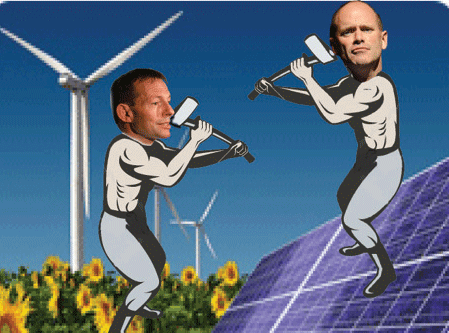
The Solar Dawn project would have used Australian-pioneered technology and transformed Chinchilla and the western Darling Downs into the nation’s mixed-energy capital. But the Liberal National Party has found a way to back out of an earlier Bligh government agreement and halt its contribution.
Premier Campbell Newman signalled soon after winning the March state election that he would look at pulling the plug on the $75 million investment if he could do it without risk to taxpayers. Minister for Energy and Water Supply Mark McArdle wrote to federal Energy Minister Martin Ferguson last week to confirm he had cut the Queensland contribution. Mr McArdle was understood to have told Mr Ferguson Solar Dawn was unable to meet the State Government’s funding agreement.
As a result, the agreement between the two governments was “terminated”…… Prime Minister Julia Gillard had committed $464 million, saying the project would support Labor’s carbon tax and keep the environment clean…… http://www.couriermail.com.au/news/queensland/campbell-newman-government-axes-queensland-solar-energy-scheme-nations-largest/story-e6freoof-1226413831562
New wind farm near Barossa Valley would power 68,000 homes
 Wind farm mooted near Barossa http://www.abc.net.au/news/2012-06-29/wind-farm-mooted-near-barossa/4100638 June 29, 2012 Pacific Hydro has submitted an application to the Development Assessment Commission for a 42-turbine wind farm on the edge of the Barossa Valley.
The Keyneton wind farm would be north-west of Cambrai, with turbines running along about 15 kilometres of the eastern Mount Lofty Ranges. The company initially proposed 57 turbines for the area but reduced the number in response to community concerns about the visual amenity and potential noise. The nearest house to the wind farm would be about 1.7 kilometres away, with most homes between three and five kilometres from the project.
The wind farm would power about 68,000 homes a year. Pacific Hydro already runs the Clements Gap wind farm, south of Port Pirie, and is proposing another near Georgetown in the mid-north.
Carbon tax essential for Australian superannuation funds’ $700 billion renewable energy investment
 Greens attend energy forum, Wauchope Gazette, 27 Jun, 2012, THREE of the four Greens
 council candidates attended the Renewable Energy Forum, held at the Glasshouse recently. The event was organised by the Nature Conservation Council and Australian Conservation Foundation, and follows other informative climate change related events, such as the forum last year by Professor Ross Garnaut.
Lead Greens candidate, Mr Ian Oxenford said, the highlight of the evening was the ‘revelation’ from the keynote speaker, Nathan Fabian, representing the Investor Group on Climate Change, a consortia of Australia’s leading superannuation funds, that Australian based superannuation funds have $700 billion of renewable energy investments for Australia.
The future of these investments depends on a long term effective price on carbon. “Mr Fabian said that without certainty of carbon price, investors will have no choice but to direct these funds to offshore investments,” Mr Oxenford said.
“This should ring alarm bells to those praising the threats of the Federal Leader of the Opposition to scrap the ‘carbon tax’ (sic) if he is elected Prime Minister next year.”….. Continue reading
Aboriginal and solar firms join in outback solar projects
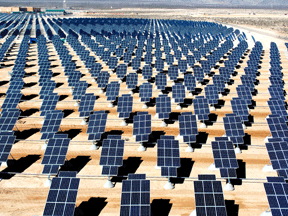
 Indigenous firm eyes solar power http://au.news.yahoo.com/thewest/business/a/-/wa/14049902/indigenous-firm-eyes-solar-power/ Peter Williams, The West Australian June 27, 2012, A new indigenous-controlled energy company has plans to build solar power systems in regional areas as big as any existing projects in Australia.
Carey Power, a joint venture between indigenous-owned mining services provider Carey Mining and Perth solar energy specialist Next Power, is targeting mine camps as well as remote communities and local governments.
Next Power chief executive and Carey Power executive director Kieron D’Arcy said Carey Power planned to install systems of up to 10 megawatts, equal to the size of the nation’s biggest solar plant being built in the Mid West. Continue reading
Despite Victorian Government’s opposition, the wind energy industry hopes for a new wind farm
Wind farm hopes remain http://www.abc.net.au/news/2012-06-26/wind-farm-hopes-remain/4092612 June 26, 2012 A central Victorian renewable energy group says it will hold on for as long as it can, after its government contract runs out at the end of the month.
The Woodend Integrated Sustainable Energy Group has been pushing for a community-owned wind farm to be established in the Macedon Ranges. It erected a 60-metre high wind mast last year with a $50,000 State Government grant. The group’s president, Barry Mann, says the mast can remain in place until November 2014.
“We want to get to that point where we can reinvest money generated from clean energy, our best resource which is our wind, and put it back into other things like revegetation, Landcare type stuff, solar panels on sporting clubs and have a sustainability project,” he said.
Queensland Premier Newman’s war on solar energy
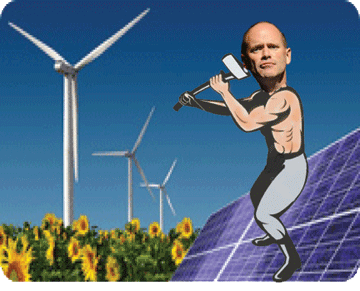 Can-do Campbell slashes Queensland solar PV tariffs, REneweconomy, By Giles Parkinson on 25 June 2012 One of the most depressingly predictable political back-flips has finally come to pass, with the Campbell Newman-led Queensland state government abandoning its commitment to the solar bonus scheme, and announcing it will slash its net feed-in tariff from a 44c/kWh to just 8c/kWh.
The dramatic move means that Queensland is the last state to remove the solar PV FiT, and replace it with a nominal amount. The 8c tariff will be reviewed in July 2013, and will end in July 2014 – leaving retailers to make only a “voluntary contribution.”
This is despite promises by Newman during the campaign that the solar bonus scheme would not be cut. But as we pointed out in this item in March, Can-do Campbell and the art of political risk, Newman intended to cut a whole range of climate and clean energy schemes. Newman has now brought an end to a variety of renewable energy schemes, including a $5 million grant for the Cloncurry solar PV project, and funding for geothermal research.
Newman also sought to exit a $75 million grant for the Solar Dawn project in the solar flagships program, but has found he could not. He may still be able to hold on to the money if Solar Dawn is unable to negotiate a power purchase agreement with the state government-owned utility. Continue reading
Community owned solar farm plan for Bacchus Marsh, Victoria
 Solar farm proposed for Bacchus Marsh, Melton Weekly, Moorabool Weekly, BY CLAIRE KNOX, 26 Jun, 2012 STATE and federal governments need to encourage smaller-scale community renewable energy (CRE) projects, according to sustainability leaders. They say promoting community-owned models could be the key to engaging the wider public in lowering carbon emissions.
Deb Porter, secretary of Moorabool Environment Group (MEG), said the group was looking at developing a community solar farm in Bacchus Marsh, with people purchasing shares. Continue reading
The role of the smart meter in Australia’s renewable energy future
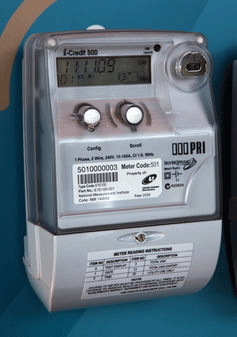 Challenge 13: smart energy demand and renewable supply “….The Conversation, Mark Diesendorf argues that it is high time we got smart about power: how we generate it and how we deliver it. 26 June 12
Global challenge 13: How can growing energy demands be met safely and efficiently?
“……..Question 13 was posed by the Millennium Project in a global context. However, when applied to Australia and other rich countries, the assumption that energy demand should continue to grow must be challenged at the outset.
There is huge potential for increasing the efficiency of energy use through technological improvements (known as “energy efficiency”) and reducing the demand for energy services by fostering behavioural changes (known as “energy conservation”). These are the cheapest and fastest ways of cutting unnecessary energy demand. The key foci are buildings (including the appliances and equipment they contain) and industry.
In the near future, a new tool will become widely available for monitoring and reducing electricity demand: the smart meter as a component of the “smart grid”. Continue reading
Australia to reach 20% renewable electricity by 2020
Among all renewable energy sources, solar PV had the highest revenue share in 2011, while wind power is considered the lowest cost form of large-scale renewable energy generation in the ANZ region. It is noteworthy that Australia has some of the best wind resources in the world.
Renewables to generate a fifth of Australia’s electricity by 2020 http://www.newstatesman.com/business/energy/2012/06/renewables-generate-fifth-australias-electricity-2020 Green energy revenues in Australia and New Zealand to reach $5.04bn over the next four years. NEW STATESMAN 22 JUNE 2012 Revenues from renewable energy markets in the Australia and New Zealand region (ANZ) will reach an estimated $5.04bn by the end of 2016, according to new analysis from the business research and consulting firm Frost & Sullivan.
Renewables in ANZ markets earned revenues of $1.90bn in 2011. Subha Krishnan, research analyst at Frost & Sullivan, said:
Ever since the RET target for 2020 was amended to provide a solar multiplier for rooftop solar systems and some states introduced generous feed-in tariffs, small-scale installations such as [photovoltaic] systems and solar hot water systems have flooded the REC market. Continue reading
Electric cars – no greenhouse emissions IF POWERED BY RENEWABLE ENERGY
 Electric cars silently make a charge in trial , The Age, Adam Carey June 23, 2012 YOU might not see it coming – and you certainly won’t hear it coming – but the day when electric cars start to appear on our roads could be just around the corner.
Small, speedy and near silent, there are just 100 or so electric cars on the road in Victoria now, the Department of Transport says. About half of them are being used in a trial it is doing to learn more about how people might use them here.
One-hundred-and-eighty households and 60 organisations are being given a three-month loan of an electric car during the trial, which is due to wrap up in 2014…..
People in the electric car industry accept price is a sticking point. The Nissan Leaf, which went on sale in Australia this week, retails for $51,500. But about $15,000 of the cost is in the rechargeable
battery….
.. the cars release no direct carbon emissions, and potentially zero emissions if powered by renewable energy.
http://www.theage.com.au/victoria/electric-cars-silently-make-a-charge-in-trial-20120622-20tu7.html#ixzz1yeulK3KA
A New South Wales City Council sets up Australia’s largest solar powered streetlighting project
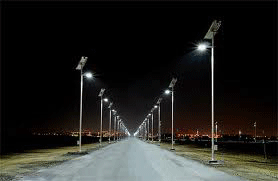 Shining light in renewable energy Goulburn Post, 22 Jun, 2012 GOULBURN Mulwaree Council is leading the way when it comes to combining renewable energy and street safety by installing more than 50 solar powered streetlights along Marys Mount Road.
The 3km stretch of road is believed to be the single largest solar powered streetlighting project for a councilowned and maintained road in Australia. The solar powered streetlights took three weeks to install, with local tradespeople contracted to assist with the project……..
Each stand-alone system comprises primarily the three major electronic
components, all working in unison.
1) Solar Panels – Absorbed radiation sent to through the controller to the batteries. The Solar Panels are monocrystalline and generally do not require maintenance.
2) Sealed Batteries – Supplying daily stored power. The batteries are sealed and require no regular maintenance.
3) Controllers – The Control Centre (operating, monitoring, regulating).
The controller automatically adjusts for the daylight savings throughout the entire year, and no manual adjustment is required.
The Cost of Life Analysis included the poles, solar panels, batteries, controller and fittings. This worked out to be $400 per pole/annum or approx five per cent of the Total Project value.
Goulburn Mulwaree Council has also installed solar panels at its Visitor Information Centre (installed by Ingenero Pty Limited), and is currently investigating options to install panels at its Aquatic Centre. Stage 1 of this process is now complete, with local company Sunup Solar and LED Lighting Systems installing the systems. Council is investigating the possibility of tendering for Stage 2 of an additional 5KW. http://www.goulburnpost.com.au/news/local/news/general/shining-light-in-renewable-energy/2598968.aspx
Harvey Norman aims to be an Australian leader in solar panel sales
 Harvey Norman invests in solar panels 19 June 12, http://news.ninemsn.com.au/article.aspx?id=8485955 Retailer Harvey Norman plans to be a market leader in the domestic solar industry after placing a substantial order for user-friendly solar panels. Continue reading
Solar panels in Australia- cutting mains electricity use and wholesale prices

 Solar Panels Cutting Australia’s Mains Electricity Consumption http://www.energymatters.com.au/index.php?main_page=news_article&article_id=3261 by Energy Matters Results of a study released earlier today show energy efficiency efforts and home solar power installations are reducing Australia’s mains grid supplied electricity consumption – and wholesale electricity prices too. Continue reading
Australia using less ‘baseload’ energy – largely thanks to solar panels
 more than half the cut in power use was due to photovoltaic solar panels, solar hot water systems and energy savings programs in Victoria and New South Wales that encourage use of more efficient lightbulbs and appliances.
the cost of solar energy and energy-efficiency schemes was modest compared with other factors pushing up electricity prices……
Solar panels linked to lower power usage, Illawarra Mercury, ADAM MORTON, 20 Jun, 2012 SCHEMES encouraging people to install solar panels and save energy have cut household power consumption and will restrict the pace at which electricity bills increase in coming years, a new analysis has found.
While solar incentive schemes have been criticised as an expensive way to reduce greenhouse gas emissions, an industry analysis has found they have led to a reduction in the amount of fossil fuel electricity drawn from the national power grid.
It suggests it is likely no new baseload power plants will be needed over the next decade.
Electricity consumption fell 3.2 per cent over the three years to 2011, ending years of dramatic increases and bucking projections that it would continue to soar due to economic and population growth. Continue reading
1 This month
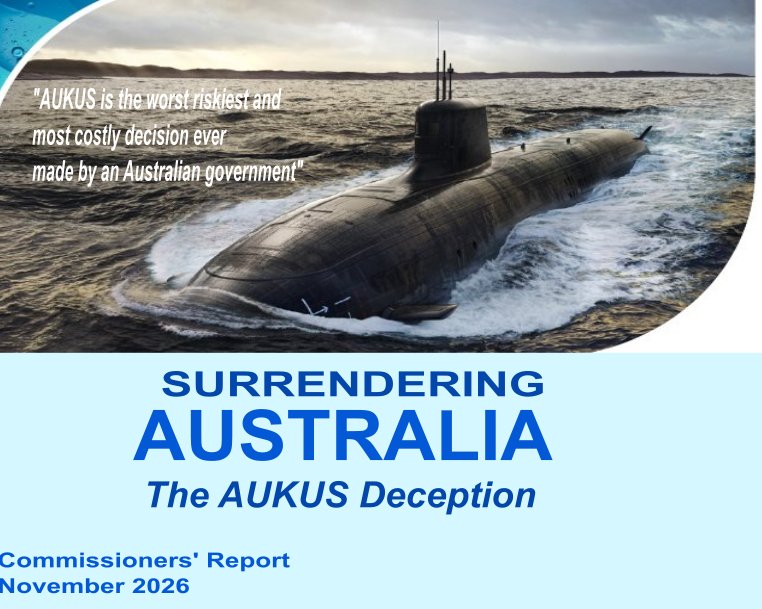
Read the Public Inquiry Report, the Commissioners’ report, Surrendering Australia: The AUKUS Deception is available to download for free at aukuspublicinquiry.com. Or just watch the replay of the National Press Club Luncheon.
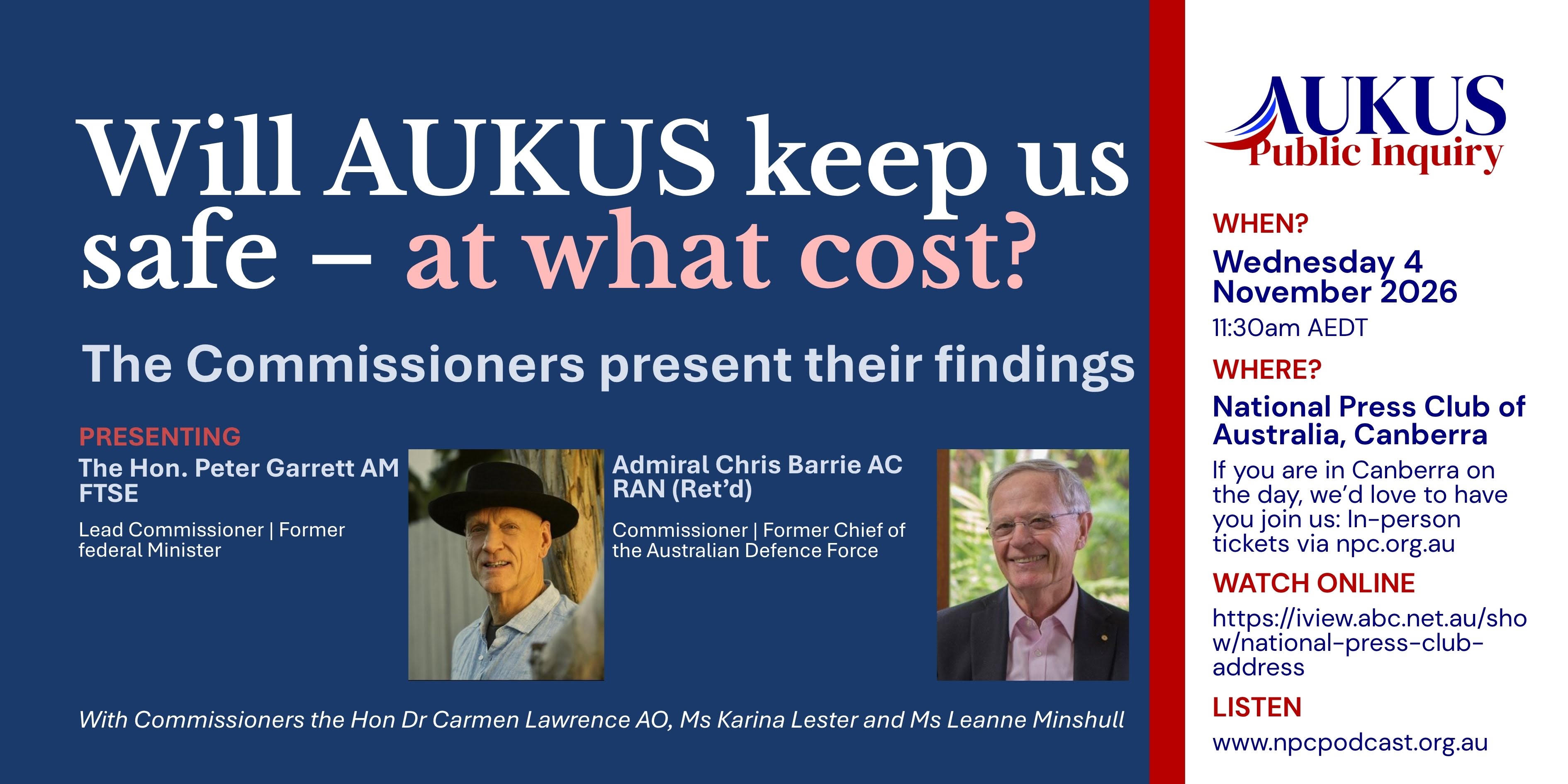
4 November – Will AUKUS keep us safe – at what cost?
the Commissioners of the AUKUS Public Inquiry present their findings at the National Press Club of Australia in Canberra. iview.abc.net.au/show/national-press-club-address
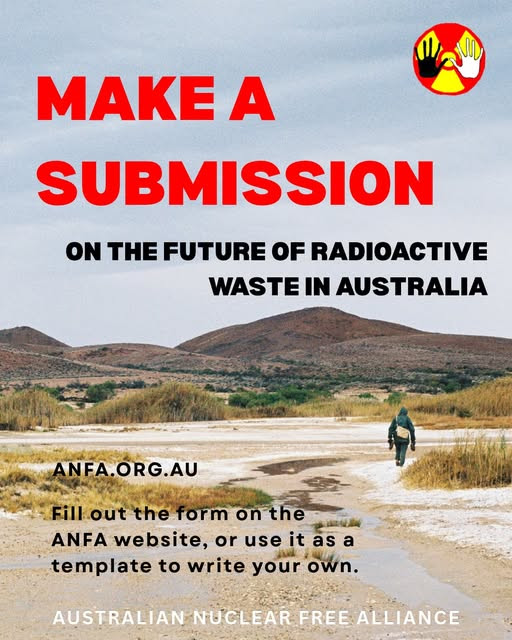
Submissions to the federal government’s new draft framework close on the 13th November 2026.
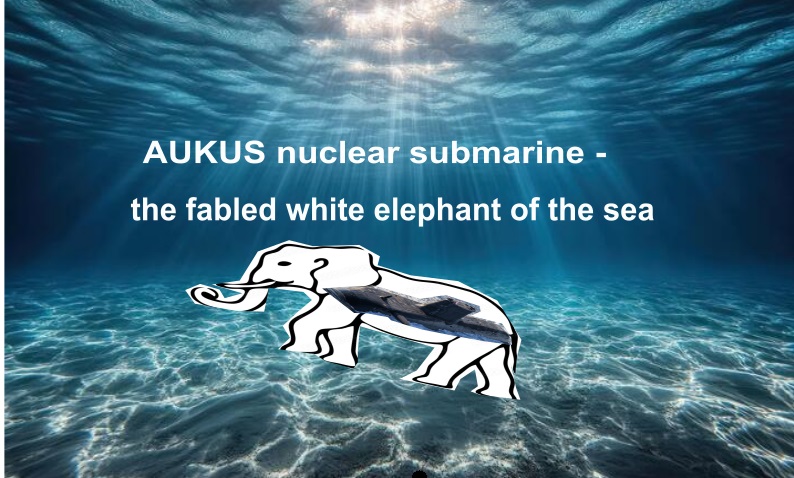
Australians deserve the truth
about
AUKUS – https://aukuspublicinquiry.com/

PETITION – To: Prime Minister Anthony Albanese and the Australian Labor Government

of the week – Australians for War Powers Reform (AWPR)
To see nuclear-related stories in greater depth and intensity

