Australia’s media under threat
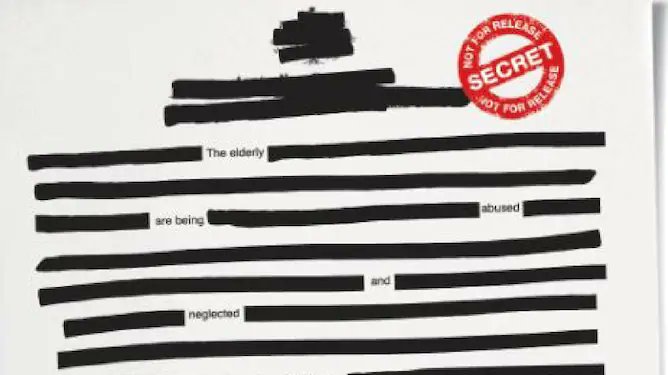
“Media outlets have faced attacks in the form of centralisation of private ownership, funding cuts to public broadcasters, and potential prosecution of journalists, including News Corp journalist Annika Smethurst.”
One of the report’s authors, Geoffrey Watson, SC, former counsel assisting the Independent Commission Against Corruption, said he had been shocked by how quickly the brutal type of politics that evolved in the United States and the United Kingdom, and partly led to the ascendancy of Donald Trump and Boris Johnson, had taken root in Australia.
“One day you see the judiciary attacked and the next someone in the media,” said Mr Watson, who is a director of the Centre for Public Integrity. “On the third day it might be the CSIRO, they even attack our scientists. Some people don’t recognise it as the same problem, but it is all part of the same disease.”
He said the effectiveness of the media in Australia as a watchdog was not only threatened by personal and legal attacks by the government, but by regulations that had allowed ownership of newspapers to be reduced to an effective duopoly.
The report, entitled “Protecting the Integrity of Accountability Institutions”, said that a range of institutions – including the judiciary and the Administrative Appeals Tribunal, the public service, integrity commissions such as the ICAC, statutory authorities such as the Human Rights Commission and the Fair Work Commission, and the CSIRO – had all been targeted in recent years by interested parties seeking to undermine their independence and public trust.
“These institutions are important not only because they ensure actual accountability, transparency and good governance but because they build confidence and trust within the Australian community,” it said. “When this confidence and trust is diminished, divisiveness and conflict increase. This impacts social cohesiveness and the economy, and the welfare of all Australians suffers. Ultimately, as international experience has shown, it is a threat to democracy itself.”
It cited as examples of interference attempts by federal ministers to influence the Victorian Court of Appeal in 2017 terrorism cases, sustained funding cuts and personal attacks on the ABC, and the de-skilling of the public service through the outsourcing of up to 50 per cent of government departments to contractors.
The report listed a series of principles that needed to be respected in order to protect the independence of the threatened institutions. They include protection from political retribution, secure and sufficient funding, secure tenure of senior officials and public access to advice to the government from accountability institutions, as well as the creation of an effective federal integrity watchdog.
The Centre for Public Integrity, a independently funded think tank, was formed earlier this year in part to champion the case for a such a body. The report comes in the midst of a campaign by Australian media, including the Herald and The Age, to defend the public right to information in the face of increasing attempts by government and government agencies to suppress information, prosecute whistleblowers and criminalise legitimate public interest journalism.
ABC challenges the validity of Federal Police raids
 We don’t want any sensationalist headlines,’ AFP
  allegedly told ABC, https://www.theage.com.au/national/we-don-t-want-any-sensationalist-headlines-afp-allegedly-told-abc-20191028-p534ux.htmlby Michaela Whitbourn ,October 28, 2019 —An Australian Federal Police agent told the ABC it wanted to avoid “sensationalist headlines” such as “AFP raids ABC” before it seized a raft of documents from the broadcaster’s Sydney headquarters, the Federal Court has heard.
The ABC is challenging the legal validity of the search warrant authorising the June 5 raid by the federal police on its offices in Ultimo and is seeking the return of documents seized at the time. Continue reading
Australian Federal Police put their case at Federal Court hearing about their raid on ABC
No role’ for implied freedom of political communication in ABC raid decision: AFP, The Age Michaela Whitbourn, October 29, 2019 The ABC had “no basis” for claiming the implied freedom of political communication acted as a handbrake on a court’s power to issue a warrant to the Australian Federal Police to raid its Sydney headquarters, lawyers for the police have told the Federal Court.
The national broadcaster is challenging the legal validity of the search warrant authorising the June 5 raid on its offices in Ultimo and is seeking the return of documents seized at the time.
After a series of preliminary legal fights earlier this year, the full hearing in the Federal Court commenced on Monday and continued on Tuesday with submissions from the federal police.
The ABC is challenging the warrant on four bases, including the decision to grant the search warrant, made by a Local Court registrar, fell foul of the implied freedom of political communication in the Commonwealth Constitution…….
In documents filed in court, the ABC argues the implied freedom is relevant and “investigative journalism in the public interest that relies on information provided to journalists by confidential sources … is fundamental to the maintenance of the Australian system of representative democracy” which is provided for in the Australian Constitution. ……
David William McBride, a former military lawyer, has previously admitted leaking material to the ABC that formed the basis of its reports and has been charged with a range of criminal offences.
A new court order is being abused in order to harass a journalist
YOU CAN’T HANDLE THE TRUTH! Media’s dwindling role in Democracy Panel
Toxic “Safety” orders the latest tool to shut down free speech https://www.michaelwest.com.au/toxic-safety-orders-the-latest-tool-to-shut-down-free-speech/, by Michael West — 25 October 2019 It’s #YourRightToKnow. There are many ways to silence the media: persecution of whistleblowers, defamation threats, contempt of court claims, lobbying of media bosses by powerful interests, injurious falsehood claims, the government’s draconian secrecy laws and police raids on journalists. Michael West reports on the latest abuse against free speech.
Today we can unveil yet another threat to freedom of speech: the Personal Safety Intervention Order (PSIO), a court order which is intended to help victims of domestic violence but instead is being abused as a tool to harass journalists, namely Sandi Keane, Editor of this publication.
It’s #YourRightToKnow. There are many ways to silence the media: persecution of whistleblowers, defamation threats, contempt of court claims, lobbying of media bosses by powerful interests, injurious falsehood claims, the government’s draconian secrecy laws and police raids on journalists. Michael West reports on the latest abuse against free speech.
Today we can unveil yet another threat to freedom of speech: the Personal Safety Intervention Order (PSIO), a court order which is intended to help victims of domestic violence but instead is being abused as a tool to harass journalists, namely Sandi Keane, Editor of this publication.
There have been some reports about the abuse of Personal Safety Intervention Orders in Victoria by those seeking malicious revenge. The editor of this journal, Sandi Keane, is believed to be the first journalist to be silenced in this way. She’s attended court seven times after receiving two Orders and has been threatened with a third. “An Intervention Order is now a sure fire way to shut down a story,” says Keane. “Getting an Intervention Order in Victoria is instant and cost-free (no lawyer required).”
The two essential criteria are for applicants to claim they have been threatened and are suffering mental stress as result.
An Interim Order will be issued immediately against anyone in Australia.
Sandi Keane says the applicants lied about the threats but no evidence was needed until the Final Contested Hearing some 12-18 months later.
The effect on public interest reporting therefore is chilling as most news is time-critical, so by the time the story might eventually be published, its news value might have evaporated.
There are no consequences for abusing the legal system and costs cannot be claimed by the Respondent in the proceedings.
The Applicant can also manipulate the date of the final hearing as a magistrate will only set a date for the Final Hearing if both sides have had a chance to get a lawyer; are ready for the hearing; or agree to the date.
Furthermore, court reporters cannot report on an Intervention Order unless they withhold the name of the court and names of the relevant parties.
So, not only does an Intervention Order trump an Injunction in the High Court with all its attendant costs and adverse publicity, it also ticks the Suppression Order box.
Yet the sting in the tail is that, from the date of the Interim Order, all references to the “protected person” must be deleted from any media site including social media (Condition 10).
Journalists can forget about getting another colleague to publish the story as this is prohibited under Condition 8.
Breaching the order risks a criminal conviction or prison sentence.
Journalists union, the Media Arts and Entertainment Alliance (MEAA), has met with the Victorian Attorney General with the hope of amending the Personal Safety Intervention Order Act to protect freedom of the press. In a letter to the Chief Magistrate, the MEAA wrote:
“This is a dangerous assault on press freedom, has a chilling effect on legitimate journalism in the public interest and undermines the public’s right to know.”
Editor’s Note:
Sandi Keane’s investigation was into the fraudsters operating in the pedigree dog industry. She was successful in contesting one of these orders. The unsuccessful Applicant in this case had served a jail sentence for fraud and was also found guilty of arson. The other applicant also has a conviction for fraud. These two people have taken out five PSIOs of which we know. The others were granted against people who had taken legal action against them, made an official complaint or given evidence against them.
The rise of PSIOs, and their abuse, coincides with the rise in other forms of suppression of free speech in Australia, by all three branches of government: the judiciary, the executive and the legislature.
It’s time to enshrine free speech in the constitution such as is the case in the US. You can take action to stand up for your right to know. Check out MEAA’s Take Action site here.
Attorney General Christian Porter backs laws that restrict journalists’ reporting
|
Material from raid on journalist’s home ‘may be used to prosecute’, The Age, By Dana McCauley October 25, 2019 — Attorney-General Christian Porter has launched an extraordinary intervention in a High Court case over raids by Australian Federal Police (AFP) on News Corp journalist Annika Smethurst’s home, asking the court to block a move to destroy material that may be used for future prosecution.
Mr Porter, who has sought to reassure media companies fighting for press freedom that he is “seriously disinclined” to approve prosecutions over public interest journalism, said in a joint submission to the court that the AFP was still weighing up whether to refer the matter to prosecutors. “If charges are laid, the data seized from Ms Smethurst’s phone may well be important. In those circumstances, the court should not order that the data be destroyed,” Mr Porter’s joint submission with the Australian Federal Police said. “It should leave it to the trial judge in any future criminal prosecution to determine whether that material will be admitted.” Australian media outlets – including Nine, publisher of The Sydney Morning Herald and The Age – have united with a ‘Right to Know’ campaign to warn against growing censorship, calling for reforms to shield whistleblowers and journalists from prosecution. Mr Porter has asked the court to uphold the validity of the AFP raid warrant and secrecy laws that restrict journalists’ reporting, which News Corp and Ms Smethurst are challenging. AFP officers raided Ms Smethurst’s home in June over a story published in the Sunday Telegraph a year earlier, in which she reported on a government plan to allow the Australian Signals Directorate to spy on Australian citizens for the first time. News Corp and Ms Smethurst argue the raid breached the implied freedom of political communication in Australia’s Constitution because the prohibition on publishing classified information was not limited to “inherently harmful” disclosures and gave the government “unconstrained discretion” to protect information, even if it was “merely embarrassing”…….. The Parliamentary Joint Committee on Intelligence and Security inquiry into press freedom will report at the end of November……… On Friday, the information watchdog launched an investigation into the Home Affairs department’s compliance with freedom of information laws after it emerged the department was failing to release documents within the legal deadline in one out of four cases. https://www.theage.com.au/politics/federal/material-from-raid-on-journalist-s-home-may-be-used-to-prosecute-20191025-p534cr.html |
|
Judge denies Julian Assange a delay in extradition hearings
|
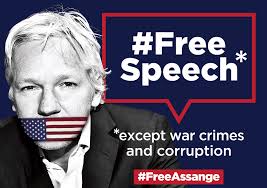
WikiLeaks founder Julian Assange denied delay to extradition hearing by London judge, https://www.abc.net.au/news/2019-10-22/wikileaks-founder-assange-in-court-to-fight-extradition/11625042 The full extradition hearing of WikiLeaks founder Julian Assange will go ahead in February 2020 after a London judge declined a request by his lawyers to delay proceedings by three months.
Key points:
The 48-year-old appeared in a packed court on Monday to fight extradition to the United States, where he faces 18 counts, including conspiring to hack into Pentagon computers and violating an espionage law. Britain’s former Home Secretary Sajid Javid signed an order in June allowing Assange to be extradited to the US, where authorities accuse him of scheming with former Army intelligence analyst Chelsea Manning to break a password for a classified government computer. He could spend decades in prison if convicted. Assange and his legal team said he needed more time to prepare his case, but failed to convince District Judge Vanessa Baraitser that a slowdown was justified. The full extradition is still set for a five-day hearing in late February, with brief interim hearings in November and December. Assange — clean shaven, with his silvery-grey hair slicked back — defiantly raised a fist to supporters who jammed the public gallery in Westminster Magistrates Court. After the judge turned down his bid for a three-month delay, Assange, speaking very softly and at times appearing to be near tears, said he did not understand the proceedings. He said the case was not “equitable” because the US government had “unlimited resources” while he did not have easy access to his lawyers or to documents needed to prepare his battle against extradition while confined to Belmarsh Prison on the outskirts of London. Lawyer Mark Summers, representing Assange, told the judge that more time was needed to prepare Assange’s defence against “unprecedented” use of espionage charges against a journalist. Mr Summers said the case has many facets and would require a “mammoth” amount of planning and preparation. He also accused the US of illegally spying on Assange while he was inside the Ecuadorian Embassy seeking refuge, and of taking other illegal actions against the WikiLeaks founder. “We need more time,” Mr Summers said, adding that Assange would mount a political defence. Mr Summers said the initial case against Assange was prepared during the administration of former president Barack Obama in 2010 but wasn’t acted on until Donald Trump assumed the presidency. He said it represented the US administration’s aggressive attitude toward whistleblowers. Representing the US, lawyer James Lewis opposed any delay to the proceeding. The case is expected to take months to resolve, with each side able to make several appeals of rulings. The judge said the full hearing would be heard over five days at Belmarsh Court, which would make it easier for Assange to attend and contains more room for the media. Assange’s lawyers said the five days would not be enough for the entire case to be heard. Health concerns for Assange Outside the courthouse, scores of his defenders — including former London mayor Ken Livingstone — carried placards calling for Assange to be released. Wikileaks editor-in-chief Kristinn Hrafnsson said it was a “big test case for journalism worldwide”. “This should be thrown out immediately because this is a total violation of a bilateral treaty between the US and the United Kingdom which basically states that you cannot extradite someone for political offences, and this is a political case,” he said. Regarding Assange’s health, Mr Hrafnsson said he was in a “stable condition” but was living in “de facto solitary confinement”. “After three or four weeks it starts to bite in and you can feel that he is suffering,” he said. Assange supporter Malcolm, who did not give his surname, told the ABC there was “not nearly enough” people actively campaigning for Assange’s freedom, and he wanted to see the whole street blocked at the next hearing. Another supporter accused the Australian government of failing to “defend their own citizen”. The crowd outside court was largely well-behaved but briefly blocked traffic when a prison van believed to be carrying Assange left court. |
|
14 Regional News Media join the campaign for press freedom
|
Australian Community Media joins fight for press freedom and your right to know, The Islander, 21 Oct 19, Today, Australian Community Media joins other media outlets in an unprecedented campaign to defend growing threats to freedom of the press in Australia.
The front pages of all 14 of ACM’s daily newspapers, like other leading newspapers around the country, have been symbolically censored to highlight the need to fight for the public’s right to know in the face of increasing attempts by government and government agencies to suppress information, prosecute whistleblowers and criminalise legitimate public interest journalism.
In your nation’s capital, the front page of The Canberra Times today features a redacted document and asks the question: “When government keeps the truth from you, what are they covering up?” The powerful message is repeated on the front pages of the Newcastle Herald, The Border Mail and, in Victoria, The Courier in Ballarat, The Standard in Warrnambool and the Bendigo Advertiser. Front-page news has also been censored in The Examiner and The Advocate in Tasmania as well as in NSW’s Illawarra Mercury, The Northern Daily Leader in Tamworth, The Daily Advertiser in Wagga Wagga, Bathurst’s Western Advocate, Dubbo’s Daily Liberal and the Central Western Daily in Orange. Australia’s Right to Know, a coalition of leading media organisations and industry groups including ACM, has launched a website, yourrighttoknow.com.au, to illustrate the dangers of increasing federal government secrecy, and to urge Australians to stand up for their right to know. The website showcases public interest journalism that has exposed banking malpractice, neglect and abuse in aged-care homes and the Australian Tax Office’s power to take money out of people’s bank accounts without their knowledge. The #righttoknow campaign will advertise across print, digital, radio and television, including commercials aired for the first time across all TV channels on Sunday night. The campaign follows June’s Australian Federal Police raids on the ABC and the home of News Corp journalist Annika Smethurst. Both media organisations are still awaiting confirmation of whether the journalists targeted will face prosecution. Research commissioned by the media coalition shows that while 87 per cent of Australians value a free and transparent democracy where the public is kept informed, only 37 per cent believe that it’s happening……..https://www.theislanderonline.com.au/story/6447711/its-time-to-fight-for-your-right-to-know/?cs=1777&fbclid=IwAR3Ae84LVpOPIrkyRGTee5XkyFqWCw-3w3aKzN_1B3s34nUVOTD-2yrlMPU |
|
A Media Freedom Act for Australia?
work, https://theconversation.com/australia-needs-a-media-freedom-act-heres-how-it-could-work-125315?utm_medium=email&utm_campaign=Latest%20from%20The%20Conversation%20for%20October%2022%202019%20-%201440613637&utm_content=Latest%20from%20The%20Conversation%20for%20October%2022%202019%20-%201440613637+CID_dab722b5Rebecca Ananian-WelshSenior Lecturer, TC Beirne School of Law, The University of QueenslandOctober 22, 2019 Australians picked up their morning papers yesterday to find heavily blacked-out text instead of front-page headlines. This bold statement was instigated by the “Your Right to Know” campaign, an unlikely coalition of Australian media organisations fighting for press freedom and source protection.A key reform advocated by a range of organisations and experts – including our research team at the University of Queensland – is the introduction of a Media Freedom Act. Unlike human rights or anti-discrimination legislation, there is no clear precedent for such an act.
So what exactly might a Media Freedom Act look like and is it a good idea?
Raids and response
It was the June raids on the home of News Corp journalist Annika Smethurst and the ABC’s Sydney headquarters that revealed the fragile state of press freedom in Australia. Two parliamentary inquiries into press freedom are on foot, with public hearings before the Senate committee starting last Friday.
Parliament will soon face the question: can we protect national security without sacrificing that cornerstone of liberal democracy, press freedom? If so, how?
Home Affairs Minister Peter Dutton’s immediate response to the raids was to state that journalists would be prosecuted if they received top-secret documents. A month later, Dutton issued a ministerial directive to the AFP that emphasised the importance of press freedom and the need for restrained action against journalists.
Attorney-General Christian Porter’s subsequent directive was more moderate, ensuring that he would have the final say on whether journalists would be prosecuted on the basis of their work “in a professional capacity as a journalist”.
These directives may reflect a burgeoning appreciation within government of the importance of the press in ensuring democratic free speech and accountability.
However, the laws that undermine press freedom by targeting journalists and their sources remain on the books. These laws include many of the now 82 (and counting) national security laws enacted since September 11 2001. This is more than anywhere else in the world and some of these laws grant the government uniquely severe powers of detention and interrogation.
A Media Freedom Act could serve three key roles, making it an appropriate and advantageous option in the protection of national security, press freedom and democracy.
Recognise the fourth estate
First, a Media Freedom Act would recognise and affirm the importance of press freedom in Australia. This recognition would support the fourth estate role of the media and demonstrate Australia’s commitment to democratic accountability and the rule of law. It would carry the weight of legislation rather than the relative flimsiness of ad hoc directives.
In this way, a Media Freedom Act would represent a clear commitment to the public’s right and capacity to know about how they are governed and power is exercised.
The act would also recognise that press freedom is not an absolute, but may be subject to necessary and proportionate limitations.
A culture of disclosure
econd, it would support a transition from a culture of secrecy to a culture of disclosure and open government across the public sector. This role could be served by requiring the public sector (including law enforcement and intelligence officers) to consider the impact of their decisions on press freedom and government accountability and to adopt the least intrusive option that is reasonably available.
This requirement echoes Dutton’s directive. It is already part of the law of Victoria, the ACT and Queensland, where free expression is protected within those jurisdictions’ charters of rights. Like the charters, a federal Media Freedom Act would aim to bring about a cultural shift and contribute to the gradual rebuilding of trust between government and the media.
At federal level, the parliament must already consider the impact of a new law on freedom of expression under the Human Rights (Parliamentary Scrutiny) Act. A Media Freedom Act could reinforce the importance of parliament and the public sector considering the impact on press freedom when it debates and enacts new laws.
Journalism is not a crime
Third, and most importantly, a Media Freedom Act would protect press freedom by ensuring legitimate journalism was excluded from the scope of criminal offences.
It is important that this be in the form of an exemption rather than a defence. This has no substantial legal impact. But, crucially, an exemption conveys that the journalist had not engaged in criminal wrongdoing.
It also places the onus on the prosecution to prove the exemption doesn’t apply. This therefore alleviates the chilling effect on press freedom caused by the threat of court action.
The framing of the protection will attract debate (what, after all, is a journalist? And what is journalism?).
A good starting point is the existing journalism defence to the general secrecy offence in section 122.5 of the Criminal Code. For that defence to apply, the person must have:
- dealt with the information in their capacity as a “person engaged in the business of reporting news, presenting current affairs or expressing editorial or other content in news media”
- have reasonably believed that engaging in the conduct was in the public interest.
A single act or many amendments?
A Media Freedom Act is not a panacea; it would not avoid the need for a detailed review of Australia’s legal frameworks for their impact on press freedom.
In particular, protections for private sector, public sector and intelligence whistleblowers need attention. Suppression orders and defamation laws also have a serious chilling effect on Australian journalism. However, the present approach of considering dozens of individual schemes for their discrete impact on press freedom, and seeking technical amendments to each to alleviate that impact, is cumbersome, illogical and destined to create loopholes.
Australia’s national security laws are uniquely broad and complex. At present, an inconsistent array of (notably few) journalism-based defences and exemptions from prosecution are scattered across these laws. Inconsistency leads to confusion, and overlapping offences make it even more difficult for journalists to know when they are crossing the line into criminal conduct.
The imperative to protect press freedom is fundamental and deserving of general recognition and protection. In light of these concerns, our international obligations and the rule-of-law concerns for legal clarity, consistency and proportionality, it is time for a Media Freedom Act.
Australian media push for press freedom (pity they’re not helping Julian Assange, though)
|
‘A culture of secrecy’: what is the Right to Know campaign about? Media companies say their journalists are being stopped from holding the powerful to account. What’s stopping them? What do they want government to do about it? Why should you care? The Age By Fergus Hunter, OCTOBER 20, 2019 All of Australia’s major media organisations have joined forces to call for reforms to protect public interest journalism in Australia. Australia’s Right to Know coalition includes Nine, News Corp, the ABC, SBS, The Guardian, and journalists’ union the Media, Entertainment and Arts Alliance. The campaign, an unprecedented show of unity between competitors, is pushing for stronger protections for media freedom after years of perceived deterioration. The outlets are seeking to combat a growing culture of secrecy that restricts journalists’ ability to hold the powerful to account.
Did anything, in particular, spark this?Media organisations in Australia have long been concerned about threats to journalism, but the issue exploded into the public consciousness following two consecutive police raids earlier this year. On June 4, police conducted a six-hour raid on the home of News Corp political journalist Annika Smethurst over an April 2018 story. The story had revealed a proposal for electronic intelligence agency the Australian Signals Directorate to take on an expanded domestic role and that figures inside government were concerned about the idea.
Did anything, in particular, spark this?Media organisations in Australia have long been concerned about threats to journalism, but the issue exploded into the public consciousness following two consecutive police raids earlier this year. On June 4, police conducted a six-hour raid on the home of News Corp political journalist Annika Smethurst over an April 2018 story. The story had revealed a proposal for electronic intelligence agency the Australian Signals Directorate to take on an expanded domestic role and that figures inside government were concerned about the idea.
What was the government’s response?Prime Minister Scott Morrison and senior colleagues defended the police raids as the independent actions of an agency doing its job to protect national security. They have responded to the broader furore over press freedom by calling a parliamentary inquiry and issuing directives to agencies emphasising the importance of a free press. The inquiry, conducted by the intelligence and security committee, is examining the impact of national security laws on press freedom. This inquiry has heard from media outlets, government officials and independent experts. It is being conducted alongside a more wide-ranging press freedom inquiry by a Senate committee. Officials, including senior figures at the Australian Security Intelligence Organisation and the Department of Home Affairs, have defended the need for a high level of secrecy, criticised media coverage and argued that some of the recommendations put forward by media organisations would threaten national security. Ministers and officials have declined to rule out pursuing charges against the News Corp and ABC journalists targeted in the raids.
Home Affairs Minister Peter Dutton has issued a directive to the federal police stating they should consider the “importance of a free and open press” and broader public-interest implications before involving media outlets in investigations. Attorney-General Christian Porter also instructed Commonwealth prosecutors not to charge journalists under certain secrecy laws without his approval. Porter has said he would be “seriously disinclined” to authorise the prosecutions. Privately, the Morrison government has indicated a scepticism that media freedom is something that grabs the public’s attention. There is also hostility within the Coalition towards any changes seen as weakening national security. With these political and policy factors in mind, the government does not yet seem convinced of the need for sweeping law reform. What do the media companies want to achieve?Australia’s Right to Know coalition has six key proposals for “necessary and urgent” reform. The changes would strengthen rights and protections for public-interest journalism.
|
|
New involvement of Attorney General in press freedom
The order could shield News Corp’s Annika Smethurst and the ABC’s Dan Oakes and SamClark who were named in Australia Federal Police (AFP) warrants used during raids in June and have not yet been cleared of any criminal charges. The move, however, has ignited debate about an elected politician’s direct involvement in police matters and press freedom.
Now, Smethurst, Oakes and Clark can only be charged if the Attorney-General gives written consent to the charges. A directive was signed to the Commonwealth Director of Public Prosecutions (CDPP) in September, the details of which have only come to light this week. The decision follows legal challenges from both the ABC and News Corp Australia over the legitimacy of the raids and the warrants used.
“The direction means where the CDPP independently considers that there is a public interest in a prosecution for one of the relevant offences involving a journalist, the consent of the Attorney-General will also be required as a separate and additional safeguard,” Porter said in a statement.
“This will allow the most detailed and cautious consideration of how an allegation of a serious offence should be balanced with our commitment to freedom of the press.
“I have previously said that I would be seriously disinclined to approve prosecutions of journalists except in the most exceptional circumstances and would pay particular attention to whether a journalist was simply operating according to the generally accepted principles of public interest journalism.”
Porter hasn’t yet commented on the cases regarding Smethurst, Oakes or Clark.
An ABC spokesperson called the directive a ‘welcome step’, but said the organisation continues to look forward to the results of the two press freedom inquiries which have been triggered by the raids.
“The Attorney General’s directive is a welcome step. It is one plank in a raft of legislative reform that the ABC identified in its submissions to the two concurrent media freedom parliamentary inquiries,” said the spokesperson.
“The ABC looks forward to seeing the recommendations from those inquiries as well as an expeditious conclusion to the current AFP investigation into ABC journalists.”
“The direction issued by The Attorney General is unremarkable. They make the Commonwealth Department of Public Prosecution seek the Attorney General’s consent to take legal action against journalists in a few more instances but they offer no comfort for journalists disclosing information in the public interest that they are safe from prosecution for doing their job,” said Reid.
“This so-called safeguard falls a long way short of what media organisations are seeking to recognise the role of journalists to keep the public informed.”
The Law Council of Australia has also weighed in on the move, with president Arthur Moses SC citing grave concerns over the Attorney General’s involvement with press freedom.
“I have grave concerns that this sort of direction undermines the independence of the CDPP by requiring her to obtain the consent of the Attorney General before prosecuting an offence,” Moses said.
“What will enhance press freedoms in this country is a proper review of our laws to ensure that the actions of journalists doing their job as a watchdog of government are not criminalised and put at risk of prosecution.
“I have no doubt the Attorney General would act in good faith. But it puts the Attorney General – a politician – in the position of authorising prosecutions of journalists in situations where they may have written stories critical of his government.
“It creates an apprehension on the part of journalists that they will need to curry favour with the government in order to avoid prosecution. The media must be able to lawfully report on matters of public interest without fear or favour.
“Journalists should not need to fear prosecution because of a story that embarrasses government.”
The government seeks to intimidate the media
The national security bureaucracy doesn’t want a police state. It is more ambitious than that. The hope is to return Australian culture to the conformity and political quietude of the 1950s.
Now the government seeks to intimidate the media through laws and criminal prosecutions into a deferential posture once more, with editors becoming habituated to asking permission before they publish.
Clinton Fernandes, The Witness K case and government secrecy https://www.thesaturdaypaper.com.au/opinion/topic/2019/09/28/the-witness-k-case-and-government-secrecy/15695928008833 In recent months, I have sat in court as an observer as Canberra lawyer Bernard Collaery has faced charges over disclosing information about the Australian Secret Intelligence Service (ASIS). On Thursday, Collaery’s case was back before the Supreme Court of the Australian Capital Territory. It is a good time, then, to consider this case and the national security state’s assault on Australia’s democratic culture more generally.
In 2004, ASIS installed listening devices in the government offices of newly independent Timor-Leste to eavesdrop on its internal discussions during oil and gas negotiations with Australia. The espionage operation occurred while Alexander Downer and John Howard, who were respectively foreign minister and prime minister at the time, said they were deploying Australia’s resources against extremist Muslim terrorism in Indonesia.
But the Timor operation diverted precious ASIS resources away from the war on terror. On September 9, 2004, Jemaah Islamiyah terrorists succeeded in bombing the Australian embassy in Indonesia. To make matters worse, the Timor bugging occurred under cover of an aid project, jeopardising the safety of Australian aid workers everywhere.
A senior ASIS officer, known only as Witness K, expressed concerns about the Timor bugging operation. His career is believed to have suffered as a consequence. He approached the inspector-general of intelligence and security and obtained permission to speak with a lawyer – Bernard Collaery. Both men are now on trial: Collaery in the ACT Supreme Court, where he will exercise his constitutional right to a jury trial, and Witness K in the ACT Magistrates Court……. Continue reading
Australia: Freedom of Information and the Nuclear Industry- theme for October 19
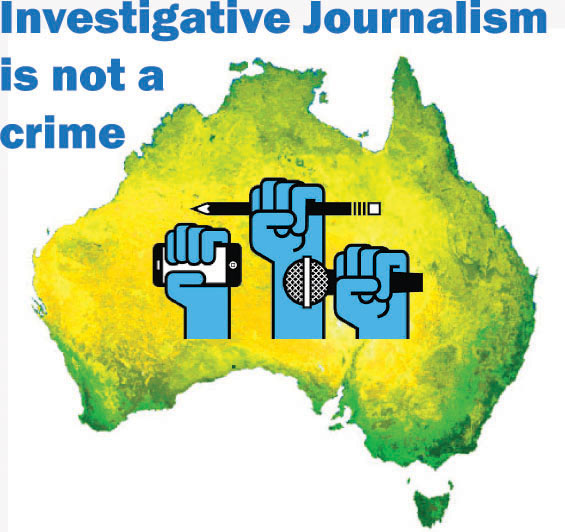
Australia’s press freedom is under threat as never before.
It’s always been pretty bad, with Murdoch media controlling at least 70% of media outlets, and with Liberal governments trying to strangle the ABC,
But now – it is at crisis point. We have an Australian citizen, Julian Assange, held in solitary confinement in London, for the crime of skipping bail. UK and complicit Australia want to have him extradited to USA, to face life imprisonment for ‘treason”. What was his “treason”? Publishing the facts, revealed by Bradley Manning, on USA military atrocities. i.e. investigative journalism. (Manning also in prison)
We also have federal police raiding ABC offices and a journalist’s home. We have draconian security laws, and prosecutions of whistleblowers Richard Boyle, David McBride and Witness K.
 Australia is fast developing a culture of press intimidation by government.
Has this anything to do with the nuclear industry? Not obviously directly. Not yet. But government and industry have always tried to see that the harms from uranium mining and nuclear bomb testing were covered up. Few Australians would have heard of the long term push by some politicians and defence industry personnel, for nuclear weapons.
As the global nuclear industry revs up its dishonest spin for “new nuclear”, and as climate change impacts this country, Australia is a sitting duck for the lie that “nuclear solves climate change”. And for the push for even more involvement in America’s nuclear weapons system. And for involvement in 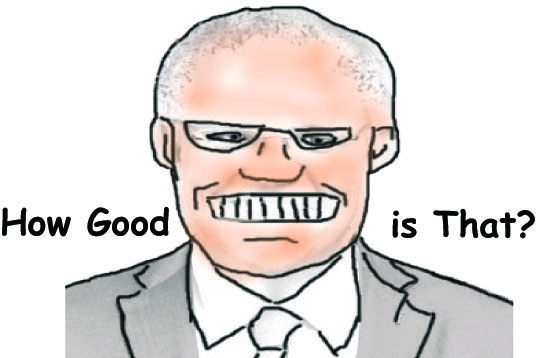 Trump’s Nuclear Weapons in Space programme.
We now have a government without any policy (unless you count “having a budget surplus” as a policy) Scott Morrison can’t forever shout “How good is that?” about everything. Journalists that criticise government actions are under scrutiny. It doesn’t bode well for any public policy area. And that certainly includes matters nuclear. more https://www.meaa.org/campaigns/press-freedom/
Found – historic film of Aboriginal resistance to uranium mining
Kakadu uranium protest documentary Dirt Cheap unearthed by Northern Territory Library, ABC News By Matt Garrick 18 Sept 19 The rediscovery of an old VHS tape, left forgotten on the shelves of the Northern Territory Library, has unearthed a tense and important piece of Australian history.
Key points:
- The 1980 documentary Dirt Cheap showcased the Mirarr people’s fight against uranium mining
- The Northern Territory Library recently hunted down the only digital copy of the documentary so it could be shown at a film festival
- Filmmaker Ned Lander says the movie created a stir at the time of its release
The rare copy of the nearly 40-year-old documentary Dirt Cheap, which details the early pushback against uranium mining in Kakadu National Park, was practically unwatchable due to its age……..
The film documented the concerns of the Mirarr people during what was a tense period of negotiation in the lead-up to the 1979 Ranger Uranium Mining Agreement.
It also showcased the pressures and broken promises the traditional owners faced. “It was very, very apparent to us that people were not ready to sign the agreement in relation to mining, and this was being done under pressure.
Mirarr resistance inspires protests around nation
Against the push of government and business interests, the Mirarr stood resolute in their bid to protect their land.
“As a child growing up I saw the struggle of my family, including my grandfather — they [had] been struggling,” traditional owner Jimmy Nabanardi-Mudjandi said.
I’m really proud of them, but it’s sad because they’re not here to see what the new future of Jabiru’s gonna be.”
The resistance from the Mirarr had a flow-on effect around the nation.
Banner-waving protesters took to the streets in Melbourne and Sydney in great numbers, scenes which Dirt Cheap captures in vivid detail.
“Mirarr people got major support from around Australia, from around the whole nation,” Mr Nabanardi-Mudjandi said.
Next stage of uranium mining looms
In the decades since the film’s release, uranium has been mined at Kakadu, but the Ranger mine is now expected to wind up in 2021.
Mr Nabanardi-Mudjandi said it was vital the land was protected during its rehabilitation.
“We are watching them, what they’re doing,” he said.
Mr Nabanardi-Mudjandi will be a special guest when Dirt Cheap screens as part of the Darwin International Film Festival at the Northern Territory Library at 5:30pm on Wednesday. Contact Matt Garrick https://www.abc.net.au/news/2019-09-18/northern-territory-film-uranium-protests-unearthed-for-festival/11519914
Media silence on Julian Assange’s imprisonment encourages governments to intimidate journalists
 All around the world, Assange’s treatment seems to have given the green light to governments to intimidate and hassle journalists. Australian police, for instance, recently conducted a raid on journalist Annika Smethurst’s home. Smethurst had not long before that revealed that the Government had been secretly requesting permission to spy on its own citizens.
He must not be extradited’ – Vivienne Westwood on Julian Assange
The media blackout on Julian Assange’s imprisonment https://independentaustralia.net/business/business-display/the-media-blackout-on-julian-assanges-imprisonment,13094 By Mint Press News | 11 September 2019, The same media that has spent years dragging Assange’s name through the mud is now engaging in a blackout on his treatment.
If you are waiting for corporate media pundits to defend freedom of the press, you’re going to be disappointed.
The role of journalism in a democracy is publishing information that holds the powerful to account — the kind of information that empowers the public to become more engaged citizens in their communities so that we can vote in representatives that work in the interest of “we the people.”
There is perhaps no better example of watchdog journalism that holds the powerful to account and exposes their corruption than that of WikiLeaks, which exposed to the world evidence of widespread war crimes the U.S. military was committing in Iraq, including the killing of two Reuters journalists; showed that the U.S. Government and large corporations were using private intelligence agencies to spy on activists and protesters; and revealed how the military hid tortured Guantanamo Bay prisoners from Red Cross inspectors.
It’s this kind of real journalism that America’s First Amendment was meant to protect but engaging in it has instead made WikiLeaks publisher Julian Assange the target of a massive smear campaign for the last several years — including false claims that Assange is working with Vladimir Putin and the Russians and hackers, as well as open calls by corporate media pundits for him to be assassinated. Continue reading
‘All of us are in danger’: John Pilger delivers warning from Julian Assange
Today, in further flagrant and conscious censorship, no British, Australian or American newspaper is carrying a report on Waters’ initiative and the rally.
Roger Waters and John Pilger make powerful defence of Julian Assange in London, WSWS 3 September 2019
Up to 1,000 people gathered last night in central London to hear internationally acclaimed musician Roger Waters deliver a musical tribute to imprisoned WikiLeaks’ publisher Julian Assange.
Performing outside the UK Home Office, just miles from Belmarsh Prison where Assange is being held as a Category A prisoner, Waters sang Pink Floyd’s iconic song “Wish You Were Here.” He was accompanied by guitarist Andrew Fairweather Low.
Supporters filled the forecourt and pavement on both sides of Marsham Street, many carrying banners and placards demanding Assange’s freedom and the release of imprisoned whistleblower Chelsea Manning. Spontaneous chants rang out, “Free, Free Julian Assange!” and “There’s only one decision: No extradition!”
John Pilger, a veteran filmmaker and investigative journalist and a personal friend of Assange, opened the event with an impassioned speech. Pointing in the direction of the Home Office, Pilger told the crowd: “The behaviour of the British government towards Julian Assange is a disgrace. A profanity on the very notion of human rights. It’s no exaggeration to say that the treatment and persecution of Julian Assange is the way that dictatorships treat a political prisoner.”
John Pilger, a veteran filmmaker and investigative journalist and a personal friend of Assange, opened the event with an impassioned speech. Pointing in the direction of the Home Office, Pilger told the crowd: “The behaviour of the British government towards Julian Assange is a disgrace. A profanity on the very notion of human rights. It’s no exaggeration to say that the treatment and persecution of Julian Assange is the way that dictatorships treat a political prisoner.”………
Pilger warned that Assange’s condition was a matter of grave concern. “I worry a great deal about him if he spends many months in Belmarsh,” he said. “The regime there is imposing a kind of isolation on him that is deeply psychologically wounding. He’s in a small cell in the hospital ward. They seem not to know what to do with him. Of course, what they should be doing is letting him out. He certainly should not be in a maximum-security prison.”…….
Underscoring the point made by Kristinn Hrafnsson about the mainstream media, no major British television station reported on the event on their evening news broadcasts. Today, in further flagrant and conscious censorship, no British, Australian or American newspaper is carrying a report on Waters’ initiative and the rally.
Via social media and publications such as the WSWS, however, reports and video of Waters’ performance, Pilgers’ speech and the statements of Gabriel Shipton are circulating widely and will be viewed by hundreds of thousands of people internationally over the coming days.
1 This month

of the week – Australians for War Powers Reform (AWPR)
To see nuclear-related stories in greater depth and intensity
 Antinuclear