Scott Morrison wants to shut down moderate climate action group, Market Forces, BECAUSE IT’s TOO EFFECTIVE
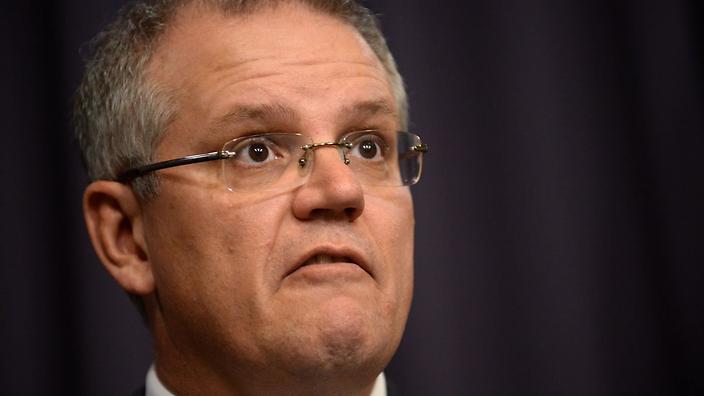 Inside Market Forces, the small climate group Scott Morrison wants to put out of business, From humble beginnings, Market Forces is now in the crosshairs of the Coalition’s war on environmental boycotts, Guardian, Adam Morton Environment editor @adamlmortonMon 11 Nov 2019 When Market Forces, a small climate activist group, was singled out as the target of the government’s push to stop environmental campaigns that advocate boycotts of fossil-fuel companies, its leader was briefly taken aback but not disappointed.
“You know you’re doing something right when the Morrison government tries to bring you down,” Julien Vincent, the group’s executive director and founder, says from its base in Melbourne. “It’s unpleasant, but it’s only happening because we are getting results.”
From Vincent’s perspective, those results include the Commonwealth Bank and insurers QBE, Suncorp and IAG pledging they would soon no longer work with or underwrite developments that use thermal coal, and the group’s part in the campaign that frustrated attempts by Indian company Adani to find investors for its proposed Carmichael coalmine.
In terms of winning the government’s attention, it is likely the results also included a recent profile in the Australian Financial Review, the newspaper of the business community. Under the headline “How activists pushed CBA out of coal in five years”, it talked up Market Forces’s successes and methods, including a deal-making meeting with the bank’s chairwoman, Catherine Livingstone.
Coincidentally or not, the attorney general, Christian Porter, last week nominated Market Forces as a poster child “radical activist group” trying to impose its will on companies through coordinated harassment and threats of boycotts. Porter said it was “simply not OK” that mining and resources businesses were being targeted on ideological grounds by activists that wished them financial harm.
It followed Scott Morrison telling the Queensland Resources Council that activists who campaigned for secondary boycotts against miners and small businesses that work with resources companies potentially posed a “more insidious threat” to jobs and the economy than street protests……
With the details in the wind, Morrison’s push has led to some confusion among Coalition MPs about what is proposed and how it will avoid impinging on freedom of expression, though none spoke publicly. The Business Council of Australia has backed the prime minister; legal academics have warned changes to reduce the influence of environmental campaigns could breach the constitution.
Environmental and civil liberty groups noted the apparent hypocrisy in the government floating a secondary boycott ban given Canavan had urged his constituents to stop doing business with Westpac after it ruled out financing the Adani mine …… https://www.theguardian.com/environment/2019/nov/11/inside-market-forces-the-small-climate-group-scott-morrison-wants-to-put-out-of-business
Australia’s over-exploited water supply – an issue being ignored
|
Although Australia is a land often devastated by drought, if you live in the city, it’s very unlikely that you’ll turn on the tap and find no water comes out.Even during the Millennium Drought nearly a decade ago, we avoided coming close to a Cape Town-style ‘Day Zero’. And given about 70 per cent of Australians live in major cities, it’s easy to forget just how good most of us have it. Whether it’s for cooking, drinking or bathing, we don’t have to collect water from a well, or pump it ourselves, or worry about it being dirty or unsafe. The sources of our water supplies are out of sight, out of mind. But it hasn’t always been that way — and we need to stop and think about where it comes from. If we don’t, we risk being unprepared for when the next prolonged drought comes around. ‘Liquid sausage meat’ It’s important to note that not all Australians have access to safe drinking water: spare a thought, for example, for remote Indigenous communities, or for the people trucking drinking water to small drought-stricken towns…….. [The author gives a history of Australia’s water sources, water use, and restrictions] We have to start thinking about our waterMore than a decade has passed since those tough restrictions on household water use. As our cities grow and the climate changes, it’s no longer reasonable to wash our hands of the water question. For our hotter and drier cities of the future, building more dams won’t be the answer. Seawater desalination plants aren’t without their problems: desal is energy-intensive and its salty brine is damaging to the local marine environment. Although some cities like Perth are making headway with wastewater recycling, the cheapest and easiest option for all of us is to change our water behaviour, and to better live within our means. Relying on technology alone is not the answer. The development of urban water supplies and sanitation over the past century or so has brought incredible benefits to our lives, while technology and infrastructure allows us to consume that water in the blink of an eye. According to the Australian Bureau of Statistics, households in the Northern Territory (349kL) and Western Australia (241kL) use the most water each year, while Victoria (166kL) and Tasmania (147kL) use the least. Climate, soils and pricing all play a role here, but these statistics suggest that some cities have much thirstier habits than others. Thinking more carefully about where our water comes from — and at what cost — is vital to making sense of living in Australian cities now and in the future. Dr Ruth Morgan is an environmental historian at Monash University, and an ABC Top 5 humanities scholar for 2019.https://www.abc.net.au/news/2019-11-11/changing-australian-water-attitudes-for-conservation/11647258 |
|

First offshore wind farm in Australia being tested
Testing begins for first offshore wind farm in Australia, The Age, By Benjamin Preiss, November 10, 2019 —Scientific testing begins this month for Australia’s first proposed offshore wind farm, near Gippsland, which could provide enough power for more than 1.2 million homes.
The testing comes as the union movement launches a campaign to lobby the state and federal governments to smooth the way for the project to proceed.
The Star of the South wind farm is expected to provide up to 2000 megawatts of power − about 18 per cent of the state’s power demand − and is set to cost between $8 billion and $10 billion.
Within weeks, the company will begin detailed studies of the wind and wave conditions at the 496-square-kilometre area off the south coast of Gippsland. It will also conduct environmental studies on marine and bird life.
If considered feasible, the wind farm is slated to provide “full power” by 2027.
Unions hope the wind farm will provide secure jobs for electricity workers in the Latrobe Valley, where the economy has relied heavily on coal-fired power generation.
The Latrobe Valley was hit hard by the closure of the Hazelwood power plant in 2017, and remaining coal-fired power plants are scheduled to begin closing in coming decades.
The broader region is bracing for more job losses with the state government phasing out native timber logging by 2030, sparking a furious response from the Construction Forestry Maritime Mining and Energy Union.
Previous estimates indicated the Star of the South wind farm could include 250 turbines but that is yet to be determined. Its proposed site is between 10 kilometres and 25 kilometres from Port Albert.
Last week a group of unions and Victorian Trades Hall Council launched a report calling for a “direct transition” to help redeploy workers in fossil fuel industries to jobs at Star of the South.
They want the commonwealth to establish a “transition authority” and a master plan to develop offshore renewable energy……
The Victorian government has set a renewable energy target of 50 per cent by 2030…..https://www.theage.com.au/national/victoria/testing-begins-for-first-offshore-wind-farm-in-australia-20191110-p53970.html?fbclid=IwAR2pEmquJ0zzGw5egjYDTM1H6loOXZBaaTWIPAY0brsixjmlUuwiU4r-_lg
Australian Government propaganda promoting nuclear waste dump to a rural community

Another pack of 15 glossy brochures arrived in our mail last week. Only one was new, all the rest were sent last year.
• How many people actually read them all cover to cover last year?
• How many just had a quick flick through, looked at a few photos and read a few lines?
• What did people do with the first lot?
• What happens with this lot – stack them on the bookshelf next to the others?
Those who support the dump don’t need to read them because they don’t need any more convincing.
Those who don’t support the dump don’t need to read them again because nothing has changed. The site was geologically and culturally unsuitable last year. That hasn’t changed.
So why send all this stuff again? Is it good use of tax payers’ money when the whole of the east coast is burning and the country is in the grip of potentially the worst drought in recorded history?
What do these brochures cost to compile, print and produce, in colour and on highest quality paper?
Imagine the benefit to our region if all these publishing resources had been directed at promoting our magnificent Flinders Ranges? Of course, a campaign like that would cost millions!
This dump has been a con job from the start and no one knows where the finish line is – the judge makes the rules!
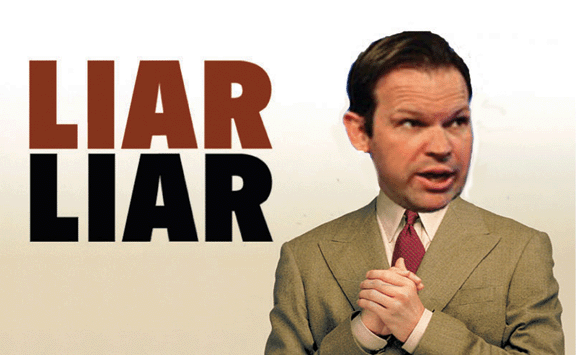
Matt Canavan and ANSTO lying to Kimba community about true level of planned nuclear waste
|
Susan Craig Fight To Stop Nuclear Waste Dump In Flinders Ranges SA
Visual Storyteller 9 Nov 19
Resources Minister Matt Canavan refers to Intermediate Level Waste as “medial waste.” This is a lie. How can communities make informed decisions based on misinformation? (Extract from The Advertiser November 8. Page 5) Zac Eagle The reprocessed, vitrified waste returned from Europe is classified High Level in every country except Australia. Kazzi Jai Honestly, if it is so safe, safe, safe…..then why are they treking it over 1500 kms plus away from Lucas Heights which produces over 90% of Australias nuclear waste? And the determination of the best place for this waste is by an individual nominating their own land? For an all-above-ground dump? The cheapest way to deal with all of this waste! Not the best….but the cheapest! This is how desperate the Feds are to rid themselves of this waste! Not the most scientific and geological stable site, not the least flood prone or least earthquake prone site…..but by a landowner nomination….. And then dividing a small rural community – whether Kimba or Hawker – and feeding them half -truths and bribing these little struggling communities with bribe money into accepting this waste which remains dangerous for hundreds of years, and the compulsory tag-a-long intermediate level waste for thousands of years! And saying that it is an industry! When is radioactive landfill for Lucas Heights an industry? It is simply a licence for Lucas Heights to generate as much waste as they like, and have no responsibility for it, since it is shafted over onto South Australia and becomes SOLELY South Australia’s liability and problem! Disgraceful! Anton Thony since when is medical waste intermediate level waste? https://www.facebook.com/groups/941313402573199/ |
|
Fuel tanker fire on highway near Kimba – just as well it wasn’t a nuclear waste transport

Emergency services responded to reports a fuel tanker rolled and caught alight on the Eyre Highway at Kelly, about 15 kilometres east of Kimba just after 7am on Thursday 31 October.
Fortunately, the tanker driver was not injured in the crash.
The fire caused damage to the road surface and required repairs by Department of Planning, Transport and Infrastructure.
The highway is open, but speeds are currently restricted to 40 km/h at the scene of yesterday’s fire.
Australia’s out of control bushfires (all along the region where the nuclear lobby wants to put reactors!)
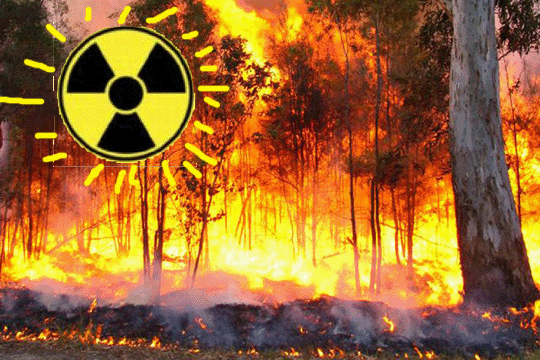 ‘Uncharted territory’: Dozens of out of control bushfires burn across New South Wales and Queensland, https://www.sbs.com.au/news/uncharted-territory-dozens-of-out-of-control-bushfires-burn-across-new-south-wales-and-queensland Hot, windy conditions are wreaking havoc across New South Wales and Queensland.
Australian firefighters warned they were in “uncharted territory” as they struggled to contain dozens of out-of-control bushfires across the east of the country on Friday.
Around a hundred blazes pockmarked the New South Wales and Queensland countryside, around 19 of them dangerous and uncontained.
“We have never seen this many fires concurrently at emergency warning level,” New South Wales Rural Fire Service Commissioner Shane Fitzsimmons told the ABC. “We are in uncharted territory.”The RFS said on Friday afternoon it received multiple reports of people being trapped in their homes at several locations.
Homes have also been destroyed, the RFS added.
A mayor on New South Wales’ mid-north coast said on Friday the bushfires ripping through the region were “horrifying and horrendous beasts”.
MidCoast Council mayor David West said a fire near Forster threatened a council building on Thursday night.
“It was literally a wall of yellow, horrible, beastly, tormenting flames,” the mayor said.
The mayor was particularly concerned about an out-of-control fire burning near Hillville south of Taree.
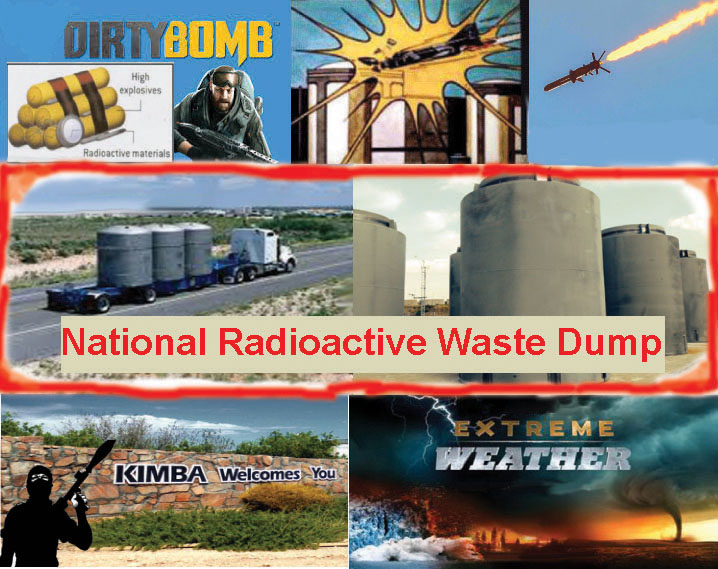
Hardly “broad support” as 40% of Kimba locals reject nuclear waste dump
|
More than 60 per cent of Kimba locals support nuclear waste dump in their region https://www.abc.net.au/news/2019-11-07/majority-of-kimba-residents-support-nuclear-waste-facility/11680774
By Casey Briggs A clear majority of Kimba residents have voted in favour of a nuclear waste dump being built in their region.
Key points
Federal Resources Minister Matthew Canavan has released the results of a month-long indicative postal ballot, confirming 61.6 per cent of the 734 ballot papers were in favour of the dump. The non-binding ballot — which was conducted by the Australian Electoral Commission — was a key factor in the Federal Government’s decision on where to build the facility, but native titleholders have challenged the validity of the process. Two sites near Kimba, halfway between Australia’s east and west coast, were shortlisted as possible locations for the country’s first national nuclear waste facility. A third site in Hawker, near the Flinders Ranges, was also shortlisted, and a vote of that town’s residents will begin next week. The proposal would see the Kimba site storing Australia’s low- to medium-level radioactive waste, which is currently housed at more than 100 sites, including the Lucas Heights nuclear reactor in Sydney. The Federal Government said it would pay up to four times the value of the property on which it chooses to build the facility. Mr Canavan said the result showed a “clear level of support” for the proposal.
But No Radioactive Waste on Agricultural Land in Kimba or SA Committee spokeswoman Kellie Hunt said the result showed the community was still divided. “Minister Canavan has always promised that the National Radioactive Waste Facility would not be sited where broad community support did not exist, and with nearly 40 per cent of residents saying no, this clearly cannot be proven in Kimba,” she said. She said the Government had wasted “unacceptable amounts of time, money and recourses attempting to coerce our community into accepting this facility”. “The stress his flawed and divisive process has caused is clearly evident in our once-cohesive town,” she said. 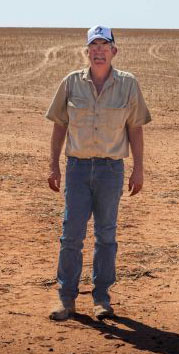 Local resident volunteers property Local resident volunteers property
Landowner Jeff Baldock volunteered his property as a potential location for the facility.”This is a way that we can hopefully get a new industry into town that doesn’t rely on rainfall,” he said. Kimba resident Audrey Lienert is opposed to the nuclear dump, and said the issue had divided the town.
“The 45 people they talk about coming to work here, they’re not going to buy the houses, they’re only going to be working to dig the holes.” On the other side of the debate, Kerri Cliff said the benefits to the community were “obvious”. “Whichever side people are sitting on, I think the vote has been something we’ve wanted all along,” she said. “Whether it gets us the actual facility, we’ll have to wait and see.” Native titleholders run separate ballotOnly local residents were permitted to vote in the ballot, infuriating the region’s native titleholders, the Barngarla people. The Barngarla people lost a court battle to stop the vote, but vowed to appeal to the Federal Court. “The decision will also affect all of Barngarla’s rights over their native title land whether they are for or against it,” a spokesperson for the Barngarla Determination Aboriginal Corporation said in a statement. The Barngarla people said they had also run their own vote through an independent company, and wanted the results included in the official vote.
“This means, that if the total number of people in the Kimba and BDAC ballots vote no, then we will seek to enforce this result legally.” |
|
In reality Kimba’s support for nuclear waste dump was only 49.94% of those eligible to vote”
 ENuFF South Australia, No Nuclear Waste Dump Anywhere in South Australia, 7 Nov 19 ENuFF South Australia, No Nuclear Waste Dump Anywhere in South Australia, 7 Nov 19Barndioota SWOT (Strengths, Weaknesses, Opportunities and Threats) published
“Having stated in the Senate that he would require a number in the vicinity of 65% of the community voting to progress with the proposal, Minister Canavan chose to push Kimba into phase two of the process with a supporting vote of 57%. This |
|
In Kimba 62% of locals vote in favour of nuclear waste dump
 Kimba locals back nuclear waste dump. The Advertiser, 7 Nov 19, Kimba residents have backed a proposal to build a radioactive storage site near the Eyre Peninsula town.
The Australian Electoral Commission conducted a five-week ballot on the issue, on behalf of Kimba Council, with votes being finalised today.
The ballot found 62 per cent of voters backed the proposal.
Resources Minister Matt Canavan said the results showed “significant” community support for the project, which involves building a storage site for low and intermediate level medical waste.
The Government is considering building the storage site at either “Napandee” or “Lyndhurst” near Kimba, or “Wallerberdina”, near Hawker in the Flinders Ranges.
Mr Canavan said he would consider the results alongside other feedback and technical information relating to the project, once a separate ballot in the Flinders Ranges was complete.
Kimba Mayor Dean Johnson said a nuclear waste site would provide much needed jobs and economic stimulus for the region.
If approved in the area, 45 people would work at the waste site once it was built, and the community would receive a $31 million package from the Federal Government including some money already earmarked for local projects in the lead up to the vote.
“In times of drought, you just get reminded again how reliant we are on agriculture,” Mr Johnson said.
“An alternative industry would be good for the town. Whether this is the right one or not, we’ll find out shortly.”
Mr Johnson said he was “incredibly proud” of his community following four years of consultation.
“To have a 90 per cent participation rate shows how strongly engaged our community has been,” he said.
Kimba farmer Peter Woolford, who has been campaigning against the waste dump plan, said the result showed there was still a lot of opposition to the project.
“The Eyre Peninsula is such an amazing place,” said Mr Woolford, chair of the lobby group No Radioactive Waste on Agricultural Land in Kimba or SA.
“Why would you expose your export industry here to any risk at all?”
Mr Woolford said there had been little increase in public support for the project over the past four years, despite the community receiving $4 million in Federal funding for projects as part of the campaign to find a site.
Hawker’s voting period begins on Monday, after the council voted to delay its ballot until a risk assessment was completed.
Mayor Peter Slattery said the council was keen to gauge the public’s views after months of uncertainty on the project’s future.
“If we find they’re opposed to this, we know it’s game over and we can all quietly relax,” Mr Slattery said.
“And if the community are supportive of this that gives us the direction to move forward. “Given how difficult and divisive it’s been, we’re really looking forward to having some direction and resolution.”
The votes had been delayed since last year, when two Aboriginal associations said they would take legal action to stop the ballots, because traditional land owners who did not live in the districts were excluded.”
https://www.adelaidenow.com.au/…/6a04b1b53b6fc5f00b69031be1…
Bangarla Aboriginal people conducted their OWN ballot on nuclear waste dump plan for Kimba, South Australia
Kazzi Jai shared a link. Fight To Stop Nuclear Waste In The Flinders Ranges, 6 Nov 19 On ABC 639 news this morning…..The Barngala People have conducted their OWN ballot through the AEC (the Kimba ballot is being done by the AEC as well) and will forward the results to Canavan once tallied.
News segment 02:32:14 to 02:33:00
Podcast will only stay up for 6 days.
https://www.abc.net.au/radio/northandwest/programs/breakfast/breakfast/11661112
Kimba’s Dramatic drop in property values, since nominated for nuclear dump
 Zac Eagle Fight To Stop Nuclear Waste Dump In
  Flinders Ranges SA
Property values dropped nearly 30% in 12 months since Kimba nominated for a dump.
Destruction of local communities in more ways than one. Kimba was 496th in South Australia, now 952nd. more https://www.facebook.com/groups/941313402573199/
A travesty of justice- extradition process of Julian Assange
|
Julian Assange’s Extradition Process Is ‘A Charade’, The Real News Network, November 5, 2019
Interview Transcript
GREG WILPERT: Julian Assange recently lost a court bid to have his upcoming February 2020 extradition hearing postponed. The hearing about the postponement took place on October 21, and according to observers who were present, he could barely speak in coherent sentences. Reacting to the hearing, UN Human Rights Rapporteur Nils Melzer warned last Friday that Assange continues to show symptoms of psychological torture. Melzer had visited Assange in May when he conducted an extensive review of his physical and psychological condition. In his statement on Friday, Melzer said, “Despite the medical urgency of my first appeal, and the seriousness of the alleged violations, the U.K. has not undertaken any measures of investigation, prevention, and redress required under international law.” In addition to the concerns about Assange’s treatment at Belmarsh Prison outside of London, many have also raised concerns about the impartiality of the proceedings against him. Assange was jailed last April when the Ecuadorian Embassy, where he had been given political asylum, allowed the police to arrest him. He then received a 50-week sentence for having skipped jail in 2012. The Trump Administration has since then requested Assange’s extradition on 17 charges of espionage for which he could receive a 170-year prison sentence in the United States. Joining me now to discuss the latest developments in the case of Julian Assange is John Pilger. He has been observing the Assange case very closely and was present at the October 21 court hearing…… John Pilger – “…..His physical condition has changed dramatically. He’s lost about 15 kilos in weight. To see him in court struggling to say his name, and his date of birth, was really very moving. I’ve seen that when I visited Julian in Belmarsh Prison where he struggles at first, and then collects himself. I’m always impressed by the sheer resilience of the man, because as Melzer says, absolutely nothing has been done to change the conditions imposed on him by the prison regime. Nothing has been done by the British authorities.
This was almost underlined by the contemptuous way that this court hearing recently was conducted by this judge, by this magistrate. There was a sense among all of us who were there that the whole charade, and it seemed a charade, was preordained. You had sitting in front of us, on a long table, four Americans who were from the U.S. Embassy here in London, and one of the prosecution team was scurrying backwards and forwards to get instructions from them. The judge could see this, and she allowed it. It was just absolutely outrageous.
When Julian did try to speak, and to say that basically he was being denied the very tools with which to prepare his case, he was denied the right to call his American lawyer. He was denied the right to have any kind of word process or laptop. He was denied certain documents. As he said, “I’m even denied my own writings,” as he called it. That is, his own notes and manuscripts. This hasn’t changed at all, and of course the effect of that on his morale, to say the least, has been very significant, and that showed in the court.
Greg Wilpert – ” ….district judge, Vanessa Baraitser, and one of the things that she did was completely dismiss Assange’s request for determination whether the extradition proceedings are even legal. That is, he cites according to U.K. law, “Extradition shall not be granted if the offense for which extradition is requested is a political offense”
JOHN PILGER quotes Julian’s lawyer Gareth Peirce – “….under law, it’s not a matter of opinion. They are political. All but one of the charges concocted in Virginia are based on the 1917 Espionage Act, which was a political piece of legislation used to chase off the conscientious objectors during the first World War.
It’s political. There is no charge. There is no basis, no foundation, for allowing these extradition proceedings to go forward, and almost perversely the judge seemed to, if not acknowledged that in her contempt for the proceedings. Whenever Julian Assange spoke, she feigned a disinterest, a boredom, and whenever his lawyers spoke, the same thing. Whenever the prosecutor spoke, she was attentive. The theatrics of this hearing were quite remarkable. I’ve never seen anything like it. Then very hurriedly, when Julian Assange’s lawyer requested a delay in when the case actually starts from February, they said, “We’re not going to be ready in February,” and she dismissed that out of hand.Not only that, she said that the extradition case would be held in a court that is in fact adjoining Belmarsh prison. It’s almost part of the prison. It’s a long way out of London.
So you have, if not a secret trial, but a trial in which, or an extradition hearing in which very few seats are available to the public. It’s a very difficult place to get to. So every obstacle has been put in the way of Assange getting a fair hearing. And I can only repeat, this is a publisher and a journalist convicted of nothing, charged with nothing in Britain, whose only crime is journalism. That may sound like a slogan, but it’s true. They want him for exposing the kind of outrageous war crimes, Iraq, Afghanistan, that journalists are supposed to do. “
GREG WILPERT: “…….How do you explain this lack of concern among the media and human rights groups for Assange’s situation?
JOHN PILGER: Because so many human rights groups are deeply political, Amnesty International never made Chelsea Manning a prisoner of conscience. A really disgraceful thing. Chelsea Manning, who was effectively tortured in prison, and they haven’t, as you say, they haven’t elevated Julian’s case. Why? Well, they’re an extension. They’re an extension of an establishment that is now almost systematically coming down on any form of real dissent. In the last five, six years, the last gaps, the last bolt holes, the last spaces in the mainstream media for journalists, from average journalists for the likes Assange, not only Assange, for the likes of people like even myself and others, have closed. The mainstream media, certainly in Britain, always held open those spaces. They’ve closed, and there is generally I would think a fear, right throughout the media, a fear about opposing the state on something like the Assange case. You see the way the whole obsession with Russia has consumed the media with so many nonsensical stories. The hostility, the animosity towards Julian. My own theory is that his work shamed so many journalists. He does what journalists ought to have done, and don’t do any more. He’s done the job of a journalist. That can only explain it. I mean when you take a newspaper like The Guardian, which published originally the WikiLeaks revelations about Iraq and Afghanistan, they turned on Julian Assange in the most vicious way.
They exploited him for one thing. A number of their journalists did extremely well with their books, and Hollywood scripts, and so on, but they turned on him personally. It was one of the most unedifying sights I think I’ve ever seen in journalism. The same thing happened in the New York Times. Again, I can only surmise the reason for that. It’s that he shames them. We have a desert of journalism at the moment. There are a few who still do their jobs; who still stand up against establishment power; who still are not frightened. But there’re so few now, and Julian Assange is totally fearless in that. He knew that he was going to run into a great deal of trouble with the state in Britain, the state in the United States–but he went ahead anyway. That’s a true journalist…… https://therealnews.com/stories/julian-assange-extradition-process-charade
|
|
Victorian Government INQUIRY INTO NUCLEAR PROHIBITION
The Standing Committee on Environment and Planning invites written submissions from individuals and organisations addressing
one or more of the issues identified in the terms of reference.
The submission closing date is Friday 28 February 2020.
Terms of reference
https://www.parliament.vic.gov.au/epc-lc/article/4347
That this House requires the Environment and Planning Committee to inquire into, consider and report, within 12 months, on potential benefits to Victoria in removing prohibitions enacted by the Nuclear Activities (Prohibitions) Act 1983, and in particular, the Committee should —
(1) investigate the potential for Victoria to contribute to global low carbon dioxide energy production through enabling exploration and production of uranium and thorium;
(2) identify economic, environmental and social benefits for Victoria, including those related to medicine, scientific research, exploration and mining;
(3) identify opportunities for Victoria to participate in the nuclear fuel cycle; and
(4) identify any barriers to participation, including limitations caused by federal or local laws and regulations.
- Email to nuclearprohibition@parliament.vic.gov.au
- Using the eSubmissions form
- Hardcopy; send to:
Standing Committee on Environment and Planning
Parliament House, Spring Street
EAST MELBOURNE VIC 3002
- Your full name
- Contact details (either a postal address or phone number)
- The text of your submission or an attachment containing your submission
- A clear indication if you are seeking confidentiality
Strong public demand for climate action, but Australian government determined to punish climate protesters,
 An increasingly outraged public is demanding action in a nation intimately linked to coal mining. The government has responded by threatening a new law to punish protesters. NYT, By Damien Cave and Livia Albeck-Ripka, Nov. 6, 2019 SYDNEY, Australia — One climate activist halted train service by chaining himself to the tracks. Others have glued themselves to busy roads, causing gridlock. And just last week, protesters locked arms to stop people from entering a mining conference before being forcibly dispersed by police officers with pepper spray.
A surge of climate activism is flooding Australia as the country falls behind on its promise to reduce emissions — effectively ignoring the Paris Agreement the Trump administration just abandoned. Prime Minister Scott Morrison has responded with a threat that’s alarmed scientists and free speech advocates, arguing that the government should outlaw “indulgent and selfish” efforts by environmental groups to rattle businesses with rallies and boycotts. “The right to protest does not mean there is an unlimited license to disrupt people’s lives,” Mr. Morrison said, adding, “I am very concerned about this new form of progressivism.”
Australia’s “climate wars,” once confined to election campaigns, are now spilling into the streets with some of the biggest protests the country has ever seen. An increasingly outraged public is demanding action while the conservative national government refuses to budge, relying on the police to squelch dissent……..
Coal-loving politicians
Two years ago, when Mr. Morrison was Australia’s treasurer, he stood up in the House of Representatives with a hunk of black coal in his hand.
“Don’t be afraid. Don’t be scared,” he said. “It won’t hurt you.”
His shiny prop had been shellacked to keep his hands clean, but the point he made then is one he and his governing coalition stand by: Coal is good……Now, Australia is the world’s largest coal exporter. It is also a major exporter of natural gas, making for a resource-driven country that is
“rich, dumb and getting dumber,” according to one recent headline summarizing the findings of a Harvard study that ranked Australia’s economy 93rd in complexity, behind Kazakhstan, Uganda and Senegal. The mingling of mining interests with national interests is perpetuated through a revolving door: lawmakers frequently work for the coal industry after leaving office. And for some, defending coal has come to be equated with defending the country.Even the opposition center-left Labor Party is hooked, pushing for emissions cuts while continuing to support more coal mining……
An increasingly angry public
Poll after poll shows growing concern about climate change among Australians of all ages and political persuasions.In September, a survey by the Australia Institute found that 81 percent of Australians believe climate change will result in more droughts and flooding (up from 78 percent in 2018). Two out of three Australians agreed that the government should plan for an orderly phaseout of coal, while 64 percent said Australia should aim for net-zero emissions by 2050.
And researchers continue to sound the alarm. A paper co-written by an Australian scientist and signed by 11,000 other experts warned on Wednesday of a clear “climate emergency.”……
The so-called climate strike in September, part of a global effort led by children, was the largest mass demonstration in Australian history.
It was quickly followed last month by the Extinction Rebellion protests, and then came last week’s anti-mining protests in Melbourne….. Over 10 days of protests in London, the police arrested more than 1,700 Extinction Rebellion protesters.
Australia aims to go further. A law passed last year allows the military to break up protests. The Labor government in Queensland is fast-tracking a law to add new fines for protesters who use locking devices to prevent their removal……. Reduced coal mining would not hurt the economy as much as people think.
According to the Australia Institute poll from last month, Australians believe coal mining accounts for 12.5 percent of Australia’s economic output and employs 9.3 percent of its work force. “In reality,” the report says, “coal mining employs only 0.4 percent of workers in Australia and is 2.2 percent of Australia’s G.D.P.” Of the roughly 238,000 jobs that mining provides in Australia, only around 50,000 are tied to coal, according to government figures.
“The government relies on ignorance,” Professor Eckersley said. “It’s a very toxic politics.”
Portrayals of extreme activism are also exaggerated. The vast majority of protesters demanding climate action are not radical disrupters. They are more like Jemima Grimmer, 13, who asked adults to “respect our futures” at the Sydney climate strike in September, or Vivian Malo, an Aboriginal woman attending last week’s protest in Melbourne, where she said the experience of being pepper-sprayed felt like chemotherapy “on the outside.” Here in a country rapidly losing its laid-back image, the future of Australia’s climate battles could be seen in her bloodshot eyes as she stood near a line of stone-faced police officers, describing their use of force as “scary.”
“The insatiable drive for resource extraction,” she said. “It’s out of control.” https://www.nytimes.com/2019/11/06/world/australia/australia-climate-protests-coal.html
1 This month.
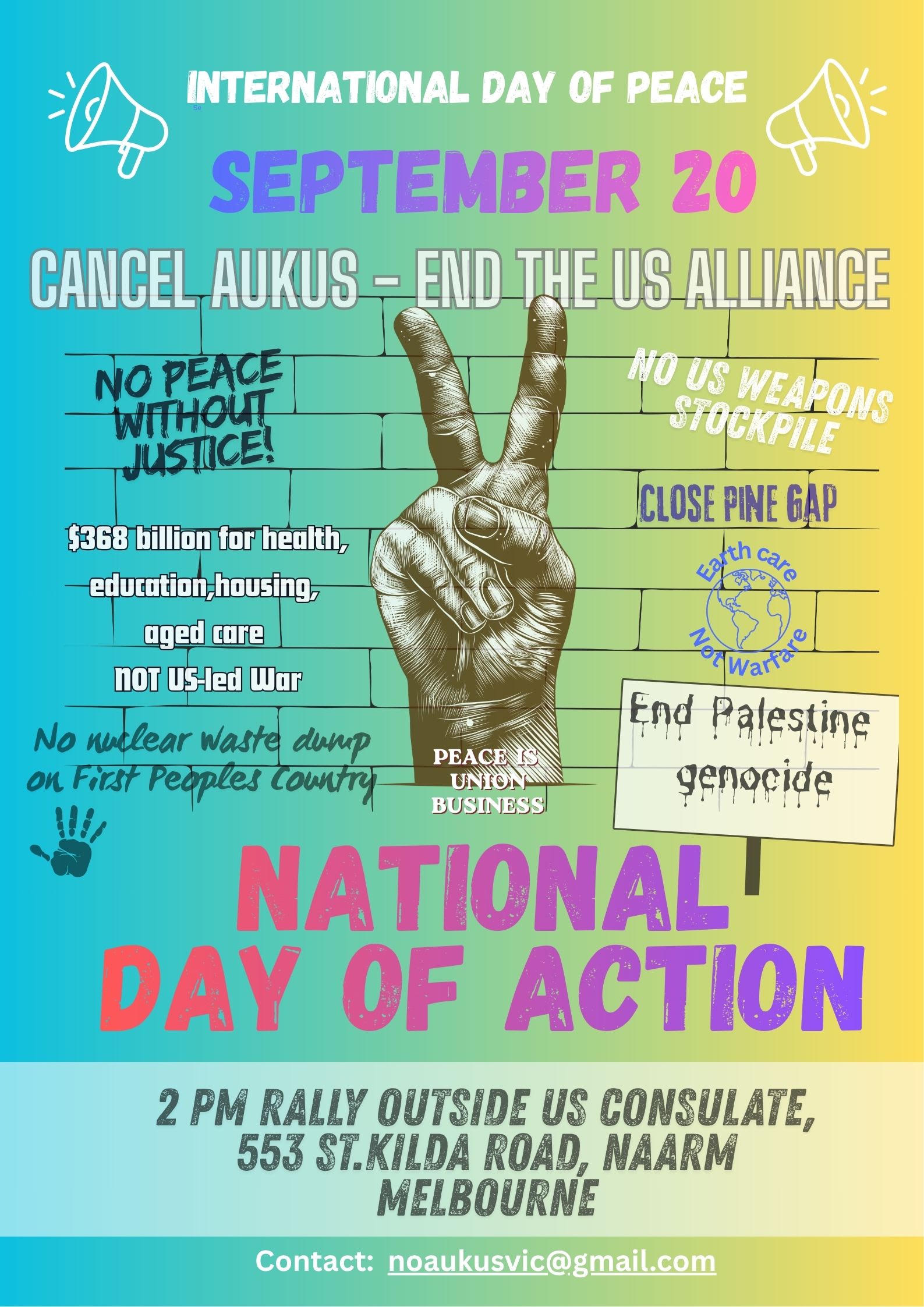
20 September –National Day of Action in Melbourne on the International Day of Peace

Help Aunty Sue Protect Her Land and Sacred Sites From Destructive Rocket Testing.
.

Australians deserve the truth
about
AUKUS – https://aukuspublicinquiry.com/


PETITION – To: Prime Minister Anthony Albanese and the Australian Labor Government

of the week – Australians for War Powers Reform (AWPR)
To see nuclear-related stories in greater depth and intensity
 Antinuclear