Experts argue for an Australian ban on nuclear weapons ahead of UN Summit
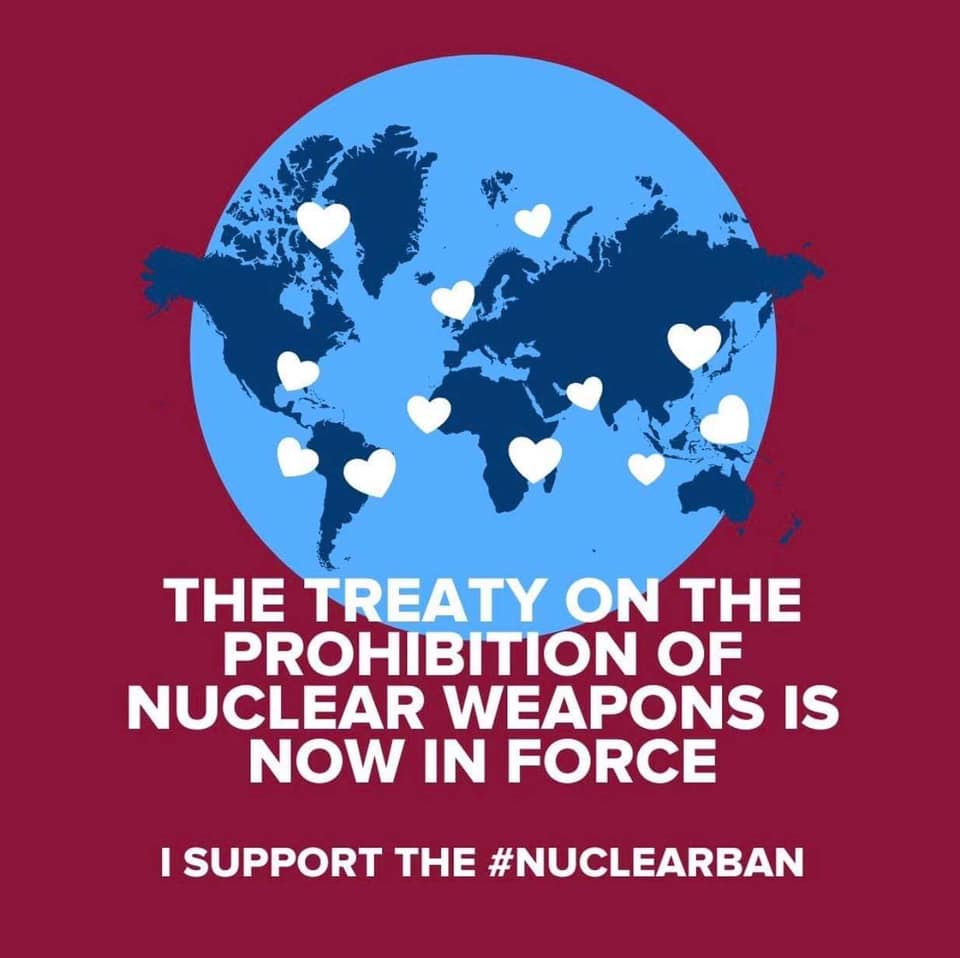
University of Melbourne experts are urging Australia to sign and ratify the UN Treaty on the Prohibition of Nuclear Weapons (TPNW) to commit most effectively to nuclear disarmament and non-proliferation.
The argument was made in ‘Luck is not a strategy: it’s time to prohibit Nuclear Weapons’, the second paper in a series prepared by the University of Melbourne’s Initiative for Peacebuilding to stimulate discussion of key issues on the agenda at the upcoming UN Summit of the Future.
Associate Professor Tilman Ruff AO, co-founder of the International Campaign to Abolish Nuclear Weapons (ICAN), which received the 2017 Nobel Peace Prize, ICAN Australia director Gem Romuld and Executive Director of ICAN Melissa Parke argue it is important Australia signs the Treaty before taking a seat on the UN Peacebuilding Commission in 2025.
Almost half the world’s nations have already joined the TPNW, which contains the only comprehensive prohibition of nuclear weapons and the only internationally agreed framework to eliminate nuclear weapons in a time-bound, verified way.
The TPNW is also the first nuclear weapons agreement to address the harm done by nuclear weapons use and testing.
Associate Professor Ruff argues Australia’s involvement is particularly critical given the number of available deployed nuclear weapons is increasing for the first time in two decades, along with explicit nuclear threats, and two nuclear-armed states – Russia and Israel – are prosecuting war, risking nuclear escalation.
No disarmament negotiations are underway, while hard won treaties limiting nuclear weapons have been abolished.
“Additional signatories, such as Australia, will contribute to the universalisation of the ban treaty, and its effectiveness,” Associate Professor Ruff said.
“For as long as we remain outside the treaty, promoting a role for nuclear weapons and assisting in their possible use in our defence policies, we are contributing to the problem.”
The Summit of the Future will be held from 22–23 September 2024 in New York, gathering world leaders to forge a new international consensus on how we deliver a better present and safeguard the future.
The Initiative for Peacebuilding, which brings together multidisciplinary research, engagement, and education to advance peacebuilding and conflict prevention in the Indo-Pacific region, plans to release a series of five policy briefs ahead of the Summit.
Associate Professor Ruff called for Australian leaders to harness this moment of great danger to sign the TPNW and then work towards ratification, just as Australia has joined the treaties banning other inhumane and indiscriminate weapons, including chemical and biological weapons, landmines and cluster munitions.
“Nuclear weapons are abhorrent, immoral, and illegal under international law. They are the worst weapons of mass destruction, and have no place in a secure and healthy future. Australia needs to signal its firm agreement and expedite signature and ratification of the UN-TPNW,” he said.
South Australia’s renewable triumph is stunning proof that Dutton’s nuclear plans are a folly
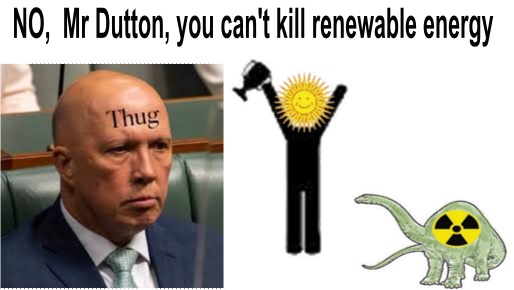
Giles Parkinson, Jul 12, 2024 https://reneweconomy.com.au/south-australias-renewable-triumph-is-stunning-proof-that-duttons-nuclear-plans-are-a-folly/
When the federal and state governments were deciding on a location to announce a funding deal that will underwrite South Australia’s final leap to its remarkable goal of 100 per cent net renewables within the next three years, Port Augusta was the obvious choice.
The city at the top of the Spencer Gulf, like the neighbouring Whyalla, is everything that the climate deniers, the renewable naysayers, the conservative media and the federal Coalition say is not possible.
Port Augusta once played host to the state’s ageing and incredibly dirty coal generators. Whyalla was the subject of taunts from former prime minister Tony Abbott that it would be rendered a ghost town by a carbon price.
Now the two cities are host to thriving renewable energy hubs, new green industries and technologies that will help propel the state into a clean energy future.
And it is remarkable how little is actually known about the achievements of South Australia beyond its borders. Already it is at an annual average of 70 per cent renewables, and by 2027 it intends to be the first in the world to reach 100 per cent net renewables primarily through wind, solar and storage.
Just to be clear, that does not mean that it will consume only renewables. “Net” means that the amount of power it produces from wind and solar during the year will be equivalent to the amount it consumes. But it will still export and import as needs must.
It’s a stunning achievement, and still one that the naysayers insist is not possible. The state has become a globally significant testing ground in technologies – it hosted the first Tesla big battery that helped change the thinking on future grids around the world – and it is addressing and solving complex engineering issues that many experts thought were too difficult and some still say are insurmountable.
More importantly, it is doing this as a result of bipartisan policy. Labor kicked it off more than a decade ago by making itself the most welcoming state for wind and solar.
The Liberal state government set the target of reaching 100 per cent renewables by 2030. Labor is now back in power and has accelerated that target to 2027. It is marvellous what can be achieved when the coal lobby is removed and not pulling the strings of the politicians and public mood.
Despite all this, the achievements in South Australia remain largely ignored by the rest of the country.
The announcement by federal energy minister Chris Bowen and state energy minister Tom Koutsanstonis about the funding deal for a gigawatt of new wind and solar and 600 MW (2,400 MWh) of battery storage – to ensure the 100 per cent net renewable target is met – barely rated a mention in mainstream media outside the state.
Yet it is here, in Port Augusta, that federal Opposition leader Peter Dutton has decided should be one of seven sites – along with Collie, Liddell, Mt Piper, Loy Yang, Callide and Tarong – that should play host to their nuclear power plant proposals.
They were chosen, the Coalition tells us, because they are locations that still have or once supported coal fired power generators, and – they claim – would have available transmission capacity. But as Koutsantonis pointed out during his visit this week, that is simply not the case. That capacity has already been taken up by other projects.
“This site here where the Port Augusta power station once sat is now at capacity in terms of our renewable transmission lines to Adelaide,” he told journalists. “So the idea you can just plug in a nuclear power station here is just folly.
“I haven’t seen Peter Dutton here. I haven’t seen the Commonwealth Opposition here at all talking to the state government about their pretend plans for nuclear power in South Australia.”
Indeed, it is not surprising that Dutton has not shown up: South Australia is not just shining a path to the future, it is a real life repudiation of the folly of the federal Coalition’s nuclear plans, and the sheer nonsense of its claims.
Let’s remember that the Coalition and the conservative media’s nuclear arguments are based almost entirely around the assumption that wind and solar cannot power a modern economy.
South Australia proves them wrong, emphatically so. The grid is reliable, wholesale power prices are falling, and will continue to do so as it free itself from the yolk of fossil gas. Legacy industries are being revived by the growth of wind and solar, new industries are being established, and big business with big loads are being attracted to the state.
The once broke Whyalla steelworks, for example, has based its revival around plans for “green steel” underpinned by wind and solar, and BHP will power its giant Olympic Dam mine with a unique “firmed renewables” contract sourced from the state’s biggest wind project and a big battery.
The state’s transmission operator ElectraNet reports inquiries amounting to several gigawatts of new load from industries attracted to cheaper and greener power, and apparently not the least bit concerned about the scare campaigns that the lights will surely go out.
South Australia is already at the stage where enough rooftop solar is generated in the middle of the day to meet all local demand. That will soon occur in other states too, including Western Australia, effectively eliminating grid demand and requiring storage or new load or exports to soak up the excess.
As every major utility in Australia makes clear, the era of always-on base-load power is well and truly passed in such grids. South Australia has not just shut down its last coal generators, and is closing down its remaining combined cycle gas plants, which perform a similar role. The gaps will be filled by facilities that are fast and flexible. There is simply no room in the grid for an always-on nuclear plant.
“This site is taken. So I’m not quite sure where he’s planning to build this or how he’s planning to build this,” Koutsantonis said.
“If Peter Dutton was serious about what he was talking about, he would have come to us earlier and spoken to us about it, consulted with us. For whatever reason, he hasn’t even stepped a foot on this site to actually have a look at it.”
Bowen has been taking that message across the country. “This whole precinct’s being transformed … into a renewable energy hub, a green cement hub and a critical minerals hub,” he said at Port Augusta.
The next day, Bowen popped up in Lithgow, at the site of another mooted nuclear site, the Mount Piper coal generator, where the asset owner Energy Australia also outlined plans to build pumped hydro, a giant battery and to convert its coal plant into a “flexible” asset rather than an “always on” baseload asset in the interim.
“Traditionally Mount Piper has been a full-load, continuous load power station, and today it’s becoming much more flexible,” EnergyAustralia’s head of operations and projects Sue Elliott said. “It now operates during the day and seasonally depending on renewable availability in the market.
“We are progressing planning for a Lake Lyell Pumped Hydro Project … and we’re also planning a 500 megawatt, four hour Mount Piper Battery Energy Storage System right here on site to take advantage of transmission assets.”
As Bowen pointed out, this is real investment happening now, not some time in the distant future.
“I’m not sure if Mr Dutton and (Opposition energy spokesman Ted) O’Brien have been here yet, but they have a plan for nuclear power, which is at least 30 years away,” he said.
“They admit 2035 at its earliest; even that is wildly ambitious and optimistic and unrealistic. But that doesn’t fix the problems today.
“It doesn’t create jobs today. It doesn’t create investment today and, indeed, it will chill investment. It will stop people investing in the alternative plans because of the investor uncertainty created by having a nuclear plan, which is never going to happen – it’s a fantasy.”
South Australia, and its charge towards 100 per cent renewables, is very real. And worth talking about.
Yet another huge procurement bungle has been unearthed. Guess where?
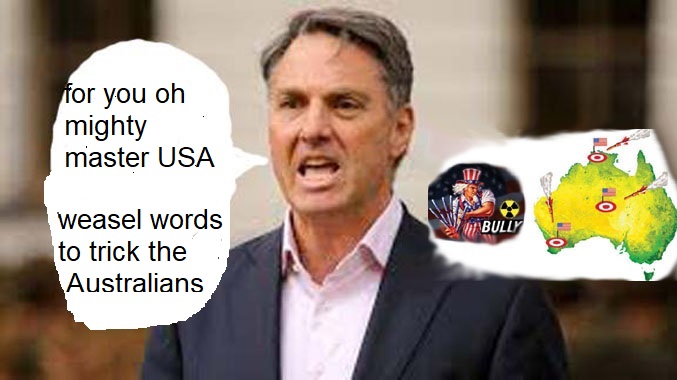
A procurement process so blatantly rotten that the beneficiary itself tried to stop it? It could only happen in Defence.
Crikey BERNARD KEANE, JUL 12, 2024
The hits keep coming for Defence. The Australian National Audit Office has just revealed another big bungled project by the department, one that was a decade in the making.
While it lacks the champagne glamour of the Defence-Thales munitions scandal and only costs hundreds of millions, not billions, the debacle over “myClearance” demonstrates that Defence’s inability to manage procurement — a core task for such an institution — is department-wide.
It’s also a likely unique case of procurement process so bad that the company that benefited objected to it.
myClearance” might sound like a colonoscopy prep, but it is in fact the notional answer to longstanding problems with the systems used by the Australian Government Security Vetting Agency within Defence to vet people for security clearances across the public sector — a process much criticised by other agencies for its glacial speed.Richard Marles takes on reality, comes off second-best in growing Thales scandalRead More
In 2014, Defence decided that its vetting platform needed to be replaced, and thus began what became the Vetting Transformation Project — given impetus, no doubt, by the Abbott government’s hysteria over the Snowden revelations and the idea of “inside threats” used to……………(Subscribers only) more https://www.crikey.com.au/2024/07/12/defence-procurement-rotten-myclearance/?utm_medium=Social&utm_source=Twitter#Echobox=1720756332
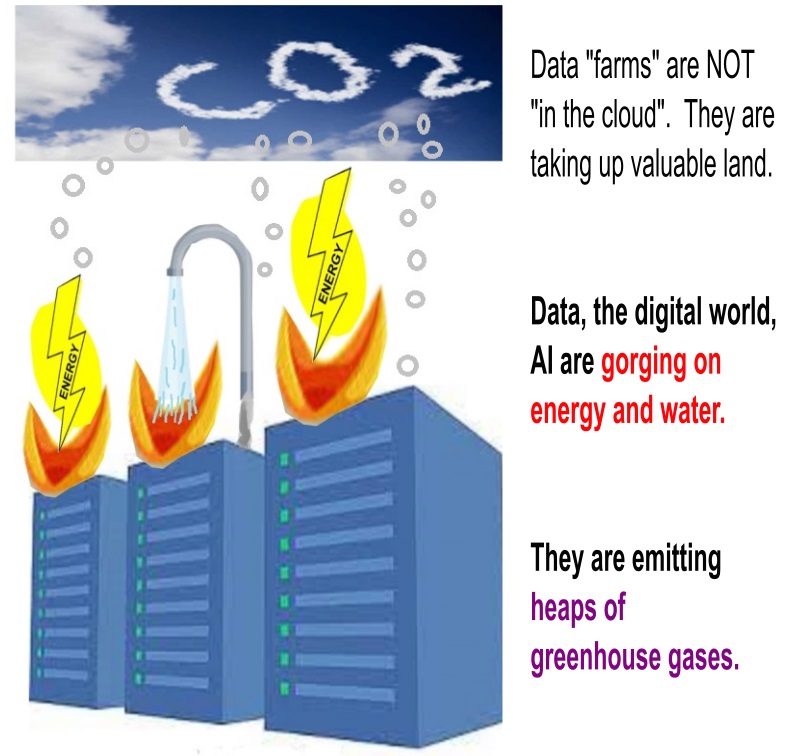
Power-hungry data centres are booming in Australia. Can the grid cope?
By Nick Toscano, July 12, 2024, https://www.theage.com.au/business/companies/power-hungry-data-centres-are-booming-in-australia-can-the-grid-cope-20240711-p5jssa.html
An explosion in the number of data centres in Australia is looming as a new test for the energy grid amid warnings they might soon require as much as electricity as two giant coal-fired power stations are capable of generating.
As cloud-based computing [nb there is no “cloud”] and artificial intelligence (AI) accelerate demand for data storage, Melbourne and Sydney have emerged as key locations for tech companies building vast industrial facilities to house their servers that send and receive data 24/7, known as data centres.
These data centres, which need huge amounts of electricity to run high-intensity computing and cooling systems, are already major power users in Australia – consuming about 5 per cent of available generation.
They are expected to drive further electricity demand growth alongside homes switching from gas to electric appliances and the growing adoption of electric cars.
However, new modelling from UBS suggests official forecasts may be underestimating the scale of the added demand that data centres could drive in the coming years.
The investment bank calculates between 3.3 gigawatts and 5 gigawatts of demand – equivalent to the combined generating potential of approximately two of Australia’s biggest coal-fired power plants – could be added to the east coast grid by 2030 on the back of growth in data centres and artificial intelligence.
At the top end of the range that could equate to up to 15 per cent of overall grid demand, which could add significant strain to supplies and push up prices unless properly managed.
The data centre boom is coming at a time of upheaval for Australia’s main grid as it transitions to cleaner energy, while the coal plants that have supplied the bulk of its power for decades increasingly bring forward their closures.
Although renewables’ share of the mix is growing, there are worries it’s not happening fast enough, with authorities fearing a shortfall of generation, storage and transmission lines to protect against the threat of price rises or blackouts once coal exits the grid.
Analysts at Morgan Stanley believe the grid will be able to accommodate extra demand from data centres’ growth, which it forecasts to rise from 5 per cent to about 8 per cent by 2030.
However, the system will face more strain next decade when the majority of the nation’s remaining coal-fired power plants are expected to have closed, they said.
“We see the power requirement for new Australian data centres as manageable for the Australian power system to 2030, but power could become a constraint in the 2030s given planned coal plant closures,” they said.
UBS said data centres may provide benefits for grid planners trying to maintain system stability, given they offer consistent minimum demand 24/7 – similar to the role of aluminium smelters. But they would add “incremental pressure” during evening peak demand periods once the sun sets and solar output recedes, Allen said.
The spread between daytime and evening wholesale prices could widen to up to 70 per cent by 2030 due to coal closures and delays to the renewable rollout, he added.
Don’t make my home a nuclear power hub- nuclear reactors in Latrobe Valley unsafe and unrealistic.

As some Coalition MPs have let slip, talk of nuclear reactors is really code language for extending the life of coal and gas for at least 20 years until nuclear reactors can be regulated, built and actually generate energy into the Australian energy grid. This is incompatible with our global commitment to limit warming to 1.5 degrees and will see Australians more vulnerable to extreme heat, fires and floods.
By Hayley Sestokas, July 10 2024, https://www.canberratimes.com.au/story/8691386/nuclear-reactors-in-latrobe-valley-unrealistic-and-unsafe/
Earlier this year the federal Coalition began spruiking their ill-conceived idea to build nuclear reactors on the land of retired coal-fired power plants as a solution to Australia’s energy future. That talk has now reached fever pitch as Peter Dutton announced his proposed sites last week – including in the Latrobe Valley.
Leaving aside for a moment the prohibitive costs and safety concerns associated with nuclear reactors – it seems clear that Peter Dutton nor his Coalition colleagues bothered doing their homework or actually speaking to local people on the ground before naming the Latrobe Valley as a potential site.
If he had conducted even a superficial survey of community attitudes to the proposition of turning the Latrobe Valley into a nuclear power hub, he would have realised quickly that the vast majority of the community can see this proposition for what it is – a dangerous distraction that ignores the more urgent need for safe mine rehabilitation.
As it currently stands, the so-called retired coal mine sites being referred to are facing ongoing issues associated with rehabilitating the existing toxic and unstable mine pits that remain full of flammable coal. It doesn’t take too much of a mental stretch to realise that mixing old unstable mine pits and nuclear reactors is not likely to end well.
The Latrobe Valley also sits in an earthquake hotspot near the fault lines of the Strzelecki Ranges. The Fukushima nuclear disaster, which led to mass evacuations, hundreds of billions of dollars of economic loss and the release of large amounts of radioactive contamination to the air and ocean, clearly showed the danger of building a nuclear reactor on a fault line.

The other glaring gap in the nuclear push is water. According to the World Nuclear Institute, one nuclear reactor requires between 1514 and 2725 litres of water per megawatt hour. That equates to billions of gallons of water per year, all of which requires intensive filtering.
So where, might we ask, is all this water going to come from? Especially at a time when it’s not clear where the millions of litres of water for rehabilitating all three mine pits are going to come from. We are already in the midst of a looming water crisis without the added intensive drain of a nuclear facility.
As recently as 2019 local MP Darren Chester already publicly stated that the government had no plans to change the moratorium in place on nuclear power – let alone that his own electorate would be the site on which it would be staged.
Mr Chester has previously said safety concerns would need to be ameliorated and the development would need to demonstrate direct “social and economic benefits”. So it sounds like having opposed the nuclear push it now seems he is prepared to support his Coalition’s nuclear pipedream, at the right price.
As the area that has powered Victoria for decades, people in the latrobe valley know better than anyone that we are now in the midst of a clean energy transition. we can’t afford to wait decades for nuclear reactors when we have clean sun and wind energy right here and right now, already powering 40 per cent of our electricity grid.
It is also disingenuous that after decades of inaction and outright climate denial from the Coalition parties, the same party are now spruiking nuclear as the fastest way to reduce emissions. Instead, the Coalition needs to get with the program and focus on the fast and fair rollout of renewable energy as we phase out burning coal and methane gas.
As some Coalition MPs have let slip, talk of nuclear reactors is really code language for extending the life of coal and gas for at least 20 years until nuclear reactors can be regulated, built and actually generate energy into the Australian energy grid. This is incompatible with our global commitment to limit warming to 1.5 degrees and will see Australians more vulnerable to extreme heat, fires and floods.
While many local people are experiencing a worsening cost-of-living crisis, the federal Coalition is proposing we transition Australia to the most expensive source of energy in the world. The current levelised cost of energy (LCOE) puts nuclear generated electricity at $US180 per megawatt hour compared to $US50 for onshore wind and $US60 for utility-scale solar.
In addition to the very high cost of electricity from nuclear reactors is the huge cost to build them. In the UK, the Hinkley Point C reactor was originally budgeted to cost £18 billion, it will now cost up to £46 billion with inflation factored in. This is in a country with an established regulatory framework and nuclear industry.
Despite the reassurances of those in the Coalition who really should know better, there is still no long-term solution for the radioactive waste from nuclear reactors that meets community expectations for safety and environmental protection. Australia currently struggles to store low-grade waste from nuclear medical facilities, let alone the more radioactive waste from nuclear power reactors.
Dating right back to when the British first tested nuclear weapons in central Australia in the 1950s and ’60s in South Australia, First Nations communities, particularly in remote areas, have borne the brunt of the harm caused by nuclear activities in Australia.
First Nations communities continue to protest and take legal action against radioactive waste burial on country. There are communities who are still unable to access their land due to radioactive waste – let’s not add to that shameful legacy. Not here, not anywhere.
In pitching this radioactive, future technology, the Coalition is ignoring the fact that the clean energy transition is already well under way – and the Latrobe Valley community is out in front with a vision for a healthy, sustainable and safe future in our region. Gippsland has more than 25 large renewable energy projects in the pipeline, worth $54 billion.
With the support of the local community, these projects are already delivering the kinds of jobs and energy solutions we need now, not two decades away.
Hayley Sestokas is the Latrobe Valley community organiser for Environment Victoria.
The dirty history of ‘Nukey Poo’, the reactor that soiled the Antarctic.
By Nick O’Malley, July 10, 2024 , https://www.theage.com.au/environment/conservation/the-dirty-history-of-nukey-poo-the-reactor-that-soiled-the-antarctic-20240708-p5jrzd.html
The rekindled nuclear debate in Australia has stirred old memories in some of a little-known chapter of our region’s history, when the US Navy quietly installed what today we might call a small modular reactor at the US Antarctic base on Ross Island.
The machine, nicknamed “Nukey Poo” by the technicians who looked after it, was installed at McMurdo base in 1961, when Antarctic exploration was expanding and nuclear energy had developed a bright futuristic sheen.
Things did not end well.
Back then, as now, Antarctic missions relied upon lifelines with distant homes. Supplies had to be carried long and sometimes dangerous distances. The US kept its Antarctic sites supplied via an ongoing supply mission called Operation Deep Freeze, which was based at the McMurdo Naval Air Facility.
According to an article on the Nukey Poo incident published in 1978 by the Bulletin of the Atomic Scientists – a journal concerned with the potential danger of nuclear technology, founded by Albert Einstein and veterans of the Manhattan Project – while a gallon of diesel cost the US Navy US12¢ back then, by the time the Americans shipped supplies to McMurdo, diesel cost 40¢ a gallon. At South Pole station, diesel was worth $12 a gallon.
But the then US Atomic Energy Commission had a solution to save costs on transporting supplies. What if McMurdo, and other distant US bases, were supplied by small transportable nuclear reactors? Congress agreed and soon the Martin Marietta Corporation won a contract to build them.
In an advertisement in Scientific American, the company boasted in language reminiscent of today’s debate over modular reactors that “because nuclear energy packs great power in little space, it’s extremely useful when you need electricity in remotes spots. It’s portable and gives you power that last for years …” Soon, the company said, nuclear power might be carrying us to outer space and frying our eggs.
A reactor named PM-3A (PM stood for “portable, medium powered”) was shipped out in sea crates and installed at McMurdo – which is within New Zealand-claimed Antarctic territory – over the summer of 1961 and became known on the base as Nukey Poo. Because cement would not cure in the frigid climate, the reactor was not encased in concrete, rather its four major components sat in steel tanks embedded in gravel and wrapped in a lead shield.
Admiral George Dufek described the moment as “a dramatic new era in man’s conquest of the remotest continent”. The US administration was certain the reactor did not violate the Antarctic Treaty’s declaration that “any nuclear explosions in Antarctica and the disposal there of radioactive waste material shall be prohibited”.
Within a year, Nukey Poo caused its first fuss, a hydrogen fire in a containment tank that led to a shutdown and energy shortages. Icebreakers fought to break through and fuel for generators was delivered by helicopter, which burned as much as they delivered over the course of a flight. Over the following years, Nukey Poo proved so unreliable and expensive to maintain that the military gave up hopes of using the technology to displace diesel at other remote locations.
In 1972, the navy began the three-year task of decommissioning the reactor and decontaminating the site. During that process, they discovered corrosion that technicians feared may have caused leaks of irradiated material. No detailed investigation was done. The secretary of the US National Academy of Sciences said the program was ended due to a series of malfunctions and the possibility of leaks, the Bulletin of the Atomic Scientists reported. The New Zealand government declared the decision was economic.
Either way, it was decided not only to remove the reactor, but half the hillside it was built into. Eventually 12,000 tonnes of irradiated gravel and soil was removed on supply ships to be buried in concrete lined pits in the United States.
The young Australian scientist, Dr Howard Dengate, who had run one of the NZ bases, hitched a lift on one those ships, the Schuyler Otis Bland, in 1977. Dengate recalls a grumpy captain who once swore at him for inviting bad luck on the ship by whistling on deck. The captain, Dengate recalled this week, blamed him for “whistling up” the storm that struck the vessel before the Australian disembarked in New Zealand and the ship sailed on to the US.
Though the reactor was little discussed in the wider world, no secret was made on the base of the reactor or its impact. Indeed, Dengate recalled finding an operating manual for the reactor in the American rubbish pits that New Zealanders had developed the habit of fossicking in.
But the story did not end there.
In 2011, an investigation by journalists of News 5 Cleveland found evidence that McMurdo personnel were exposed to long-term radiation, and in 2017 compensation was paid to some American veterans of the base. A year later, New Zealand officials announced that it was possible that New Zealand staff were also affected.
It has since been reported that four New Zealanders had raised claims about their ill health since their time in the Antarctic.
In 2020, the Waitangi Tribunal, a permanent commission in New Zealand to investigate cases against the Crown, launched inquiries. They are not yet complete.
Asked if he was concerned about travelling with the irradiated material, Dengate said he was not. “We were young and dumb and adventurous,” he told this masthead of his time in the Antarctic.
Decoded: Defence Department’s deadly deceits
After nine months of denial and disinformation, the Australian government has been forced to confirm its deadly exports to Israel
Undue Influence MICHELLE FAHY, JUL 09, 2024
After spending nine months denying any weapons were going to Israel, senior Australian government ministers are now in damage control after a Defence Department official admitted for the first time since the Hamas attack on Israel on 7 October 2023 that there are active export permits relating to Israel that cover the transfer of parts and components.
Labor MPs from Prime Minister Anthony Albanese down have spent months attacking political opponents on this issue.
This was Defence Minister Richard Marles just weeks ago on ABC Melbourne radio: ‘So, to be clear, what the Greens are alleging is that somehow we are supplying Israel with weapons which are being used in the conflict in Gaza. That is absolutely false, and that is a total lie.’
Following the revelations about active permits, senior government ministers have doubled down and introduced a perverse phrase – ‘non-lethal parts’ – to defend the continued export of key parts and components into the F-35 fighter jet supply chain.
The F-35 is being used by Israel over Gaza, and the global supply chain, of which Australia is a key part, services this combat aircraft. In June, the US agreed to sell 25 more F-35 fighter jets to Israel.
More than 70 Australian companies have been awarded over $4.13 billion in global production and sustainment contracts through the F-35 program so far.
Minister Marles and Foreign Minister Penny Wong both recently referred to Australia’s export of ‘non-lethal parts’, having spent eight months insisting: ‘Australia is not sending weapons to Israel and has not done so for the past five years.’
Israel is accused of committing genocide in Gaza in a case that is before the International Court of Justice. Israel is also accused of deliberately causing the starvation of Palestinians in Gaza, according to the International Criminal Court. Australia’s response to both cases has been muted, at best.
Non-lethal’ parts
The F-35 would not operate without all its parts and components. Australia remains the sole source of a number of them, as I reported for Declassified Australia in April.
The proposition that the Australian parts used in a lethal weapon system could be separately considered ‘non-lethal’ indicates a government intent on damage control.
‘Lethal’ is the first word that arms manufacturer Lockheed Martin uses to describe its F-35 fighter jet. It markets the aircraft as the most lethal fighter jet in the world.
In a testament to that, in March the F-35A version was operationally certified to carry a nuclear bomb – the first fighter jet or bomber to be granted nuclear-capable status since the 1990s
The UN Arms Trade Treaty (ATT) makes no mention of the lethality of the individual parts or components that comprise the weapons (“conventional arms”) it covers.
Two weeks ago, the UN published a damning report on Israel’s extensive use of heavy bombs with wide area effects in densely populated areas in Gaza since 7 October: ‘The scale of human death and destruction wrought by Israel’s bombing of Gaza…has been immense.’
High Commissioner for Human Rights Volker Türk said: ‘The requirement to select means and methods of warfare that avoid or at the very least minimise to every extent civilian harm appears to have been consistently violated in Israel’s bombing campaign.’
Last December, the head of the F-35 joint program office, Lieutenant General Michael Schmidt, gave evidence at a US Congressional hearing that confirmed Israel was using its F-35s in the bombing attacks.
Lt-Gen Schmidt said the F-35 program office had been moving ‘at a breakneck speed to support…Israel…by increasing spare part supply rates’.
Lockheed Martin has acknowledged that ‘every F-35 built contains some Australian parts and components’.
The government’s ‘non-lethal parts’ messaging is at odds with a significant UN statement issued on 20 June, which included and named multinational arms companies in its call to cease supplying Israel with arms, ‘even if [the arms transfers] are executed under existing export licenses’.
Under the headline ‘States and companies must end arms transfers to Israel immediately or risk responsibility for human rights violations’, the statement named 11 multinationals – including Lockheed Martin, BAE Systems, Boeing, Northrop Grumman, Rheinmetall and RTX/Raytheon – which all have significant operations in Australia.
These companies, by sending weapons, parts, components, and ammunition to Israeli forces, risk being complicit in serious violations of international human rights and international humanitarian laws,’ the statement said.
Government in damage control
The Albanese government was forced to employ new language following evidence given by a Defence Department official in a recent Senate Estimates hearing………………………………………………..
What is a ‘weapon’?
The senior ministers were forced to change tack because the favoured line of all Labor MPs since Israel launched its newest and deadliest war against Palestine has cracked under sustained scrutiny.
The carefully crafted statement that ‘Australia is not sending weapons to Israel and has not done so for the past five years’ contains two elements designed to mislead: ‘weapons’ and ‘to Israel’.
All Labor MPs, including the Prime Minister, use the word ‘weapons’ repeatedly without defining it, knowing the vast majority of Australians will assume it means ‘weapons’ in the usual broad sense.
However, the government is cynically relying on a narrow military definition.
The Defence Department’s Hugh Jeffrey, in a previous Senate hearing, said the Department’s chosen definition of ‘weapon’ was ‘derived from’ definitions in the UN Arms Trade Treaty (ATT), ‘which classifies what weapons are’.
‘Under the UN definition, weapons are defined as whole systems, like armoured vehicles, tanks and combat helicopters,’ he said……………………………………………..
UN experts referred to the Geneva Conventions when warning countries that any transfer of weapons or ammunition to Israel that would be used in Gaza was likely to violate international humanitarian law:
‘States must accordingly refrain from transferring any weapon or ammunition – or parts for them – if it is expected…that they would be used to violate international law.
Such transfers are prohibited even if the exporting State does not intend the arms to be used in violation of the law…as long as there is a clear risk.’
This article was first published at Declassified Australia on 1 July 2024, https://undueinfluence.substack.com/p/decoded-defence-departments-deadly?utm_source=post-email-title&publication_id=297295&post_id=146424013&utm_campaign=email-post-title&isFreemail=true&r=1ise1&triedRedirect=true&utm_medium=email
Squadron Energy says innovation needed to overcome jump in wind costs, but nuclear not the answer

ReNewEconomy, Sophie Vorrath, Jul 10, 2024
The CEO of the Andrew Forrest owned renewables developer Squadron Energy says the cost of developing onshore wind energy projects has jumped by up to 50 per cent over the past four years, presenting industry with a “very big challenge” as it works to deliver tens of gigawatts of new capacity in Australia.
Speaking at Australia Wind Energy 2024 in Melbourne on Wednesday, Squadron chief Rob Wheals said industry would need to act swiftly to overcome the jump in wind costs that, alongside other roadblocks, are getting in the way of scaling up development.
Wheals says about two-thirds of the cost of delivering an onshore wind project are made up of construction and installation costs and that, since 2020, developers have seen those costs increase by as much as 50 per cent
……………………………………………………………………………………………………… Esposito, Wheals and various other global wind energy executives including from RES, Goldwind and RWE, also noted that the grid connection situation, at least, is improving, with network companies, market bodies and governments joining forces to boost visibility and speed up critical project connection processes.
Cost problems – and the impacts of Australia’s predictably unpredictable energy politics – still need some nutting out.
“My message to us as an industry is that we … need to do the heavy lifting. We need to do that heavy lifting now,” Wheals told the conference.
“We’re looking at a four- to five-fold increase from today through to 2050. …We can’t afford to be distracted by the nuclear debate and, in fact, nuclear won’t be there in time for us anyway…………. https://reneweconomy.com.au/squadron-says-innovation-needed-to-overcome-jump-in-wind-costs-but-nuclear-not-the-answer/—
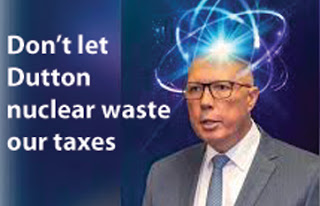
Peter Dutton’s nuclear proliferation claims. What’s the scam?
by AAP and Kim Wingerei | Jul 11, 2024 https://michaelwest.com.au/peter-duttons-nuclear-proliferation-claims-whats-the-scam/
The scam is that it is wrong. According to a fact check done by AAP, his claims are misleading at best. Five other nations in the top 20 – Germany, Italy, Turkiye, Saudi Arabia and Indonesia – do not generate nuclear energy.
Germany, Italy and Turkiye import very small amounts of electricity generated from nuclear sources, but Indonesia and Saudi Arabia don’t consume any nuclear power.
–Australia is the only top 20 economy that doesn’t generate, import or have a plan to do so.
Mr Dutton has made the claim at least four times in interviews about the coalition’s plan to build seven nuclear power stations in Australia without clarifying that he’s counting countries planning to use nuclear power among those that are actually using it.
“Nuclear energy actually is not used by three of the world’s 20 largest economies.”
Mr Dutton said nuclear power was “used by 19 of the 20 biggest economies in the world” at a June 18 press conference in NSW.
He again claimed that of the top 20 economies in the world, “Australia is the only one that doesn’t have nuclear” in a June 20 interview on Sky News.
That same day, the opposition leader spoke out about how Australia could benefit from nuclear power “as 19 of the world’s top 20 economies have done” in an ABC News Breakfast interview.
Mr Dutton again said Australia was the only one of the 20 biggest economies that “doesn’t operate” nuclear at a press conference on July 5.
Australia, Saudi Arabia and Indonesia do not generate or use nuclear power for electricity.
He also said Australia was the only G20 member that didn’t use or plan to use nuclear power in an ABC TV interview on April 2
The G20 is a global forum for countries with large economies. Despite its name, the G20 includes only 19 nations, plus the African Union and the European Union. Spain is invited to the G20 as a permanent guest.
It’s unclear if Mr Dutton is referring to the G20 countries plus Spain, or the 20 largest nations by gross domestic product, as he’s used both interchangeably.
However, AAP FactCheck has analysed the former because the nations that don’t generate nuclear power and the nations that only import small amounts of it are exactly the same for both groupings, as per World Bank 2023 GDP data.
Fourteen G20 countries operate nuclear power plants: Argentina, Brazil, Canada, China, France, India, Japan, Mexico, Russia, South Africa, South Korea, Spain, the UK and the US.
Three G20 nations that don’t generate nuclear power but import small amounts are Germany, Italy and Turkiye. That year, about 0.5 per cent of the electricity consumed there was imported from France, which generates about two-thirds of its electricity from nuclear sources.
Italy closed its last reactors in 1990. Today, about six percent of its electricity consumption is imported nuclear power.
The country effectively banned nuclear power in 2011, but the current government wants to restart it.
Turkiye is building a plant that could start generating electricity from 2025. The country is also planning to build two other nuclear plants.
In 2022, the country imported a tiny amount of the electricity it consumed, including 0.8 per cent from Bulgaria, which generates about 35 per cent of its electricity from nuclear sources.
Therefore, a fraction of Turkiye’s electricity consumption could be produced from nuclear – likely less than half a per cent.
The country effectively banned nuclear power in 2011, but the current government wants to restart it.
Therefore, a fraction of Turkiye’s electricity consumption could be produced from nuclear – likely less than half a per cent.
Saudi Arabia doesn’t use any nuclear energy either, but it’s taking steps towards doing so in future.
Indonesia doesn’t have any nuclear reactors but has tentative plans to build some in the coming decades.
Dr Yogi Sugiawan, a policy analyst at the Indonesian government agency responsible for developing nuclear energy policies and plans, told AAP FactCheck that his country doesn’t generate or import nuclear energy.
However, Dr Sugiawan says Indonesia’s government is considering nuclear power, with an initial plant “expected to be commissioned before 2040”.
The verdict
The claim that Australia is the only G20 nation that doesn’t use nuclear power is misleading.
Evidence and experts say six G20 countries do not generate any nuclear energy, and three of those don’t consume it either.
Misleading – The claim is accurate in parts, but information has also been presented incorrectly, out of context or omitted.
AAP FactCheck is an accredited member of the International Fact-Checking Network.
Dr Yogi Sugiawan, a policy analyst at the Indonesian government agency responsible for developing nuclear energy policies and plans, told AAP FactCheck that his country doesn’t generate or import nuclear energy.
However, Dr Sugiawan says Indonesia’s government is considering nuclear power, with an initial plant “expected to be commissioned before 2040”.
South Australia locks in federal funds to become first grid in world to reach 100 per cent net wind and solar
And to underline the difference in federal politics, the announcement was made at Port Augusta, the site of a former coal fired power station that the federal Coalition wants to turn nuclear, but which has already become a hub for green energy and green industry.
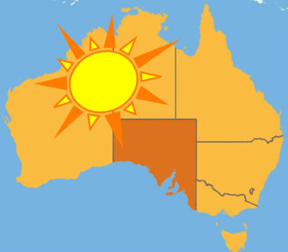
And to underline the difference in federal politics, the announcement was made at Port Augusta, the site of a former coal fired power station that the federal Coalition wants to turn nuclear, but which has already become a hub for green energy and green industry.
Giles Parkinson, Jul 10, 2024, https://reneweconomy.com.au/south-australia-locks-in-federal-funds-to-become-first-grid-in-world-to-reach-100-per-cent-net-wind-and-solar/
South Australia has locked in federal funding to ensure that it becomes the first non-hydro grid in the world to reach 100 per cent net renewables.
The funding deal – through what’s known as a Renewable Energy Transformation Agreement – means that the federal government will underwrite a minimum one gigawatt of new wind and solar generation capacity and another 400 MW (1,600 MWh) of storage – to ensure it meets its target of 100 per cent net renewables by 2027.
South Australia already leads Australia – and the world – with a wind and solar share of around 70 per cent over the last 12 months. The addition of the new capacity, along with the new Project Energy Connect transmission link from NSW, will enable it to become the first in the world to reach 1`00 per cent net renewables based around wind and solar.
That does not mean it will be powered at all times by wind and solar. But the amount of wind and solar generated and stored each year will be equivalent to what it consume each year. The state will export power at times and import at other times, and can fall pack on existing peaking gas plants to fill in the gaps.
Reaching that milestone will be a landmark for the state, and for advocates of the renewable energy transition, particularly as conservative and legacy fossil fuel interests continue to push back on the idea that a modern economy can be powered by renewables and storage.
The irony about South Australia is that the target of 100 per cent net renewables was originally committed by the state Liberal government. The state Labor government merely accelerated it from 2030 to 2027.
And to underline the difference in federal politics, the announcement was made at Port Augusta, the site of a former coal fired power station that the federal Coalition wants to turn nuclear, but which has already become a hub for green energy and green industry.
“South Australia has been a renewable energy pioneer – so much so that we recently brought forward our renewable energy target by three years, committing to ensure electricity generation can be sourced from net 100 per cent renewables by 2027,” state energy minister Tom Koutsantonis said in a statement.
“So we warmly welcome this agreement to accelerate the roll out of renewables while ensuring the reliability of the energy system.
“Our government is committed to working with the Commonwealth to establish a secured grid, supporting the power needs of South Australian households and businesses.”
South Australia has not added a new wind or solar project to the grid for around two years, although the biggest wind project in the state – the 412 MW Goyder South wind farm – is about to connect and send its first power to the grid.
Several new battery projects are also under construction – at Blyth, Hallett, Clements Gap and Templers and another, Tailem Bend, still waiting to be commissioned.
These projects will help propel the state towards 80 per cent renewables over the coming year, while the additional capacity of 1,000 MW of wind and solar, 400 MW of battery capacity (plus the minimum 200 MW included in the current CIS auction) will take it towards 100 per cent net renewables by 2027.
South Australia is also building the world’s first green hydrogen power plant at Whyalla, which will be accompanied by a 250 MW green hydrogen electrolyser and storage facilities, which will also be the world’s biggest when complete.
The state is also fielding huge number of inquiries from industry keen to source zero emissions and low cost green energy – with the local transmission company ElectraNet reporting that more than 2 gigawatts of load inquiries have been made.
Federal energy and climate minister Chris Bowen says the signing of the Renewable Energy Transformation Agreement means that South Australia is the first state to lock in the funding required to meet its targets under the federal government’s Capacity Investment Scheme.
The CIS aims to contract an additional 32GW of renewable generation and storage across the country to help it deliver most of the capacity needed to meet its 82 per cent renewable energy target by 2032.
The first tender of 6 gigawatts of new wind and solar capacity has been flooded with interest, with more than 40 GW of projects showing interest, while the first storage tender – for 600 MW, 2,400 MWh in Victoria and South Australia – was also heavily oversubscribed with some 19 GW of proposals.
Bowen says the bilateral agreements have been designed specifically to address the barriers developers, communities, and governments face in delivering renewable projects, and to replace ageing infrastructure that was built half a century ago.
“The Albanese Government is delivering the certainty and confidence the market spent a decade asking for,” Bowen said in a statement.
“The more renewable energy we have in our grid, the more downward pressure it puts on energy bills because it is the cheapest form of energy to power households and industry.
“Giving the market the confidence to build new projects is good; signing an agreement to collaborate with South Australia on practical steps to get the best out of this energy transformation for South Australian workers, communities and industry, is great.
“The Albanese Government’s Reliable Renewables Plan is the only plan supported by experts to deliver the clean, cheap, reliable and resilient energy system that Australians deserve. This is in sharp contrast to Peter Dutton’s anti-renewables nuclear plan – which remains uncosted and unexplained.”
As part of the deal, South Australia, will establish its own specific grid reliability mechanism and benchmark to be used in place of the national framework, and to be responsible for identifying and delivering new projects and technologies that will maintain reliability to that standard.
Renew Economy is seeking more information to understand what that means in practice.
“The Sun has won”: exponentially growing solar destroys nuclear, fossil fuels on price

Given Dutton’s claims about solar power costing more than nuclear are made ridiculous by the fact that solar’s break-even price has fallen by a factor of more than 1000 and the trend is continuing.
Meanwhile cost overruns in nuclear are endemic and SMR’s only exist in Dutton’s imagination.
By Noel Turnbull, Jul 11, 2024, https://johnmenadue.com/the-sun-has-won-exponentially-growing-solar-destroys-nuclear-fossil-fuels-on-price/—
It’s not known if Peter Dutton reads The Economist but if he does, he must probably think from time to time that it is sometimes dangerously left wing.
In the 22 June issue, it had a special essay on solar power – headlined ‘The Sun Machine’. The sub-head was “An energy source which gets cheaper the more you use it marks a turning-point in industrial history’.
The essay is a total contradiction of almost everything Dutton is claiming about nuclear and renewable energy.
“What makes solar energy revolutionary is the rate of growth which brought it to this just-beyond the marginal state”, the essay says.
They cite a veteran energy analyst, Michael Liebreich, who shows that in 2004 it took a year to install a gigawatt of solar power capacity; in 2010 it took a month; in 2016 a week; and in single days in 2023 there were a gigawatt of installation worldwide.
Current projections are that solar will generate more electricity than all the world’s nuclear plants in 2026; than wind turbines in 2027; dams in 2028; gas-fired plants in 2026; and coal-fired ones in 2032.
All that well before Dutton’s nuclear plants – if at all – start generating power. Moreover, unlike nuclear power which notoriously always takes longer to build than predicted, predictions about the rate of solar power roll-out are consistently under-estimates.
The Economist points out that in in 2009 The International Energy Agency (IEA) predicted solar would increase from 23GW to 244GW by 2030. It hit that milestone in 2016 – less than a third of the predicted time. The world capacity was 1419GW by 2023.
Ironically, one of the few organisations which got their predictions roughly right was Greenpeace – yet even their prediction was an under-estimate.
Given Dutton’s claims about solar power costing more than nuclear are made ridiculous by the fact that solar’s break-even price has fallen by a factor of more than 1000 and the trend is continuing. Meanwhile cost overruns in nuclear are endemic and SMR’s only exist in Dutton’s imagination.
Dutton is stronger on ideology and outrageous claims than economics, but the manufacture of photovoltaics is a classic example of the benefits of mass production – benefits which have always eluded the nuclear power industry.
As The Economist points out solar cells are standardised products all made in basically the same way and “they have no moving parts at all, let alone the fiendish complexity of a modern turbine.”
“Manufacturers compete on cost, by either making cells that make fractionally more electricity, by either making cells that make fractionally out of a given amount of sunshine or which cost less.”
Economics 101 teaches us that a commoditised product does not lead to more and more aggressive competition on the supply side – simply in this case by getting more electricity out of any given amount of sunshine or by costing less.
Rob Carlson, a technology investor, told The Economist: “There is no other energy-generation tech where you can install one million or one of the same thing depending on your application.”
“The Sun has won” he says.
The Economist said: “From the mid-1970 to the early 2020s cumulative shipments of photovoltaics increased by a factor of a million which is 20 doublings. At the same time prices dropped by a factor of 500. That is a 27% decrease in cost of doubling of installed capacity, which means a halving of costs every time installed capacity increases by 360%.
Adair Turner, an eminent economist and financial services executive, was Chair of Britian’s Climate Change Committee which was set up to help transition to zero emissions.
He told The Economist: “We totally failed to see that solar would come down so much.”
BloombergNEF estimated, in 2015, that the cost for solar on a global basis was $122 per MWH – higher than on shore wind and coal. Today both solar and onshore wind are almost half the cost of coal.
Meanwhile, Dutton has welcomed Keir Starmer’s election win by pointing to his support for nuclear power. Which, given that the UK has already installed nuclear power, the cautious Starmer is unlikely to announce that he is closing it down.
Moreover, Starmer’s major problem with nuclear is managing the spiralling delays in, and cost of, nuclear plants being constructed following typical Tory blunders.
The question which Dutton needs to answer is why he knows more about nuclear and solar power than The Economist reporters, Bloomberg, Adair Turner, Rob Carlson, many major investment funds and the overwhelming majority of Australian scientists?
He might ponder all that while the Murdoch media is becoming a tad critical of him – criticising his policy on supermarket divestment and speculating on who might be the Liberal Party leader if Dutton loses the next election.
Meanwhile, notwithstanding their doubts about Dutton’s chances and policies (other than nuclear) The Australian never totally loses its manic opposition to anything progressive. The inimitable Greg Sheridan opined on The Australian front page (6/7) that Labour had not won but the Tories had lost. Partly true obviously, but his piece was enough to prompt the subs to headline the piece with “Self-described socialist is set to drag Britain far to the left”.
Sheridan also rehearsed his regular hates and speculated how it would all come undone.
Jeremy Corbyn would love that to be the case but Starmer not so.
Perhaps the funniest lines in Sheridan’s’ piece were: “Starmer is brainy and works hard. Too deep immersion in the law has rendered it impossible for Starmer to write felicitous prose or create memorable images.”
From a journalist who year after year simply reproduces the same old opinions on the same old subjects that is, to say the least, a bit much.
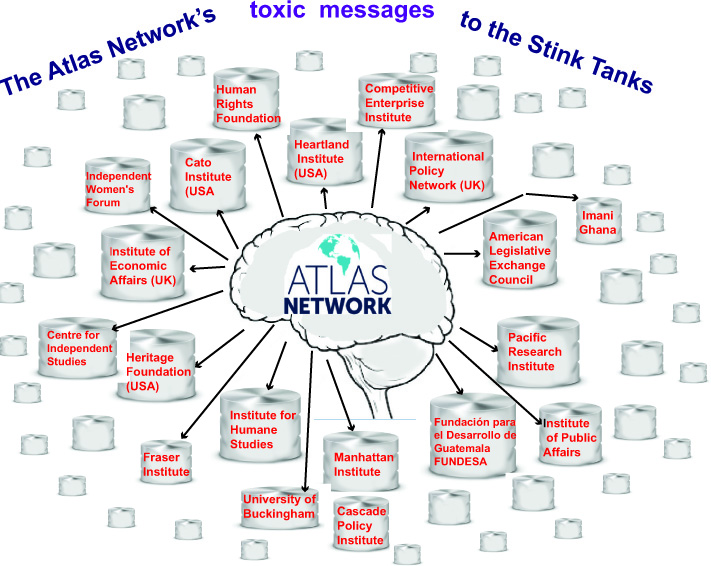
The IPA just exploded their argument that the “Atlas Network” is tinfoil hat conspiracy

Lucy Hamilton, 11 July 24 https://theaimn.com/the-ipa-just-exploded-their-argument-that-the-atlas-network-is-tinfoil-hat-conspiracy/
The Institute of Public Affairs (IPA) has just shown its links to the Atlas Network, the group to which the Heritage Foundation and Project 2025 belong. The IPA has been a blight on the Australian scene since some of its senior figures went to a Mont Pelerin Society meeting in Hong Kong in 1978 and determined to change it from being a body that promoted the market for businessmen (but with checks and balances) to a much more extreme agenda. Mike Seccombe recounted the story from the old guard’s explanation: “Former IPA head: radicals ‘hijacked’ thinktank.”
This reflects the fact that the IPA was established – in 1943 – before the Mont Pelerin Society first met in 1947. Both bodies grew out of a business world that was terrified by the New Deal and other Keynesian responses to the Great Depression and the Great War. The aristocrats and robber barons were aghast at the thought that they might lose property to the filthy masses as the Russian elites had in the revolution. They perceived government efforts to hold off revolution by offering some support to the population, immiserated by capitalism’s failure in the late 20s, as the first step to their own impoverished exile.
The program was funded and fostered by resource extraction money from the earliest days at both the Mont Pelerin Society and the IPA.
This Cold War bogeyman continues to haunt the IPA. It is campaigning to demonise socialism on social media, using propaganda resources manufactured by its partner organisations in the Atlas Network.
The IPA is terrified of a world where young people have seen the ugliness of neoliberalism. That term is best defined not so much as an ideology, but as the network of people and organisations which have worked over decades to turn us from societies into a global market of consumers. The massive inequality it has fostered since the Mont Pelerin Society’s campaigning moved from the fringes in the 1940s to power under Reagan, Thatcher, Pinochet and Rogernomics is clear and miserable. Social democracies seem a much sounder path to a sustainable society and world.
The Mont Pelerin Society first colonised the Chicago School. The laissez faire economics taught there had been fighting monopoly power as a distortion of the free market. Under Friedrich Hayek’s influence, they converted to fighting the antitrust law that impeded monopolists. The new agenda of Hayek’s Chicago School was for the big money to control government. Thus they would shackle their less-connected competitors, and prevent the masses standing in their way. Milton Friedman was their great salesman. His work became systemised, by founder Antony Fisher at Hayek’s instigation, in junktanks that pretended to be think tanks or university centres or phoney grass-roots civil society organisations.
There was no “free market.” That was propaganda. This is visible in the long trajectory of the campaigns the neoliberal network pursues. In America’s Republican states, it is stark. The blocking of union formation is a mission to prevent the worker having any power over their conditions. The campaign does not stop there. This is accompanied by non-compete clauses so that a worker who does not like their conditions of employment, in the most menial of jobs, cannot move to a rival who provides better conditions. Not only that, but state laws (of the kind written by these networks) punish employers within their state boundaries that offer better conditions.
Labor conditions in Republican states are appalling. It is worse in these Confederate states for non-White people. Through a raft of laws that make it miserable to exist, through to an entire infrastructure designed to imprison Black men and hire out their bodies as slave labour, the intent is clear. There is no free market for labour.
The redistribution of society’s tax money to the rich in a variety of ways (think Jobkeeper and Harvey Norman) shows, just as the Republican state experiment does, that the neoliberal experiment is not about “property rights” but “property rights for the rich.” Our property is their property.
If they wish to make our property worthless by fuming poisoned air over it, that is our tough luck.
When one of the Atlas Network’s favourite IPA apparatchiks, Tim Wilson, was made Human Rights Commissioner by IPA-affiliate Tony Abbott, his public campaign was for free speech rights. Of course Yassmin Abdel-Magied’s free speech was not to be protected. Free speech is for their faction, not the Other.
Behind closed doors, however, Wilson’s primary battle for rights was for property rights. He spoke at the libertarian Friedman Conference with utter scorn of the high-ranking rights experts with whom he was forced to work in that role. His infantilised distortion of the British tradition of liberalism placed property rights as the prime factor. Their more sophisticated (French?) tradition of liberalism treated the rights of oppressed humanity as a higher priority.
Anyone watching the authoritarian intent behind the Project 2025 mission that threatens to accompany a Trump victory in November sees that it protects the property rights of the rich as much as key Atlas funder and strategist Charles Koch could demand. The human rights of anyone who fails to live as the obedient “traditional” identity, however, is under serious threat. The fact that the humanity of the gestating woman or pregnant person is made invisible, a machine gestating the potential humanity of a small ball of cells inside, illustrates the threat. Control of anyone who does not play by their rules is already a life and death matter in American Republican states.
The IPA shared a snippet of video made by one of the American Atlas partners, the Liberty Fund. In this, grim socialist footage of communist Estonia illustrates that “socialism” is ugly, monotone suffering not Bernie Sanders. The youth must be chastened out of the idea that their humanity deserves rights or that they have a justifiable claim for a decent standard of living, even if the plutocrats have to give up a little of their extraordinary wealth. At the bottom of that Liberty Fund page, key partners in the Atlas Network are listed.
The low-rent IPA campaigns on social issues to foment culture war. They aim to distract those most disadvantaged in neoliberalism’s world. They have not, however, forgotten the main game. A more equitable society means the rich must pay their fair share of tax. The financial, legal, governmental systems that they have gamed must be deconstructed. Before 2020, eight men alone owned as much property as that held by 3.6 billion people. Since the pandemic, that situation has worsened dramatically. In the years since 2020, 26 trillion dollars of new wealth has been snatched by the 1%. By contrast the rest of the world’s population gained $16 trillion. A 5% wealth tax on the handful of billionaires could raise enough to bring 2 billion people out of poverty.
Business has always benefitted from tax-funded infrastructure. Hospitals, schools, roads, railway, the internet etc make businesses possible. The bunk economics of neoliberalism denies that fact. Their friends at ultraconservative Quadrant warned that neoliberalism’s zero sum game would destroy the Australian way of life, and they are being proved right.
This impoverished world has been created by the plutocrats’ influence network and their junktanks infesting our public debate, media, academia and government. Neoliberalism was their construction and continues to threaten our survival by their obdurate refusal to transition away from carbon-based energy.
We should thank the IPA for sharing Koch (and Templeton) propaganda. Next time they say that talk of the Atlas Network is tin-foil hat conspiracy theory, we can remind them that they proved our point themselves.
Aboriginal supporter of right-wing racism, Warren Mundine’s interests in mining uranium -not doing too well.
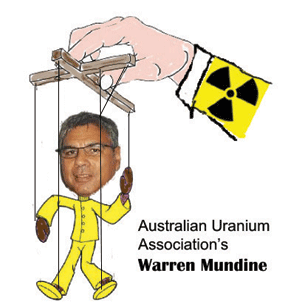
Mundine was one of the two main faces of the “No” campaign against last year’s Indigenous Voice to parliament referendum, campaigning against so-called “elites”.
The Voice “No” campaign was run by far-right lobby group Advance which ran a campaign of aggressively attacking so-called “elites” who it said were behind the Voice.
In fact, as previously reported, the No campaign was bankrolled by a handful of mega wealthy individuals, many with deep ties to the mining and fossil fuels sector.
The struggles facing Aura Energy coincide with a fierce political debate over the future of nuclear energy in Australia, with the federal Opposition calling for a nuclear rollout despite it being vastly more expensive than renewables.
Mundine uranium company shares collapse
ANTHONY KLAN, 9 July 24 https://theklaxon.com.au/mundine-uranium-company-shares-collapse/
A uranium exploration company overseen by businessman Warren Mundine has seen its share price crash after its auditor warned it was in danger of collapse.
Over $60 million has been wiped from the value of ASX-listed Aura Energy since its auditor waived the red flag — and a subsequent emergency capital raising has seen new investors left heavily in the red.
Company document show that on March 15 the auditor of Aura Energy — which states it has “major uranium projects” in “Africa and Europe” — warned there was a “material uncertainty” that it would be able to remain solvent.
Aura Energy had made losses of $9.79m in the 18 months to December 31 and had a remaining cash balance of just $5.86m.
Shares in the company — which is not covered by any analysts or stockbrokers — immediately crashed 33%, to 16.5c.
Aura Energy conducted a capital raising to help it stave off insolvency, but shares it sold under the offer only six weeks ago at 18c yesterday closed at just 13.5c.
Since January — while Australia has been engaged in a fierce debate over nuclear energy — the share price of Aura Energy has halved.
Mundine, who was appointed a director of Aura Energy in December 2021, is a major public advocate of nuclear energy was previously a director of Australian Uranium Association.
The woes facing Aura Energy follow the collapse of the planned $10m IPO of Mundine’s “minerals exploration” company Fuse Minerals in April.
That company, chaired by Mundine, was forced to scrap its plans to float on the ASX after failing to raise enough funds, despite it extending its capital raising period by more than eight-fold, from two weeks to more than four months.
Fuse Minerals had never earned a cent in revenue or conducted a single drill.
Mundine was one of the two main faces of the “No” campaign against last year’s Indigenous Voice to parliament referendum, campaigning against so-called “elites”.
He has repeatedly refused to comment when contacted by The Klaxon.
Company filings show Aura Energy entered a trading halt on March 15 and three days published its accounts for the six months to December 31.
In the six months it lost $2.99m, on the back of $6.80m in losses in the year to June 30, 2023.
In the half-year report, Aura Energy’s auditors Hall Chadwick state there is a “material uncertainty that may cast significant doubt” over the company’s “ability to continue as a going concern”.
In the report Aura Energy’s directors state the company is “dependent on further capital raises or external financing” to stay afloat.
“As the Group is in the exploration stage and does not generate operating cash inflows, the Group is dependent on further capital raises or external financing to maintain operations which results in a material uncertainty which may cast significant doubt on whether the Group can continue as a going concern,” the directors state.
On March 18 — the same day it published those half-year accounts — Aura Energy announced it had conducted a “successful placement” to raise $16.2m from “professional and sophisticated investors” by issuing 90.2m shares at 18c a share.
It would also raise $2m from the public, also at 18c a share, with those shares listed on the ASX on May 30.
Under both raisings, for every four shares bought there were also three “free” attached options, with an exercise price of 30c and a two year expiry. (Meaning they would have value if Aura Energy’s share price goes above 30c in the next two years).
In advertising the public raising, Fuse Minerals said the price of 18c a share was at an “18.2% discount” to the 22c a share they were trading at on the day the offer was announced.
Further, 18c a share was a “23.5% discount” to the average price the shares had been trading at over the five days before the offer was announced.
On the day the public offer shares were listed on the ASX, May 30, the company’s shared were trading at 16.5c.
Yesterday they closed at 13.5c.
At January 1 the company had 623m shares on issue and a share price of 26.5c, giving it a “market capitalisation” of $165.1m.
Yesterday its market capitalisation was $103m, down $62.1m.
The struggles facing Aura Energy coincide with a fierce political debate over the future of nuclear energy in Australia, with the federal Opposition calling for a nuclear rollout despite it being vastly more expensive than renewables.
Mundine and Senator Jacinta Price were the most prominent faces of the “No” campaign against the Indigenous Voice to parliament, which was voted down in October.
Two weeks later Mundine announced he was chair of Fuse Minerals — and that the company was seeking to raise up to $10m and list on the ASX.
The Klaxon subsequently revealed Fuse Minerals owned only one of the nine exploration licences listed in its prospectus — and that its own “independent expert” had warned it was in danger of collapse.
By January Fuse Minerals had raised just $1.86m, well short of the $6m-$10m sought and was legally required to refund money to investors seeking to exit.
On March 28 Fuse Minerals was forced to scrap the offer entirely.
The Voice “No” campaign was run by far-right lobby group Advance which ran a campaign of aggressively attacking so-called “elites” who it said were behind the Voice.
In fact, as previously reported, the No campaign was bankrolled by a handful of mega wealthy individuals, many with deep ties to the mining and fossil fuels sector.
No room for nuclear: AGL says flexibility is key as it plans to dump coal for renewables in a decade

ReNewEconomy Giles Parkinson, Jul 9, 2024
Australia’s biggest supplier of coal generation and baseload power, AGL Energy, has again underlined the fact there is no room for nuclear in Australia’s transition to renewables – neither on a grid dominated by wind and solar nor at its coal sites that it intends to transform into clean industrial hubs.
“I’d like to clarify – as I did in March – that nuclear energy is not part of our strategy and our position on this remains unchanged, AGL CEO Damien Nicks said in a presentation to a CEDA event in Sydney on Tuesday.
Nicks’ position is important because two of AGL’s coal generation sites have been identified by the federal Opposition for its nuclear power plans, which it says could see seven reactors, or more, start construction sometime in the 2030s or 2040s – should they be elected, be able to remove the bans, find the technology and finance, and the sites to host it.
AGL – and the owners of other mooted nuclear sites – have no intention of giving up their assets for nuclear power plants, despite the threats of compulsory acquisition, largely because they have their own plans.
Nicks says the site of the recently shuttered Liddell coal generator in the Hunter Valley is already accounted for, with plans for a giant battery, solar module manufacturing, panel recycling, a link to a planned 400 MW pumped hydro facility and multiple green industries including hydrogen, metals and other activities.
“The Hunter Hub is actively progressing opportunities across a variety of industries, including; solar thermal generation, solar PV manufacturing, battery and solar recycling, waste-ash-to-materials and hydrogen,” Nicks says.
“Our recent announcements with SunDrive and Elecsome are examples of the businesses we’re looking to work with.
“We’re committed to creating opportunities for our people and local communities, as well as partnering with like-minded industries to support economic diversification and jobs in the Upper Hunter.”
The point that Nicks made around the Hunter hub is that – because of its multi-billion dollar investment plans in new industries – there is no spare capacity for the sort of big nuclear projects that the Coalition wants to build. Or even small ones.
It points to the hot air behind the Opposition position on nuclear, and it’s complete of planning and consultation, something it plans to ignore by riding roughshod over opposition from state governments, asset owners, and local communities.
But the nuclear plan also makes little sense for Australia’s solar dominated grid, as so many energy experts have pointed out. Nicks once again highlighted this, saying the nature of a grid dominated by wind and solar needs flexibility rather than the “always-on” base-load design relied on by nuclear.
AGL intends to shutter the last of its coal generators by 2035, and is working to make them more flexible in the meantime so they can to respond to the generation patterns and “solar duck curves” created by rooftop PV, which will account for most of demand in daytime hours, and large scale wind and solar.
It’s critical we have the flexibility within our portfolio to firm capacity and help us manage some of the changing peaks and troughs in the renewable energy market,” he said
These include expanding its grid scale battery assets, boosting its capacity of hydro and gas peakers, and growing its portfolio of distributed energy assets to 1.6 GW by 2027, to support load shifting and orchestration of rooftop solar.
The slide provided above [on original] indicates a number of new wind, solar and battery projects, including the already announced Pottinger Energy Park in the Riverina, the proposed 500 MW, 2000 MWh Tomago battery, the newly approved Bowmans Creek wind project, and several other projects that have not yet been publicly named.
“We’ve undertaken significant upgrade works at our Bayswater plant in NSW and Loy Yang in Victoria that means these plants can now be flexed down approximately 60-70 per cent of their full operating capacity.
“This means we’re able to further ramp down during those daytime periods of peak solar generation which is commercially beneficial as it minimises production at negative pricing, using less coal and producing less emissions,” he said. …………………….. more https://reneweconomy.com.au/no-room-for-nuclear-agl-says-flexibility-is-key-as-it-switches-from-coal-to-renewables-in-a-decade/
Book – “Nuked” on Aukus ‘fiasco’ says decision to embrace pact will ‘haunt’ Labor for years

“undermines any argument that the new submarines – whether nuclear or not – would be used primarily to defend Australia or to protect the nation’s shipping lanes”.
“at least one new cabinet minister wondered if it was possible to stop Aukus, but the suggestion went no further”.
Fowler said he did not believe there had been adequate public debate in Australia about the merits of Aukus,
Andrew Fowler’s book reveals one of Australia’s most important requirements for its submarines was the ability to work alongside the US in South China Sea
Daniel Hurst , 7 July 24, https://www.theguardian.com/world/article/2024/jul/07/book-on-aukus-fiasco-says-decision-to-embrace-pact-will-haunt-labor-for-years
One of Australia’s most important requirements for its new submarines is the ability to work alongside the United States in the South China Sea, a new book discloses.
The book by Andrew Fowler, a former investigative journalist for the ABC’s Four Corners and Foreign Correspondent programs, also predicts that Labor’s rush to embrace the Aukus pact “will haunt them for years to come”.
Fowler examines the Morrison government’s cancellation of the French submarine contract and its pursuit of a nuclear-powered alternative in the book Nuked: The Submarine Fiasco that Sank Australia’s Sovereignty.
The book makes the case that Aukus is a “deeply flawed” scheme that, when combined with a parallel effort to deepen military integration with the US, effectively ties Australia’s future “to whoever is in the White House”.
It includes an interview with David Gould, a former UK undersecretary for defence, who was headhunted by the then Gillard Labor government in 2012 as a consultant on a replacement for Australia’s ageing Collins-class submarines.
“As we sat talking, Gould revealed for the first time what has long been suspected: one of the submarine’s most important requirements would be to work with the Americans in the South China Sea,” Fowler writes.
“He explained that the submarine would need ‘to get through the archipelago to the north of Australia and into the South China Sea and operate in the South China Sea for a reasonable period of time and then come back again, without docking, or refuelling or anything. That’s what it needs to do.’”
The book quotes Gould as saying that the submarine would work alongside the US and Japan in an “integrated system”, which had become “even more pertinent with China”.
Fowler writes that the statement “undermines any argument that the new submarines – whether nuclear or not – would be used primarily to defend Australia or to protect the nation’s shipping lanes”.
Fowler contends that the focus is “to contain China and threaten its trade routes and food and energy supplies in a crisis”.
The Australian government has repeatedly said that its strategic motivation for acquiring nuclear-powered submarines is to “contribute to the collective security of our region” and maintain the global rules-based order.
The Labor defence minister, Richard Marles, has argued that the defence of Australia “doesn’t mean that much unless we have the collective security of our region” and that the nuclear-powered submarines would put a “question mark in any adversary’s mind”.
Fowler contends that the focus is “to contain China and threaten its trade routes and food and energy supplies in a crisis”.
The Australian government has repeatedly said that its strategic motivation for acquiring nuclear-powered submarines is to “contribute to the collective security of our region” and maintain the global rules-based order.
The Labor defence minister, Richard Marles, has argued that the defence of Australia “doesn’t mean that much unless we have the collective security of our region” and that the nuclear-powered submarines would put a “question mark in any adversary’s mind”.
The book reveals that after Labor won the 2022 election, “at least one new cabinet minister wondered if it was possible to stop Aukus, but the suggestion went no further”.
In an interview with Guardian Australia, Fowler said he began researching the book after becoming fascinated with “the overuse of executive power of government in the Morrison government, particularly the exposure of his five secret ministries”.
“I thought that the arrival of a $368bn secret deal that was done and then sprung on the public and the opposition party at the last moment would require an investigation,” he said.
Fowler said he did not believe there had been adequate public debate in Australia about the merits of Aukus, the security partnership with the US and the UK that involves the nuclear-powered submarine project but also collaboration on other advanced defence technologies.
“I think we debate the dollar-and-dime arguments, as the Americans might say, but we don’t debate the really big issues,” Fowler said.
“I don’t give advice to government but I think the Australian people have a right to know what the submarines are being bought for. They’re being bought to run with the Americans and Japan to contain the rise of China.”
Fowler said the then Labor opposition was put “in a diabolical position” when forced by Scott Morrison to make a quick decision on whether to support Aukus in 2021.
“This was a calculated attempt to wedge Labor on this issue and Labor only had 24 hours to make a decision,” he said. “It was obscene and absurd, and yet they made the decision fearing that if they opposed it they would be accused of being anti-American and weak on national security.
“I do understand why they went with it, but I think they also had some time to do some backtracking.”
Fowler called for an inquiry focused on “a failure of due process” in the cancellation of the French contract and the decision to pursue the Aukus arrangement, which officials admitted during Senate estimates hearings had not gone through the normal two-gate process for defence acquisitions.
Instead, the Morrison government announced Australia, the US and the UK would carry out an 18-month joint study to work out how to deliver the project. That led to the Albanese government’s March 2023 announcement of more detailed plans.
The book argues the French submarines would have given Australia “greater independence”, noting the president, Emmanuel Macron, had described Australia, India and France as being at the heart of a “new Indo-Pacific alliance and axis”.
The book says this “more independent thinking” caused “consternation in Washington”.
1 This month

of the week – Australians for War Powers Reform (AWPR)
To see nuclear-related stories in greater depth and intensity
 Antinuclear