Environment Minister Sussan Ley not to support protection of Murray-Darling river systems
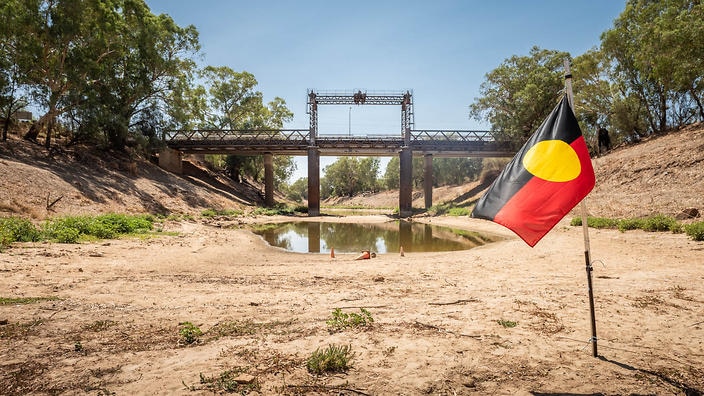
Murray-Darling systems not assessed for endangered listing after officials warned Coalition would not  support it
FoI documents reveal struggling systems were ‘clear candidates’ for protection but Sussan Ley ‘unlikely to support’ it, Guardian, Lisa Cox, Wed 13 May 2020 Struggling river and wetland systems in the Murray-Darling Basin were not assessed for listing as critically endangered after officials warned the Morrison government would not support protecting them.
Environment department staff said the two ecological communities were “clear candidates” for assessment for a critically endangered listing, documents released under freedom of information show. But the environment minister, Sussan Ley, was “unlikely to support” their inclusion on the 2019 list of species and habitats under consideration for protection, they told the threatened species scientific committee.
The department also told the committee the work required to do the assessment would have “significant resource implications”.
The two communities are known as the “wetland and inner floodplain of the Macquarie Marshes”, and the “Lower Murray River and associated wetlands, floodplains and groundwater systems from the junction of the Darling River to the sea”.
Both were listed as critically endangered by then environment minister Mark Butler in the final days of the Labor government in 2013.
After the Coalition won government, both listings were disallowed under the new environment minister, Greg Hunt. It followed a campaign against the critically endangered listings by the National Irrigators Council.
Humane Society International, the organisation behind the nomination that led to the 2013 listings, renominated the river and wetlands systems for assessment for a critically endangered listing last year.
In a briefing to the threatened species scientific committee, officials said a tool the department used for conservation assessments had ranked the two communities as the highest priorities from a conservation perspective among a group of five ecological communities nominated for listing in 2019.
But neither made it on to the proposed priority assessment list, which is given to the environment minister to consider before they determine the nominations that will make it on to the final list.
The briefing to the committee is the same document that led to Guardian Australia last week revealing the government had stopped listing major threats to species under national environmental laws…….
Labor’s environment spokeswoman, Terri Butler, said it was “outrageous” the Morrison government had not followed scientific advice. She said the government was attempting “to influence the outcomes of scientific processes designed to protect our environment”.
Richard Kingsford, the director of the Centre for Ecosystem Science at the University of New South Wales, said the scientific research on the two communities showed both had high levels of biodiversity and were degrading significantly as a result of reduced flooding.
“The question would be: why were they ruled out at that first step?” he said…… https://www.theguardian.com/environment/2020/may/13/murray-darling-systems-not-assessed-for-endangered-listing-after-officials-warned-coalition-would-not-support-it
‘under cover of coronavirus’ New South Wales govt approves US company to mine coal beneath a Sydney drinking water dam
|
Woronora reservoir, an hour’s drive south of the CBD, is part of a system which supplies water to more than 3.4 million people in Greater Sydney. The approval will allow Peabody Energy to send long wall mining machines 450 metres below the earth’s surface to crawl along coal seams directly below the dam. Dr Kerryn Phelps says the fact the decision was made “under the cover of coronavirus” is “unfathomable”. NSW has spent 12 of the last 20 years in drought, with record low rainfall plunging much of the state into severe water shortage last year. “We know about the potential for catastrophe,” Dr Phelps told 9News.com.au. “We just cannot let this [decision] go unchallenged.” The former president of the Australian Medical Association may seem an odd figure to lead opposition to a mining project, but Dr Phelps takes what she calls a broad view on health. She grew up on Sydney’s North Shore when koalas still lived in family backyards and has witnessed firsthand the affects human populations have on the natural world. She has also seen, as a doctor, how the degradation of the nature impacts human health. In her role as City of Sydney councillor, Dr Phelps introduced a motion to the council calling on the NSW Minister for Planning and Public Spaces, Rob Stokes, to reverse the approval. “We can’t simply risk the water supply in one part of Sydney, without considering the repercussions for the rest of the state and country,” Dr Phelps said. “We have to make a stand now. If not now, then when?” Chain reactionOn the evening of April 6 this year, the City of Sydney council almost unanimously passed Dr Phelp’s motion calling for the approval to be reversed, prompting mayor Clover Moore to send Mr Stokes a strongly worded internal letter. In it, she described the minister’s decision as “scandalous”. Sutherland Labour Party councillor Ray Plibersek says the move also led Sutherland Shire Council to pass a similar motion urging the decision be reconsidered. “We’re very concerned,” Cr Plibersek told 9News.com.au. “There’s been evidence of damage to the water table… and despite assurances from mining companies, there is a threat to a crucial resource – water.” Sutherland Shire and Wollongong, which both have more than 200,000 residents, share the Woronora special catchment area, the rivers and rivulets passing from one jurisdiction to the next. They share the water within it too – the reservoir supplies 100 per cent of the drinking water……….. https://www.9news.com.au/national/coal-mine-under-greater-sydneys-woronora-drinking-water-reservoir-approved-during-coronavirus-pandemic/d3e51de8-f370-4fcf-b4f8-7f62be1c24c7
|
|

Australian government stops listing major threats to species under environment laws
|
Australian government stops listing major threats to species under environment laws
Documents show department has stopped recommending assessment of ‘key threatening processes’ affecting native wildlife Lisa Cox ,Guardian 8 May 2020 The federal government has stopped listing major threats to species under national environment laws, and plans to address listed threats are often years out of date or have not been done at all. Environment department documents released under freedom of information laws show the government has stopped assessing what are known as “key threatening processes”, which are major threats to the survival of native wildlife. Conservationists say it highlights the dysfunctional nature of Australia’s environmental framework, which makes aspects of wildlife protection optional for government. The Environment Protection and Biodiversity Act is being reviewed, a once-a-decade requirement under the legislation, and there are calls for greater accountability rules to be built into Australia’s environmental laws. It follows longstanding criticism that the act is failing to curb extinction. ‘An unacceptable excuse’In a series of reports since 2018Australia has uncovered multiple failures including delays in listing threatened species and habitats, threatened species funding being used for projects that do not benefit species, critical habitat not being protected, and recovery actions for species not being adopted or implemented. The act lists threats such as feral cats, land clearing and climate change as key threatening processes that push native plants and animals towards extinction. Once a threat is listed, the environment minister decides whether a plan – known as a threat abatement plan – should be adopted to try to reduce the impact of the threat on native species. Advertisement
But a 2019 briefing document shows the department has stopped recommending the government’s threatened species scientific committee assess new key threatening processes for potential listing……… ‘It’s shocking really’Further government data shows that of the 21 listed major threats, only three of those were listed in the last decade of the act, the most recent was in 2014…… The process for listing threats can also take years and is subject to ministerial discretion. Major alterations to the flow of river systems – caused by industry and dams – was accepted by the department for assessment in 2016 but removed from the list by the then environment minister, Josh Frydenberg. The only major threat currently under assessment – “fire regimes that cause biodiversity decline” – has been on the assessment list since 2008 and remains incomplete 12 years later. Its deadline is listed as August 2013. Fire regimes that cause biodiversity decline refers to changes in the frequency and scale of fire due to human influence. Every state of the environment report identifies changed fire patterns as a major threat to the survival of native wildlife. “They haven’t even listed it as a threat, let alone done something about it. It’s shocking really,” Andrew Cox, the chief executive of the Invasive Species Council, said. ……. ‘The system’s broken’Environmental organisations and the threatened species scientific committee have highlighted the weaknesses of the KTP system in submissions to the EPBC review, chaired by Graeme Samuel. ‘The system’s broken’Environmental organisations and the threatened species scientific committee have highlighted the weaknesses of the KTP system in submissions to the EPBC review, chaired by Graeme Samuel……… “It’s all optional. That’s the problem,” James Trezise, a policy analyst at the Australian Conservation Foundation, said. “A threat abatement plan is this optional thing where it’s optional to establish them, it’s optional to implement them, there’s no system for tracking them and there’s not enough resources available.”…. https://www.theguardian.com/environment/2020/may/08/australian-government-stops-listing-major-threats-to-species-under-environment-laws |
|
Investors urge governments to go green for coronavirus recovery
 Investors urge governments to go green for coronavirus recovery, The Age ,By Mike Foley, May 4, 2020 Major investors, Australian superannuation funds and the International Energy Agency are urging governments to seize the green opportunity to drive economic growth after the coronavirus pandemic and avoid the risks they see in high carbon emitting projects.“Recovery plans that exacerbate climate change would expose investors and national economies to escalating financial, health and social risks in the coming years,” said a statement from the Investor Agenda group – an international coalition of institutional investors and asset managers whose members hold more than US$80 trillion under management. Investors urge governments to go green for coronavirus recovery, The Age ,By Mike Foley, May 4, 2020 Major investors, Australian superannuation funds and the International Energy Agency are urging governments to seize the green opportunity to drive economic growth after the coronavirus pandemic and avoid the risks they see in high carbon emitting projects.“Recovery plans that exacerbate climate change would expose investors and national economies to escalating financial, health and social risks in the coming years,” said a statement from the Investor Agenda group – an international coalition of institutional investors and asset managers whose members hold more than US$80 trillion under management.
Large-scale energy generators such as coal and gas fired power plants and their heavy duty transmission networks, as well as gas powered manufacturing facilities, are built to deliver a return on investment over decades. Investors argue international commitments to tackle climate change and reduce emissions such as the Paris Agreement create an unacceptable risk for long-term investment in emissions intensive projects…… The Clean Energy Council, which represents renewable energy companies that employ more than 28,000 workers said governments had “an opportunity to transform Australia forever”. In its Clean Recovery report released on Tuesday the Council said wind and solar projects totalling 30 gigawatts energy capacity, which already have development approval, would generate $50 billion in investment across the supply chain 50,000 construction jobs and 4000 permanent positions. The Council also said support for large and small-scale renewables, such as rooftop panels, and an accelerated roll-out of batteries would create a “smart energy system” that could deliver flexibility and lower costs for consumers with low-emissions. This week, the International Energy Agency, an intergovernmental energy forecast adviser, highlighted opportunities in the energy sector in the wake of COVID-19. Global energy demand is forecast to fall a whopping 6 per cent this year, seven times more than during the global financial crisis….. The Council also said support for large and small-scale renewables, such as rooftop panels, and an accelerated roll-out of batteries would create a “smart energy system” that could deliver flexibility and lower costs for consumers with low-emissions. This week, the International Energy Agency, an intergovernmental energy forecast adviser, highlighted opportunities in the energy sector in the wake of COVID-19. Global energy demand is forecast to fall a whopping 6 per cent this year, seven times more than during the global financial crisis…. Emma Herd, chief executive of the Australian Investor Group on Climate Change, said “government policy that spurs fresh private investment in clean energy … will lead to much needed jobs and economic growth”. “The Australian government should be looking to integrate recovery plans with its technology investment roadmap, long-term emissions reduction strategy, grid modernisation planning and bushfire recovery to build greater resilience and reduce climate risk,” Ms Herd said. https://www.theage.com.au/politics/federal/investors-urge-governments-to-go-green-for-coronavirus-recovery-20200504-p54pmu.html |
|
|
Australia’s govt betting on a fossil-fuel led recovery – despite expert advice on renewable energy
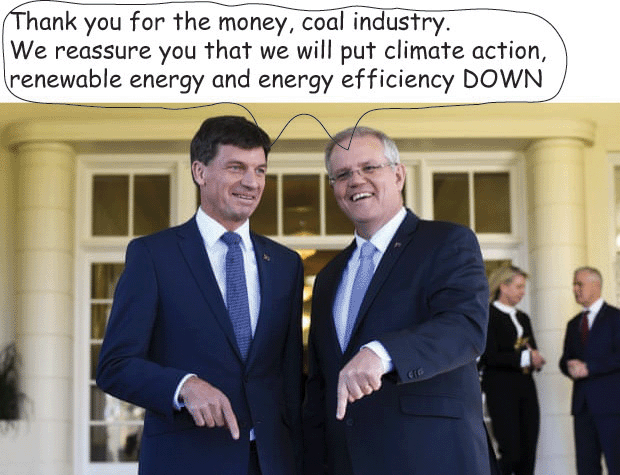 Trouble with gas: the Coalition is betting on the fossil fuel for recovery – but the sums don’t add up
The Australian government says gas is ‘essential’, but the global view is it’s the second-least desirable source of electricity Guardian, Adam Morton Environment editor @adamlmorton, Sun 3 May 2020 The agency that runs Australia’s electricity last week gave its verdict on how to deliver what would have seemed fanciful not that long ago – a power grid that within five years should at times be able to run on 75% wind and solar energy.
The Australian Energy Market Operator delivered a report on integrating renewable energy into the system with an optimistic message.
As described by its chief, New Yorker Audrey Zibelman, the technical capacity was already there, but markets and regulations would have to be adjusted. There were no “insurmountable reasons” why the grid could not take even higher levels of renewables, as it will need to for Australia to meet the Paris agreement goal of zero greenhouse gas emissions.
The minister in charge of both energy and cutting emissions, Angus Taylor, chose a different emphasis.
In a statement issued as the study was released, Taylor said it had highlighted the challenges of increased amounts of solar and wind given the system needed continuous inertia – support from constantly running “synchronous generation” – to ensure grid stability. He suggested that inertia could come from gas-fired power.
The market operator’s report does not mention gas generation, but the fossil fuel – often described as having half the emissions of coal, though recent studies have suggested it could be much more – is clearly on Taylor’s mind. A few days earlier he had given interviews to Nine newspapers to support the idea of a “gas-fired recovery” from the Covid-19 pandemic, suggesting it may be a focus of future economic stimulus measures……..
Andrew Grant, head of oil, gas and mining with London-based financial thinktank Carbon Tracker, says the global view of gas has flipped from it being seen as a cleaner fuel than coal, to it being the second-least desirable source of electricity. He points to analysis by the International Energy Agency that found global gas-fired power generation must begin to decline later this decade under a sustainable development scenario. “Better than coal is not exactly a ringing endorsement,” Grant says. …….
t there is little evidence that the Australian electricity grid will need more gas power. Last year, it provided about 9% of generation. The market operator assessment suggested this could fall to near zero in the second half of this decade before returning in a much smaller amount – less than a third of what it is now – in the 2030s if the grid was to run at lowest cost……
Simon Holmes à Court, senior advisor to the Climate and Energy College at the University of Melbourne, says the services needed for a secure power grid are increasingly available from sources other than gas, including government-backed large batteries and potentially through adjustments at wind or additions at solar farms……… https://www.theguardian.com/australia-news/2020/may/03/trouble-with-gas-the-coalition-is-betting-on-the-fossil-fuel-for-recovery-but-the-sums-dont-add-up
Why does the Morrison govt hear the experts on coronavirus, but ignore the experts on climate change?
|
Perhaps we should ditch the word entirely, and with it the forest of feel opinions about what governments “must” do to advance an author’s previously-held ideological positioning in the post-corona world. Imagine if we took just two lessons from the way Australian governments responded to the coronavirus: that good decisions are made when they consider the evidence and the best available expert advice; and that policy-making can accommodate reasonable differences of opinion, without becoming a “war”…… For six years now leading business, environmental, investor, union, farming and social welfare groups have been trying, largely in vain, to create a space for a sensible discussion about global heating, and to give Australian politicians a way to retreat from the self-defeating culture war that has scuppered all attempts at policy. They wouldn’t put it this way, but in effect the environmentalists, desperate for Australia to make some meaningful move towards reducing emissions, and the business groups, desperate for some kind of investment certainty, have been trying to save Australia’s politicians from themselves. The starting point for the Australian Climate Roundtable’s deliberations is that Australia needs to reach net zero emissions, and that delaying action just increases the cost of reaching that goal. Unremarkable propositions in any fact-based forum, but in some Coalition circles, still close to heresy. Now the roundtable, including its business members, argues that this post-corona reconstruction is a chance to speed up decarbonising the economy. The Business Council of Australia chief executive, Jennifer Westacott, argued in an opinion piece that the post-corona discussion should divest itself of “ideological constraints”. “In resuscitating our economy, we can tackle some of our most vexed problems. Every dollar we invest in energy should be a dollar towards a lower carbon economy and lower energy bills,” she wrote. And expert evidence about what might be possible has been flooding in by the day. The Australian Energy Market Operator this week released its long awaited “renewable integration study”, which found Australia could accommodate levels of up to 75% “instant” penetration of wind and solar in its main grid by 2025 – that we have the know-how, but need to update market and regulatory settings….. And then there was the advice from the International Energy Agency this week that renewable electricity will be the only energy source resilient to the biggest global energy shock in 70 years, triggered by the pandemic. …. – the latest Climateworks report released earlier this month found that net zero emissions by 2035 is possible in Australia, using technologies that are mostly already mature and available. The CSIRO’s roadmap released last year found there was no trade-off between economic growth and transitioning to zero emissions, and in fact strong action could lead to GDP growth, an increase in real wages and net zero emissions by 2050. …… https://www.theguardian.com/environment/commentisfree/2020/may/02/australia-listened-to-the-experts-on-coronavirus-its-time-we-heard-them-on-climate-change |
|


Australian govt’s devious ploy to further dispossess the Bangarla Aboriginal people
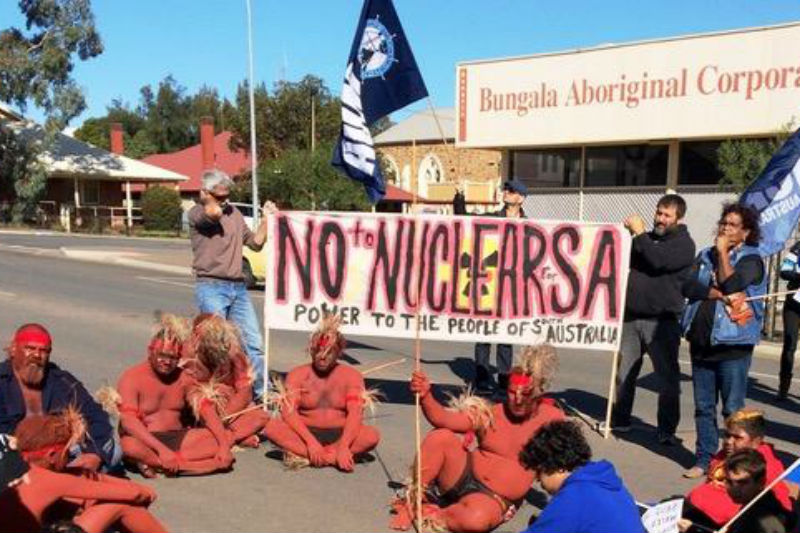
First Nations communities continue to be left behind, Eureka Street, Michele Madigan -22 Apr 20 “………..As well as their own real fears for their health in the COVID-19 pandemic as documented in their recent submission (number 25) to the Senate Standing Economics Legislation Committee of Inquiry the Barngarla peoples of South Australia’s Eyre Peninisula are being forced to counter attempts to further their dispossession in new schemes by federal government. The Barngarla Determination Aboriginal Committee (BDAC) plead with the federal government to delay the current procedures so that the public hearings regarding the site of the federal nuclear waste facility in the Kimba region may take place ‘on Country’ rather than by teleconference, which would greatly disadvantage their cause.
Even more seriously, the BDAC submission (among others) denounces the purposeful strategy by the Resources Minister in refusing to make a formal declaration. Instead, the Minister made ‘a policy decision’ in naming the chosen site of Napandee, having ‘presented it as a declaration’.
BDAC points out, ‘The Government is now seeking to legislate directly, as an indirect but very effective means to prevent judicial oversight.’ That is, the Minister is seeking to change the current legislation of the National Radioactive Waste Management Act so that Parliament itself will ‘select’ Napandee as the site and thereby stopping any judicial oversight of anything untoward in the long administrative process to date.
As the BDAC submission summarises, ‘This is highly concerning to the Barngarla people as it should be to all Australians.’
In the last few days, the federal Parliamentary Joint Committee on Human Rights has written a report critical of the treatment of Barngarla Traditional Owners. It is a unanimous report, endorsed by Coalition members of the Committee.
And there we have it. As Aboriginal communities still await the needed funding to ensure their survival during this pandemic, the wheels of another government ministry are confidently seeking to further dispossess and disempower by such proposed legislation. Shameful indeed.
Michele Madigan is a Sister of St Joseph who has spent the past 38 years working with Aboriginal people in remote areas of SA, in Adelaide and in country SA. Her work has included advocacy and support for senior Aboriginal women of Coober Pedy in their campaign against the proposed national radioactive dump. https://www.eurekastreet.com.au/article/first-nations-communities-continue-to-be-left-behind?utm_medium=email&utm_campaign=Eureka%20Street%20Daily%20-%20Wednesday%2022%20April%202020&utm_content=Eureka%20Street%20Daily%20-%20Wednesda
Current Review of Environment Protection and Biodiversity Conservation Act (EPBC) ? – it’s all about promoting the polluters
 The Government puts business ahead of the environment , Independent Australia, By Sue Arnold | 22 April 2020, The writing is on the wall for the environment. And it doesn’t look good.
Prime Minister Scott Morrison has promised to:
‘Fast-track new and existing major infrastructure projects and adopt an aggressive pro-business strategy ahead of the October budget to help the country claw its way out of an expected virus-induced recession.’
Tax breaks for big business, deregulation and wide-scale industrial relations reform will form part of the Morrison Government’s attempts to lift the nation out of the economic black hole, according to the Sydney Morning Herald.
Environmental organisations, ecologists, wildlife shelters and Australia’s biodiversity are facing an Armageddon as a result of state and federal governments’ absolute failure to protect the environment in the face of a serious economic recession.
Yet this is the nation which has lost over one billion animals to the catastrophic bushfires. A nation with dying and dead ecosystems, and thousands of hectares of burned-out forests. The forests will take many years to recover and ecosystems may never be rehabilitated.
A glimpse of what’s in store can be gained from the current review of the Environment Protection and Biodiversity Conservation Act 1999 (‘EPBC Act’), undertaken under the chairmanship of Professor Graeme Samuel AC.
The review is required under the EPBC Act every ten years, to examine the operation of the legislation and the extent to which its objects have been met.
An expert panel was set up to support Professor Samuel. Panel members include Bruce Martin, an inaugural member of the Prime Minister’s Indigenous Advisory Council and President of the Cape York Peninsula Live Export Group.
Dr Erica Smyth AC is a panel member with over 40 years’ experience in the mineral and petroleum industry, having worked for ten years in the oil and gas industry managing government approvals for offshore facilities, LNG and methanol facilities……
With no ecologists, environmental lawyers, or conservation organisations, the review and its panel completely fails the pub test.
It is important to note that in accordance with section 522A of the EPBC Act, the review is supposed to examine:
‘The operation of the Act; and
The extent to which the objects of the Act have been achieved.’
Added to the terms of reference is the following statement:
‘The review will make recommendations to modernise the EPBC Act and its operation to address current and future environmental challenges.’
The terms of reference may be at odds with section 522A of the Act, if the phrase ‘modernise the Act’ is interpreted as code for change to focus on economic growth at the expense of the environment.
Further evidence of the focus of the Government’s dirty business can be found on the EPBC website which lists as one of the objectives of the EPBC Act to:
‘Provide a streamlined national environmental assessment and approvals process.’
The legislation contains no such provision, and other objectives have also been changed ‘to promote the conservation of biodiversity” to ‘conserve Australia’s biodiversity’.
More importantly, the following legal objective wasn’t included:
‘To promote a cooperative approach to the protection and management of the environment involving governments, the community, land-holders and indigenous people.’
In October 2019, Environment Minister Sussan Ley said that “cutting delays in project approvals could save the economy $300m a year,” with the Morrison Government promising to “tackle green tape”.
No one should be surprised by the review’s focus or the outcome.
The review will be ‘guided by the principles’ which include:
……… Making decisions simpler, including by reducing unnecessary regulatory burdens for Australians, businesses and governments;
…….. Obviously, the first principle should be the predominant, sole guiding focus of the review given the catastrophic state of Australia’s biodiversity and environment.
Instead, the evidence of a drastically changed focus favouring the growth and the economy is made abundantly clear by the guiding principles and panel choices. There’s no explanation of the extraordinary failure to focus on the inability of the EPBC Act to have fulfilled any of its objectives.
April 17 was the final day for submissions to the review’s lengthy discussion paper. Six major environmental groups asked the Federal Government to delay the submission deadline and the review as a result of the chaos caused by the COVID-19 pandemic……..
Australia is currently cursed with governments and politicians who continue to ignore the environment. It’s almost incomprehensible that after the bushfire catastrophes, the environment should sink to the bottom of the pile……. https://independentaustralia.net/environment/environment-display/the-government-puts-business-ahead-of-the-environment,13819
South Australia’s Greens fight to stop nuclear waste dumping on Kimba

Mark Parnell, 21 Apr 20 The people of the Flinders Ranges voted to reject the proposal to site the nuclear waste dump in their local area, so the Federal Morrison Government has decided that Kimba, at the top of Eyre Peninsula, will host the dump.
Legislation has been introduced into Federal Parliament and a Senate inquiry is now underway. It is due to report back to Parliament by the end of July. You can find out more and read the submissions here.
the Barngarla people challenged the flawed community ballot and their claim of racial discrimination was dismissed by the Federal Court. But all is not lost. Earlier this month, the Parliamentary Joint Committee on Human Rights found that the Government’s new dump laws posed “a significant risk” that the rights of Traditional Owners under international human rights laws would NOT be protected. This means that it’s more important than ever to show our support to the Traditional Owners to have their voices heard.
In my last update, I flagged the likelihood of an imminent new South Australian Parliamentary Inquiry into the proposed Kimba nuclear waste dump. I now don’t expect that inquiry to commence until much later in the year. Of course, if the Federal Bill is defeated in the Senate, then there may be no need for an inquiry at all! That is our hope.
Finally, I recently tabled a new petition against the nuclear waste dump in State Parliament, which I know some of you have signed. You can read my speech here, or watch it here.
Another revolving door- Air Chief Marshal (ret’d) Mark Binskin AC straight into BAE warships maker
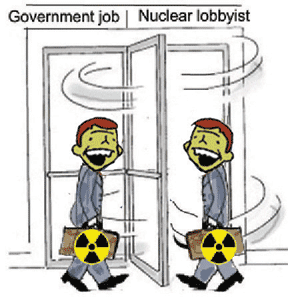 Air Chief Marshal (ret’d) Mark Binskin AC
MILITARY INDUSTRY REVOLVING DOOR. Michael West Media
In June 2018, Mark Binskin was Chief of the Defence Force when BAE Systems Australia was awarded the $35 billion Future Frigate contract, the largest surface warship program in Australia’s history. The following month Binskin retired. He has since been appointed in a non-executive director role with BAE Systems. The contract for the $1.2 billion upgrade of the Jindalee Operational Radar Network was also awarded to BAE in the final months of Binskin’s tenure…… https://www.michaelwest.com.au/air-chief-marshal-mark-binskin-ac-retd/
13 Australian peak Non Government Organisations seek stronger Environmental Law on Nuclear Issues

Joint ENGO Submission on Nuclear Issues as they Relate to the Environmental Protection & Biodiversity Conservation Act Review 2020
This submission is made on behalf of the following national and state peak environment groups:
-
- Australian Conservation Foundation,
- Australian Nuclear Free Alliance,
- Friends of the Earth Australia,
- Greenpeace Australia Pacific,
- Mineral Policy Institute,
- The Wilderness Society,
- Arid Lands Environment Centre,
- Environment Centre NT,
- Environment Victoria,
- Conservation Council SA,
- Conservation Council WA,
- Nature Conservation Council NSW and Queensland Conservation Council.
This submission outlines the importance of retaining s140A of the EPBC Act which prohibits nuclear power; the retention of uranium exploration and mining in the definition of a Nuclear Action and the inclusion of Nuclear Actions as a Matter of National Environmental Significance (MNES).
This submission is made in consideration of the broader objects and principles of the Act and is based on evidence from recent inquiries into both nuclear power and uranium mining. There is clear evidence that nuclear activities can have a significant environmental and public health risk and, in many cases, irreversible impacts, and this is consistent with the current dedicated legislative prohibitions for both nuclear power and scrutiny for uranium mining.
While the current Act does not include a prohibition on uranium mining we strongly advocate that there be a national ban on uranium mining consistent with state legal or policy prohibitions in New South Wales, Queensland, Tasmania, Victoria and West Australia Written by Mia Pepper, Jim Green, Dave Sweeney, David Noonan & Annica Schoo.
Summary of Recommendations
Uranium:
• that uranium mining and milling be included in s140A prohibitions as nuclear actions that the Minister must not approve, on the basis that the nuclear industry has failed to successfully remediate any uranium mine in Australia and has impacts inconsistent with the objects and principles of the EPBC Act.
• if the above recommendation is not adopted that uranium mining and milling remains within the definition of a ‘nuclear action’ and that nuclear actions continue to be listed as MNES and the protected matters continue to be listed as the ‘environment’ and so be subject to full environmental assessment at the state level
• DAWE to initiate an inquiry into the human and environmental impacts of uranium mining, as advised by the UN Secretary General following the Fukushima nuclear disaster, noting that Australian uranium was present in each of the Fukushima Daiichi reactors at the time of multiple reactor meltdowns
. • regulatory reform for existing operating mines • that the review committee recommend DAWE prioritise the rehabilitation of abandoned uranium mines and processing facilities, exploration sites and uranium mines that have been in care and maintenance for more than two years.
Nuclear Power:
• the retention of s140A of the EPBC Act 1999 which states “No approval for certain nuclear installations: The Minister must not approve an action consisting of or involving the construction or operation of any of the following nuclear installations: (a) a nuclear fuel fabrication plant; (b) a nuclear power plant; (c) an enrichment plant; (d) a reprocessing facility.”
Other Matters:
• a National Environmental Protection Authority be established
• the effectiveness of assessment bilateral agreements be reviewed, and approval bilateral agreements are not pursued
• legislate requirements for mine closure, address activities that are used to avoid mine closure and to work with states and territories to remediate existing legacy mine sites
• there be established internal process for DAWE to pursue the listing of newly identified species by referring to the Threatened Species Scientific Committee
• that the principles of free, prior and informed consent become a mandatory operational principle within the EPBC Act along with a governance mechanism to operationalise this principle……… . https://dont-nuke-the-climate.org.au/wp-content/uploads/2020/04/Joint_Sub_EPBC_Nukes_FINAL.pdf
A brief Submission to the the Review of the Environment Protection and Biodiversity Conservation Act 1999

 I first tried to use their online formal submission form. I found several of the questions they posed to be confusing, and obfuscated the issues. So, I gave up on their form, and just wrote my own ideas
Noel Wauchope, SUBMISSION TO EPBC REVIEW.
It is obvious that the polluting industries, especially mining, are keen to further weaken Australia’s environmental protection laws.
Announcing the statutory review of the commonwealth’s Environment Protection and Biodiversity Conservation Act (EPBC) last October, the Morrison government pitched it as an opportunity to weaken the Howard era laws even further and make it easier still for environmentally destructive projects to be approved. 2
A particular case for scrutiny is in the uranium/nuclear industry. A very telling example of the weakness of the EPBC Act is in the sudden approval given by the then Environment Minister, Melissa Price, for the Yeelirrie uranium project to go ahead, in complete contradiction of its rejection by WA Environmental Protection Agency . The current EPBC Act specifies protection for species at risk of extinction. Still, the approval went ahead, the EPBC Act apparently a toothless tiger. 3
Australian governments, State and federal, are under relentless lobbying by the nuclear industry. There are several nuclear Inquiries going on at State level, and one Federal nuclear Inquiry. Despite the clear knowledge of nuclear power’s high costs, safety dangers and terrorism risks, the global nuclear lobby’s push is to remove Australia’s nuclear prohibition laws. The EPBC Act contains two strong nuclear prohibitions, which should not be changed – EPBC Act 1999 section 140A No approval for certain nuclear installations and EPBC Act 1999 section 22 What is a nuclear action?
2. https://www.theguardian.com/commentisfree/2020/mar/28/with-the-climate-crisis-and-coronavirus-bearing-down-on-us-the-age-of-disconnection-is-over
3. https://www.sbs.com.au/news/labor-questions-shonky-wa-uranium-mine-deal
Call for Australian government to delay review of its Environment laws
|
Environment groups ask government to delay review of Australia’s conservation laws https://www.theguardian.com/australia-news/2020/apr/16/environment-groups-ask-government-to-delay-review-of-australias-conservation-laws
Six organisations raise concerns with environment minister Sussan Ley about the impact of the bushfires and coronavirus, Lisa Cox 16 Apr 2020 Some of Australia’s biggest environmental organisations have asked the government to delay the completion of its statutory review of Australia’s national environment laws.Six groups – the Australian Conservation Foundation, WWF, the Wilderness Society, Environmental Justice Australia, Humane Society International and Birdlife Australia – have raised concerns with the environment minister, Sussan Ley, about the impact of the bushfire and coronavirus crises on the review process. The independent review of the Environment Protection and Biodiversity Conservation Act (EPBC Act) occurs once every 10 years and is due to publish its final report in October. But the process this year has been affected by back-to-back crises that began with the unprecedented bushfires through spring and summer. The government extended its timeframe for submissions to the review to the end of this week to give the public and organisations time to respond to the fire crisis.
But the fires were almost immediately followed by the massive economic and social upheaval caused by the global outbreak of Covid-19. The review has also lost one of the members of its expert panel due to the departure of Andrew Macintosh, leaving it without an environmental law expert. Macintosh stepped down from the review after he was named one of the commissioners on the bushfire royal commission. The government has so far said it intends to continue with the review’s timetable to publish a draft report in June and a final report in October. A spokesman for Ley said the review’s chair, Graeme Samuel, could request an extension for the final report but “he has not indicated a need to do so at this stage”. In their letter, the environment groups ask the government “to be cognisant of the current series of crises” and extend the timeframes for the draft and final reports to ensure “there will be space for meaningful consultation and deliberation”. “Extending timeframes will also enable you to be sure there is requisite sectoral expertise on the advisory panel, which is currently missing,” they say, in reference to both Macintosh’s departure and the failure of the government to appoint an ecologist to the review. When the review was announced last year, the government said it would “tackle green tape” and reduce delays in approvals of major projects. Environment groups, however, have long called for an overhaul of the act, which has been failing to stem Australia’s rate of extinction. In their letter, they say the Covid-19 crisis has affected the capacity of NGOs, business and the community to “meaningfully engage in the EPBC review process”. “We are also highly concerned that the majority of the review will take place without the ability for the reviewer and his panel to visit the natural areas that are at stake, see the impact of the 2019-20 summer bushfires and hear from the communities and organisations working to protect Australia’s unique biodiversity and see their work,” the letter states. Environment groups, however, have long called for an overhaul of the act, which has been failing to stem Australia’s rate of extinction. In their letter, they say the Covid-19 crisis has affected the capacity of NGOs, business and the community to “meaningfully engage in the EPBC review process”. “We are also highly concerned that the majority of the review will take place without the ability for the reviewer and his panel to visit the natural areas that are at stake, see the impact of the 2019-20 summer bushfires and hear from the communities and organisations working to protect Australia’s unique biodiversity and see their work,” the letter states. Ley’s office did not indicate any plan to replace Macintosh on the panel. “While Prof MacIntosh has been a valuable source of advice in the early stages of the review before focussing on the bushfire royal commission, he was one of many people with expertise in a range of areas who have assisted Prof Samuel on all aspects of the review and their contribution will be specifically acknowledged in the final report,” the spokesman said. Australia’s fire crisis caused a spike in concern about the environment among voters. Polling published by the Australian National University in February found about half the respondents listed the environment as the most or second most important issue in deciding their vote. A new poll of 1,024 Australians for the Places You Love alliance of environment groups found 87% were worried species were now at more risk of extinction unless something is done to protect habitat after the bushfires. In the immediate aftermath of the fires, a government analysis found 113 species had needed urgent attention after at least 30% of their habitat was burnt. The effect of social distancing restrictions due to Covid-19 has meant that scientists have had to shut down or scale back some field work that was to assess the full impact of the fires on wildlife. |
|
Australia’s political revolving door between military industry and government – Reynolds and Reith
Senator the Hon Linda Reynolds CSC
MILITARY INDUSTRY REVOLVING DOOR, MichaelWest.com 15 Apr 20
The “spruiker-in-chief” of defence industry has been involved with promoting military industry interests since the late 1980s when she co-founded the WA Defence Industry Council. Reynolds combined a career in the army reserves with political staffing roles for the Liberals, and a stint with industry giant Raytheon, before becoming a senator for WA in 2014. From 2 March 2019, she served as Minister for Defence Industry before being promoted to Defence Minister on 29 May 2019…….. https://www.michaelwest.com.au/linda-reynolds/
The Hon Peter Reith AM
MILITARY INDUSTRY REVOLVING DOOR
Former Howard government defence minister Peter Reith created a storm of protest when he quit politics and started work within a day or two for Tenix Defence (now BAE Systems Australia) as a consultant on government relations. Tenix Defence was Australia’s largest military industry corporation and a significant contractor to the department over which Reith had just had oversight. ……..more https://www.michaelwest.com.au/peter-reith/ …… https://www.michaelwest.com.au/linda-reynolds/
While we focus on coronavirus, the planet is still heating
 All eyes are on coronavirus… but what about the planet? With COVID-19 all anyone is talking about at the moment, we take a look at where that leaves the environment, Pro Bono Australia, 14th April 2020 Maggie Coggan As many countries shut their borders, impose heavy-duty lock down laws, and scramble to deal with the financial and social implications of coronavirus, the climate crisis has shifted out of focus.
But environmental advocates warn that just because attention is elsewhere it doesn’t mean the environment isn’t suffering, or that action to mitigate the impacts of climate change should come to a grinding halt.
The crisis is still happening
At the end of March, the Great Barrier Reef experienced its third major bleaching event in the last five years.
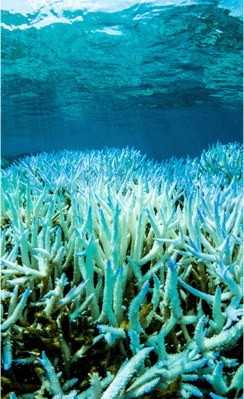 The Great Barrier Reef Marine Park Authority confirmed soon after that the bleaching was caused by warming waters associated with climate change.
Nathaniel Pelle, a senior Greenpeace campaigner, told Pro Bono News that while the reef could recover, it needed drastic emission reductions globally and in Australia.
He said something that wouldn’t help was the fossil fuel industry actively trying to weaken environmental protections, attracting corporate subsidies from government stimulus packages and forging ahead with mining projects.
“We’ve seen the petroleum exploration licence fees suspended in South Australia and a lot of oil and gas companies calling for assistance as well,” Pelle said.
“Controversial coal and gas projects like the Metropolitan mine, the Vicary Coal Mine, the Glendale mine, and the Narrabri Mine are continuing apace, even while communities don’t have the opportunity to participate, while expert witnesses aren’t necessarily going to be available and scientific investigation is impossible.”
The Victorian Premier Daniel Andrews, also recently came under fire for lifting the ban on onshore gas exploration in mid-March, a move environment groups warned could lead to worse bushfires and droughts.
Gavan McFadzean, the Australian Conservation Foundation climate change program manager, also said it was critical that a close eye was kept on the fossil fuel industry.
“These are times often when the fossil fuel sector may attempt to entrench its longevity as an economic powerhouse,” McFadzean told Pro Bono News.
“They have been ramping up their political donations federally in recent years and have the kind of political access that could shape economic reform as we come out of this crisis.”
He added that the postponement of climate talks such as the United Nations Intergovernmental Panel on Climate Change and the Cop26 in Glasgow meant that global targets and action would have to hold off until at least 2021.
He said while it was understandable the events were postponed, it was critical that once the virus was under control climate action once again took centre stage.
“The Cop26 event was going to be the most important conference since Paris in 2016… it was the conference where countries were going to be setting targets,” McFadzean said.
“It’s going to be really important that climate issues return to the national stage as COVID-19 gets under control, because climate change is also a central threat to society and the global economy as we know it.”
Emissions are going down – But not for long …….
Pelle said that if Australia and the rest of the world emerged from the crisis looking towards the energy solutions of the 21st century then the globe could see a recovery that worked for everyone.
“We could see a recovery that works for communities, that works for people, that makes people’s lives better and tackles the climate crisis at the same time, instead of a deliberate economic contraction and disruption to everyone’s lives,” he said.
A chance to start again
McFadzean said while the COVID-19 crisis was far from over, it was a good time to start imagining what a different kind of economy and climate future might look like if things were done differently.
“This means positioning ourselves to be an exporter of renewable energy to the world as we strive to make our future energy needs from low emission sources, recover our transport sector and move towards lower emissions vehicles, stronger pollution standards and electric vehicles,” he said………
https://probonoaustralia.com.au/news/2020/04/all-eyes-are-on-coronavirus-but-what-about-the-planet/
1 This month

of the week – Australians for War Powers Reform (AWPR)
To see nuclear-related stories in greater depth and intensity
 Antinuclear