Conflict of interest: Queensland govt appoints Adani director to oversee coal port!
Adani director appointed to body overseeing mining giant’s coal port despite conflict of interest warning http://www.abc.net.au/news/2017-02-27/adani-director-appointed-government-body-overseeing-coal-port/8301104 Exclusive by the National Reporting Team’s Mark Willacy and Alexandra Blucher 27 February 2017:
“The Queensland Government appointed an Adani company director to chair the authority overseeing the Abbot Point coal port, despite being warned of “potential conflicts of interest”.
Key points:
“It’s undoubtedly a conflict of interest,” said law professor on Mr Fish’s appointment
Treasurer’s office confirms it knew of Mr Fish’s directorship and that he “disclosed potential conflicts of interest prior to his appointment”
But Mr Fish’s link to Adani was not disclosed publicly by the Treasurer when he was appointed … “
Money intended for research was diverted to coal advertising
Pre-election coal advertising funded by money meant for clean coal research, ABC News, By Stephen Long 21 Feb 17 The coal industry’s multi-million-dollar advertising and lobbying campaign in the run-up to the last federal election was bankrolled by money deducted from state mining royalty payments and meant to fund research into “clean coal”.
Key points:
- Coal21 fund launched in 2004, aiming to create $1 billion to research “clean coal technologies”
- Fund’s coal levy was suspended from mid-2012 to mid-2016
- In 2013 coal lobby changed mandate of Coal21 to allow its funds to be used for “coal promotion”
The mining industry spent $2.5 million pushing the case for lower-emissions, coal-fired power plants in the run-up to last year’s election — a cause the Federal Government has since taken up with gusto.
The source of the funds was a voluntary levy on coal companies, originally intended to fund research into “clean coal” technologies, which coal producers could deduct from state mining royalties.
Instead, some of the money raised paid for phone polling, literature and TV ads that declared “coal — it’s an amazing thing”.
The funds were channelled through the Australian Coal Association Low Emissions Technology Limited (ACALET), formerly owned by the Australian Coal Association and now part of the Minerals Council for Australia.
Queensland Government documents list “the COAL21 levy payable to Australian Coal Association Low Emissions Technologies Ltd (ACALET)” as an eligible deduction against royalty payments in the state.
A “coal research” levy in NSW is also deductible against coal mining royalty payments, under a deal signed off by the disgraced former NSW Labor minister Ian Macdonald, who was charged with criminal offences after an ICAC inquiry.
Coal21 was launched more than a decade ago, with the aim of creating a $1 billion fund for research into “clean coal” technologies like carbon capture and storage (CCS), but only a fraction of the money was raised or spent.
With a lack of research projects to finance, the levy was suspended in 2012. In 2013, the coal lobby changed the mandate of Coal21 to downplay research and allow its funds to be used for “coal promotion”.
Critics ‘outraged’ by industry’s use of funding
Funding the industry campaign from money that otherwise would have been paid to state governments as mining royalties has outraged the Federal Opposition and the coal industry’s critics.
“It is a huge shame that Coal21 funding, which was mean to go into genuine CCS research, is now being used to finance advertising and political campaigns,” Labor’s environment spokesman Mark Butler said.
Australia Institute chief economist Richard Denniss said it was “scandalous”.
“Every dollar spent on advertising as part of the coal industry campaign was a dollar that should have gone into consolidated revenue,” he said.
“Citizens funded a propaganda campaign with money that would otherwise have gone into public revenue to fund schools and hospitals.”
Australian Conservation Foundation summarises the background of Adani’s Carmichael coal mine and rail project
 The Adani Brief: our summary https://www.acf.org.au/adani_brief_summary
https://groups.google.com/forum/#!topic/wgar-news/QkXUYq11cmQ 15 February 2017:
“Background
The brief is the result of months of international investigation by Environmental Justice Australia and
USA-based environmental law non-profit EarthJustice into the global legal compliance record of the Adani Group.
It puts governments and private stakeholders on notice that backing Adani’s Carmichael
coal mine and rail project in Queensland’s Galilee Basin
may expose them to financial and reputational risks.
“Key findings
“Environmental destruction:
Adani Group companies have a record of environmental destruction and non-compliance with environmental regulations.
Some examples are: …
“‘Black money’: …
“Bribery and illegal exports: …
“Confusing and opaque corporate structures: …
“This is a company the government is entrusting: … ”
The Adani Brief:
What governments and financiers need to know
about the Adani Group’s record overseas
https://groups.google.com/forum/#!topic/wgar-news/QkXUYq11cmQ
https://envirojustice.org.au/sites/default/files/files/Submissions%20and%20reports/The_Adani_Brief_by_Environmental_Justice_Australia.pdf
Australia’s taxpayers subsidise a private company set up by ANSTO to sell nuclear power produced isotopes
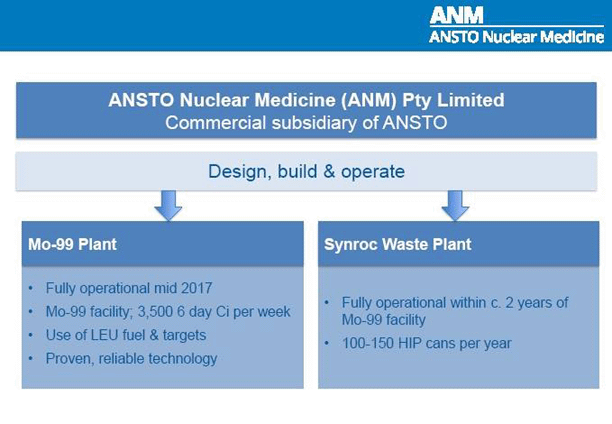
ANSTO’s link http://www.nuclearaustralia.org.au/ansto-nuclear-medicine-project/ This is a slide from the above link. ANSTO Nuclear Medicine (ANM) Pty Ltd is a commercial subsidiary of ANSTO.
So a company is going to cream off the profits while Australian taxpayers subsidise the reactor and the waste disposal – and communities have to deal with the costs of a nuclear waste dump. Another slide says “Full Cost Recovery Model” – the full cost can never be recovered when you are dealing with nuclear waste.
Australia’s proponents of nuclear submarines are way behind the times
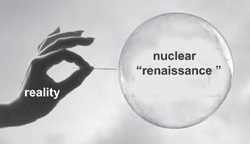 Nuclear Fuel Cycle Watch South Australia Paul Richards shared a link. 1 Jan 17
Emerging this decade are the many challenges to the whole nuclear industries range of products from; medicine, reactors, weapons
Not to mention the always present 1940s backdoor issue that’s never been solved, that of nuclear waste management
This submarine news makes a joke of our neocon naval purchase, particularly if the goal was to put nuclear reactors into the Shortfin Barracuda Block 1A at some future point
The whole biased process used by those enamoured the nuclear industry is becoming increasingly obvious. Particularly, when this Swedish technological development must have been known about but discarded in favour of the nuclear state, France. Who are a founding member of UN Security Council P5 and who as a group control all nuclear issues globally through the IAEA
Nonetheless, this is a notable problem with all nuclear infrastructure, that is, the slow technological development due to the magnitude of the complex physics difficulties. Issues that are becoming common knowledge and as such widely understood by the public as a secondary downside along with unsolved waste problem
Obsolescence is the biggest problem with all nuclear technology, and the whole industry struggles to survive without sovereign capital funding. Most importantly, because clean alternative technology is rapidly developed and easily recycled.
What is interesting is the catalytic conversion of C02 and water into diesel although in its infancy, has already been trialled as economically viable, as well as being CO2 neutral, and that is before the carbon industry started discounting oil. In all probability, blue or e-diesel will be a good, clean fuel for submarines given the exponential growth in German fuel technology and their incredible technological record as world leaders in catalytic technology
Is it any wonder Germany stepped off the whole nuclear cycle, with such advances rapidly developing, making current nuclear tech look so last century, dated and obsolete?
___________
https://themarketmogul.com/blue-crude-innovative-revolution/
source: the national interest: an American bi-monthly international affairs magazine published by the Center for the National Interest https://www.facebook.com/groups/1021186047913052/
Former Liberal leader Peter Reith now a lobbyist for nuclear related company Bechtel
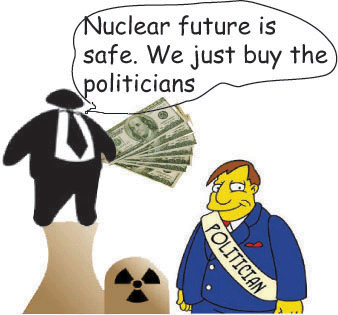 Dan Monceaux Nuclear Fuel Cycle Watch South Australia, December 2016
His current book lists just two clients: Bechtel Infrastructure (Australia) Pty Ltd and G4S Custodial Services Pty Ltd.
Internationally, Bechtel has worked on a variety of substantial projects in the nuclear fuel cycle. Examples include:
Advanced Mixed Waste, Idaho, USA
Chernobyl Shelter and Confinement, Ukraine
Davis-Besse Nuclear Power Station, Ohio, USA
Hanford Waste Treatment Plant, Washington, USA
Horizon Wylfa Newydd, Isle of Anglesey, Wales, UK
Reagan Test Site, Marshall Islands
Savannah River Remediation, South Carolina, USA
Sellafield Pile Fuel Cladding Silo Retrieval, England
U.S. Nuclear Security Enterprise, Texas and Tennessee, USA
Uranium Processing Facility, Oak Ridge, Tennessee, USA
Watts Bar Completion, Tennessee, USA
Yucca Mountain Nuclear Waste Repository, Nevada, USA http://www.dpc.sa.gov.au/documents/rendition/B18707
Australian government plays dirty tricks with language on High Level nuclear Wastes (HLW)
 Steve Dale Fight To Stop Nuclear Waste Dump In Flinders Ranges SA, 27 Dec 16
France’s submarine sales firm DCNS is notorious for corruption
 “DCNS’s operations face questions across almost the entire globe, including in Pakistan, Malaysia, India, Saudi Arabia and Chile, with bribes and kickbacks reportedly comprising 8 per cent to 12 per cent of DCNS’s entire budget.”

 French subs builder’s record of corruption, The Saturday Paper, HAMISH MCDONALD, 30 Apr 16 “…….The Defence Department has been dazzled by promises from shipbuilder DCNS of ultra-quiet pulse-jet propulsion, a powerful sonar array from Thales, a comfortable space for the crew, and a very long range. Now all that has to be done is design the new boat, replacing the nuclear reactor in the Barracuda with diesels, batteries and fuel cells, and fitting in fuel tanks.
As the Hong Kong-based website Asia Sentinel has pointed out, “DCNS’s operations face questions across almost the entire globe, including in Pakistan, Malaysia, India, Saudi Arabia and Chile, with bribes and kickbacks reportedly comprising 8 per cent to 12 per cent of DCNS’s entire budget.”
No doubt our politicians and officials are aware of all this, and will be ready to account for any largesse. Perhaps they should automatically knock off 8 to 12 per cent of any price quoted by DCNS. https://www.thesaturdaypaper.com.au/world/north-america/2016/04/30/french-subs-builders-record-corruption/14619384003178
Secret history of Maralinga nuclear bomb tests
The half-life of plutonium is 24,000 years. At this rate of decay, the Maralinga  lands would be contaminated for the next half-million years.…..A variety of factors underlay the harm to public health, Aboriginal culture and the natural environment which the British tests entailed. Perhaps most significant was the secrecy surrounding the testing program….There seems little doubt that the secrecy in which the entire testing program was cloaked served British rather than Australian interests…..Information passed to Australian officials was kept to the minimum necessary to facilitate their assistance in the conduct of the testing program. The use of plutonium in the minor trials was not disclosed……
A toxic legacy : British nuclear weapons testing in Australia, Australian Institute of Criminology. “…… Three days after the conclusion of the Totem trials, the Australian government was formally advised of British desires to establish a permanent testing site in Australia. In August 1954, the Australian Cabinet agreed to the establishment of a permanent testing ground at a site that became named Maralinga, Continue reading
Australian government about to subsidise shady coal corporation Adani Enterprises
 Adani’s Galilee Basin complex corporate web spreads to tax havens, ABC News 21 Dec 16 Stephen Long It is an intriguing corporate web that spreads from North Queensland, across Asia to the Caribbean.
Giant Indian conglomerate Adani, which plans to build one of the world’s largest coal mines in Queensland’s Galilee Basin, has set up a complex network of companies and trusts in Australia which are owned in one of the world’s major tax havens, the Cayman Islands.
The Adani Group is also attempting to shift ownership of the existing Abbot Point coal port — which it bought for $1.8 billion — to a Singaporean company ultimately owned in the Cayman Islands.
An exhaustive search of company filings and documents across the globe has cast light on this opaque structure of ownership and control.
It has alarmed environmental activists and legal experts, who fear it could make it harder to gain compensation from Adani in the event of an environmental disaster from Adani’s planned mine and port expansion on the edge of the Great Barrier Reef.
“I’ve been a businessman for most of my life, as well as an environmental activist, and the risks are great,” said Geoff Cousins, former Optus CEO and chairman of the George Paterson advertising agency, now a board member of the Australian Conservation Foundation.
“With these kinds of approvals of big mining operations or port operations, you always get a set of conditions that the Government puts on.
“But those conditions aren’t worth anything if, when something goes wrong, you try to find the company responsible and either it has no money or if it has money it’s in a tax haven and you can’t reach it.”
It is a view echoed by David Chaikin, a professor of business law at the University of Sydney.
“The advantage of having the money in tax havens is that you are able to conceal the source of money, the use of money, and also to minimise tax,” he said.
Coal infrastructure owned through opaque structures
As well as building Australia’s biggest coal mine in north Queensland, Adani is planning a huge expansion of the existing coal terminal at Abbot Point, near Bowen, to ship coal across the Great Barrier Reef to India — turning it into one of the world’s biggest coal ports.
It also wants to build a new railway linking the mine, about 400 kilometres inland, to the port.
All the planned developments are based on corporate structures involving tax havens.
Control of the railway — which the Federal Government is preparing to support with a $1 billion publicly subsidised loan — ultimately resides in the Cayman Islands, one of the world’s most notorious and secretive tax havens………
Transferring ownership of the critical port infrastructure to a Caymans Islands’ company “means it will be unregulated, unaccountable,” Tim Buckley, director of the Institute for Energy Economics and Financial Analytics told the ABC.
“It will be non-transparent to the Australian Government as to what is going on, who owns it, who are the directors. To me it is a matter of national security.”
Companies and trusts created by Adani for the proposed Carmichael mine are ultimately owned by Adani Enterprises, a publicly-listed company in India, but the control flows via a company registered in the tax haven of Mauritius, Adani Global Ltd.
A $5 billion fund the Federal Government set up for the development of northern Australia, the Northern Australia Infrastructure Facility or NAIF, is considering a request from Adani for a $1 billion subsidised loan for its rail development.
The NAIF refused to disclose which Adani entity had applied for the finance when approached by the ABC.http://www.abc.net.au/news/2016-12-21/adani-corporate-web-spreads-to-tax-havens/8135700
Evidence that Maralinga soldiers were radiation guinea pigs
The press release was drafted ahead of Operation Buffalo at Maralinga, during which
troops were ordered to crawl through areas hit by fallout. It was not meant to be made public

Top secret document reveals British troops were knowingly revealed to radiation during nuclear fallout tests – mirror.co.uk, by Susie Boniface, 2 Jan 2011, British troops WERE knowingly exposed to radiation during nuclear fallout tests, a top-secret document has finally proved.
For five decades, successive governments have denied any harm was caused to the 22,000 servicemen ordered to witness nuclear bomb tests in the Fifties and Sixties – saying the explosions were to test the weapons, not their effects on humans, and the men were at a safe distance.
But a draft Press release written before tests in Australia in 1956, now uncovered in the National Archives, reads: “The possible effects of the ingestion of radioactive fallout (by men and animals) will be among the subjects studied.”
It has the words “by men and animals” crossed out in pencil, and the version that was actually released mentions only sheep and small animals.
The document blows apart official claims that the tests were not harmful to the troops who witnessed test blasts in Australia, the US and the South Pacific.
It also backs the test veterans’ claims that they were used as “guinea pigs” by the MoD in its race to build an atomic bomb.
Since the tests they say they have suffered high rates of cancers and other illnesses. More than 1,000 vets and widows have won the right to sue the MoD.
The top-secret Press release was unearthed by veteran David Wilson, 74, from Shropshire, who served as an RAF clerk at Christmas Island in the South Pacific during two bomb blasts.
Mr Wilson, who is one of the vets suing over illnesses he has suffered, said: “We were ordered there purely and simply to witness those tests, as guinea pigs.”
The press release was drafted ahead of Operation Buffalo at Maralinga, during which troops were ordered to crawl through areas hit by fallout. It was not meant to be made public until..
Federal government bribing Aborigines to accept nuclear waste dump?

The feds are offering Traditional Owners trips to France, Spain and to Sydney ….. hmmm this sounds like another form of bribery to me, another form of trickery and I think a waste of tax payers monies, why???? https://www.facebook.com/groups/344452605899556/

Adelaide campus of University College London (UCL) – a nuclear Trojan horse

Dennis Matthews, 24 Nov 16
The Adelaide based campus of University College London is a Trojan Horse for the nuclear industry which, as I recall, was the brain-child of Mike Rann and Alexander Downer and was (I think) conceived on a train when the opening of the Ghan line extension from Alice Springs to Darwin, which just happens to be a great boost for exporting minerals such as uranium and for importing nuclear waste.
THE CASE FOR A ROYAL COMMISSION TO INVESTIGATE THE NUCLEAR ROYAL COMMISSION.
Jim Green, 3 Nov 16 No High Level International Nuclear Waste Dump in South Australia
The Nuclear Royal Commission was a disgraceful con-job from start to finish.
The SA government chose a nuclear advocate as Royal Commissioner.
The Royal Commissioner stacked his Advisory Committee with three strident nuclear advocates, ‘balanced’ by one token critic.
There wasn’t even one token nuclear critic on the Royal Commission’s staff.
And there isn’t even one token nuclear critic on the SA government’s Consultation & Response Agency which has been exerting influence on the Citizens’ Jury, and which also has strong influence over the statewide ‘consultation’ process (thinly-disguised promotion).

This morning the ABC reveals that the economic modelling commissioned by the Royal Commission was co-authored by the president and vice president of a group which aims to promote nuclear waste “solutions” and which also promotes nuclear power. A clear conflict of interest and an absolute disgrace. (www.abc.net.au/am/content/2016/s4568141.htm)
Royal Commissioner Kevin Scarce told the ABC this morning:
“The conflict of interest would arise if they were the only source of information that we were using to assess the evaluation. They were not.”
Really? In fact, only one, conflicted consultant was used by the Royal Commission for economic modelling. The fanciful speculation of the conflicted consultant was heavily promoted in the Royal Commission’s report and is now being promoted as solid, factual information by the government’s Consultation & Response Agency.
THERE NEEDS TO BE A ROYAL COMMISSION TO INVESTIGATE THE ROYAL COMMISSION.
For a serious discussion on the economics of the plan to turn SA into the world’s high-level nuclear waste dump, see this submission from Prof. Richard Blandy: http://nuclearrc.sa.gov.au/…/upl…/2016/04/Blandy-Richard.pdf
And see also the report by the Australia Institute: http://www.tai.org.au/…/P222A%20Digging%20for%20answers%20-…
The role of Professor Ernest Titterton in deceiving Australians about nuclear weapons testing
 Chapter 16: A toxic legacy : British nuclear weapons testing in Australia Published in: Wayward governance : illegality and its control in the public sector / P N Grabosky Canberra : Australian Institute of Criminology, 1989 ISBN 0 642 14605 5(Australian studies in law, crime and justice series); pp. 235-253
“……….Another factor which underlay Australian deference during the course of the testing program was the role of Sir Ernest Titterton. A British physicist, Titterton had worked in the United States on the Manhattan Project, which developed the first nuclear weapon.
After the war, he held a position at the British Atomic Energy Research Establishment, and in 1950 he was appointed to the Chair of Nuclear Physics at the Australian National University. Among Titterton’s earliest tasks in Australia was that of an adviser to the British scientific team at the first Monte Bello tests. In 1956, the Australian government established an Atomic Weapons Tests Safety Committee (AWTSC) responsible for monitoring the British testing program to ensure that the safety of the Australian environment and population were not jeopardised. To this end, it was to review British test proposals, provide expert advice to the Australian government, and to monitor the outcome of tests. Titterton was a foundation member of the Committee and later, its Chairman.
While Menzies had envisaged that the Committee would act as an independent, objective body, evidence suggests that it was more sensitive to the needs of the British testing program than to its Australian constituents.
Members tended to be drawn from the nuclear weapons fraternity, as was Titterton; from the Defence establishment, from the Commonwealth Department of Supply, from the Commonwealth X-Ray and Radium Laboratory, and from the Australian Atomic Energy Commission. Although the expertise of these individuals is beyond dispute, one wonders if they may have been too closely identified with the ‘atomic establishment’ to provide independent critical advice. The nuclear weapons fraternity have often been criticised as a rather cavalier lot; no less a person than General Leslie Groves, who headed the Manhattan Project which developed the first atomic bomb, has been quoted as having said ‘Radiation death is a very pleasant way to die’ (Ball 1986, p. 8). In retrospect, the Australian safety committee suffered from the absence of biologists and environmental scientists in its ranks……..
In 1960, the British advised the AWTSC that ‘long lived fissile elements’ and ‘a toxic material’ would be used in the ‘Vixen B’ tests. Titterton requested that the materials be named, and later announced ‘They have answered everything we asked.’ The substances in question were not disclosed (Australia 1985, p. 414). In recommending that the Australian government agree to the tests, he appears to have been either insufficiently informed of the hazards at hand, or to have failed to communicate those hazards to the Safety Committee, and through it, to the Australian government. Earlier, before the Totem tests, he had reassured the Australian Prime Minister that
the time of firing will be chosen so that any risk to health due to radioactive contamination in our cities, or in fact to any human beings, is impossible. . . . [N]o habitations or living beings will suffer injury to health from the effects of the atomic explosions proposed for the trials (quoted in Australia 1985, p. 467).
There were other examples of Titterton’s role in filtering information to the Australian authorities, a role which has been described as ‘pivotal’ (Australia 1985, p. 513). He proposed that he be advised informally of certain details of proposed experiments. In one instance, he advised the British that ‘It would perhaps be wise to make it quite clear that the fission yield in all cases is zero’, knowing that this would be a misrepresentation of fact (Australia 1985, p. 519). Years later, the Royal Commission suggested that Titterton may have been more a de facto member of the British Atomic Weapons Research Establishment than a custodian of the Australian public interest.
The Royal Commission’s indictment of Titterton would be damning:
Titterton played a political as well as a safety role in the testing program, especially in the minor trials. He was prepared to conceal information from the Australian Government and his fellow Committee members if he believed to do so would suit the interests of the United Kingdom Government and the testing program (Australia 1985, p. 526)……… http://aic.gov.au/publications/previous%20series/lcj/1-20/wayward/ch16.html
1 This month
17 October, Free Public Talk on Nuclear Issues in South Australia
David Noonan will speak on public interest concerns over the new Roxby Downs Indenture Act 2026 on BHP copper-uranium mining and ore processing in SA, and on how AUKUS may face SA with a High-Level nuclear waste agenda.
Dr Jim Green will discuss international developments in the field of nuclear power including ‘small modular reactors’ and Generation 4 ‘advanced’ nuclear reactor concepts.


Help Aunty Sue Protect Her Land and Sacred Sites From Destructive Rocket Testing.
.

Australians deserve the truth
about
AUKUS – https://aukuspublicinquiry.com/

PETITION – To: Prime Minister Anthony Albanese and the Australian Labor Government

of the week – Australians for War Powers Reform (AWPR)
To see nuclear-related stories in greater depth and intensity

