Growing opposition to radioactive waste dump

Federal plans for a radioactive waste facility near Kimba on South Australia’s Eyre Peninsula face growing opposition with Barngarla Traditional Owners today launching a Federal Court challenge to Minister Keith Pitt’s decision to site the facility on their lands.
The UN Declaration on the Rights of Indigenous People requires that ‘States shall take effective measures to ensure that no storage or disposal of hazardous materials shall take place in the lands or territories of indigenous peoples without their free, prior and informed consent.’
“The federal plan has many flaws, one of which is poor consultation with the Aboriginal and wider community,” said Australian Conservation Foundation campaigner Dave Sweeney.
“Barngarla have never given consent. Instead, they have been denied a vote in a federal community ballot. This approach is simply not acceptable in the third decade of the 2000s.
“Fewer than a thousand South Australians have had a say in a plan that has profound inter-generational implications.
“The proposed facility is unnecessary given federal parliament’s recent support for a $60 million waste storage upgrade to secure the most problematic intermediate level waste at the federal Lucas Heights nuclear site for the next three to five decades.
“Extended interim storage at Lucas Heights is prudent and possible. Moving intermediate level waste from Lucas Heights – a site with security, radiation monitoring, emergency response and local expertise – to a site near Kimba with far fewer assets and resources is irresponsible and inconsistent with best industry practice.
Sites that store and manage nuclear medicine waste around Australia will still need to do so, irrespective of the status of any national facility, so the Minister’s repeated reference to nuclear waste being spread across 100 sites is disingenuous and inaccurate.
“The planned federal action is contrary to SA state law and does not enjoy bi-partisan political support. The waste plan needs formal environmental and regulatory assessment and approval and is occurring in the context of both state and federal elections in 2022. This issue has a long way to run and will be actively contested.”
For context or comment contact Dave Sweeney on 0408 317 812
ACF’s 3-page background brief on federal radioactive waste plans
Measure twice, cut once: Advancing responsible radioactive waste management in Australia
Massive cask of nuclear waste to arrive in Sydney
Monolithic cask of nuclear waste to arrive, https://www.mandurahmail.com.au/story/7559502/monolithic-cask-of-nuclear-waste-to-arrive/
- Tracey Ferrier 21 Dec 21,
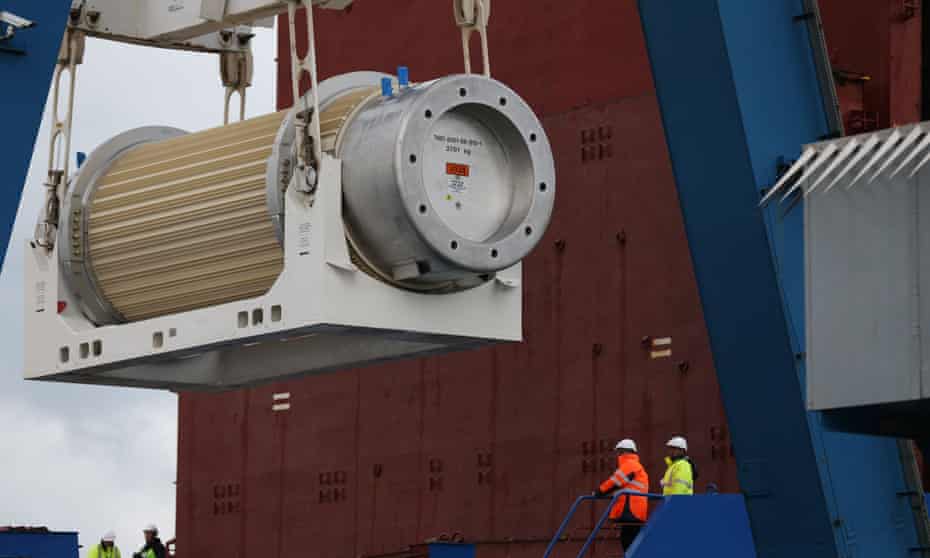
Monolithic cask of nuclear waste to arrive, https://www.mandurahmail.com.au/story/7559502/monolithic-cask-of-nuclear-waste-to-arrive/Tracey Ferrier
A monolithic steel cask designed to withstand an earthquake and a jet strike will arrive in Sydney next year, carrying two tonnes of radioactive waste.
For security reasons authorities won’t say when the hulking capsule – containing four 500kg canisters of ‘intermediate-level material’ – will arrive from the UK.
But it will hardly be an inconspicuous affair: the cask itself weighs 100 tonnes and resembles something from NASA’s space program.
Its forged steel walls are 20cm thick, it’s 6.5m long and three metres wide.
Back in 2015, when the first cask of its type arrived, it was carrying 20 tonnes of Australian nuclear waste that had been reprocessed in France.
About 600 police and security officers were involved in the mission to truck it from Port Kembla, near Wollongong, to Lucas Heights, the southern Sydney suburb that serves as the country’s nuclear technology hub.
It is safe to assume that next year’s arrival will involve an equally elaborate, high-security operation.
The Australian Nuclear Science and Technology Organisation operates the Lucas Heights compound.
It was home to the High Flux Australian Reactor (HIFAR), which supported nuclear medicine and science before it was closed in 2007 and superseded by the Open Pool Australian Lightwater reactor, also at Lucas Heights.
The waste that’s due to arrive in 2022 is from HIFAR’s operations and ANSTO says the material is being “repatriated” under the international principle that countries must be responsible for their nuclear leftovers.
However what’s coming won’t actually be what is left of the 114 spent fuel rods HIFAR sent to the UK for reprocessing in 1996.
The Australian Nuclear Science and Technology Organisation operates the Lucas Heights compound.
It was home to the High Flux Australian Reactor (HIFAR), which supported nuclear medicine and science before it was closed in 2007 and superseded by the Open Pool Australian Lightwater reactor, also at Lucas Heights.
The waste that’s due to arrive in 2022 is from HIFAR’s operations and ANSTO says the material is being “repatriated” under the international principle that countries must be responsible for their nuclear leftovers.
However what’s coming won’t actually be what is left of the 114 spent fuel rods HIFAR sent to the UK for reprocessing in 1996.
“Specifically it’s not the material we sent, it’s an equivalent, almost swapping the material that came from reprocessing our waste, for equivalent material that was produced at another UK site.”
Mr Griffiths says the UK had to demonstrate that what will be sent to Australia is “within the measurement boundaries” of the accepted definition of intermediate level waste, which can remain radioactive for thousands of years.
ANSTO also had to satisfy the national regulator on that point.
While saving money wasn’t the objective, Mr Griffiths says the waste exchange agreement means taxpayer-funded ANSTO will save $12 to $13 million in shipping costs.
ANSTO’s Pamela Naidoo-Ameglio has promised the cask’s arrival will be a “routine and safe operation”
“This will be the second repatriation project and 12th successful transport of spent fuel or reprocessed waste which ANSTO has carried out since 1963,” she said in a statement on Monday.
“For all of the obvious and standard security reasons, we can’t comment on the specific route or timing of this transport.”
The new cask will sit alongside the original one at Lucas Heights until Australia’s new national nuclear waste storage facility is constructed at Napandee, near Kimba, on South Australia’s Eyre Peninsula.
The facility is up to the design phase and is being contested by Indigenous owners, so the casks are likely to remain at Lucas Heights for a number of years.
Once Napandee is operational, the casks will be moved there and stored, pending a final solution that will involve deep burial.
Australia’s radioactive waste results from nuclear medicine, research endeavours and industrial applications. Australia does not produce nuclear power.
Proposed National Radioactive Waste Facility: Implications and Options for South Australia

Proposed National Radioactive Waste Facility: Implications and Options for SA, https://www.conservationsa.org.au/kimba_report, After a controversial process that has torn apart the previously close-knit Kimba community, Federal Resources Minister Keith Pitt (Liberal National Party – Qld) has formally declared the Napandee area near Kimba in the Eyre Peninsula grain belt as the proposed site for Australia’s first dedicated national radioactive waste facility – the National Radioactive Waste Management Facility (NRWMF).
The planned facility is not consistent with international best practice, and waste will be placed in temporary storage without a plan for what happens next.
The government says this will take decades while the federal nuclear regulator says it could take a century. Yet, there is a safer and cheaper alternative: keep the waste where most is currently stored at the Australian Nuclear Science and Technology Organisation’s (ANSTO) Lucas Heights facility south of Sydney, and only move it once a long-term site to house Australia’s long-lived intermediate-level waste is identified.
It simply does not make sense for the waste to be sent on a temporary basis to SA. Especially as it is fiercely opposed by the Aboriginal Traditional Owners – the Barngarla people and many regional grain producers. Further, the federal plan is illegal under SA law.
Nuclear submarine wastes and Napandee – a backdoor way of starting Australian nuclear waste importing?

A frightening prospect!. Not only are these planned nuclear submarines completely unsuitable for the defence of Australia’s coastline, but now it looks as if they are a back-door way of achieving that old nightmare – of Australia taking in international radioactive trash.
Preparing for spent nuclear fuel disposal. MARITIME AND UNDERSEA WARFARE, Defence Connect, 06 DECEMBER 2021, By: Christopher Skinner, ”……………….We must therefore consider the requirement for the submarine spent reactor fuel at end-of-service life to be a responsibility for Australia and to plan accordingly.
The current work on the Australian Intermediate Level Radioactive Waste Storage Facility near Kimba, on; upper Eyre Peninsula in South Australia, has reached a decision point as reported by the ABC (Napandee chosen as nuclear waste storage site after ‘six years of consultation’), “Napandee, a 211-hectare property near the town of Kimba, has been acquired by the government and will be used to store low and medium-level nuclear waste. The property was already selected by the government but it had to allow an additional 60 days of consultation before it could formally declare the site.”
The implication of this decision for the nuclear submarine program is to show that concern for the full extent of the nuclear fuel cycle is relevant even if the development of the Australian NRWMF was not predicated on either the advent of nuclear propulsion with spent fuel to be managed, nor of the need to provide a permanent disposal facility for high level waste such as unprocessed spent fuel…..” https://www.defenceconnect.com.au/maritime-antisub/9204-preparing-for-spent-nuclear-fuel-disposal?fbclid=IwAR385TPCTWA4ALXk9r7bzJ5uhyD78zpolFNvWb2Q9aEj3UvXLjAuOnhAS8A—
Traditional owners apply for judicial review to stop South Australia nuclear waste dump
Traditional owners apply for judicial review to stop South Australia nuclear waste dump
Barngarla people say they were never consulted over the project which ‘should never be built’ Guardian, Tory Shepherd, Tue 7 Dec 2021 .
Traditional owners say they will keep fighting to stop a nuclear waste dump planned for South Australia.
Late last month, the federal government confirmed a facility will be built at Napandee, 24km from Kimba, and it is beginning the regulatory and design processes.
However, the Barngarla people say they’ve been excluded from consultation and will now lodge an application for a judicial review of the entire project.
The first hearing is expected to be in March – the month the SA election is due and the federal election could be held. That could then be appealed and the case could end up in the high court, and in a different political context.
Plans to build a nuclear waste facility in South Australia have been thwarted for more than two decades. After a series of governments, inquiries, and a state royal commission, one was meant to be operational in 2020. Now it is planned for 2030.
Barngarla Determination Aboriginal Corporation chair Jason Bilney said if they win the legal challenge, it opens the way for the government to nominate other sites.
They didn’t include us from the start,” he said. “What we’ve always hoped for and fought for is to stop the nuclear waste dump because it should never be built on Napandee. It didn’t have our support,” he said.
A ballot of ratepayers found more than 60% supported the facility. The traditional owners say they were excluded because they do not live in the council area. They held a separate ballot, in which they unanimously rejected the proposal.
Bilney said if you added those two ballots together, the support would have been less than half.
“This [judicial review] will delay it,” he said.
“Everyone has the right to question this government and the processes they go through.”
Bilney also said the site was just a “Band-Aid solution” and echoed conservationists who are pushing for the low and intermediate level waste to be stored at the Australian Nuclear Science and Technology Organisation’s facility at Lucas Heights………..
The Australian Conservation Foundation said it was a “long way from a done deal”.
“This plan will face scrutiny in the federal court, but it also needs to face the court of public opinion. The government needs to give Australians, particularly South Australians and the Barngarla people, a genuine say about this plan and its inter-generational risks and impacts,” campaigner Dave Sweeney, said. https://www.theguardian.com/australia-news/2021/dec/07/traditional-owners-apply-for-judicial-review-to-stop-south-australia-nuclear-waste-dump
Many wheels to turn before that Kimba nuclear dump can go ahead, especially if Labor wins in elections.
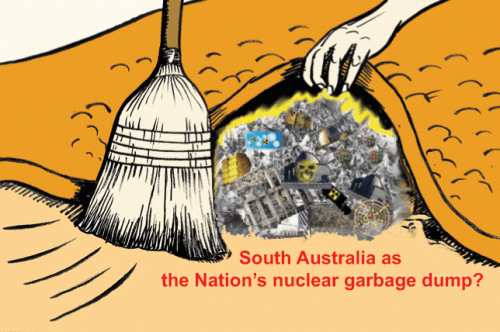
David Noonan Facebook: Fight to stop a nuclear waste dump in South Australia. 5 Dec 21. Regarding the planned nuclear waste dump at Kimba, South Australia, there will be better potential options if Federal ALP win office (and some if SA Labor do too);
there will have to be an SA Parliamentary Inquiry (likely starting sometime May on, after the elections & likely after any Judicial Reviews into Min Pitt’s siting decision & process has run its course);
there will be an EPBC Act environmental assessment including on transport issues and involving ‘public consultation’;
ARPANSA will (we expect) do separate Licensing processes – for proposed Low Level Disposal, with (better) ‘public consultaion’, and await the outcome of the EPBC Act assessment before making their Licensing decision (this will be very hard to head off if Lib gov’s are re-elected);
And in parallel or subsequently ARPANSA hold a separate process over indefinate above ground Storage of nuclear fuel wastes & ILW; ARPANSA (and a new ALP fed gov & even an SA Labor gov) will have and hear a range of concerns over co-located indefinate Storage of ILW et al and could eventually decide its preferable to retain such wastes at ANSTO Lucas Heights – until an ILW disposal option arises. There are a lot of wheels to turn yet…
The people of South Australia are being excluded from the discussion and decisions about the Federal govt’s planned nuclear waste dump
Flinders Local Action Group
Bob Tulloch, 5 Dec 21, IS SOUTH AUSTRALIA DESTINED TO BE A NUCLEAR STATE? Six years ago, the Department of Industry, Innovation and Science (DIIS) suddenly burst into our lives with their push to establish a National Nuclear Waste Management Facility within our communities.Our lives, friendships and communities where fractured and torn apart, the effects still lingering today. The communities I refer to are Hawker/ Quorn in the Flinders Ranges and Kimba on Eyre Peninsular in South Australia.The ‘pro facility’ doctrine was loud, clear, and biased. Presented in a process where ‘community consultation’ was co-opted to ‘manufacture consent’. A process tightly controlled by DIIS with little room for alternative points of view, local dissent controlled with intimidation and bullying tactics.
It came as a shock to those involved, that our Government would use such tactics to push through their agenda, culminating after 40 years of failed efforts.This is when I started investigating behind the scenes in an attempt to understand why the Federal Government wanted to establish a nuclear waste facility at Kimba, so far from the main source of supply, Lucas Heights.
The Federal Government, under the NRWM Act, has the power to over ride state laws and has used these powers during the site characterisation study of the site Napandee near Kimba, which has now been officially declared as the site for a National Nuclear Waste Facility.
The Marshall Government is keen to set up a nuclear defense industry in South Australia to compliment the proposed nuclear submarine industry.Our state opposition, although opposed to the recent site selection process, is keeping very quiet, not forgetting under Jay Weatherall’s leadership in 2016, introduced the idea of importing the world’s nuclear waste to South Australia.My concern is, the people of South Australia are now being left out of the conversation and the decision making process.
Kimba residents who oppose the nuclear waste dump plan are not backing down.
Opposing residents refusing to back down on nuclear stance, Port Lincoln Times
- Claire Harris 2 Dec 21,. Kimba residents opposed to the nuclear waste facility being built in the district are not backing down on their stance, following the selection of the Napandee site by the federal government earlier this week.
No Radioactive Waste on Agricultural Land in Kimba or SA president Peter Woolford said he was disappointed in the announcement, but not surprised.
“It’s a bitter pill to swallow, because last week we were announced SA Ag Town of the Year, and now we’re the nuclear dump town,” he said.
“Ag is our big passion, it’s made Kimba, and will be a big factor influencing Kimba in future, so we’re standing up and opposing this because we want to protect what we have.”
Mr Woolford said he didn’t “subscribe to the theory” that the nuclear waste facility would be issue-free.
“We all take out insurance not because we know something is going to happen, but to protect against a potential risk if something does happen – this is no different,” he said.
He said the group would seek legal advice going forward to explore all avenues, potentially including a judicial review.
Retired Kimba farmer Peter McGilvray also opposes the choice and expected the community would remain divided on the issue.
“The damage is done. I came here in 1976 and was never going to leave, but this has pushed the button for me, and now I don’t plan on staying much longer,” he said.
Despite the criticism, Napandee site owner Jeff Baldock said the definitive decision was a step in the right direction for the town….. https://www.portlincolntimes.com.au/story/7534854/opposing-residents-refusing-to-back-down-on-nuclear-stance/s
Federal government spinning the virtues of nuclear waste to Whyalla, Port Lincoln, Ceduna, who had no say in the decision.
Roni Skipworth Facebook: No nuclear waste dump anywhere in South Australia ·
Those here who are of Aboriginal Culture please be aware this is happening in Whyalla Pt Lincoln Ceduna. The Federal Government didn’t want to include the Barngarla Custodians of Eyre Peninsula’s input when a new site for Australian Nuclear Waste Dump in Kimba Farming District. Though now that the Barngarla Culture is taking the Federal Government to COURT they want input from those towns mentioned. To give them SPIN in how the Culture can receive $$$, employment n investment into ANSTO the company who creates Nuclear Medicine in Lucas Heights NSW.
The Farmers The Landowners and City dwellers of SA hav been fighting this for 6-7yrs with State n Federal Govs. The best place to hold this Dump is at Lucas Heights as they received $60 million grant to extend ANSTO. Now Rowan Ramsay and the property owner of Napandee with the Mayor of Kimba are rubbing their hands together in bonuses of your well earned and Gst Taxes to start building in 4 years.
I live within the 50km limit though we and other neighbours on the borders of Kimba and in Wudinna didn’t have a say as well as the Barngarla Custodians have a vote. We meaning Mother Earth and those who have said NO seemed not to be heard.Please spread this to your friends and families of the Barngarla Culture of Eyre Peninsula.
How the federal government gets around the problem of trucking nuclear waste over Aboriginal land.
– Kazzi Jai 5 Dec 21, (Facebook No nuclear waste dump anywhere in South Australia) . The [Napandee . Kimba] property is not now Aboriginal land, as there is no Native Title over this piece of land. However there are parcels of land with Native Title neighbouring the site, which are used for camping and hunting by the Barngarla people of the region 2 The present Bill new section 19B empowers the Minister to acquire additional land for road access., thus overcoming Native Title on those areas. Minister Pitt says he will introduce an amendment to ensure that Title rights cannot be compulsorily acquired. (from Hansard)
Legislative and regulatory obstacles, highly dangerous wastes – Kimba nuclear dump is still an uncertain project.

no point moving intermediate waste from its temporary storage in Lucas Heights, to temporary storage in Napandee.
3 reasons the announcement to dump radioactive waste in South Australia is extremely premature , The Conversation, Ian Lowe, Emeritus Professor, School of Science, Griffith University Prof. Ian Lowe was for twelve years a member of the Radiation Health and Safety Advisory Council, which advises the regulator ARPANSA. 1 Dec 21,
The site, Napandee, comprises 211 hectares of government-acquired land, with radioactive waste set to be stored for over 100 years in deep trenches.
Radioactive waste is extremely hazardous to people and the environment. It emits radiation, which can pollute water, kill wildlife and cause a number of deadly human health issues such as cancer. Even waste with low potency levels needs to be stored away for centuries, so the community should be assured the repository is well designed and properly managed.
While Pitt is celebrating what he regards as a resolution, there are three reasons this announcement is premature……………
1. Legislative and regulatory hurdles
Twenty years ago, The Olsen government of SA passed legislation to prevent radioactive waste being brought into the state. When the Howard government proposed storing radioactive waste in the state soon after, the subsequent Rann government strengthened that legislation.
This means the new proposal will require the current SA government to repeal or amend the current law. This will be difficult, as Premier Steven Marshall runs a minority government and, with an MP defecting in October, he’s likely to struggle to get the support he needs.
There is also a regulatory hurdle. A proposal such as this needs the approval of the regulator, the Australian Radiation Protection And Nuclear Safety Authority (ARPANSA), which will assess the proposal to determine whether it ensures the safety of people and the natural environment.
ARPANSA took the previous proposal by the Howard government very seriously. The process included public hearings at which the Director of ARPANSA was assisted by two scientists – I was one and the other was a Canadian expert in radioactive waste management.
It became clear in the assessment process that the federal government had made no attempt to calculate the risk of transporting radioactive waste from the various sites where it’s now stored to the more secure centralised facility. It simply asserted that the risk was minimal.
ARPANSA was not impressed by this data-free approach. Faced with opposition by the state government and questions raised by the regulator, the federal government withdrew the proposal.
2. The waste is more dangerous
The second serious hurdle is that “intermediate level” waste from a nuclear reactor temporarily stored at Lucas Heights will be sent there.
The new Napandee facility will mostly store the comparatively benign “low-level waste”. This includes residues from nuclear medicine, scientific research and industrial applications. Once buried in deep trenches, this poses relatively little risk to humans or wildlife.
Intermediate level waste is much nastier and demands much greater levels of security. It contains long-lived radioactive isotopes that need to be isolated and contained for periods of thousands of years – effectively permanent disposal. This is generally seen as requiring engineered underground containment facilities, rather than the near-surface repositories used for low-level waste.
No such facility to safely, and permanently, house this waste has been built in Australia, and the regulator will undoubtedly require assurances it could be safely constructed and managed.
It will also be much more difficult to justify transporting this waste along the roads of three states, given it’s now securely held at Lucas Heights. Transporting nuclear waste comes with risks of accidents or possible theft by terrorists of the dangerous material.
There seems to be no point moving intermediate waste from its temporary storage in Lucas Heights, to temporary storage in Napandee.
3. No consent from Traditional Owners
The third hurdle for the proposal is the opposition of the Barngarla Traditional Owners, who have made clear they do not support the proposal for radioactive waste to be stored on their land.
After the consultation process in SA, a ballot showed 60% of the local residents supported the proposal. But the the Barngarla people say they have not been included in consultations.
In previous decades, our governments have ridden roughshod over the wishes of Traditional Owners and imposed developments they did not want. Today, the Australian public is generally more respectful of the wishes of Traditional Owners.
There will certainly be legal challenges to the government’s scheme. But even if the Barngarla people don’t have the law on their side, they have the moral authority. It will be politically difficult for any government to justify going ahead with a scheme that is totally opposed by the relevant Indigenous group. https://theconversation.com/3-reasons-the-announcement-to-dump-radioactive-waste-in-south-australia-is-extremely-premature-172766?fbclid=IwAR1AHoelrqg9AWWS4sicLvV6t3KIHFbFidE_rot3ncTVJ-Avlitu09Tl6bQ
Liberal MP Rowan Ramsey has misled South Australia, in greatly minimising the amount of Intermediate Level nuclear waste intended for Napandee farm site.

So on the basis of the above figures the amount of ILW contained in the big canister that Rowan mentioned is actually only 0.1 per cent by volume of the ILW intended for Napandee. (In other words the documented volume of ILW intended for Napandee is about 1000 times more than what he stated).
Andrew Williams, Fight to stop sa nuclear waste dump in South Australia, 1 Dec 21, Rowan Ramsey stated that the TN-81 canister in the Interim Waste Store at Lucas Heights is the only Intermediate Level Waste intended for Napandee. This is not correct.
The large canister that he mentioned contains reprocessed used nuclear fuel from the old decommissioned HIFAR reactor, which ARPANSA notes as having radioactivity at the higher end of the ILW range.
That means it must remain safe from people and the environment for 10,000 years according to International guidelines followed by the Australian regulator. Another load of reprocessed used nuclear fuel from the old HIFAR reactor is due back next year and is intended to end up at Napandee, in the same type of TN-81 container.
Of the waste intended for Napandee, this highly hazardous reprocessed nuclear fuel is the most radioactive. However there is a lot more intermediate level waste (ILW) than what is in these two big containers intended for Napandee. All of the reprocessed highly hazardous used nuclear fuel produced by the existing OPAL reactor over its operating life is intended for Napandee in years to come.
However during the production of radioactive isotopes (some of which are used in nuclear medicine) ILW is produced. The Australian Radioactive Waste Management Framework (2018) reports total ILW at 1770 cubic metres, with 95% by volume as federal gov. wastes. It is intended to produce a further 1,960 cubic metres over the next 40 years (all intended for Napandee), most of which will be produced at Lucas Heights. (This is documented and can be checked).
All of this ILW is intended to go to Napandee for up to 100 years of above ground storage. A TN-81 container can hold up to 28 canisters, each containing 150 litres of vitrified reprocessed fuel waste. 28×150 litres = 4,200 litres = 4.2 cubic metres. So on the basis of the above figures the amount of ILW contained in the big canister that Rowan mentioned is actually only 0.1 per cent by volume of the ILW intended for Napandee. (In other words the documented volume of ILW intended for Napandee is about 1000 times more than what he stated).
Kimba temporary nuclear waste dump plan is unnecessary, now that federal government has approved upgraded storage plan at Lucas Heights.
South Australian farm near Kimba to be nation’s first nuclear waste facility, Queensland Country Life 30 Nov 21,
A SOUTH Australian farm will be turned into a national nuclear waste facility, after the federal government officially selected the site in the last parliamentary sitting week of 2021.
The site near the town of Kimba, in the Eyre Peninsula, was always considered the front runner for the facility,…………
Australian Conservation Foundation national nuclear-free campaigner Dave Sweeney said the plan lacked a rationale and a social licence, as the region’s Traditional Owners were excluded from key consultation processes.
Mr Sweeney said the planned facility was unnecessary given federal parliament’s recent support for a $60 million waste storage upgrade to secure the most problematic intermediate level waste at the Australian Nuclear Science and Technology Organisation’s (ANSTO) Lucas Heights nuclear site for the next three to five decades.
“The Kimba plan is effectively redundant on the day Minister Pitt has made his decision,” Mr Sweeney said.
Extended storage of Australia’s most problematic waste at Lucas Heights where most of it is already stored, makes far more economic, environmental and radiological sense than the ill-considered Kimba plan.”
Traditional owners expected to challenge nuclear waste facility in South Australia

Traditional owners expected to challenge nuclear waste facility in South Australia
The Barngarla people have unanimously rejected the federal government’s controversial plan to store radioactive medical waste on their land, and may take their case to the state’s supreme court, Guardian, Tory Shepherd 29 Nov 21
The federal government has confirmed that a controversial nuclear waste facility will be built near Kimba, in South Australia – but the traditional owners are expected to mount a legal challenge.
Resources minister Keith Pitt announced two months ago that a 211-hectare site at Napandee, 24km out of Kimba, had been chosen from three potential sites to store Australia’s radioactive waste. After 60 days of further consultation, he confirmed that decision on Monday morning.
An Australian Electoral Commission ballot found more than 60% of local residents supported the facility. However, the traditional owners, the Barngarla people, say many of them missed out on the vote because they were not living in the Kimba council area.
When surveyed separately, the Barngarla voters unanimously rejected the proposal.
At the time, Barngarla Determination Aboriginal Corporation chair Jason Bilney said he planned to launch a judicial review, challenging in the supreme court the selection of Kimba over other sites.
Guardian Australia has contacted the corporation for comment.
Pitt said the government would now acquire the land to build a new facility that would store low- and medium-level medical waste that is scattered across more than 100 locations in Australia……….
The new facility will house low-level waste permanently, and medium-level waste temporarily, until a permanent solution is found for that.
Conservationists have told a parliamentary inquiry into the future of the Lucas Heights nuclear facility that the Sydney site should be expanded to take the nation’s waste until that long-term decision is made, rather than having a new facility built. https://www.theguardian.com/australia-news/2021/nov/29/traditional-owners-expected-to-challenge-nuclear-waste-facility-in-south-australia
The Kimba nuclear dump is a long way from a done deal: needs formal environmental and regulatory assessment and approval.
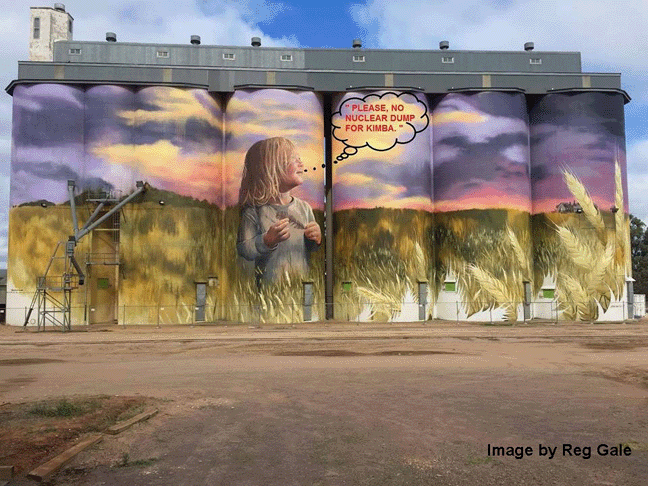
Resources Minister Keith Pitt’s formal declaration of Napandee, near Kimba in regional South Australia, as the location for a co-located radioactive waste disposal and storage facility is likely to see an escalation in community contest and opposition, the Australian Conservation Foundation said today.
ACF’s concerns with the plan include:
- No consent from the region’s Traditional Owners, the Barngarla people. Barngarla were actively excluded from key ‘consultation’ processes, including a highly restricted community ballot.
- The planned facility is unnecessary given federal parliament’s recent support for a $60 million waste storage upgrade to secure the most problematic intermediate level waste (ILW) at the Australian Nuclear Science and Technology Organisation’s (ANSTO) Lucas Heights nuclear site for the next three to five decades.
- Moving intermediate level waste from ANSTO, a site with many institutional assets – security, radiation monitoring and emergency response, local expertise etc – to a site near Kimba with far fewer assets and resources is irresponsible and inconsistent with best industry practice.
Further concerns are outlined in ACF’s 3-page background brief on radioactive waste plans.
“The Kimba plan is effectively redundant on the day Minister Pitt has made his decision,” said ACF’s national nuclear-free campaigner Dave Sweeney.
“Extended storage of Australia’s most problematic waste at Lucas Heights where most of it is already stored, makes far more economic, environmental and radiological sense than the ill-considered Kimba plan.
“Sites that currently store and manage nuclear medicine waste around Australia will still need to do so, irrespective of the status of any national facility, so the Minister’s repeated reference to nuclear waste being spread across 100 sites is disingenuous and inaccurate.
“The planned federal action is contrary to SA state law and does not enjoy bi-partisan political support.
“Fewer than one thousand South Australians have had a say in a plan that has profound inter-generational implications.
“This is particularly concerning given the prospect of project creep as atomic enthusiasts spruik domestic nuclear energy in the context of the proposed acquisition of nuclear-powered submarines.
“Minister Pitt is continuing the same top-down, flawed approach that has failed in the past.
“Minister Pitt’s decision is the start of a new stage in the campaign for responsible waste management.
“This politicised move will be contested in the Courts and on the streets.
“Setting up processes to manufacture consent – including denying a voice to Aboriginal Traditional Owners – speaks volumes about the poverty of the arguments in favour of the waste facility.
“If the Minister was convinced of the project’s merits he would not be cutting corners with Traditional Owners and the wider community or making myth about nuclear medicine.
“Canberra should stop playing politics and instead get serious about responsible radioactive waste management.
“This issue has a long way to run. The plan needs formal environmental and regulatory assessment and approval and is a long way from a done deal.”
ACF’s 3-page background brief on federal radioactive waste plans
Measure twice, cut once: Advancing responsible radioactive waste management in Australia
1 This month

of the week – Australians for War Powers Reform (AWPR)
To see nuclear-related stories in greater depth and intensity
 Antinuclear