Angus Taylor has never asked Climate Change Authority to model zero carbon pathway — RenewEconomy

Climate Change Authority tells inquiry that it has not been asked to model a zero emissions pathway for Australia. The post Angus Taylor has never asked Climate Change Authority to model zero carbon pathway appeared first on RenewEconomy.
Angus Taylor has never asked Climate Change Authority to model zero carbon pathway — RenewEconomy
March to End the Madness of War! — limitless life
This March Let’s End the Madness of War! March 2021 We still have a choice today: nonviolent coexistence or violent co-annihilation…. If we do not act, we shall surely be dragged down the long, dark, and shameful corridors of time reserved for those who possess power without compassion, might without morality, and strength without sight. […]
March to End the Madness of War! — limitless life
March 24 Energy News — geoharvey

Opinion: ¶ “Our Survival Depends On Treating Nature With More Respect” • Intersecting and escalating crises – disruption of our climate, the collapse of biodiversity, the declining health of the ocean and the depletion of natural resources – demonstrate clearly that we cannot continue on our current path. We are the authors of our own […]
March 24 Energy News — geoharvey
Bure: the buried nuclear waste scandal in France
Le Monde Diplomatique 23rd March 2021 One hundred thousand years. Bure or the buried nuclear waste scandal. Bure,in the Meuse, has become an emblematic place of one of the problems posed by the nuclear industry – waste management – and its contestation. Through an investigation put into images by Cécile Guillard, journalists Gaspard
d’Allens and Pierre Bonneau recount how the National Agency for the Management of Radioactive Waste (Andra) imposed itself, subsidizing communities, setting up related companies to its sector, creating a clientelist climate.
This omnipresence has one objective: to set up the Cigeo project, the creation of the landfill site for the most radioactive waste, thanks to the fabrication of consent and the opacity of research and decisions, taken without public consultation.
The repression of the protest is disproportionate. Eighty mobile gendarmes to control the village daily,
twenty-seven inadmissibility restrictions, 85,000 intercepted conversations, searches … What democracy in this process where politicians and public organizations decide the future of our society for a hundred thousand years?
WordPress new ”Block” posts almost unusable
For 13 years, this has been a great posting system. Now it has been ”upgrsaded” to a system tha is almost unuseable. Ir looks smarter, but has lost important features. For example, the ability to easily retrieve old posts. I have contacted WordPress to try to get back the practical, useable “Classic Posts”. If that cant be done, I’ll be moving from WordPressto a different blog system.
Infamous Fukushima town sign praising nuclear energy to become permanent museum display
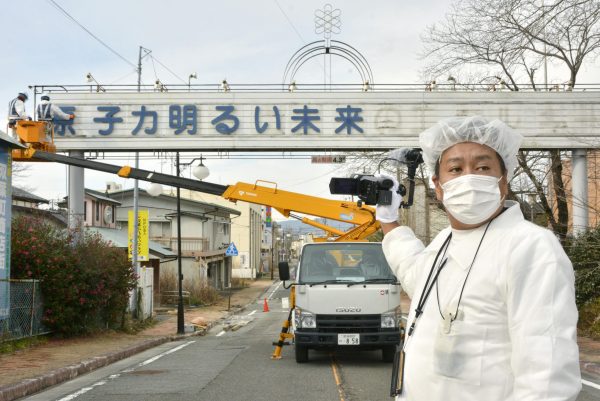
全町避難が続く福島県双葉町で、原発推進看板の撤去工事を見守る標語考案者の大沼勇治さん=21日
 Infamous Fukushima town sign praising nuclear energy to become permanent museum display https://mainichi.jp/english/articles/20210320/p2a/00m/0na/006000c, March 20, 2021 (Mainichi Japan) FUKUSHIMA — A sign hailing nuclear energy and formerly located on the main street of Fukushima Prefecture town Futaba, which was rendered inaccessible following the nuclear meltdowns triggered by the March 2011 Great East Japan Earthquake, will go on display at the Great East Japan Earthquake and Nuclear Disaster Memorial Museum in the town from March 24. Infamous Fukushima town sign praising nuclear energy to become permanent museum display https://mainichi.jp/english/articles/20210320/p2a/00m/0na/006000c, March 20, 2021 (Mainichi Japan) FUKUSHIMA — A sign hailing nuclear energy and formerly located on the main street of Fukushima Prefecture town Futaba, which was rendered inaccessible following the nuclear meltdowns triggered by the March 2011 Great East Japan Earthquake, will go on display at the Great East Japan Earthquake and Nuclear Disaster Memorial Museum in the town from March 24.
The sign measures 2 meters by 16 meters, and reads “Nuclear Power: Energy for a Bright Future.” After the 2011 nuclear disaster at the Tokyo Electric Power Co. Fukushima Daiichi Nuclear Power Station, the sign became iconic nationally as a symbol of the northeastern Japan town that pushed for nuclear power and still remains entirely subject to evacuation orders. The sign was removed in March 2016 because its deterioration posed dangers, and photos of the sign were displayed at the museum. It is too large to be placed indoors, so authorities delayed its display when opening the museum in September 2020; in the meantime, discussions on how to exhibit it were held with the Fukushima Prefectural Government. Then, on March 19, the prefectural government announced the sign will go on permanent display at the museum’s outdoor terrace from March 24. Yuji Onuma, 45, who came up with the sign’s slogan when he was in elementary school, said, “I believe exhibiting the sign will symbolize a resolve to never have another nuclear accident, and to aim for a bright future this time around. It took a long time after its removal for display plans to be finalized, but I hope coming face to face with the real thing will give visitors a chance to think about the nuclear disaster.” (Japanese original by Ryusuke Takahashi, Fukushima Bureau) |
|
New research into the effects of nuclear bomb tests on Montebello islands
 By Susan Standen 22 Mar 21, A new Edith Cowan University research project hopes to collect important data on the impact of historical nuclear testing in the remote Montebello Islands area. Key points:
Sixty years after the British government conducted nuclear explosion testing on the islands, there is little data available to find how much residue plutonium still exists. The project hopes to be the first study to outline how and where man-made radioactivity is still existing in the marine sediment. Collections of sediment are being collected from remote field trips to the islands to analyse amounts of residue plutonium radionuclides.,,,,,,,,,,,, Ms Hoffman says other island nations affected by nuclear blasts will be able to use the Montebello Islands research as a reference baseline to start their own investigations. Will it inform health research? Ms Hoffman says the first step is to find out what remains there as a legacy………….. The project is a collaboration between the Edith Cowan University, the Department of Biodiversity and Conservation and the Australian Radiation Protection and Nuclear Safety Agency. https://www.abc.net.au/news/2021-03-22/montebellos-nucelar-fallout-research/13260242 |
|
Why Boris Johnson rejected Scott Morrison as speaker at climate summit, to Morrison’s fury

|
Boris Johnson outlines why Scott Morrison was rejected to speak at climate summit, The Age, By Rob Harris March 22, 2021 British Prime Minister Boris Johnson told Scott Morrison that Australia was denied the opportunity to speak at last year’s climate summit because he wanted to encourage nations to set more ambitious emissions reduction targets.
Mr Johnson, who is rallying the world’s leading economies towards achieving net zero emissions by 2050, explained his rationale in a letter to the Australian Prime Minister in December last year while acknowledging the domestic political challenge over climate policy. Mr Johnson had originally invited Mr Morrison to speak at the December 12 summit but later walked away from the offer amid a behind-the-scenes diplomatic tussle over whether Australia’s climate change policies were insufficient to warrant a speaking slot………. While Mr Morrison told Parliament at the time he was not bothered by the snub, the government was privately furious behind the scenes and much of its anger was directed towards the British PM, who hosted the conference in partnership with the UN and France. Mr Johnson said Mr Morrison should understand that “we have tried to set a high bar for this summit to encourage countries to come forward with ambitious commitments”………https://www.theage.com.au/politics/federal/boris-johnson-outlines-why-scott-morrison-was-rejected-to-speak-at-climate-summit-20210322-p57d2o.html |
|
Will Australia’s states save the day on climate and the clean energy transition? — RenewEconomy

Renewable policy is getting better in Australia’s states, but is it enough to cancel out federal inaction? The post Will Australia’s states save the day on climate and the clean energy transition? appeared first on RenewEconomy.
Will Australia’s states save the day on climate and the clean energy transition? — RenewEconomy
Tasmania, South Australia lead, while Morrison is deadweight on energy transition — RenewEconomy

States continue to do the heavy lifting on a clean energy transition, as Morrison ignores chance for a clean energy recovery, WWF scorecard shows. The post Tasmania, South Australia lead, while Morrison is deadweight on energy transition appeared first on RenewEconomy.
Tasmania, South Australia lead, while Morrison is deadweight on energy transition — RenewEconomy
How the world can reach net zero target without resorting to nuclear power
 IW Long Reads: Is Nuclear Energy On The Road To Ruin Or A Sustainability Silver Bullet? How the world can reach net zero target without resorting to nuclear power, Investment Week, Anna Fedorova-22Mar 21, Anyone who has seen the TV series Chernobyl knows that when things go wrong with nuclear power the consequences are dire. And while it may seem that matters have evolved since the days of the Soviet Union, the nuclear disaster in Fukushima that happened just ten years ago suggests otherwise. IW Long Reads: Is Nuclear Energy On The Road To Ruin Or A Sustainability Silver Bullet? How the world can reach net zero target without resorting to nuclear power, Investment Week, Anna Fedorova-22Mar 21, Anyone who has seen the TV series Chernobyl knows that when things go wrong with nuclear power the consequences are dire. And while it may seem that matters have evolved since the days of the Soviet Union, the nuclear disaster in Fukushima that happened just ten years ago suggests otherwise. ……….[Elizabeth Stuart, analyst, sustainability research at Morningstar Europe], says with every other aspect of sustainability, “there is no silver bullet and nuclear is so very far from a perfect solution”.
For example, even when nuclear reactors are running properly, they use “tremendous amounts of water to cool the reactors”, while mining and refining the Earth’s finite resources of uranium ore also requires a large amount of energy. And of course, there is the question of waste management over many generations, given that uranium rods remain dangerously radioactive for 10,000 years. “There are also second order effects to investment in nuclear energy such as the certainty that this research can be used to create nuclear weapons and that plants are a high value targets should a war break out,” Stuart adds. “Disruption in a nuclear plant invariably won’t remain within country borders so there is also the issue of diplomacy to consider. In short, nuclear is a textbook example of a controversial stock and any investor would be wise to question its place in an ESG portfolio.” ………………. the balance is expected to shift towards renewables, which is expected to lead to a decentralisation of the power grids, posing further challenges for nuclear. Jonathan Cohen, partner at Howard Kennedy, says: “Currently, nuclear power projects are being developed at very high costs and it is difficult to finance new projects without large state expenditure. ……………wide scale support from the private sector just is not there, with investors increasingly choosing to stay on the safe side and invest in renewables instead. Robeco, for example, excludes electricity utilities that generate more than 30% of their power from nuclear sources from all of its sustainable strategies, and does not invest in nuclear power at all in its RobecoSAM Smart Energy Equities strategy. This decision is driven by a combination of “unique risks”, negative environmental impacts, relatively high costs of nuclear and the “impressive technological and cost developments in both renewables and storage technologies”. Mark Campanale, founder of the Carbon Tracker Initiative, says: “Our view is that given so many cheaper renewable energy resources available, why would anyone want to go to the expense of what is an uncompetitive technology on price, one which takes hundreds of years to clear up its waste?” According to Eduardo Monteiro, co-CIO at Victory Hill Capital Advisors, even if nuclear is to play a “robust role” in a country’s energy supply, it has too many shortcomings as a sustainable investment alternative, and should therefore be avoided. “The waste generated will be a legacy for future generations to deal with and as such investors need to think about the very real negative impact these holdings will have in both the broader sense but also to financial returns,” he says. According to Eduardo Monteiro, co-CIO at Victory Hill Capital Advisors, even if nuclear is to play a “robust role” in a country’s energy supply, it has too many shortcomings as a sustainable investment alternative, and should therefore be avoided. “The waste generated will be a legacy for future generations to deal with and as such investors need to think about the very real negative impact these holdings will have in both the broader sense but also to financial returns,” he says. According to Eduardo Monteiro, co-CIO at Victory Hill Capital Advisors, even if nuclear is to play a “robust role” in a country’s energy supply, it has too many shortcomings as a sustainable investment alternative, and should therefore be avoided. “The waste generated will be a legacy for future generations to deal with and as such investors need to think about the very real negative impact these holdings will have in both the broader sense but also to financial returns,” he says. “Such managers may naturally prefer to invest in renewables to support their interpretation of ESG investing and the transition to ‘clean’ energy more widely,” he says. https://www.investmentweek.co.uk/analysis/4028635/iw-long-reads-nuclear-energy-road-ruin-sustainability-silver-bullet |
|
March 22 Energy News — geoharvey

Opinion: ¶ “Have Rosy Forecasts About The Legacy Energy Industry Created A Financial Bubble?” • We’ve heard a lot lately about a “bubble” in Tesla and other EV-related stocks. But a report from the independent think tank RethinkX argues that a far more dangerous bubble exists around conventional coal, gas, nuclear, and hydroelectric energy assets. […]
March 22 Energy News — geoharvey
Bill Gates backs costly nuclear reactor design fueled by nuclear-weapon-usable plutonium
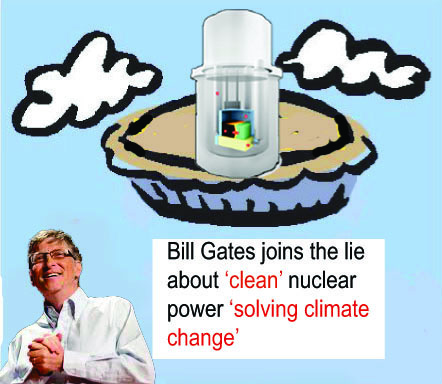
Bill Gates’ bad bet on plutonium-fueled reactors https://thebulletin.org/2021/03/bill-gates-bad-bet-on-plutonium-fueled-reactors/?utm_source=Newsletter&utm_medium=Email&utm_campaign=MondayNewsletter03222021&utm_content=NuclearRisk_Gates_03222021 By Frank N. von Hippel | March 22, 2021
One of Bill Gates’ causes is to replace power plants fueled by coal and natural gas with climate-friendly alternatives. That has led the billionaire philanthropist and Microsoft co-founder to embrace nuclear power, and building nuclear power plants to combat climate change is a prospect worth discussing. But Gates has been persuaded to back a costly reactor design fueled by nuclear-weapon-usable plutonium and shown, through decades of experience, to be expensive, quick to break down, and difficult to repair.
In fact, Gates and his company, Terrapower, are promoting a reactor type that the US and most other countries abandoned four decades ago because of concerns about both nuclear weapons proliferation and cost.
The approximately 400 power reactors that provide about 10 percent of the world’s electric power today are almost all water-cooled and fueled by low-enriched uranium, which is not weapon usable. Half a century ago, however, nuclear engineers were convinced—wrongly, it turned out—that the global resource of low-cost uranium would not be sufficient to support such reactors beyond the year 2000.
Work therefore began on liquid-sodium-cooled “breeder” reactors that would be fueled by plutonium, which, when it undergoes a fission chain reaction, produces neutrons that can transmute the abundant but non-chain-reacting isotope of natural uranium, u-238, into more plutonium than the reactor consumes.
But mining companies and governments found a lot more low-cost uranium than originally projected. The Nuclear Energy Agency recently concluded that the world has uranium reserves more than adequate to support water-cooled reactors for another century.
And while technologically elegant, sodium-cooled reactors proved unable to compete economically with water-cooled reactors, on several levels. Admiral Rickover, who developed the US Navy’s water-cooled propulsion reactors from which today’s power reactors descend, tried sodium-cooled reactors in the 1950s. His conclusion was that they are “expensive to build, complex to operate, susceptible to prolonged shutdown as a result of even minor malfunctions, and difficult and time-consuming to repair.” That captures the experience of all efforts to commercialize breeder reactors. The United States, Germany, the United Kingdom, France, and Japan all abandoned their breeder-reactor efforts after spending the equivalent of $10 billion or more each on the effort.
Today, despite about $100 billion spent on efforts to commercialize them, only two sodium-cooled breeder reactor prototypes are operating—both in Russia. India is building one, and China is building two with Russian help. But it is not clear India and China are looking only to generate electricity with their breeders; they may also be motivated in part by the fact that breeder reactors produce copious amounts of the weapon-grade plutonium desired by their militaries to expand their nuclear-weapon stockpiles.
The proliferation risks of breeder-reactor programs were dramatically demonstrated in 1974, when India carried out its first explosive test of a nuclear-weapon design with plutonium that had been produced with US Atoms for Peace Program assistance for India’s ostensibly peaceful breeder reactor program. The United States, thus alerted, was able to stop four more countries, governed at the time by military juntas (Brazil, Pakistan, South Korea, and Taiwan), from going down the same track—although Pakistan found another route to the bomb via uranium enrichment.
It was India’s 1974 nuclear test that got me involved with this issue as an advisor to the Carter administration. I have been involved ever since, contributing to the plutonium policy debates in the United States, Japan, South Korea and other countries.
In 1977, after a policy review, the Carter administration concluded that plutonium breeder reactors would not be economic for the foreseeable future and called for termination of the US development program. After the estimated cost of the Energy Department’s proposed demonstration breeder reactor increased five-fold, Congress finally agreed in 1983
Gates is obviously not in it for the money. But his reputation for seriousness may have helped recruit Democratic Senators Cory Booker, Dick Durbin, and Sheldon Whitehouse to join the two Republican senators from Idaho in a bipartisan coalition to co-sponsor the Nuclear Energy Innovations Capabilities Act of 2017, which called for the VTR.
I wonder if any of those five Senators knows that the VTR is to be fueled annually by enough plutonium for more than 50 Nagasaki bombs. Or that it is a failed technology. Or that the Idaho National Laboratory is collaborating on plutonium separation technology with the Korea Atomic Energy Research Institute at a time when about half of South Korea’s population wants nuclear weapons to deter North Korea.
Fortunately, it is not too late for the Biden administration and Congress to avoid repeating the mistakes of the past and to zero out the Versatile Test Reactor in the Department of Energy’s next budget appropriations cycle. The money could be spent more effectively on upgrading the safety of our existing reactor fleet and on other climate-friendly energy technologies.
Frank N. von Hippel
Frank N. von Hippel is a co-founder of the Program on Science and Global Security at Princeton University’s School of Public and International…
The week in nuclear news
Not a lot of remarkable news on nuclear this week . The nuclear lobby is doubling down on its media propaganda, touting nuclear as the solution to climatev change. Also it is determinedly promoting the Tokyo Olympics – the so-called ‘recovery Olympics’, despite the fact that international visitors are banned.
Coronavirus. Incidence of new cases globally continues to rise, but death numbers are falling. Problems in distribution of vaccines.
Climate. Developments in global heating are covered each week in Radio Ecoshock, which is a jump ahead of most news media. This week, it’s been about the predicted high temperatures in the world’s cities. Also, it’s a warm\ning that climate tipping points are coming sooner than expected.
A bit of good news. March 20 was the U.N.’s International Day of Happiness. For the fourth year in a row, Finland has been named the happiest country in the world, with Iceland coming in second, followed by Denmark, Switzerland, and the Netherlands.
AUSTRALIA.
BHP, Rio Tintom given carte blanche to export uranium to global hotspots .
Australian Senate vote on Kimba nuclear dump delayed till mid-May, but dump opponents will be fighting on. Resources Minister Keith Pitt on radio – same old same old Bluff and Bribery about Kimba nuclear dump plan.
Minerals Council of Australia trying to influence European Commission, to push for fossil fuels and nuclear.
Need for ‘consent laws’, as Australian mining companies trample on Aboriginal rights.
INTERNATIONAL.
Investigative journalism – Advanced nuclear reactors : Assessing the Safety, Security, and Environmental Impacts of Non-Light-Water Nuclear Reactors. New science report: advanced nuclear reactors no safer than conventional nuclear plants. The economics of nuclear power plants are not favorable to future investments.
Nuclear power has become irrelevant — like it or not. Why the Fukushima disaster signalled the end of Big Nuclear.
New research to determine plutonium pollution and its sources.
Don’t believe hydrogen and nuclear hype – they can’t get us to net zero carbon by 2050
Review of Michael Shellenberger’s book on ”Why Environmental Alarmism Hurts Us All”.
Need for ‘consent laws’, as Australian mining companies trample on Aboriginal rights
“The Australian government needs to amend native title and land rights legislation to include a requirement for companies to gain free, prior and informed consent from traditional landowners before proceeding with projects, as well as mandatory human rights due diligence assessments.”
The report also recommends governments at all levels work to remove financial and other barriers to Indigenous people accessing the courts to ensure they can effectively challenge decisions that affect them.
Close the gap in consent laws for major resource projects: report. A new report highlights accountability shortfalls in major resource projects and calls for legislative reform to protect Indigenous people’s rights. https://www.rmit.edu.au/news/all-news/2021/mar/mining-first-nations Michael Quin, 21 Mar 21,
The First Peoples and Land Justice Issues in Australia report by researchers at RMIT University’s Business and Human Rights Centre (BHRIGHT), reveals the human rights impacts of companies operating on Aboriginal and Torres Strait Islander land.
BHRIGHT Director, Associate Professor Shelley Marshall, said the case studies revealed a pattern of companies failing to meet international business and human rights norms, as well as a lack of respect for the fundamental principle of obtaining free, prior and informed consent from landholders on projects impacting them.
“Our research reveals a legal framework and corporate behaviour that refuses to acknowledge lack of consent,” Marshall said.
“The fact that companies can operate within Australian law while failing to respect and uphold their international human rights obligations underlines the urgent need for legislative reform at state, territory, and federal levels.”
“These companies also need to step up and take their obligations under human rights frameworks much more seriously.” Continue reading
1 This month.

PETITION – To: Prime Minister Anthony Albanese and the Australian Labor Government
Chernobyl: The Lost Tapes – A good documentary on Chernobyl on SBS available On Demand for the next 3 weeks– https://www.sbs.com.au/ondemand/tv-program/chernobyl-the-lost-tapes/235274195556

19 May – Webinar- Webinar: No Nuclear Weapons in Australia
Start: 2026-05-19 18:00:00 UTC Canberra, Melbourne, Sydney (GMT+10:00)
End: 2026-05-19 19:30:00 UTC Canberra, Melbourne, Sydney (GMT+10:00)
20 May – Webinar – The dangerous world of AUKUS, US, military occupation and suppression of dissent

National Webinar, 20th May, 2026, 6.30pm AEST. Confronting laws restricting/suppressing protest speech and action
Speakers: Former Sen. Rex Patrick, Lawyer Nick Hanna ,Arthur Rorris ,Jorgen Doyle, Sen David Shoebbridge,
Facilitator Kelley Tranter.

of the week – Australians for War Powers Reform (AWPR)
To see nuclear-related stories in greater depth and intensity
 Antinuclear