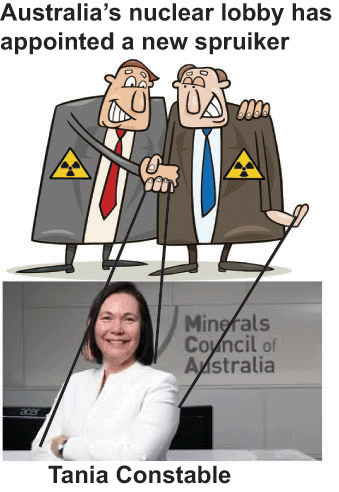
Minerals Council of Australia trying to influence European Commission, to push for fossil fuels and nuclear
|
The Minerals Council of Australia has weighed into a European commission climate policy debate, urging it to back fossil fuels with carbon capture use and storage (CCS) and nuclear power on a list of environmentally friendly developments.
In a written submission to the commission, the minerals council (MCA) said a proposed EU taxonomy for sustainable activities intended to shape investment under a European green deal was inconsistent in how it dealt with clean technologies because it favoured solar, wind and biofuels over nuclear and CCS. The mining lobby group said it was concerned this approach would have a flow-on effect on the types of energy investments backed by EU-based companies across the globe and “increase the cost of reducing CO2 emissions”. It called for an overhaul. InfluenceMap, a London-based thinktank that tracks corporate climate lobbying, said the MCA’s submission suggested it wanted to export its “negative approach to climate policy” by pushing for changes in other parts of the world that would allow continued use of coal and gas. The MCA submission argued there was “no valid basis” for treating CCS and nuclear differently given EU countries currently used coal, gas and nuclear……….. But InfluenceMap’s program manager, Rebecca Vaughan, said the MCA appeared concerned a science-led approach to dealing with the climate crisis would hurt the industries it represented. “While the MCA says it wants the EU to take a technology neutral position, its submission appears to advocate for the continued use of coal and gas with carbon capture utilisation and storage, which is clearly at odds with the commission’s science-based policy,” Vaughan said. The MCA has long been accused of hindering action to tackle the climate crisis in Australia, and campaigned aggressively against Labor’s two attempts to introduce a carbon pricing scheme. In recent years it has come under pressure to change its anti-climate stance from its biggest members, BHP and Rio Tinto. It followed the big mining companies facing repeated calls from their investors to abandon the MCA over its commitment to coal. It resulted in the MCA releasing a climate plan that said it was committed to the Paris agreement and reaching net zero emissions, but did not include a timeframe in which that target should be reached. The EU taxonomy is intended to help it meet a target of at least a 55% cut in its emissions below 1990 levels by 2030 on the way to net zero by 2050 by defining what activities are considered environmentally sustainable and warrant investment support. The commission said it expected the taxonomy would “create security for investors, protect private investors from greenwashing, help companies to plan the transition, mitigate market fragmentation and eventually help shift investments where they are most needed”.
The final version of the EU’s sustainable finance rules was due in January but a decision was delayed until April after 10 countries objected to the initial proposal because they wanted gas to be deemed a sustainable energy source. Nuclear energy plays a significant role in some EU countries but has been found to be in decline in the developed world, and to be more expensive and less efficient at reducing emissions than renewable energy……….. Nuclear energy remains banned in Australia. Some Coalition MPs and industry leaders want the prohibition lifted. https://www.theguardian.com/australia-news/2021/mar/21/australias-miners-urge-europe-to-define-nuclear-power-and-fossil-fuels-with-carbon-capture-as-sustainable |
|
Fukushima disaster 10 years on: How long will it take to clean up the nuclear waste?
Fukushima disaster 10 years on: How long will it take to clean up the nuclear waste?
Decontamination and living with ‘black bags’
Piles of black bags were generated by the vast, painstaking clean-up and then transported from other storage places. Those black bags have occupied more than 90 blocks ranging from 180 sq m to 6,500 sq m in the northern part of Tomioka since 2015.
According to a 2018 report from Japan’s Ministry of the Environment, the estimated total quantity of decontaminated soil will be somewhere between 16 and 22 million cubic metres after volume reduction. This is 13 to 18 times larger than the volume of the Tokyo Dome.
The Ministry says the total will likely be at the lower end of the provided range, in a latest reply to The Straits Times’ query.
Limits of decontamination
The “decontamination” only involves soil removal in flatland areas – the government has said that it is impossible to clear the soil in mountainous areas, but more than 70 per cent of the hardest-hit areas are mountainous.
Mr Nobuyoshi Ito is one of those who live in the mountainous areas where vast decontamination is hard to carry out.
Mr Ito first moved to Iitate village in Fukushima prefecture in 2010 after he retired as an IT engineer, to work as an “apprentice farmer”.
He had no ties with the village before that, but the self-professed “guinea pig” ended up staying on there, in open defiance of government orders to evacuate, and against his children’s wishes for him to live with them in Niigata prefecture on the west coast.
“When the government asked us to evacuate… I asked if there would be criminal charges if I continued to live here,” he told The Straits Times in 2016. “They said no.”
He carries a dosimeter around with him all the time, measuring anything he can lay his hands on from soil, plants to animal carcasses. He also owns a laboratory-grade radiation measuring machine at his cabin, deep in the mountains in the village.
He thinks the government’s decision to not decontaminate forested mountainous areas will backfire due to factors such as rain that may spread radioactive material, and in a study last year found that 43 out of 69 locations along the Olympic torch relay route had radiation levels above the government limits.
He told The Straits Times that he fears that Tokyo is overly eager to portray that everything was “under control”, given that this could give the impression that it is “case closed”.
Non-profit Greenpeace notes that such standards in towns neighbouring the nuclear plant would not pass in other parts of the world.
The indefinite future: Where to permanently store 16 million bags of nuclear waste
The law requires that the final disposal site of high-level nuclear waste should be outside of Fukushima by March 2045.
Two fishing villages in Hokkaido are vying to host the final storage facility of Japanese nuclear waste for half a century, splitting communities between those seeking investment to stop the towns from dying, and those haunted by the 2011 Fukushima disaster who are determined to stop the project.
I cannot give a deadline at this moment. We will consider the entire schedule based on the progress at the two new potential sites, along with nationwide public relations activities.
MS MASARU KASHIMA
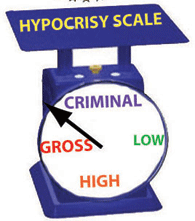
The nuclear lobby’s lying propaganda on the run up to COP Climate Conference
Ya gotta admire the global spread and relentless persistence of the nuclear industry at every level. Whether it be aimed ast schoolkids or heads of state, – the message is just such a lie – that nuclear power is ”essential to fight climate change’‘
Never mind that nuclear power is itself very vulnerable to climate change (over-heating, rising sea leveles, storm surges, water shortages……)
Anyway, today I was captivated by a charming, pretty, graphic, touted by the Public Service Enterprise Group, (PSE&G’) in an article extolling nuclear power, published by INSIDER NJ.
I just felt the need to make PSE&G’s picture honest.

Need for more research into causes of increased incidence of childhood lukaemia near nuclear site
National Library of Medicine 15th March 2021, A previous investigation of the occurrence of childhood acute leukemia around the Belgian nuclear sites has shown positive associations around one nuclear site (Mol-Dessel). In the following years, the Belgian Cancer Registry has made data available at the smallest administrative unit for
which demographic information exists in Belgium, i.e. the statistical sector. This offers the advantage to reduce the potential misclassification due to large geographical scales.
Results confirm an increased incidence of acute childhood leukemia around Mol-Dessel, but the number of cases remains very small. Random variation cannot be excluded and the ecological design does not allow concluding on causality. These findings emphasize the need for more in-depth research into the risk factors of childhood leukemia, for a better understanding of the etiology of this disease.
The economics of nuclear power plants are not favorable to future investments
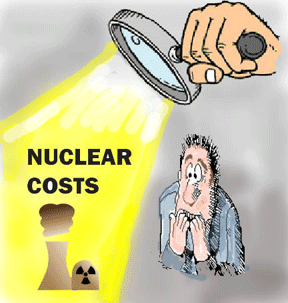 Investing into third generation nuclear power plants – Review of recent trends and analysis of future investments using Monte Carlo Simulation https://www.sciencedirect.com/science/article/abs/pii/S1364032121001301 Renewable and Sustainable Energy Reviews Volume 143, June 2021, 110836
Author links open overlay panelB.WealerabS.BauerbC.v.HirschhausenabC.KemfertacL.Göke
Highlights
- •Cost escalations in the nuclear sector observed in previous research continue until today.
- •Investing into a nuclear power plant today is not a profitable business case.
- •The net present values are mainly negative, in the range of five to ten billion USD.
- •Interest during construction is a major cost driver not to be underestimated.
- •Policy debates should consider total costs including interest and construction time.
Abstract
This paper provides a review of trends in third generation nuclear power plants, and analyzes current and future nuclear power plant investments using Monte Carlo simulations of economic indicators.
We first review global trends of nuclear power plant investments, including technical as well as economic trends. The review suggests that cost escalations in the sector observed in previous research continue until today, including the most recent investment projects in the U.S. and in Europe.
In order to extend this analysis, we carry out our own investment analysis of a representative third generation nuclear power plant, focusing on the net present value and the levelized cost of electricity. We base our analysis on a stochastic Monte Carlo simulation to nuclear power plant investments.
We define and estimate the main drivers of our model: Overnight construction costs, wholesale electricity prices, and weighted average cost of capital, and discuss reasonable ranges and distributions of those parameters.
Model runs suggest that investing in nuclear power plants is not profitable, i.e. expected net present values are highly negative, mainly driven by high construction costs, including capital costs, and uncertain and low revenues.
Even extending reactor lifetimes does not improve the results significantly. We conclude that our numerical exercise confirms the literature review, i.e. the economics of nuclear power plants are not favorable to future investments, even though additional costs (decommissioning, long-term storage) and the social costs of accidents are not even considered.
The post 2025 energy market must plan for a grid without coal — RenewEconomy

The Energy Security Board is devising ways to keep the grid operating along the rocky road of the renewables transition. But is it looking far enough ahead? The post The post 2025 energy market must plan for a grid without coal appeared first on RenewEconomy.
The post 2025 energy market must plan for a grid without coal — RenewEconomy
Coles snubs coal and gas and commits to 100 pct renewables by 2025 — RenewEconomy

Coles commits to buy renewables and slash its emissions, as supermarkets lead the way in corporate climate commitments. The post Coles snubs coal and gas and commits to 100 pct renewables by 2025 appeared first on RenewEconomy.
Coles snubs coal and gas and commits to 100 pct renewables by 2025 — RenewEconomy
Agrisolar: Solar industry hopes farmers will help solve grid access problems — RenewEconomy

The Clean Energy Council says working with Australian farmers could help solve the growing problem of grid access for new large-scale solar farms. The post Agrisolar: Solar industry hopes farmers will help solve grid access problems appeared first on RenewEconomy.
Agrisolar: Solar industry hopes farmers will help solve grid access problems — RenewEconomy
March 20 Energy News — geoharvey

Opinion: ¶ “Federal Oil & Gas Leasing Needs Fixing” • President Biden’s executive order focused on climate change is forward-looking. Among many actions spanning the entire federal government, the order places a pause – not a ban – on new oil and gas leases. It applies to actions not yet taken, and in most cases, […]
March 20 Energy News — geoharvey
Australian Senate vote on Kimba nuclear dump delayed till mid-May, but dump opponents will be fighting on
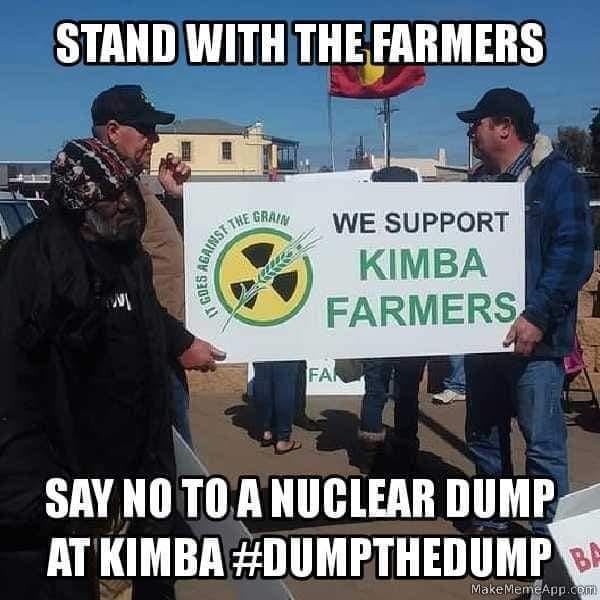
Resources Minister Keith Pitt on radio today – same old same old Bluff and Bribery about Kimba nuclear dump plan
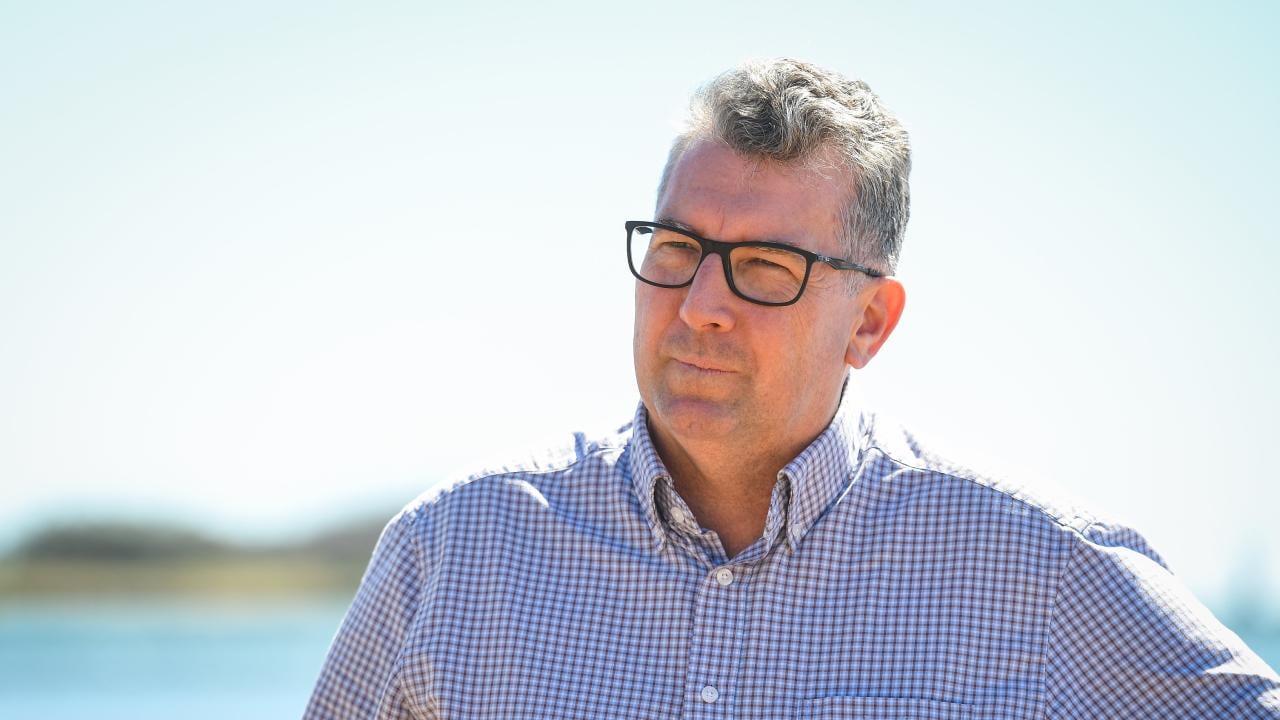 Kazzi Jai, No nuclear waste dump anywhere in South Australia, 19n Mar 21,
Pitt having a news grab this morning Monday 15/03/2021 on ABC 639 North and West. Had nothing new to say – same old, same old – …..but it was the first interview from him for the dump for 2021!
New science report: advanced nuclear reactors no safer than conventional nuclear plants
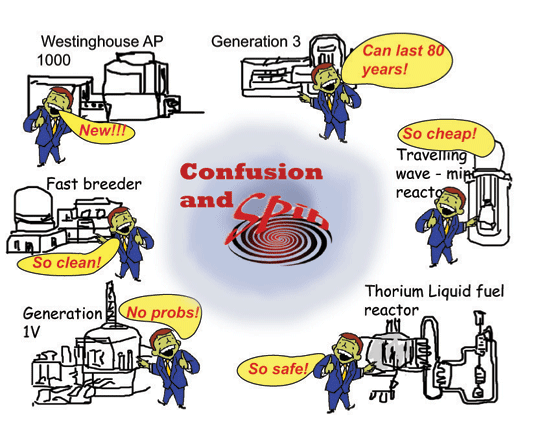
Advanced nuclear reactors no safer than conventional nuclear plants, says science group https://www.reuters.com/article/us-usa-nuclearpower/advanced-nuclear-reactors-no-safer-than-conventional-nuclear-plants-says-science-group-idUSKBN2BA0CP, By Timothy Gardner-18 Mar 21,
President Joe Biden, a Democrat, has made curbing climate change a priority and has supported research and development for advanced nuclear technologies.
The reactors are also popular with many Republicans. Last October, the month before Biden was elected, the U.S. Department of Energy, awarded $80 million each to TerraPower LLC and X-energy to build reactors it said would be operational in seven years.
Advanced reactors are generally far smaller than conventional reactors and are cooled with materials such as molten salt instead of with water. Backers say they are safer and some can use nuclear waste as fuel.
“The technologies are certainly different from current reactors, but it is not at all clear they are better,” said Edwin Lyman, director of nuclear power safety at the Union of Concerned Scientists.
“In many cases, they are worse with regard to … safety, and the potential for severe accidents and potential nuclear proliferation,” said Lyman, author of the report UCS released Thursday called “‘Advanced’ Isn’t Always Better”.
Nuclear reactors generate virtually emissions-free power [ if you ignore their total fuel chain] which means conventional ones, at least, will play a role in efforts to decarbonize the economy by 2050, a goal of the Biden administration. But several of the 94 U.S. conventional nuclear plants are shutting due to high safety costs and competition from natural gas and wind and solar energy.
That has helped spark initial funding for a new generation of reactors.
Also, nuclear waste from today’s reactors would have to be reprocessed to make fuel. That technique has not been practiced in the United States for decades because of proliferation and cost concerns. Other advanced reactors emit large amounts of radioactive gases, a potentially problematic waste stream.
Lyman said advanced nuclear development funds would be better spent on bolstering conventional nuclear plants from the risks of earthquakes and climate change, such as flooding. The report recommended that the Department of Energy suspend its advanced reactor demonstration program until the Nuclear Regulatory Commission (NRC) requires prototype testing before reactors can be licensed for commercial use.
The DOE did not immediately respond to a request for comment.
Also, nuclear waste from today’s reactors would have to be reprocessed to make fuel. That technique has not been practiced in the United States for decades because of proliferation and cost concerns. Other advanced reactors emit large amounts of radioactive gases, a potentially problematic waste stream.
Lyman said advanced nuclear development funds would be better spent on bolstering conventional nuclear plants from the risks of earthquakes and climate change, such as flooding. The report recommended that the Department of Energy suspend its advanced reactor demonstration program until the Nuclear Regulatory Commission (NRC) requires prototype testing before reactors can be licensed for commercial use.
The DOE did not immediately respond to a request for comment.
Audit office questions Taylor emails as it slams Collinsville coal plant grant — RenewEconomy

ANAO questions processes to award millions in public funds to coal plant feasibility study, and the use of energy minister Angus Taylor’s private email address. The post Audit office questions Taylor emails as it slams Collinsville coal plant grant appeared first on RenewEconomy.
Audit office questions Taylor emails as it slams Collinsville coal plant grant — RenewEconomy
“We have policy chaos:” Australians back ban on new petrol cars — RenewEconomy

Federal government urged to show leadership on EV policy as polling shows most Australians would support a ban on new petrol vehicle sales. The post “We have policy chaos:” Australians back ban on new petrol cars appeared first on RenewEconomy.
“We have policy chaos:” Australians back ban on new petrol cars — RenewEconomy
Western Australia sets new record for wind and solar share, and minimum demand — RenewEconomy

Western Australia sets a new record for wind and solar share in its stand-alone grid, while the growth in rooftop solar pushes grid demand to a record low the following day. The post Western Australia sets new record for wind and solar share, and minimum demand appeared first on RenewEconomy.
Western Australia sets new record for wind and solar share, and minimum demand — RenewEconomy
1 This month.


PETITION – To: Prime Minister Anthony Albanese and the Australian Labor Government
Chernobyl: The Lost Tapes – A good documentary on Chernobyl on SBS available On Demand for the next 3 weeks– https://www.sbs.com.au/ondemand/tv-program/chernobyl-the-lost-tapes/235274195556

19 May – Webinar- Webinar: No Nuclear Weapons in Australia
Start: 2026-05-19 18:00:00 UTC Canberra, Melbourne, Sydney (GMT+10:00)
End: 2026-05-19 19:30:00 UTC Canberra, Melbourne, Sydney (GMT+10:00)
20 May – Webinar – The dangerous world of AUKUS, US, military occupation and suppression of dissent

National Webinar, 20th May, 2026, 6.30pm AEST. Confronting laws restricting/suppressing protest speech and action
Speakers: Former Sen. Rex Patrick, Lawyer Nick Hanna ,Arthur Rorris ,Jorgen Doyle, Sen David Shoebbridge,
Facilitator Kelley Tranter.

of the week – Australians for War Powers Reform (AWPR)
To see nuclear-related stories in greater depth and intensity
 Antinuclear