Australian government obsessed with preventing legal appeals against its nuclear waste dump plan
Commenting on the opinion piece: They have let it come: now build it , In Daily Dave Sweeney, Australian Conservation Foundation InDaily 25 Feb 21
Sean Edwards’ defence of the federal governments push for a hotly-contested national radioactive waste facility near Kimba on the Eyre Peninsula fails to recognise that the deeply flawed plan has once more hit the rough.
Mr Edwards speaks of respect, but there is nothing respectful in the governments new legislation seeking to remove people’s rights to legally appeal or challenge the plan.
Access to a day in court is a fundamental democratic right, and the governments obsession with removing this should sound alarm bells in the wider community, just as it has in the Senate where the planned law was again deferred this week after it failed to garner broad political support.
The plan shirks the hard questions about responsible long-term radioactive waste management in favour of a sub-optimal short-term political ‘fix’.
The waste comes from the Lucas Heights reactor in Sydney. There is a growing call that it should stay at this secure federal site until there is a credible pathway for its long-term management. Moving it to an area in regional South Australia where there are far fewer management assets and resources is both unnecessary and irresponsible.
This is not a decision about on which hill to put a mobile tower. Deciding on Australia’s first purpose-built national radioactive waste facility requires much more evidence, effort and evaluation than has occurred to date.
If radioactive waste lasted as long as our politicians it would hardly be a problem. But it doesn’t. This is Australia’s most serious radioactive waste and some of it needs to be isolated from people and the environment for 10,000 years.
Our nation needs a credible, evidence-based approach to the long-term management of radioactive waste.
Sadly, neither Minister Pitt’s plan nor Mr Edward’s assurances deliver this. It is time the current approach was scrapped and the federal government got serious about advancing responsible waste management. – https://indaily.com.au/opinion/reader-contributions/2021/02/26/your-views-on-nuclear-waste-submarines-and-jobseeker/
Dr Helen Caldicott on Independent Australia tells The Truth About Nuclear Power
 HELEN CALDICOTT: The truth about nuclear power — neither clean nor green https://independentaustralia.net/environment/environment-display/hthe-truth-about-nuclear-power–neither-clean-nor-greenelen-caldicott-,14837 HELEN CALDICOTT: The truth about nuclear power — neither clean nor green https://independentaustralia.net/environment/environment-display/hthe-truth-about-nuclear-power–neither-clean-nor-greenelen-caldicott-,14837
By Helen Caldicott | 26 February 2021, While nuclear power is considered clean by many, there are several harmful and long-lasting consequences resulting from its use, writes Dr Helen Caldicott.
AN ENORMOUS AMOUNT of fossil fuel is used to mine and mill uranium, to enrich and fashion the nuclear fuel rods, to build the enormous concrete reactor, let alone decommission the radioactive mausoleum at the end of its active life of 40-60 years. Finally, but not least, to transport millions of tons of intensely radioactive waste to some as-yet-to-be-constructed storage site in the U.S. to be kept isolated from the ecosphere for one million years according to the U.S. Environmental Protection Agency. We all know to our detriment that the combustion of oil, gas and coal creates CO2, the main global warming gas. According to a definitive study by Jan Willem Storm van Leeuwen and Philip Smith titled ‘Nuclear Power: the Energy Balance’, the use of nuclear power causes, at the end of the road, approximately one third as much CO2 as gas-fired electricity production. The rich uranium ores required for this reduction are limited and the remaining poorer ores in reactors would produce more CO2 than burning fossil fuels directly. Nuclear reactors are best understood as complicated expensive and inefficient gas burners. Setting aside the above energetic costs and accepting the nuclear industry’s claim that it is clean and green, and assuming a 2% growth in global demand, all present-day reactors – 440 – would have to be replaced by new ones. Half the electricity growth would be provided by nuclear power and half the world’s coal fire plants replaced by nuclear plants requiring the construction over 50 years of 2,000 to 3,000 1,000-megawatt reactors — one per week for 50 years. The International Atomic Energy Agency estimates already there are 370,000 tons of high-level radioactive waste in the world awaiting disposal, containing over 100 radioactive elements such as:
Dr John Gofman MD, the discoverer of uranium-233, estimated that if 400 reactors operated for 25 years at 99 per cent perfect containment, caesium loss would be equivalent to 16 Chernobyls. A half-life is multiplied by ten or 20 to give the total dangerous radiological life. There is no containment that lasts 100 years let alone one million. As these radioactive elements inevitably escape and leak into the environment, they will concentrate at each step of the food chain tens to hundreds of times, for instance through algae, then crustaceans, then small fish, then big fish, then us. They are tasteless, invisible and odourless. Once deposited in human or animal organs, they irradiate a small volume of cells over many years inducing mutation of regulatory genes which control the rate of cell division, thus inducing uncontrolled cell division which is cancer. Leukemia takes five to ten years to appear post contamination, solid cancers 15 to 80 years. Genetic abnormalities will take generations to manifest. Animals and plants are similarly affected. In effect, by creating more and more nuclear waste, we humans will be inducing random compulsory genetic engineering for the rest of time. That’s what clean, green nuclear power means. You can follow Dr Caldicott on Twitter @DrHCaldicott. Click here for Dr Caldicott’s complete curriculum vitae. |
|
Gippsland town volunteers for micro-grid trial to reduce dependence on main grid — RenewEconomy

The town of Heyfield 200km east of Melbourne will be the guinea pig for new microgrid technology in a study led by UTS. The post Gippsland town volunteers for micro-grid trial to reduce dependence on main grid appeared first on RenewEconomy.
Gippsland town volunteers for micro-grid trial to reduce dependence on main grid — RenewEconomy
Australia cannot afford to allow coal generators to hijack clean energy transition — RenewEconomy

Regulators overseeing the new energy market rules for Australia’s main grid must push back against the attempts by the coal lobby to hijack the process. The post Australia cannot afford to allow coal generators to hijack clean energy transition appeared first on RenewEconomy.
Australia cannot afford to allow coal generators to hijack clean energy transition — RenewEconomy
Solar panels installers on notice in safety blitz — RenewEconomy

Metropolitan and regional installers of rooftop solar panels can expect an unannounced visit from SafeWork’s inspectors as the work health and safety regulator targets heightened risk associated with a boom in demand. The post Solar panels installers on notice in safety blitz appeared first on RenewEconomy.
Solar panels installers on notice in safety blitz — RenewEconomy
“Days of high solar tariffs are over”: Victoria regulator slashes FiT by one third — RenewEconomy

Victoria regulator says the days of high solar tariffs are over, as minimum FiT is slashed by one third due to falling wholesale prices. The post “Days of high solar tariffs are over”: Victoria regulator slashes FiT by one third appeared first on RenewEconomy.
“Days of high solar tariffs are over”: Victoria regulator slashes FiT by one third — RenewEconomy
Renewable Energy Zones, network expansions, added to Infrastructure Priority List — RenewEconomy

Renewable Energy Zones and large-scale storage added to the federal government’s Infrastructure Priority List. The post Renewable Energy Zones, network expansions, added to Infrastructure Priority List appeared first on RenewEconomy.
Renewable Energy Zones, network expansions, added to Infrastructure Priority List — RenewEconomy
AusNet pushes case for route through Victoria to unlock wind and solar — RenewEconomy

AusNet releases its preferred route for major new transmission link through Victoria to address “Rhombus of Regret” and unlock new wind and solar projects. The post AusNet pushes case for route through Victoria to unlock wind and solar appeared first on RenewEconomy.
AusNet pushes case for route through Victoria to unlock wind and solar — RenewEconomy
Fukushima Disaster & Tokyo Olympics — limitless life

Disaster in Fukushima and 2020 Tokyo Olympics By Former Ast. Prof. in Research Reactor Instute of Kyoto University On February 11th 2011 a severe earthquake struck the Tōhoku region in Japan causing several Tsunami waves which hit the pacific coast of Fukushima, Miyagi, Iwate prefectures causing a power failure at the Fukushima Daiichi Nuclear Power […]
Fukushima Disaster & Tokyo Olympics — limitless life
Radioactive Materials in Black Rockfish Off Fukushima Coast: Shipment Suspended — Fukushima 311 Watchdogs

February 22, 2021, 7:09 pm The Fukushima Prefectural Federation of Fishermen’s Associations (FISHMA) has suspended shipments of a fish called “Kurosoy” that was landed on February 22 in an experimental fishery off the coast of Fukushima Prefecture. This is the first time in about two years that radioactive materials exceeding the standard have been detected […]
Radioactive Materials in Black Rockfish Off Fukushima Coast: Shipment Suspended — Fukushima 311 Watchdogs
Fukushima Daiichi Nuclear Power Plant Containment Vessel Water Level Continues to Drop Due to Earthquake

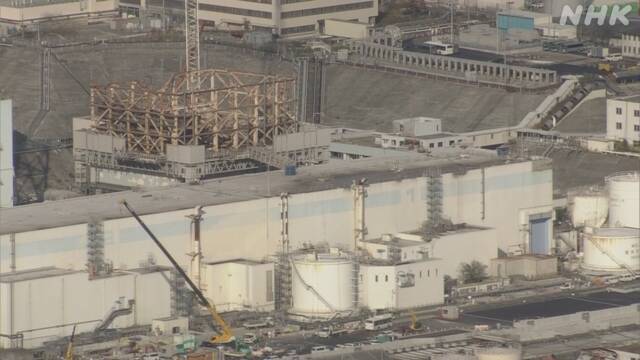
February 23, 2021, 5:05 PM
Tokyo Electric Power Company (TEPCO) summarized the impact of the February 13 earthquake on the Fukushima Daiichi Nuclear Power Plant on February 22, and said that the water level in the containment vessel that houses the reactor continues to drop. The Nuclear Regulation Authority (NRA) has said that water injection is continuing and that there are no safety issues at present, but has called for tighter monitoring.
At the Fukushima Daiichi Nuclear Power Plant, water is being injected to cool the melted down nuclear fuel, but the water level in the containment vessels of the Unit 1 and Unit 3 reactors has dropped by several dozen centimeters and has been on a downward trend ever since.
In addition, nitrogen has been injected into the containment vessel to prevent hydrogen explosions and increase the pressure, but in the Unit 1 reactor, the pressure gauge that measures…
View original post 171 more words
February 26 Energy News — geoharvey

Opinion: ¶ “How The Race For Renewable Energy Is Reshaping Global Politics” • Andrew Forrest, chairman of Fortescue Metals Group, searched the world for five months to find sites for hydropower and geothermal energy. The experience told him that in fifteen years, energy will be completely changed. And that will change politics globally. [InsideClimate News] […]
February 26 Energy News — geoharvey
Legislation banning nuclear power in Australia should be retained

Murdoch papers and Murdoch’s Sky News have ramped up their campaign to have nuclear laws repealed, and far-right Coalition MPs and former MPs are along for the ride. The post Legislation banning nuclear power in Australia should be retained appeared first on RenewEconomy.
Legislation banning nuclear power in Australia should be retained — RenewEconomy
State parliaments in NSW and Victoria have completed nuclear inquiries over the past two years but the governments of both states have no intention of repealing laws banning nuclear power.
The Morrison government established an inquiry into nuclear power in 2019 but made it clear that the federal ban would be retained regardless of the findings of the inquiry.
Nevertheless, supporters continue to campaign for the repeal of federal and state laws banning nuclear power. The Murdoch papers and Murdoch’s Sky News have ramped up their campaign to have those laws repealed.
Far-right Coalition MPs and former MPs are along for the ride.
And a tangled web of far-right conspiracists and fossil fuel interests: for example a recent article promoting nuclear power in Australia was written by a Policy Associate at the impressive-sounding Institute for Energy Research — the impressive-sounding, Koch-founded, fossil fuel-funded Institute for Energy Research.
There’s conflict within the Coalition, as demonstrated by the unwillingness of the federal and NSW Coalition governments to repeal legal bans, and submissions opposing nuclear power to the federal inquiry from the SA and Tasmanian conservative governments as well as the Queensland Liberal-National Party.
Coalition Senator Matt Canavan is at war with himself, previously noting that nuclear power would increase power bills but now supporting taxpayer funding for nuclear power through the Clean Energy Finance Corporation.
Yes, it’s entertaining watching the Coalition at war with itself over an energy source that has well and truly priced itself out of the energy debate and has instead found a home in the culture wars.
Former PM Malcolm Turnbull describes nuclear power as the “loopy current fad … which is the current weapon of mass distraction for the backbench”.
But there’s a serious side to the problem.
Firstly, the promotion of nuclear power muddies the energy debate and helps to delay the transition from fossil fuels to renewables. Economist Prof. John Quiggin notes that, in practice, support for nuclear power in Australia is support for coal.
Secondly, politicians who are silly enough to promote nuclear power over cheaper renewables would probably be silly enough to gift billions of dollars of taxpayer subsidies to nuclear companies.
And not all of these MPs are fringe figures like Craig Kelly — some have real clout such as NSW Deputy Premier John Barilaro, former Deputy Prime Minister Barnaby Joyce, and former PM Tony Abbott (who thinks the Coalition should promote nuclear power to “create a contest” with unions, GetUp, the Greens, the ALP and the “green left“.
There are plenty of recent examples demonstrating how badly nuclear power projects can go wrong.
All of the recent projects in the US and western Europe have cost about A$20 billion per reactor and all of them are at least A$10 billion over budget and many years behind schedule.
Multi-billion-dollar taxpayer and ratepayer subsidies for these failed projects have been ever-expanding. It would be naïve to expect a better outcome — in other words, a non-disastrous outcome — in Australia given our lack of experience and expertise.
Thirdly, culture wars based on lies and conspiracy theories can escalate beyond anyone’s wildest imagination, as we see with the MAGA movement in the US.
There has to be push-back against irrational ideologues lest they become dangerous irrational ideologues.
The rest of this article summarises the reasons to oppose nuclear power in Australia and to keep legal bans in place. This summary comes with the caveat that rational arguments won’t shift the culture warriors; a cult deprogrammer might shift them, but not rational arguments.
Nonetheless, the rest of the population needs to be inoculated against the misinformation of the ideologues. Continue reading
Australian government’s nuclear waste plans unacceptable – Dr Margaret Beavis
 Long-term impact of quick nuclear dump fix https://indaily.com.au/opinion/2021/02/23/long-term-impact-of-quick-nuclear-dump-fix/Legislation to set up a national nuclear waste storage site on South Australia’s Eyre Peninsula is being debated by federal parliament. Margaret Beavis argues that both the site selection process and storage plans for long-lived intermediate nuclear waste are unacceptable. Long-term impact of quick nuclear dump fix https://indaily.com.au/opinion/2021/02/23/long-term-impact-of-quick-nuclear-dump-fix/Legislation to set up a national nuclear waste storage site on South Australia’s Eyre Peninsula is being debated by federal parliament. Margaret Beavis argues that both the site selection process and storage plans for long-lived intermediate nuclear waste are unacceptable.
Today, the government is planning a Senate vote to lock in moving highly radioactive nuclear waste to Kimba. This bill will deny any judicial oversight or review, despite major flaws in the proposal. However there is no rush to find a home for Australia’s nuclear waste. The federal nuclear regulator, ARPANSA, has been crystal clear; the nuclear waste at the ANSTO Lucas Heights reactor can stay there safely for decades. Claims that moving the waste is urgently needed to continue nuclear medicine in Australia are patently false. As a GP, I use nuclear medicine and ongoing access is necessary. Other arguments that we need to consolidate nuclear waste at one site are misleading, given hospitals will be handling waste for as long as there is nuclear medicine. Hospitals currently manage their own nuclear medicine wastes on a ‘delay and decay’ basis on site; after use in a patient, the waste very rapidly loses its radioactivity. After a few months the vast majority is safe enough to go to a normal rubbish tip. There will always be multiple sites. Many South Australians would be unaware that this proposed “temporary storage” of nuclear waste in Kimba is a second-rate cheap solution. World’s best practice requires deep geological disposal, which costs a lot more. Countries such as Finland have spent over 40 years researching locations and properly involving communities. They are only now building a deep geological repository, at a cost of over A$5 billion In contrast, the Kimba plan will cost shift onto future generations, who will be left to do the job properly at great expense. Indeed, whilst the government promises to move the waste yet again some decades hence, there are no plans whatsoever for proper longer-term disposal. It is highly likely to end up stranded at Kimba and a significant liability for South Australians. In addition to the dodgy storage proposal, there are many other flaws. The big ones include: four years of a misleading government marketing campaign, a deciding vote using a biased sample of residents and a complete disregard of profound opposition by the Traditional Owners. The site selection process has been poor. The community has endured several years of very one-sided marketing, and remains deeply divided on the issue. Low-level waste has been the major focus thoughout, yet the elephant in the room is the intermediate waste that is radioactive for over 10,000 years. The community vote was based on town boundaries, which biased the sample towards businesses who may profit from the facility. It excluded farmers who are closer to the site than the township. At the alternative Hawker site last year, a much less biased vote with a 50 km radius was used, and the waste was clearly rejected. This current proposal also rides rough shod over the clear opposition of the traditional owners. In April 2020 the Federal Parliament’s own Joint Committee on Human Rights found the National Radioactive Waste Management Act does not sufficiently protect the Barngarla’s rights and interests. The Federal Government admits its proposed legislation will deny farmers, Traditional Owners and other interested parties a right to a judicial review. Indeed, the legislation is designed to do just that. This bill locks in a second-rate process for a second-rate facility that will be a major future liability for South Australians. Highly radioactive intermediate level nuclear waste is going to be with us for a very, very long time. There is plenty of time to do it right. We need a proper disposal plan, not moving the waste unnecessarily to a temporary store and leaving it for our kids to pay for. This waste is highly radioactive for millennia. If this legislation passes, it will come back and haunt South Australians for generations to come. Margaret Beavis is a GP and vice president of the Medical Association for Prevention of War. |
|
Assange’s partner exposes ongoing denial of his legal and democratic rights,
 Assange’s partner exposes ongoing denial of his legal and democratic rights, https://www.wsws.org/en/articles/2021/02/22/assa-f22.html?pk_campaign=assange-newsletter&pk_kwd=wsws, Oscar Grenfell, 21 February 2021 In an online post last week, Stella Moris, the partner of Julian Assange and mother of his two young children, outlined the ongoing denial of the WikiLeaks founder’s fundamental legal and democratic rights, even after a British Magistrates’ Court ruled early last month against his extradition to the United States. Assange’s partner exposes ongoing denial of his legal and democratic rights, https://www.wsws.org/en/articles/2021/02/22/assa-f22.html?pk_campaign=assange-newsletter&pk_kwd=wsws, Oscar Grenfell, 21 February 2021 In an online post last week, Stella Moris, the partner of Julian Assange and mother of his two young children, outlined the ongoing denial of the WikiLeaks founder’s fundamental legal and democratic rights, even after a British Magistrates’ Court ruled early last month against his extradition to the United States.
Moris provided a succinct summary of the issues of democratic principle at stake, in the US attempt to prosecute Assange for lawful publishing activities that exposed war crimes, and updated his supporters on the current stage of the legal campaign to secure his freedom. The January 4 verdict, forbidding extradition, had “taken into account” the “extensive medical evidence” presented during last year’s trial, Moris explained. Assange’s dispatch to the US had been blocked on the grounds that it would be “oppressive.” His health issues, including serious depression, and the brutal character of the US prison system, meant there would be a great risk of Assange taking his own life if he were extradited. The US immediately responded, in the final days of the administration of President Donald Trump, by formally signalling an appeal. Trump’s Democratic Party successor, President Joe Biden, in his first weeks in office, rejected calls by civil liberties and press freedom organisations for the US Department of Justice to drop its pursuit of Assange, demonstrating the bipartisan character of the persecution. The High Court will decide after March 29 whether prosecutors, acting on behalf of the US state, will be permitted to proceed with their appeal. Moris stated that the next stage for the defence was to submit a response to the US grounds of appeal. She then reviewed the anti-democratic implications of Judge Vanessa Baraitser’s January 4 ruling. It had denied Assange’s extradition on health grounds, but “did not side with him on the wider public interest arguments.” Baraitser had upheld virtually all of the prosecution’s substantive arguments, effectively green-lighting future attempts by governments to prosecute journalists and publishers for exposing material that they deem to be “classified” and of “national security” significance, regardless of the public interest of what is exposed. Continue reading |
1 This month.


PETITION – To: Prime Minister Anthony Albanese and the Australian Labor Government
Chernobyl: The Lost Tapes – A good documentary on Chernobyl on SBS available On Demand for the next 3 weeks– https://www.sbs.com.au/ondemand/tv-program/chernobyl-the-lost-tapes/235274195556

19 May – Webinar- Webinar: No Nuclear Weapons in Australia
Start: 2026-05-19 18:00:00 UTC Canberra, Melbourne, Sydney (GMT+10:00)
End: 2026-05-19 19:30:00 UTC Canberra, Melbourne, Sydney (GMT+10:00)
20 May – Webinar – The dangerous world of AUKUS, US, military occupation and suppression of dissent

National Webinar, 20th May, 2026, 6.30pm AEST. Confronting laws restricting/suppressing protest speech and action
Speakers: Former Sen. Rex Patrick, Lawyer Nick Hanna ,Arthur Rorris ,Jorgen Doyle, Sen David Shoebbridge,
Facilitator Kelley Tranter.

of the week – Australians for War Powers Reform (AWPR)
To see nuclear-related stories in greater depth and intensity
 Antinuclear