Why can’t the Australian government do the right thing by the persecuted Julian Assange?
 Bravo Alison Broinowski and Independent Australia . I am utterly fed up with the Australian government, and the mainstream media’s abject failure to even consider the plight of Australian citizens speaking truth – especially re Julian Assange. I did admire Ita Buttrose’s spirited defence of the freedom of the press – UP TO A POINT. But she, and the rest of the media pack were completely hypocritical in pretending that the persecution of Julian Assange had nothing to do with them.
|
Assange, Collaery, Snowden, Smethurst: criminalising truth https://independentaustralia.net/life/life-display/assange-collaery-snowden-smethurst-criminalising-truth,13573#.XkDpbKeRTRw.twitter
By Alison Broinowski | 9 February 2020 Truth-tellers and whistleblowers need our support in Australia and across the globe, says Dr Alison Broinowski.
ENOUGH IS ENOUGH. You’ve often heard that from leaders clutching at their last straw. Australia, you would think, has had enough this year and it’s only February. Enough of a scorched, smoky summer. Enough eviscerating loss of family. Enough people fleeing for their lives from infection. Enough inaction in the face of existential threats. Enough excuses made. Enough blind eyes turned. Enough lies. But no. There’s more to come. In Australia, telling the truth is now a crime. At least four Australians who did so face secretive trials in the coming weeks, three of them in Canberra. Another is imprisoned in the ACT without you knowing what for or at whose orders. You aren’t allowed to know his name, nor the name of Witness K. You are familiar with the other two: Bernard Collaery, K’s lawyer, and Annika Smethurst, a Newscorp journalist whose home was raided by police last July. The fourth Australian is in pre-extradition detention in London’s high-security Belmarsh prison, also for telling the truth. Evidently, this is now a crime in your allies’ system as well, even though the U.S. has its First Amendment and the UK has a Bill of Rights. Revealing the embarrassing truth is what Chelsea Manning is back in a U.S. gaol for, what Edward Snowden is exiled in Russia for, and what Julian Assange did in 2010 when WikiLeaks published documents selected from more than 700,000 U.S. diplomatic cables, assessment files of Guantánamo Bay detainees, military incident logs, and videos from Iraq and Afghanistan. That’s why Assange, having been in diplomatic exile for seven years in London, faces 175 more years for espionage in a U.S. gaol. The absurdity of such a sentence, when the worst war criminals get 45 years, reflects the fury of the U.S. security state at being caught out and the subservience of its UK colleagues. Those on both sides of the Atlantic determined to get Assange are unrelenting and his extradition hearing begins on 24 February. Almost too late, the Guardian has re-discovered its editorial conscience and begun opposing extradition, not wanting justice for Assange, but press freedom. Professor Nils Melzer, the UN Special Rapporteur on Torture supports that, but has gone further, deploring Assange’s mental and physical state. He has written to the UK and U.S. governments pointing out their responsibility for his treatment. He is to raise Assange’s case this week with Sir Richard Dearlove, who was head of MI6 during the Iraq invasion. Good luck with that. Since Kevin Rudd, Australian prime ministers have been silent if not virulently negative about Assange. In recent months prominent individuals, including Bob Carr and Dick Smith, have pointed to the urgency of his case and advocated his release. In November the Greens’ Peter Whish-Wilson presented a petition with 200,000 signatures to the Senate, calling for Assange to be brought back from the UK to Australia. Late last year, Tasmanian Independent Andrew Wilkie formed the “Bring Assange Home” Friendship Group, which he co-chairs with George Christensen of the Liberal-National Party. It has no Liberal Party member. Wilkie and his supporters are seeking appointments in London this week to make the case for Assange. He says UK Prime Minister Boris Johnson, Australian Prime Minister Scott Morrison, and U.S President Donald Trump have made Assange their “political plaything”. Why can’t Morrison ask Trump, as a favour, to ‘do the right thing by this Australian’? |
|
Nuclear power – the industry in its terminal agonies
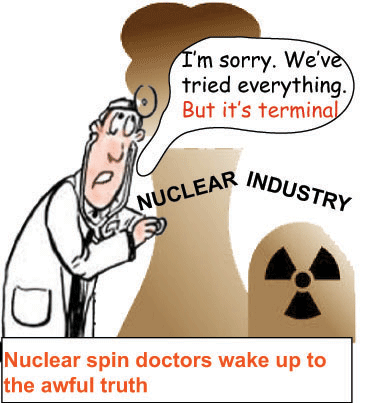
| Nuclear power went backwards in 2019, and the outlook is bleak
Jim Green, RenewEconomy, 11 Feb 2020 https://reneweconomy.com.au/nuclear-power-went-backwards-in-2019-and-the-outlook-is-bleak-61834/ Nuclear power went backwards last year with the permanent shutdown of nine power reactors and the startup (grid connection) of six. Startups were concentrated in Russia (three) and China (two), with one in South Korea. The shutdowns were spread across eight countries. Worse still for the industry – much worse – is the paucity of reactor construction starts. There were just three construction starts in 2019: one each in China and Russia, and Bushehr-2 in Iran which faces an uncertain future. No countries entered the nuclear power club in 2019 (construction starts or grid connections). The average age of the global reactor fleet passed 30 years in 2019. That’s an old fleet, increasingly prone to accidents, large and small; increasingly prone to extended outages and thus increasingly uncompetitive in electricity markets. As a result of the ageing of the reactor fleet, the International Atomic Energy Agency (IAEA) anticipates the closure of up to 139 GW from 2018‒2030 – more than one-third of current global capacity of 395 GW (including idle reactors in Japan). Based on IAEA figures, the industry will need about 10 new reactors (10 GW) each year just to match shutdowns. The industry did indeed average nearly 10 construction starts from 2008‒13. But the number has sharply declined in the aftermath of the Fukushima disaster and catastrophic cost overruns. There were more construction starts in 2010 (16) than in 2016‒19 combined (15). This table captures the birth, mid-life crisis (Fukushima) and death of the nuclear power mini-renaissance:
Diana Ürge-Vorsatz, Vice-Chair of an Intergovernmental Panel on Climate Change Working Group, notes in the foreword to the World Nuclear Industry Status Report 2019: “Trend indicators in the report suggest that the nuclear industry may have reached its historic maxima: nuclear power generation peaked in 2006, the number of reactors in operation in 2002, the share of nuclear power in the electricity mix in 1996, the number of reactors under construction in 1979, construction starts in 1976. As of mid-2019, there is one unit less in operation than in 1989.” The number of power reactors under construction has been falling slowly but steadily in recent years, from 68 in 2013 to 46 as of Jan. 2020 (52 according to the IAEA). The Era of Nuclear Decommissioning Currently, nuclear power reflects two contradictory dynamics. The earlier mini-renaissance is evident but will subside by the mid-2020s. The Era of Nuclear Decommissioning is in its infancy (with nine reactor closures, historians may mark 2019 as the beginning of this qualitatively new era) and will be in ever-sharper focus by the mid-2020s. The Era of Nuclear Decommissioning will be characterised by a decline in the number of operating reactors; an increasingly unreliable and accident-prone reactor fleet as aging sets in; countless battles over lifespan extensions for aging reactors; an internationalisation of anti-nuclear opposition as neighbouring countries object to the continued operation of aging reactors; and escalating battles over and problems with decommissioning and waste disposal. Until such time as the rot sets in, the nuclear industry can console itself with these 10-year figures indicating a marginal increase or decrease depending on whether reactors in long-term outage (most of them in Japan) are included or excluded. Including reactors in long-term outage is “misleading” and “clearly ridiculous” according to former World Nuclear Association executive Steve Kidd, because many of them may never operate again.
Pro-nuclear spin So how are the nuclear industry and its supporters responding to the industry’s miserable state? Mostly with denial and delusion. Here are the ‘top 6 nuclear power achievements‘ of 2019 according to the executive editor of POWER magazine. 1. World’s first EPR nuclear power plant enters commercial operation with the Sept. 2019 commencement of commercial operation of the second of two EPR reactors in Taishan, China. The original 2013/14 startup dates for Taishan 1 and 2 were missed by five years due to construction problems and safety concerns (including the extraordinary Creusot Forge scandal in France). Excavation work for the Taishan reactors began in 2008 and construction of the two reactors formally began in 2009 and 2010. China General Nuclear Power Corporation acknowledged a cost increase of 40 percent for the two Taishan reactors to US$11 billion. As a result of delays and cost overruns, the market for EPRs in China has all but evaporated. The EPR reactor under construction at Flamanville, France, is 10 years behind schedule: construction began in Dec. 2007, the planned startup date was 2012, and EDF now says that commercial operation cannot be expected before the end of 2022. The current cost estimate of €12.4 billion (US$13.7 billion) is 3.8 times greater than the original estimate of €3.3 billion (US$3.6 billion). The EPR reactor under construction at Olkiluoto, Finland, is 10 years behind schedule: construction began in April 2005, startup was anticipated in 2010, and startup is now scheduled in 2020. The current cost estimate of about €11 billion (US$12.2 billion) is 3.7 times greater than the original €3 billion (US$3.3 billion) price tag. The estimated combined cost of the two EPR reactors under construction at Hinkley Point, UK, including finance costs, is £26.7 billion (US$35.0 billion) (the EU’s 2014 estimate of £24.5 billion plus a £2.2 billion increase announced in July 2017). A decade ago, the estimated construction cost for one EPR reactor in the UK was almost seven times lower at £2 billion. The UK National Audit Office estimates that taxpayer subsidies for Hinkley Point will amount to £30 billion (US$39.4 billion), while other credible estimates put the figure as high as £50 billion (US$65.6 billion). Undeterred, POWER magazine claims that a 6-unit EPR project in India will be the world’s largest nuclear power plant “if completed as planned”. It would be a miracle if the project is completed as planned; indeed it would be a minor miracle if it even begins given funding constraints. 2. World’s first ACPR-1000 nuclear power plant begins commercial operation in China Grid connections of ACPR-1000 reactors in China in 2018 and 2019 mark a significant achievement. But the broader picture is highly uncertain. There has only been one reactor construction start in China in the past three years. The number of reactors under construction has fallen sharply from 20 in 2017 to 10 currently. No-one knows whether or not the Chinese nuclear program will regain momentum. Wind and solar combined generated nearly double the amount of electricity as nuclear in 2018. 3. Akademik Lomonosov connects to grid Estimated construction costs for Russia’s floating nuclear power plant (with two 32-MW ice-breaker-type reactors) increased more than four-fold and eventually amounted to well over US$10 million / megawatt (US$740 million / 64 MW). A 2016 OECD Nuclear Energy Agency report said that electricity produced by the plant is expected to cost about US$200 / MWh, with the high cost due to large staffing requirements, high fuel costs, and resources required to maintain the barge and coastal infrastructure. The primary purpose of Russia’s floating nuclear power plant is to help exploit fossil fuel reserves in the Arctic – fossil fuel reserves that are more accessible because of climate change. That isn’t anything to celebrate; it is disturbing and dystopian. 4. Vogtle nuclear expansion progresses Construction of the twin-AP1000 project in the US state of Georgia began in 2013 and the planned startup dates were April 2016 and April 2017. The project is 5.5 years behind schedule and it is unlikely that the revised completion dates of Nov. 2021 and Nov. 2022 will be met. In 2006, Westinghouse claimed it could build one AP1000 reactor for as little as US$1.4 billion. The current cost estimate for the two Vogtle reactors – US$27‒30+ billion – is 10 times higher. The Vogtle project only survives because of mind-boggling, multi-billion dollar taxpayer subsidies including US$12+ billion in loan guarantees, tax credits and much else besides. Westinghouse declared bankruptcy in 2017, largely as a result of its failed AP1000 projects in South Carolina (abandoned after the expenditure of at least US$9 billion) and Georgia, and Westinghouse’s parent company Toshiba was almost forced into bankruptcy and survives as a shadow of its former self. 5. NRC approves Clinch River nuclear site for small modular reactors (SMRs) 6. NuScale’s SMR design clears Phase 4 of NRC review process But who will pay for SMRs? Industry won’t budge without massive taxpayer subsidies. A 2018 US Department of Energy report states that to make a “meaningful” impact, about US$10 billion of government subsidies would be needed to deploy 6 gigawatts of SMR capacity by 2035. And the pro-nuclear authors of a 2018 article in the Proceedings of the National Academy of Science argue that for SMRs to make a significant contribution to US energy supply, “several hundred billion dollars of direct and indirect subsidies would be needed to support their development and deployment over the next several decades”. The prospects for SMRs are just as bleak in other countries. And as the AEMO/CSIRO GenCost 2019-20 report notes, SMRs in Australia would be 2-4 times more expensive per kW than wind and solar. Dr. Jim Green is the national nuclear campaigner with Friends of the Earth Australia and editor of the Nuclear Monitor newsletter. |
Some climate models now predict unexpected , unprecedented spike in global temperatures

A few climate models are now predicting an unprecedented and alarming spike in temperatures — perhaps as much as 5 degrees Celsius, Business Insider, CONNOR PERRETT FEB 9, 2020
- A handful of climate projections are predicting much higher rise in global temperatures than scientists have seen in the models before.
- While there’s concern over the number, some scientists hope the latest projections are outliers.
- A 2-degree rise in temperature could lead sea level to jump, coral reefs to die, and water to become dangerously scarce in some parts of the world. Some models right now predict a 5-degree rise.
The startling anomaly first appeared in models from the National Centre for Atmospheric Research (NCAR), which suggested that if Earth’s atmospheric carbon-dioxide concentration doubles (as it’s expected to do by the end of the century), the planet could wind up 5.3 degrees hotter. That’s 33% higher than the group’s previous estimate.
Scientists hope the models are an “overshot,” Bloomberg reported. It will take scientists a significant amount time – at least months – to figure out how to interpret the results.
The climate models estimate “climate sensitivity,” which tells scientists how much warmer the planet will get as a result of rising CO₂ concentrations. For four decades, the expected temperature rise if CO2 levels double has been about 3 degrees.
These models have a proven track record of accurately forecasting climate change. A recent study from the American Geophysical Union found that climate projections over the past five decades have largely been accurate – actual climate observations aligned with the models’ predictions.
SUBMISSIONS 122 Australians want Victoria’s Nuclear Prohibition Laws to stay

Unlawful and unpopular: Nuclear power and nuclear reactors are prohibited under existing federal, state and territory laws. The nuclear sector is highly contested and does not enjoy broad political, stakeholder or community support.
Disproportionate impacts: The nuclear industry has a history of adverse impacts on Aboriginal communities, lands and waters.
SUBMISSION TO VICTORIAN PARLIAMENT INQUIRY INTO NUCLEAR PROHIBITION
Jessica Lawson and 122 others (list is available) Dear Standing Committee on Environment and Planning,
Victoria’s Nuclear prohibition laws Inquiry – these are the Committee Members
The members of the Environment and Planning Committee are:
Cesar Melhem (Chair)
Clifford Hayes (Deputy Chair)
Bruce Atkinson
Melina Bath
Jeff Bourman
David Limbrick
Andy Meddick
Samantha Ratnam
Nina Taylor
Sonja Terpstra
The participating members of the Committee are:
David Davis
Georgie Crozier
Catherine Cumming
Tim Quilty
Bev McArthur
If you would like any further details on the Committee members or the Inquiry please see: https://www.parliament.vic.gov.au/epc-lc/inquiries/inquiry/983
Climate action distracted by talk of uncosted, unbuilt, unproven and unpalatable technologies such as nuclear.
|
SMH, February 10, 2020 – Chris Danckwerts, Turramurra I thought we’d all realised by now that the nuclear power option was never going to be viable, until I read Katie Allen’s article (“Keep an open mind to nuclear“, February 8-9). She ignores a number of crucial facts. First, the timeframe to build nuclear (a decade at least). Second, the cost (many billions). Third, safety. She says that smaller, more modern reactors will only “moderate” the risks, not eliminate them as most of us would wish. Finally, there would only be “less” nuclear waste to get rid of, which will still continue to be a problem. The sooner we eliminate nuclear, coal and eventually gas power options and move to 100 per cent renewables, pumped hydro, hydrogen et cetera the better off we will be.
Christopher Hill, Kensington, It seems Katie Allen has been electorally charged with selling us nonexistent new-nuclear power technologies and asking us to spend time and taxpayer money on something we never asked for. Sounds familiar. Given the continuing fallout from this government’s self-interested spending of taxpayer money, why not go nuclear? Well, the plea for open minds is all well and good. However, real movement on national energy policy and transition is now on the table. We are at that table and we are hungry for a workable energy and climate change policy. Sure, keep an open mind, but fill it with well-informed realistic debate anchored in the present, not on distracting unwanted promises of uncosted, unbuilt, unproven and unpalatable technologies such as nuclear. – Helen Lewin, Tumbi , If, as Peter Hartcher suggests (“Be amazed by our masters of delusion“, February 8-9), Allen is voicing her pro-nuclear stance in order to drag her conservative Coalition confreres into a world free of fossil fuels, I respectfully suggest she dumps this minority group of Luddites rather than tempting them with nuclear energy. She admits in her article that the “concerns” around the development of nuclear have only “moderated”. I’m afraid that won’t be enough to drag me along with her or many other Australians. – Umbi https://www.smh.com.au/national/nsw/argument-goes-nuclear-in-search-for-energy-solution-20200209-p53z2c.html |
|
Nuclear Stigma is, and will continue to be the cancer that erodes Kimba future.
“Them or us, a shit town and a policeman on the fence.”
Kimba farmer / nuclear profiteer, Andrew Baldock who has recklessly fueled the ongoing promotion to degrade a agriculture region is now pleading for the community to reunite. This maybe seen as Baldock’s failed solicitation to procure redemption, forgiveness or clemency for the irremediable damage ignorantly portrayed upon what is mostly a nobbled and unwilling community.
Sunday the 2nd of February anti-nuclear rally, portrayed attending people as welcome contributing visitors to the town until their views of nuclear were apparent only to find they were treated no better than a leper in Kimba’s colony. One local person and yes I say one, that being of the local constabulary claimed to be on the fence and treated people with regard, where the nuclear embracing dichotomy has failed to welcome.
Nuclear Stigma is, and will continue to be the cancer that erodes Kimba future. https://www.facebook.com/groups/941313402573199/
Barngarla Native Title Holders excluded from vote on Kimba nuclear waste dump
UK Campaigners demand a ‘no new nuclear’ clause in climate emergency planning
The nuclear and fossil fuel industry are mutually intertwined.
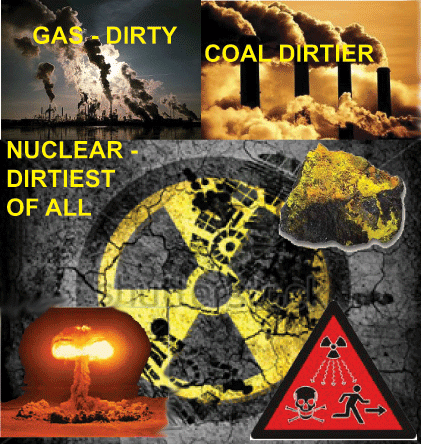
“There is no such thing as a zero or near-zero-emission nuclear power plant”
the mean value is about 66 grams of carbon dioxide for every kWh produced by nuclear power. This compares to about 9g for wind, 32g for solar and 443 for gas.
“This puts nuclear as the third highest carbon emitter after coal-fired plants and natural gas….
|
No new nuclear https://theecologist.org/2020/feb/06/no-new-nuclear
Radiation Free Lakeland, 6th February 2020
Campaigners demand a ‘no new nuclear’ clause in climate emergency planning. Climate activists across the world are uniting to protect the planet from continuing fossil fuel use. There is much talk of a green industrial revolution and a Green New Deal. This sounds good, but what does it mean?
Kevin Frea, co-chair of the Climate Emergency Network and deputy leader of Lancaster City Council has worked hard to sign local councils up declaring a climate emergency. He said: “This movement is being led by every political group and is involving local people in planning the actions needed to cut carbon.” But there’s an important thing missing here. Last September members of Radiation Free Lakeland lobbied Lancaster City Council asking the council to include a No New Nuclear clause in their climate emergency planning. Continue reading |
Arctic ice melt is changing ocean currents
|
Arctic ice melt is changing ocean currents https://www.sciencedaily.com/releases/2020/02/200207095705.htm
|
Coalition nuclear stooge MPs line up to push for removing Australia’s prohibition on nuclear activities
Support for nuclear energy heating up across government, SMH, Mike Foley, February 8, 2020 — “……. Coalition MPs have spoken out on nuclear energy as a solution to the need to decarbonise the economy, arguing the government can maintain Australia’s long-held moratorium on nuclear power and take modest steps in early stage research and development of new technologies.
Dr Allen, a paediatrician and medical researcher with a PhD, said “question marks remain” over the potential to use renewables as the sole source to power Australia’s energy grid……
Queensland LNP MP Ted O’Brien, who represents the Fairfax electorate on the Sunshine Coast, chaired a parliamentary committee which last year tabled a report titled Not without your approval: a way forward for nuclear technology, calling for a partial lift in Australia’s 20-year-old nuclear moratorium.
Rather than a total and immediate lift of the moratorium, only a partial lift for new and emerging technologies is proposed, subject to the results of a technology assessment and a commitment to community consent as a condition of approval for nuclear facilities,” it said.
Mr O’Brien said without lifting the moratorium the government could commission assessments recommended by his committee into “economic, technological and readiness assessments” for nuclear energy.
Among the Coalition MPs on the government-dominated committee who endorsed the report were Trent Zimmerman, from inner-city electorate North Sydney, Bridget Archer from Bass in northern Tasmania, Nationals MP for Lyne David Gillespie, West Australian MP Rick Wilson and North Queensland Nationals MP Keith Pitt, who was this week promoted to cabinet as Resources Minister.
Former deputy prime minister and Nationals leader Barnaby Joyce has also promoted nuclear energy.
However, Prime Minister Scott Morrison and Energy Minister Angus Taylor have said they’re not considering lifting the nuclear moratorium due to lack of bipartisan support for nuclear energy.
Mr Taylor said the government is “taking the time to thoroughly consider the [committee’s] recommendations” and it had “no plans to lift the longstanding moratorium”.
Advocates argue nuclear power production costs can fall with new technology, highlighting the emerging technology of small to medium-sized reactors. However, there are no commercial examples of the new technology in operation.
Labor MPs issued a dissenting report which said the inquiry heard from experts who argued renewable energy offered better prospects to replace fossil fuels and the safety record of nuclear energy made it too risky to consider.
“In fact the events [like Fukushima], innovations and advances in renewable energy, and emerging climate and energy system developments of the last ten years have made nuclear power even less relevant and appropriate in the Australian context at a time when nuclear power is already in decline elsewhere,” the report said. https://www.smh.com.au/politics/federal/support-for-nuclear-energy-heating-up-across-government-20200207-p53yru.html
Liberal MP Katie Allen touts nuclear energy for Australia
Katie Allen, a government member of parliament (MP) representing inner-city Melbourne, wrote in a column for Nine Entertainment newspapers that Australia has an opportunity to lead the way on developing “safer and more effective” nuclear energy.
Australia has had a blanket moratorium on nuclear energy for 20 years, but a parliamentary committee chaired by coalition MP Ted O’Brien in December tabled a report calling for it to be partially lifted…….
In December, Prime Minister Scott Morrison and Angus Taylor, the minister for energy and emissions reduction, declared that they were not considering exploring nuclear options.
Any move to lift the moratorium would require the support of the opposition Labor Party, which has previously declared an anti-nuclear stance.
The report from December said that a partial lift would allow the government to conduct recommended “economic, technological and readiness assessments” for nuclear energy.
“Rather than a total and immediate lift of the moratorium, only a partial lift for new and emerging technologies is proposed, subject to the results of a technology assessment and a commitment to community consent as a condition of approval for nuclear facilities,” it said. http://www.xinhuanet.com/english/2020-02/08/c_138765779.htm
South Australian Premier Steven Marshall visiting Eyre Peninsula, keeping a very low profile on nuclear wastes
Zali Steggall , independent MP for Warringah, luring Liberals towards climate action
A matter of conscience’: Zali Steggall unveils plans for climate change act, https://thenewdaily.com.au/news/national/2020/02/10/zali-steggall-plans-climate-change-act/ Samantha Maiden She stole Tony Abbott’s blue-ribbon seat out from under the Liberal Party’s nose and now Zali Steggall is hoping to lure party dissidents to cross the floor and vote for climate change action.
|
The legislation is modelled on the UK’s Climate Change Act and is designed to provide a national framework for action and mandatory annual reporting of Australia’s trajectory towards meeting reduction targets. “We need to set out a road map for Australia to become a low-carbon economy without all the fear-mongering and misinformation,” Ms Steggall said. “The big question all sensible Australians are asking is how? This is why we need a climate change act to set out a legislative framework.” |
|
Private investors won’t touch new Coalition-backed coal plant, Labor says
Private investors won’t touch new Coalition-backed coal plant, Labor says, Morrison government to spend up to $4m in grant for feasibility study into coal-fired power plant in Queensland, Guardian, Australian Associated Press, Sat 8 Feb 2020 The federal Labor opposition says private investors will not touch “with a barge pole” the Morrison government’s plan to support a coal-fired power plant in Queensland.
The government says it will spend up to $6m in grants for two new Queensland electricity generation projects, including a coal-fired power plant, as part of a bid to lower power prices……..
Labor’s climate change and energy spokesman, Mark Butler, said private investors would not touch a new coal-fired power station “with a barge pole”.
“The government still has no energy policy – just ideological flights of fantasy,” he said in Adelaide on Saturday. The private investment sector had made it very clear it had no appetite for building expensive coal-fired power stations, he said.
1 This month.

PETITION – To: Prime Minister Anthony Albanese and the Australian Labor Government
Chernobyl: The Lost Tapes – A good documentary on Chernobyl on SBS available On Demand for the next 3 weeks– https://www.sbs.com.au/ondemand/tv-program/chernobyl-the-lost-tapes/235274195556
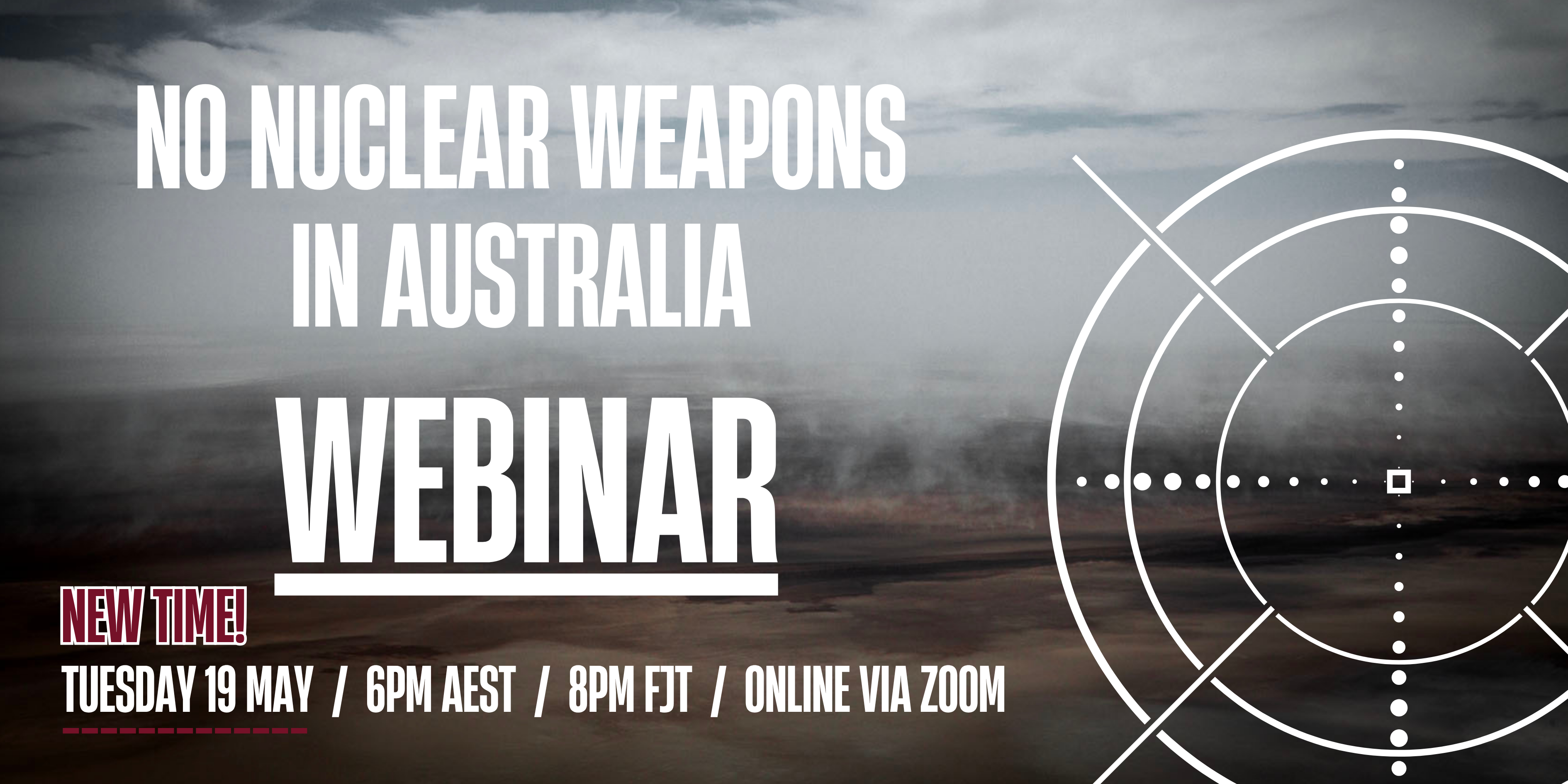
19 May – Webinar- Webinar: No Nuclear Weapons in Australia
Start: 2026-05-19 18:00:00 UTC Canberra, Melbourne, Sydney (GMT+10:00)
End: 2026-05-19 19:30:00 UTC Canberra, Melbourne, Sydney (GMT+10:00)
20 May – Webinar – The dangerous world of AUKUS, US, military occupation and suppression of dissent

National Webinar, 20th May, 2026, 6.30pm AEST. Confronting laws restricting/suppressing protest speech and action
Speakers: Former Sen. Rex Patrick, Lawyer Nick Hanna ,Arthur Rorris ,Jorgen Doyle, Sen David Shoebbridge,
Facilitator Kelley Tranter.

of the week – Australians for War Powers Reform (AWPR)
To see nuclear-related stories in greater depth and intensity
 Antinuclear