Nuking a Hurricane Would Probably Just Create a Slightly Bigger, Radioactive Hurricane
Nuking a Hurricane Would Probably Just Create a Slightly Bigger, Radioactive Hurricane https://www.livescience.com/trump-hurricane-nuclear-bomb.html By 26 Aug 19, o Planet Earth
Has Trump been reading old Live Science articles about nuking hurricanes? And if not, should he be?
President Donald Trump wants to nuke hurricanes into submission before they reach the Atlantic coastline, according to a bizarre article published yesterday (Aug. 25) on Axios. “Why can’t we do that?” he reportedly asked. This raises an important question: Has Trump been reading old Live Science articles? And if not, should he be?
Live Science answered this very question in a 2012 article.
“The theory goes that the energy released by a nuclear bomb detonated just above and ahead of the eye of a storm would heat the cooler air there, disrupting the storm’s convection current,” Rachel Kaufman wrote at the time. “Unfortunately, this idea, which has been around in some form since the 1960s, wouldn’t work.”
The problem is the energy involved, Kaufman reported, citing writing by Chris Landsea, a former National Oceanic and Atmospheric Administration research meteorologist.
A hurricane is essentially a powerful, super-efficient country-size engine for pulling heat out of the ocean and releasing it into the atmosphere. As a hurricane’s low-pressure system moves over warm water, that water evaporates and then condenses as droplets in the atmosphere. As the water condenses, it releases the heat it’s carrying into the surrounding air. About 1% of that heat energy gets converted into wind; the rest sticks around as ambient warmth, according to the article.
A hurricane can release 50 terawatts of heat energy at any given moment — a significantly greater output than the entire power system, and comparable to a 10-megaton nuclear bomb detonating every 20 minutes. Trying to stop a hurricane with a nuke would be “about as effective as trying to stop a speeding Buick with a feather,” Kaufman wrote, and might even add energy to the storm
Stopping a smaller tropical depression with a nuke might be more realistic, but there are just too many of them and no good way to tell which will develop into powerful, landfalling hurricanes.
“Finally, whether the bomb would have a minor positive effect, a negative effect, or none at all on the storm’s convection cycle, one thing is for sure: It would create a radioactive hurricane, which would be even worse than a normal one. The fallout would ride Trade Winds to land — arguably a worse outcome than a landfalling hurricane,” Kaufman wrote.
The best way to avoid the destruction of a hurricane, remains a boring one: prepare. In case that’s the route you want to go, how to prepare for a hurricane.
Trump suggested nuking hurricanes to stop them from hitting U.S.

https://amp.axios.com/trump-nuclear-bombs-hurricanes-97231f38-2394-4120-a3fa-8c9cf0e3f51c.html
Jonathan Swan, Margaret Talev, 26 Aug 19, President Trump has suggested multiple times to senior Homeland Security and national security officials that they explore using nuclear bombs to stop hurricanes from hitting the United States, according to sources who have heard the president’s private remarks and been briefed on a National Security Council memorandum that recorded those comments.
Behind the scenes: During one hurricane briefing at the White House, Trump said, “I got it. I got it. Why don’t we nuke them?” according to one source who was there. “They start forming off the coast of Africa, as they’re moving across the Atlantic, we drop a bomb inside the eye of the hurricane and it disrupts it. Why can’t we do that?” the source added, paraphrasing the president’s remarks.
Asked how the briefer reacted, the source recalled he said something to the effect of, “Sir, we’ll look into that.”
Trump replied by asking incredulously how many hurricanes the U.S. could handle and reiterating his suggestion that the government intervene before they make landfall.
The briefer “was knocked back on his heels,” the source in the room added. “You could hear a gnat fart in that meeting. People were astonished. After the meeting ended, we thought, ‘What the f—? What do we do with this?'”
Trump also raised the idea in another conversation with a senior administration official. A 2017 NSC memo describes that second conversation, in which Trump asked whether the administration should bomb hurricanes to stop them from hitting the homeland. A source briefed on the NSC memo said it does not contain the word “nuclear”; it just says the president talked about bombing hurricanes.
The source added that this NSC memo captured “multiple topics, not just hurricanes. … It wasn’t that somebody was so terrified of the bombing idea that they wrote it down. They just captured the president’s comments.”
The sources said that Trump’s “bomb the hurricanes” idea — which he floated early in the first year and a bit of his presidency before John Bolton took over as national security adviser — went nowhere and never entered a formal policy process.
White House response: A senior administration official said, “We don’t comment on private discussions that the president may or may not have had with his national security team.”
A different senior administration official, who has been briefed on the president’s hurricane bombing suggestion, defended Trump’s idea and said it was no cause for alarm. “His goal — to keep a catastrophic hurricane from hitting the mainland — is not bad,” the official said. “His objective is not bad.”
“What people near the president do is they say ‘I love a president who asks questions like that, who’s willing to ask tough questions.’ … It takes strong people to respond to him in the right way when stuff like this comes up. For me, alarm bells weren’t going off when I heard about it, but I did think somebody is going to use this to feed into ‘the president is crazy’ narrative.”
Trump called this story “ridiculous” in a Monday tweet from the G7 summit. He added, “I never said this. Just more FAKE NEWS!”
The big picture: Trump didn’t invent this idea. The notion that detonating a nuclear bomb over the eye of a hurricane could be used to counteract convection currents dates to the Eisenhower era, when it was floated by a government scientist.
The idea keeps resurfacing in the public even though scientists agree it won’t work. The myth has been so persistent that the National Oceanic and Atmospheric Administration, the U.S. government agency that predicts changes in weather and the oceans, published an online fact sheet for the public under the heading “Tropical Cyclone Myths Page.”
The page states: “Apart from the fact that this might not even alter the storm, this approach neglects the problem that the released radioactive fallout would fairly quickly move with the tradewinds to affect land areas and cause devastating environmental problems. Needless to say, this is not a good idea.”
About 3 weeks after Trump’s 2016 election, National Geographic published an article titled, “Nuking Hurricanes: The Surprising History of a Really Bad Idea.” It found, among other problems, that:
Dropping a nuclear bomb into a hurricane would be banned under the terms of the Peaceful Nuclear Explosions Treaty between the U.S. and the former Soviet Union. So that could stave off any experiments, as long as the U.S. observes the terms of the treaty.
Atlantic hurricane season runs until Nov. 30.
Japan may decommission reactors at world’s biggest nuclear plant
 Japan may decommission reactors at world’s biggest nuclear plant, https://www.aljazeera.com/ajimpact/japan-decommission-reactors-world-biggest-nuclear-plant-190826074851152.html
Plant operator Tepco says it may start decommissioning at least one reactor five years after restarting two others. Japan‘s Tokyo Electric Power Company (Tepco) said on Monday it may start to decommission at least one nuclear reactor at its Kashiwazaki-Kariwa power plant, the world’s biggest nuclear plant by capacity, within five years of restarting two of the reactors at the site.Tepco President Tomoaki Kobayakawa made the comments in a statement outlining its response to a request for plans on the station’s future by the government of the city of Kashiwazaki in Niigata prefecture, where the plant is located.
In 2017, Tepco received initial regulatory approval from the Japanese government to restart reactors 6 and 7 at Kashiwazaki-Kariwa, each with a capacity of 1,356 megawatts (MW). The plant site has seven reactors with a total capacity of 8,212MW, equal to 20 percent of Japan’s nuclear capacity.
The facility is Tepco’s last remaining nuclear plant after it announced plans to shut its Fukushima Daini station, near the Fukushima Daichi plant where a massive earthquake and tsunami caused the meltdown of three of the site’s reactors in 2011.
Kashiwazaki’s Mayor Masahiro Sakurai demanded in 2017 that Tepco submit plans to shut at least one of reactors 1 to 5 in return for approval of the restart of reactors 6 and 7, a city official told the Reuters news agency by phone on Monday. The Kashiwazaki mayor will take about a month to evaluate Tepco’s plan, the official said.
Tepco said on Friday that Kobayakawa would brief local officials on Monday about its answers to the city’s request.
Tepco may take steps to decommission more than one of reactors 1 to 5 within five years after the restart of reactors 6 and 7 if it is confident it can secure enough non-fossil fuel energy sources, according to the statement.
A Tepco official said on Monday the company is aiming to have renewable and nuclear power produce 44 percent of total output by 2030.
Tepco has been trying to convince local authorities near Kashiwazaki-Kariwa, who have sign-off rights on nuclear restarts, that it has overcome operational failings revealed at Fukushima.
Eight years ago, nearly 20,000 people died in an earthquake and tsunami that precipitated what became Japan’s worst nuclear disaster. At least 160,000 people were forced to leave their contaminated homes.
In April, Japan partially lifted an evacuation order in one of the two towns, Okuma, for the first time since the disaster, but many former residents are still reluctant to return.
The other town, Futaba, remains off-limits, as are several other towns nearby.
Japanese government must take urgent action to protect Japanese people from unacceptable radiation exposure — IPPNW peace and health blog

Now more than eight years after the Fukushima nuclear disaster, IPPNW strongly supports the call by civil society organisations in Japan for the ionising radiation maximum permissible dose limit for members of the public to be promptly reduced from 20 to 1 mSv per year. Since 2011, powerful new evidence of radiation-related health risks greater than previously estimated at doses as low as a few mSv and dose rates as low as 1mSv per year has emerged from large studies of children having CT scans, rates of leukaemia in children living in areas with differing levels of background radiation, and large long-term studies of nuclear industry workers. These studies have also confirmed the particular vulnerability to radiation of young children, and women and girls, with long-term cancer risks for young girls being up to 8 to 10 times greater than for adult males for the same radiation exposure.
August 26 Energy News — geoharvey

Opinion: ¶ “What Are The Chances One Or More Legacy Automakers Will Fail?” • Sandy Munro is a veteran of Ford, who branched out on his own. His business is about optimizing production to increase quality, lowering costs, and solving the technical challenges to bringing products to market. His thoughts on legacy automakers are not […]
Electric vehicles already cheaper for fleet owners than petrol cars — RenewEconomy

Data gleaned by ClimateWorks with Victorian councils shows there are already EVs that are within or below normal council operating costs. The post Electric vehicles already cheaper for fleet owners than petrol cars appeared first on RenewEconomy.
via Electric vehicles already cheaper for fleet owners than petrol cars — RenewEconomy
Electric vehicle costs set to fall as lithium glut hits — RenewEconomy

BloombergNEF report suggests that rather than lithium being in short supply, there is a glut which will force prices down. But it may be short lived. The post Electric vehicle costs set to fall as lithium glut hits appeared first on RenewEconomy.
via Electric vehicle costs set to fall as lithium glut hits — RenewEconomy
Tesla Model 3 Australia invasion has begun — RenewEconomy

A Canberra-bound car carrier was spotted on Saturday full to the brim with some of the first Model 3s destined for Australian customers. The post Tesla Model 3 Australia invasion has begun appeared first on RenewEconomy.
via Tesla Model 3 Australia invasion has begun — RenewEconomy
Coalition report on coal exports to India is missing the backstory — RenewEconomy

To IEEFA’s contrarian perspective, Indian investors in the main are not looking to replicate the Australian thermal coal graveyard. The post Coalition report on coal exports to India is missing the backstory appeared first on RenewEconomy.
via Coalition report on coal exports to India is missing the backstory — RenewEconomy
IFM Investors becomes latest asset manager to shun coal, align with Paris — RenewEconomy

In Australia’s climate policy void, an ever increasing number of corporations are stepping up to show leadership on this critical financial risk. IFM is the latest. The post IFM Investors becomes latest asset manager to shun coal, align with Paris appeared first on RenewEconomy.
via IFM Investors becomes latest asset manager to shun coal, align with Paris — RenewEconomy
Carnegie turns on Garden Island micro-grid, switches focus back to wave power — RenewEconomy

W.A. Garden Island Microgrid – a cornerstone project for wave power developer Carnegie Clean Energy – officially powers up, supplying solar and storage for Australia’s largest naval base. The post Carnegie turns on Garden Island micro-grid, switches focus back to wave power appeared first on RenewEconomy.
via Carnegie turns on Garden Island micro-grid, switches focus back to wave power — RenewEconomy
To 26 August – Nuclear and Climate News
The thing about climate change is – it’s all happening faster than we expected! Only a few days ago, MEDIA MATTERS was highlighting the way that mainstream media was practically ignoring the Amazon forest fires. That is changing. World leaders are now alert to this international tragedy.The Amazon fires bring to the fore the awful dilemma facing climate scientists in telling the public the truth about the world’s climate crisis.
The recent Russian nuclear accident cast a bit of gloom over Russia’s launching of its floating nuclear reactor for the Arctic region. Questions are still flying around about the radioactive illnesses and deaths involved in that accident. Also – a general recognition of the Russian government’s record of secrecy about nuclear accidents.
I suspect that the USA and UK nuclear industries are getting pretty desperate about their commercial future, and the necessity to export new nuclear technology. There’s a hasty push going on in Australia to buy Small Modular Nuclear Reactors. In a rater undignified rush, there are no less than 4 separate Parliamentary Nuclear Inquiries going on, with abnormally short times permitted for Submissions.
AUSTRALIA
NUCLEAR Queensland Labor and Liberal Coalition say NO to nuclear power.
Nuclear weapons – the underlying aim in the new push for nuclear power?
Brief notes/summaries on pro nuclear submissions to Federal govt. Early submissions to Australian govt Inquiry slightly favour nuclear power.Economist John Quiggin on Submissions to Parliamentary Nuclear Inquiries. One gem from the pro nuclear Submissions to FEDERAL. Inquiry into the prerequisites for nuclear energy in Australia. EcoEnviro’s great submission to ‘Inquiry into the prerequisites for nuclear energy in Australia’. 17 submissions now published to Federal Nuclear Inquiry. Nuclear submissions: people are “doubling up”? Sending the same submissions to 2 different Inquiries. About the CURRENT NUCLEAR SUBMISSIONS.
Reaction against Robert Parker’s nuclear reactor plan for Ipswich, Queensland.
Council announces dates for Kimba radioactive waste ballot. Flinders Ranges Council delays nuclear waste dump ballot. Secrecy in Sinister Matt Canavan’s meeting with nuclear waste dump organisations in Hawker, South Australia. Resources Minister Matt Canavan in Kimba : pressing for a ‘Yes” vote in nuclear waste dump ballot? South Australian law – No public money towards nuclear waste dumping facility.
Lynas’ radioactive waste – still a toxic issue in Malaysia.
Wiki cables show Australia thinks Iran is not the aggressor.
CLIMATE
- Labor urges Morrison govt to pressure Brazil to protect Amazon forests.
- One year on, how good is Morrison’s climate and energy denial? Australia losing credibility with Pacific nations, as Morrison supports coal, not climate action.
- Scott Morrison’s failure in diplomacy: the Pacific Forum and climate change. Australia’s Deputy Prime Minister Michael McCormack is an international embarrassment.
- Bass Coast Shire Council declares Climate Emergency.
- Ageing coal plants put Australia on map of global air pollution hotspots.
RENEWABLE ENERGY Solar sends Queensland wholesale day-time prices to zero six days in a row. 5B plans solar “speed record” for 10GW plant in north Australia. Prices hit zero again across the grid as renewables output tops 10GW. Coalition MP Keith Pitt wants Queensland to leave main grid! Schwarzenegger-backed start-up helps Australia wind farms duck negative prices. Landmark deal to power Coles underpins three NSW solar farms. Global industrial giant Molycop turns to wind and solar for half its electricity needs.
INTERNATIONAL
Distinguished scientist Martin Rees – world must fight climate change, don’t waste tax-payers’ money on space travel.
Massive wildfires are burning across the world- July was hottest month ever. New fires – hundreds – in Amazon rainforests. Life on Earth threatened by climate change – loss of Amazon Forests.
Sea level rise only half the story – climate change is altering ocean waves.
Chinese Academy of Sciences warns on the safety hazards of new nuclear .
Nuclear weapons – the underlying aim in the new push for nuclear power?
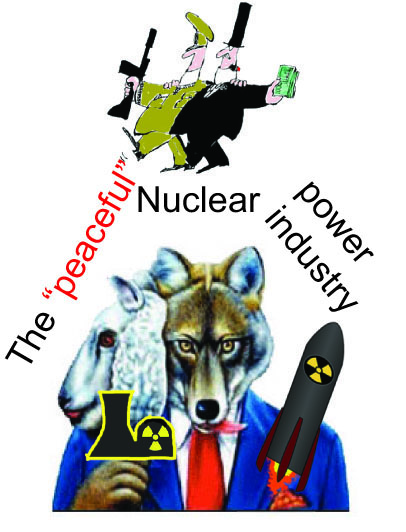 Is the push for nuclear power a covertpush for nuclear weapons? https://reneweconomy.com.au/is-the-push-for-nuclear-power-a-covert-push-for-nuclear-weapons-95422/ Mark Diesendorf & Richard Broinowski, 26 August 2019 Is the push for nuclear power a covertpush for nuclear weapons? https://reneweconomy.com.au/is-the-push-for-nuclear-power-a-covert-push-for-nuclear-weapons-95422/ Mark Diesendorf & Richard Broinowski, 26 August 2019  A recent push for nuclear power in Australia has been promoted by the usual public advocates and amplified by the Murdoch press.The arguments are predictable both in their optimism and inaccuracy: nuclear power reactors are claimed to be safe and cheaper than electricity generation from wind and sun; new generation mini-reactors are claimed to be even cheaper and safer and can be adapted to power a factory or a town. Australia has uranium, and can easily acquire the technology. Advocates for nuclear power are calling for ‘informed’ public debate to quell public fear about nuclear power. In reality, informed public debate has been going on for some time. The latest iteration was the South Australian Royal Commission of 2015-16, which found that “nuclear power would not be commercially viable to supply baseload electricity to the South Australian subregion of the NEM from 2030 (being the earliest date for its possible introduction).” But advocates are not deterred, claiming, despite the evidence to the contrary, that nuclear power is cheaper and cleaner than other forms of electricity generation. The fact is that electricity from new wind and solar farms is much cheaper than from nuclear power stations. According to the multinational investment consultancy, Lazard,the costs of energy from on-shore wind farms in the USA are in the range 29-56 USD per megawatt-hour (US$/MWh), from solar farms 36-46 US$/MWh and from conventional nuclear 112-189 US$/MWh. In Australia, the CSIRO and the Australian Energy Market Operator have jointly found that the cost of a wind or solar farm in 2020 will be approximately half of that from new coal-fired power stations, and about one-fifth of that from nuclear power in the form of the non-commercial small modular reactors currently being promoted by nuclear enthusiasts. Adding sufficient storage to solar and wind to provide equivalent dependability of supply to base-load coal and nuclear will lift the cost of wind and solar in 2020 to equivalence with new coal, but nuclear is still at least 2.5 times the cost of wind and solar. In 2019 the German Institute for Economic Research found that of 674 nuclear reactors built for electricity generation since 1951, all suffered significant financial losses. The (weighted) average net present value was around minus 4.8 billion Euros. The Institute concluded that “nuclear energy has always been unprofitable in the private economy”. So why were 674 reactors built around the world, and why do nuclear advocates want more? One motivation has been to facilitate the covert development of nuclear weapons. It is well documented (e.g. here and here) that India, North Korea, Pakistan and South Africa all used civil nuclear power to assist their respective covert developments of nuclear weapons, while the UKused its first generation nuclear power stations to supplement weapons-grade plutonium it produced in military reactors. Other countries began, then discontinued, nuclear weapons programs based on civil nuclear technology: Argentina, Australia, Brazil, Libya, South Korea, Taiwan (twice) and possibly Algeria. Iran is currently engaged in that process. Today, the UK government is offering to pay the developers of the proposed Hinkley C nuclear power station approximately double the wholesale price of electricity, increasing with inflation, for 35 years. Andy Stirling and Phil Johnstone from the Science Policy Research Unit at University of Sussex speculate that this huge subsidy is motivated by the wish to keep the nuclear industrial sector technically capable of servicing submarine reactors that carry UK’s Trident nuclear missile delivery system. There are two main pathways to nuclear explosives –either by enriching uranium in the isotope U235 or extracting plutonium Pu239 from spent reactor fuel.At various times Australia has flirted with both. In the 1960s, under the Gorton government, Australia started to build a nuclear power station at Jervis Bay with the purpose of producing electricity for the grid and Pu239 for nuclear weapons. The program was abandoned by the Liberal Party when it feared its ambition to acquire nuclear weapons would become known and result in an electoral liability. Another attempt, secretly to enrich uranium, was made between 1965 and the early 1980s by the then Australian Atomic Energy Commission (now the Australian Nuclear Science & Technology Organisation –ANSTO). Australia ratified the Treaty on the Non-Proliferation of Nuclear Weapons (NPT) in 1973 and the Comprehensive Nuclear Test Ban Treaty in 1998, but in the early 2000s pressure was again exerted on the government by elements in the foreign policy and security establishment to revive a nuclear weapons program. In a 2007 article “Creative and uncomfortable policy choices ahead”, Martine Letts, then Deputy Director of the Lowy Institute, concluded that “a thorough nuclear policy review should also consider which strategic circumstances might lead to Australia’s revisiting the nuclear weapons option”. The same year, Robyn Lim, a former Acting Head of Intelligence in the Office of National Assessment wrote that “ [we] live in an uncertain world, and must avoid having our uranium enrichment options closed off”. In 2009, the Australian Strategic Policy Institute joined the discussion, with a report by Rod Lyon, director of its Strategy and International Program. He was quoted on the ABC and in the Canberra Times(15/12/2009) as saying ‘nuclear hedging’– maintaining or appearing to maintain capabilities to acquire nuclear weapons in a relatively short time – would be prudent, a capability available within 10 or 15 years. More recent advocates have included Hugh White, who in a 2019 article in Quarterly Essay, reopened discussion on whether Australia should have its own nuclear deterrent. His concern was stimulated by indications that the USA was developing a more isolationist foreign policy. Defence strategist Paul Dibb has recommended that ‘Australia should at least be looking at options and lead times’. Peter Layton, a retired RAAF Group Captain who taught at the US National Defense University, expressed concern in a Lowy Institute article about the costs of nuclear weapons and their delivery systems and recommended that Australia should seek to acquire US or British nuclear weapons. Stephen Fruehling, an academic in the Strategic and Defence Studies Centre at ANU, considered the possibility of developing nuclear weapons to create a defensive moat around the country to deter invasion by sea. He favoured the uranium enrichment pathway to the nuclear explosive. Meanwhile, supporters of nuclear power for Australia are becoming more vocal. They include the Federal Minister for Energy & Emissions Reduction, Angus Taylor, the Institute of Public Affairs, the Business Council of Australia and several members of the Coalition Government – all supported by the Murdoch media (especially The Australian). None has yet publicly advocated the development of nuclear weapons. Building a nuclear power station used to be an effective cover for a nuclear weapons program. Today, however, with renewable electricity from wind and solar PV being so much cheaper than nuclear electricity, the credibility of nuclear power as an alternative to fossil fuels has become very low. Furthermore, a global over-capacity in uranium enrichment since nuclear electricity generation peaked in 2006 makes uranium enrichment for an Australian nuclear program even less credible. In the words of Rod Lyon, an Australian enrichment capability would also be a strategic signal. This is also the view of John Carlson, former Director-General of the Australian Safeguards and Non-Proliferation Office. If Australia follows the nuclear path, it provides our neighbours – especially Indonesia, Singapore and Malaysia – with an incentive to follow. The proliferation of nuclear power in South East Asia would signal the start of a regional nuclear arms race, making the neighbourhood less safe than ever. Dr Mark Diesendorf, a renewable energy researcher, was trained as a physicist and is currently Honorary Associate Professor at UNSW Sydney. Richard Broinowski is a former Australian diplomat and immediate past president of the New South Wales branch of the Australian Institute of International Affairs. He is the author of ‘Fact or Fission? The truth about Australia’s nuclear ambitions’,and ‘Fallout from Fukushima’. |
|
Queensland Labor and Liberal Coalition say NO to nuclear power
 Nuclear energy policy emerges as Queensland election issue, SMH, By Tony Moore, August 25, 2019 Nuclear energy has emerged as a 2020 Queensland election issue after Labor confirmed its anti-nuclear stand amid a new investigation into nuclear power led by three Queensland federal LNP MPs.Labor’s 2019 state conference on Sunday cemented the party’s opposition to the energy source after three high-profile federal Liberal National Party MPs recently triggered the first federal government inquiry into nuclear power in a decade.
Queensland Labor immediately questioned the LNP’s nuclear power policy before Opposition Leader Deb Frecklington on Sunday afternoon issued a single line statement rejecting nuclear power.
“The state LNP does not support nuclear power in Queensland,” Ms Frecklington said.
Three high-profile Queensland federal MPs – Senator James McGrath, Bundaberg-based MP Keith Pitt and Sunshine Coast MP Ted O’Brien – quietly re-opened a federal government inquiry into nuclear power, which began quietly on August 7.
Mr O’Brien is chairing the House of Representatives Standing Committee investigation into nuclear power, which will receive submissions until September 16.
He said nuclear power had evolved over the past 20 years and it was time to look again.
“The committee will look at the necessary circumstances and requirements for any future government’s consideration of nuclear energy generation, including using small modular reactor technologies,” Mr O’Brien said.
The Labor conference several times highlighted clear policy differences between Labor and the LNP in the 12-month run down to the 2020 Queensland election.
On Sunday ALP delegate Ali King, from the United Voice union, received unanimous support for the party to reconfirm its opposition to nuclear power in Queensland.
Since the (May) federal election we have seen an emboldened LNP federal government flirting with every policy fantasy of the hard right,” Ms King told the conference.
“The most disturbing of these is their insistent push towards imposing nuclear power on a reluctant Australia.”
Cost evaluations showed energy produced from nuclear fusion would be more expensive than renewable energy and the long timeframe – “possibly a generation” – made it impractical, Ms King argued. ……
Nuclear power development is currently banned in Australia under the Federal Government’s Environment Protection and Biodiversity Conservation Act 1999.
“It is this restriction that the LNP are ultimately trying to dismantle,” Ms King said. https://www.smh.com.au/politics/queensland/nuclear-energy-policy-emerges-as-queensland-election-issue-20190825-p52kl3.html
Early submissions to Australian govt Inquiry slightly favour nuclear power
 First views to federal inquiry give tick to nuclear power, The pro-nuclear power camp is slightly ahead in the first batch of views presented to the federal inquiry. Nuclear backers lead charge in new probe Chris Russell, The Advertiser, August 23, 2019
Nuclear power can operate safely and Australia should pursue the technology, a slight majority of initial submissions to the Federal Government’s inquiry into the issue recommend.
However, nearly as many submissions urge against nuclear power, saying it is dangerous and uneconomic.
“There is no business case for nuclear in Australia,” University of Adelaide Professor Derek Abbott argues.
“From an engineering viewpoint, the modern grid in fact needs energy sources that can rapidly respond to changing demand.
“(It) … would be a poor investment in a technology that will be largely redundant in the modern grid.”
Fellow South Australian Denys Smith, a retired analytical chemist, says that having plentiful power would support desalinating water, a hydrogen industry, mineral processing and manufacturing.
“Involve the public in the nuclear power debate as SA did during the royal commission in 2016,” he suggests.
“Information and facts change attitudes.”
The two SA submissions are among the first 17 to be published by the Standing Committee on the Environment and Energy, which is holding an inquiry into The Prerequisites for Nuclear Energy in Australia.
Nine submissions were in favour and seven against, with one recommending a focus on thorium rather than uranium-fuelled reactors.
The inquiry, which was established this month on instruction from federal Energy Minister Angus Taylor is open for submissions until September 16.
It will then hold hearings and request further evidence.
In his submission, Notre Dame University Professor Keith Thompson tells the inquiry nuclear power could assist Australia to fulfil an “altruistic obligation to the world to develop its agricultural potential”.
In contrast, Richard Finlay-Jones, from EcoEnviro consultants, says nuclear will not solve price and reliability issues and that “Australia has such rich renewable energy resources that it has the potential to generate power for all of southeast Asia”.
The first submissions are from individuals, with organisations likely to lodge comprehensive documents nearer to the closing date.
The inquiry must take regard of SA’s 2016 Royal Commission into the Nuclear Fuel Cycle – which found generation was not commercially viable for SA alone but should be considered nationally – and the 2006 Switkowski review.
Mr Taylor has asked the committee to report by the end of the year.
1 This month.

Australians deserve the truth
about
AUKUS – https://aukuspublicinquiry.com/
Australians deserve the truth
about AUKUS


PETITION – To: Prime Minister Anthony Albanese and the Australian Labor Government

of the week – Australians for War Powers Reform (AWPR)
To see nuclear-related stories in greater depth and intensity
 Antinuclear