Tony Abbott calls for selling uranium to India

 Australian opposition calls for India uranium sales Australia’s Federal Opposition leader Tony Abbot says Australia should sell uranium to India.ABC Radio 15 Jan 2010
The incumbent Rudd government fulfilled an election promise and outlawed uranium sales to India because Delhi has not signed the Nuclear Non-Proliferation Treaty. But Mr Abbott says selling uranium to India is a good idea……..
The former Howard government had agreed to Indian uranium sales on the back of a United States-Indian agreement allowing the sale of uranium for civil purposes. http://www.radioaustralianews.net.au/stories/201001/2792805.htm?desktop
ERA uranium shares fall, less output and lower grade ore
Energy Resources Shares Fall After Drop in Uranium Oxide Output By James PatonJan. 13 (Bloomberg) — Energy Resources of Australia Ltd., the uranium producer controlled by Rio Tinto Group, fell the most in 2 1/2 months after saying fourth-quarter output dropped 30 percent as it processed lower grades of ore. Continue reading
Aboriginal’s sacred land versus AREVA’s uranium
Jeffrey just wants to go fishing Live, smile, and breathe 12 Jan 2010 The following article was first written by Lindsay Murdock on July 14, 2007.
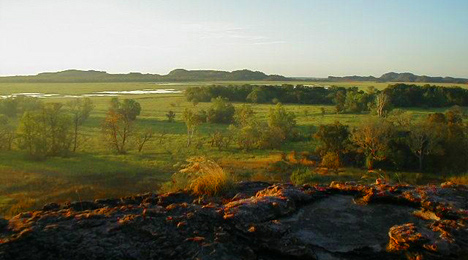
Who wants to be a billionaire? I don’t JEFFREY Lee is not interested in the soaring price of uranium, which could make him one of the world’s richest men.”This is my country, look, it’s beautiful and I fear somebody will disturb it,” he said, waving his arm across rocky land surrounded by the Kakadu National Park, where the French mining giant Areva wants to extract 14,000 tonnes of uranium worth more than $5 billion. Continue reading
Dangers of radioactive uranium mill tailings
Potential hazards from uranium mill tailings League of individuals for the environment 11 Jan 2010
1994, Feb. 14 Olympic Dam, Roxby Downs, South Australia WMC Ltd. leakage of tailings dam during 2 years or more release of up to 5 million m3 of contaminated water into subsoil ?
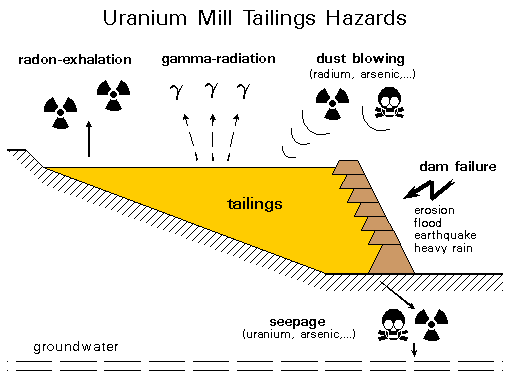 Radionuclides contained in uranium tailings emit 20 to 100 times as much gamma-radiation as natural background levels on deposit surfaces. Gamma radiation levels decrease rapidly with distance from the pile.The radium-226 in tailings continuously decays to the radioactive gas radon-222, the decay products of which can cause lung cancer. Some of this radon escapes from the interior of the pile. Radon releases are a major hazard that continues after uranium mines are shut down….. Continue reading
Uranium and the giant cuttlefish
 Have you ever seen the giant cuttlefish? It is the most beautiful animal, of magically changing colours, and ballet-like gracious movement. It is unique to a special part of Spencer Gulf, where the delicate salt balance in the water provides its specialised habitat, the only one in the world.
Some people might think that to stand up for the Giant Cuttlefish, against the Giant BHP BIlliton’s plan for Olumpic Dam uranium mine, – that this is a petty argument, about some odd, unimportant little creature.
Well, think again. Australia’s giant cuttlefish is a special, unique, and iconic toAustralia as is the kangaroo or the koala. It’s a sad time when Australians let the short-term greed of a big corporation destroy our precious environmental heritage.
South Australian govt will put BHP Billiton’s welfare ahead of environment?
 “Is the Premier saying that no matter what environmental impact there may be, he is giving BHP the go-ahead to put the desal plant there?”
BHP insists Point lowley best for desalination plant Adelaide Now SARAH MARTIN
January 08, 2010
BHP Billiton says building its proposed desalination plant anywhere but Point Lowly on the Spencer Gulf would cost “hundreds of millions” more dollars.
The desal plant’s location has divided the State Government and the Opposition, with the latter calling for BHP to investigate an alternative site on the West Coast beyond Ceduna.
Labor member for Giles, Lyn Breuer, also wants the plant built elsewhere, saying the risk to the giant cuttlefish population in the gulf is too great. Continue reading
Nuclear Regulatory Commission’s conflict of interest on radiation cancer studies
Meltdown, USA: Nuclear Drive Trumps Safety Risks and High Cost 06 January 2010 by: Art Levine, t r u t h o u t | News Analysis“………Because of questions about conflict of interest and research integrity, Beyond Nuclear, among others, is asking the NRC to take a hands-off position in commissioning a new academic study.
“The NRC receives about 90 percent of its funding from nuclear power reactor licensing fees,” said Cindy Folkers, radiation and health specialist with Beyond Nuclear. “As such, NRC clearly stands to gain from more reactor construction. Therefore, it should not be doing cancer studies or directly hiring people to conduct such studies. This is a flagrant conflict-of-interest and puts a scientifically rigorous, non-biased study at great risk
t r u t h o u t | Meltdown, USA: Nuclear Drive Trumps Safety Risks and High Cost
91% of Sept-Iles residents oppose uranium mining
According to the poll, 91 per cent of the 1002 Sept-Îles residents queried about the question of uranium exploration said they were opposed to the idea.
(Canada) Sept-Îles residents oppose uranium exploration , CBC News January 6, 2010 |
The Quebec government has a duty to put a stop to plans for uranium exploration in the Sept-Îles region because of the overwhelming opposition of residents, the city’s mayor, Serge Lévesque, said Tuesday. Continue reading
Can uranium mines be operated safely?
Uranium Mining: Australia and Globally League of Individuals for the Environment, Inc , Gavin M. Mudd 7 Jan 2010 “………………..The most recent experience of Australia’s operating uranium mines demonstrates the challenges involved in uranium mining, which are distinct and unique. There have been numerous incidents at the now closed Nabarlek mine and the operating Ranger, Olympic Dam, and Beverley projects. Continue reading
Review of the nuclear year that has been
Review of the nuclear year that has been Christina Macpherson 5 January 2010
Australia: An extraordinary year in which Climate Sceptics were allowed to dominate much of the media, turning Australia into a curious outpost of anti-science. Pro-nuclear hype revved up, too – sometimes promoted as cure for global warming, but, inexplicably, also promoted by climate change disbelievers.
BHP Billiton put out huge but inadequate Environmental Impact Statement for its planned Olympic Dam expansion. Uranium explorations all over the place, especially in South Australia, as govt and mining industry try to manipulate aboriginal owners. Awareness of radiation effects at last leads to Maralinga veterans’ legal bid for justice.
International: While the nuclear hype went on, the facts were otherwise. France’s “flagship” new nukes are still struggling, under construction, and ramping up huge debts to AREVA. UK and USA governments struggle with the reality that only the tax-payer can pay the costs of nuclear power. State-owned nuclear industry – e.g France, Russia, China are not troubled by having to reveal the costs.
USA in a turmoil over where to put nuclear wastes, as Yucca Mountain dump plan is dumped. Revelations of illegal waste-dumping by UK and European countries were quickly glossed over in mainstream media. China is secretive about its nuke wastes, in earthquake areas, and imprisons nuclear dissidents.
The world waits for a resolution of Iran and its nukes, with fear of attack on Iran by Israel or the USA.. Middle Eastern countries seek nuclear power “for peaceful purposes only”, while India revs up its nuke power and nuke weapons, and everyone eyes Pakistan with trepidation.
Quietly, the anti-nuclear and anti-uranium movements built up momentum, along with strengthening indigenous rights movement, and a strong presence at Copenhagen. Impediments occur to the growth of the nuclear industry, including for example, quite a few legal victories in USA.
Doubts about the future of uranium mining
“Right now, there’s a lot of speculation, but exactly how large demand will grow, no one knows.”
Canada: Two companies push Uranium mining in region By GARY HARMON/The Grand Junction Daily Sentinel December 27, 2009 Two major international suppliers of uranium, meanwhile, are out of commission temporarily and possibly permanently. The Cigar Lake Mine in Canada flooded, and the Olympic Dam Mine in Australia is out of production because of a shaft accident..………………. Continue reading
After years of denial, NSW govt quietly demolishing radioactive home
Radioactive waterfront home to be razed Sydney Morning Herald BEN CUBBY ENVIRONMENTDecember 28, 2009 NEW plans to clean up the site of a former uranium smelter in Hunters Hill mean a four-storey waterfront mansion the NSW Government has repeatedly declared safe will be demolished. Continue reading
Depleted uranium was tested on soldiers in Australia
An Australian royal commission first discovered the use of depleted uranium in atomic tests at Maralinga some years ago,
Global changes ruining the world, September 25, 2009 Human Nuclear Action UK Admits Soldiers Used in Radiation Experiments The UK Ministry of Defense admitted on 12 May that it exposed British, Australian and New Zealand servicemen to radiation in tests during the 1950s and 1960s. A spokesperson for the Ministry denied that the soldiers were used as guinea pigs, Continue reading
Ziggy Switkowski’s nuclear plan would cost $225 billion or more
This could cost about $225 billion in today’s money, or close to half a trillion dollars for 50 reactors……….

Nuclear economics just don’t add up Sydney Morning Herald MICHAEL R. JAMES December 24, 2009 -“……. it was inevitable that the federal Opposition would revisit nuclear power as an option for a low-carbon future in Australia. Given the recent sobering Government report on carbon capture and storage, “clean coal” seems less and less as the likely saviour………… Continue reading
Sovereign rights of aboriginal people to South Australian land
sovereign-rights-exposed-south-australia-and-british-land-coverup-revealed-in-new-book/ – Coober Pedy Regional Times 23 Dec 09 A new book called “Coming to Terms – Aboriginal Title in South Australia”, edited by prominent lawyer Shaun Berg, has just been released. The book clearly exposes the enduring Sovereign land rights of indigenous people. Continue reading

1 This month

of the week – Australians for War Powers Reform (AWPR)
To see nuclear-related stories in greater depth and intensity
 Antinuclear