Can nuclear giant AREVA be trusted with solar energy industry?
 There are two ways of looking at the French nuclear company AREVA taking over an Australian solar company.
1. Areva’s resources, financial and expert, can bring the necessary push to really make this solar industry happen. And, with the financial mess that is developing in AREVA’s nuclear industry, this solar move could herald a very positive transition away from nuclear, and to renewables.
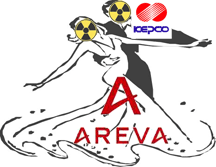 2. In Australia, we have a sad history of fossil fuel interests buying up solar industry initiatives precisely for the purpose of killing them off. AREVA has just joined forces with its powerful Korean nuclear competitor, KEPCO. Can corporations like Areva be trusted to really develop renewable technologies – or are they out to suppress them so as to promote their nuclear power empire?
I would like to think that Areva is truly diversifying, and promoting renewable energy technologies. I bear in mind the work of people like Ralph Nader, who has always been willing to talk with polluting corporations, and work for improvements.
Nevertheless, the fear remains.
Australian solar companies taken over by multinationals
Local solar power leaders taken over by Areva and Silex THE AUSTRALIAN, Giles Parkinson February 10, 2010 TWO of Australia’s most promising solar energy technologies changed hands yesterday, with the world’s largest nuclear energy group Areva buying Ausra and Silex Systems acquiring the assets of the collapsed Solar Systems. Continue reading
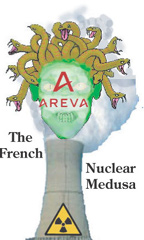
Areva ‘hedging’ its bets, with renewable energy push
this acquisition of Ausra is a good sign of where the market is heading. Given that the nuclear renaissance simply isn’t materializing as expected, it’s wise for Areva and other big energy conglomerates to hedge their bets.
Areva gets deeper into renewables with Ausra purchase the energy collective, by Tyler Hamilton, 02/08/2010 France’s Areva SA is known mostly as a designer of light-water nuclear reactors, builder of transmission and distribution systems, and a miner of uranium, Continue reading
BHP reduces Yeelirrie’s proposed uranium by an ‘uneconomic’ third
 BHP cuts Yeelirrie uranium estimate Matt Chambers : The Australian February 09, BHP Billiton has cut projections for its proposed Yeelirrie uranium mine in Western Australia by nearly a third, ruling out a heap acid leach component at the site as uneconomic. Continue reading
Growing problem of unnecessary medical ionising radiation
(USA) Glance: High-grade medical scans are key contributor to rising radiation exposure Health News February 9th, 2010 The Food and Drug Administration said Tuesday it will work with doctors and manufacturers to reduce unnecessary radiation exposure from medical scans, a problem that has been growing for decades. Continue reading

Small, beautiful, renewable energy cars
a bright future for a spectrum of ‘micro’ electric vehicles
Meet Trev: A two-seater renewable energy vehicle, by Phil Hart , February 6, 2010 , The Oil Drum: ]Major auto companies are now close to bringing their first electric vehicles onto the market. Continue reading
Pressure on U.S. Congress to set renewable energy standard
President Barack Obama has urged Congress to set a national
standard that would require 25 percent renewable power by 2025. But lawmakers have yet to act.

Wind, solar groups push US renewable energy standard Feb 10, 2010 – Stimulus funds powered most renewables to expand in 2009* – Energy groups stress domestic job creation* – Call for federal energy standard, extended tax credits By Deborah Zabarenko, Environment CorrespondentWASHINGTON, Feb 9 (Reuters) – U.S. industry executives from the wind, solar, hydropower, geothermal and biomass sectors pushed on Tuesday for a federal renewable energy standard, which they said would foster economic growth and create jobs. Continue reading
Australia’s voting system distorts Climate Change action
Queensland and particularly Western Australia, which both
have strong fossil fuels industries, relatively rural dwelling patterns, and populations of about 2m and 4.5m respectively.’……….

The climate policy disconnect: It’s rural voter over-representation Financial Times February 8, by Kate Mackenzie “………..a new paper finds that over-representation of regional voters can make a significant difference to public policy on both gasoline taxes and international climate change agreements… Continue reading
Obama appoints pro-nuker to Nuclear Regulatory Commission
Mr. Magwood’s dozens of years promoting nuclear power make him unqualified to be a regulator of the industry.

Nuclear Regulatory Commission RC Needs Nuclear Power Regulators, Not Promoters – The Project On Government Oversight (POGO) Ingrid Drake and Peter Stockton Feb 08, 2010 It’s not often that POGO lobbies to defeat a presidential nominee. However, we have felt called to speak out as loud as we can in opposition to President Obama’s nomination of William Magwood for the Nuclear Regulatory Commission (NRC) on the grounds that he does not have the independence from the nuclear power industry to regulate it, nor the security oversight background. Continue reading
1 This month

of the week – Australians for War Powers Reform (AWPR)
To see nuclear-related stories in greater depth and intensity
 Antinuclear