https://beyondnuclear.org/nuclear-winter-webinar/ The Samuel Lawrence Foundation is hosting its “First Friday” Zoom Event at 11:30 AM PST (2:30 PM EST), featuring Brian Toon, Department of Atmospheric and Oceanic Sciences, Laboratory for Atmospheric and Space Physics, University of Colorado at Boulder on:
“Nuclear Winter: The Environmental Consequences of a Nuclear Exchange.” The event is moderated by Professor Paul Dorfman, Chair of Nuclear Consulting Group, University of Sussex, UK. Professor Toon is a world renowned researcher on the environmental and climate consequences of nuclear war. Even a limited conflict between nuclear-armed India and Pakistan, an exchange of 100 nuclear weapons, would have global climate changing consequences. Click here to register for the April 7th webinar.
Once again – this is miles too long. And also – sorry – too much about Australia. But, it’s a pivotal time – this AUKUS-nuclear submarine thing. And not just for Australia – as 3 anglophone nations team up in spreading nuclear weapons-grade technology for the first time – to a non-nuclear nation. All done – not with the consent of parliaments and people – just done with a stroke by the big boys. And all setting up for the next proxy war, Australia in the lead role? – against China.
INDIGENOUS ISSUES. An obnoxious clause in Canada’s draft Act for Implementing the United Nations Declaration on the Rights of Indigenous Peoples (UNDRIP)
Despite insisting that Julian Assange has been held captive for too long, the Albanese Government still won’t intervene while the AUKUS pact keeps us in lockstep with the U.S., writes Dr Binoy Kampmark.
THE SHAM that is the Julian Assange affair, a scandal of monumental proportions connived in by the AUKUS powers, shows no signs of abating. Prior to Prime Minister Anthony Albanese assuming office in Australia, he insisted that the matter dealing with the WikiLeaks publisher would be finally resolved. It had, he asserted, been going on for too long.
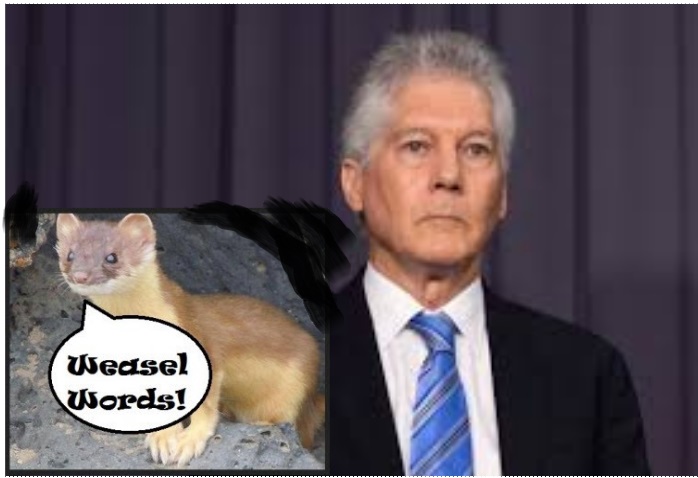
Since then, it is very clear, as with all matters regarding U.S. policy, that Australia will, if not agree outright with Washington, adopt a constipated, non-committal position. “Quiet diplomacy” is the official line taken by Albanese and Foreign Minister Penny Wong, a mealy-mouthed formulation deserving of contempt.
‘“Quiet diplomacy” to bring Julian Assange home by the Albanese Government is a policy of nothing. Not one meeting, phone call or letter sent.’
Kellie Tranter, a tireless advocate for Assange, has done sterling work uncovering the nature of that position through Freedom of Information requests over the years:
‘They tell a story – not the whole story – of institutionalised prejudgment, “perceived” rather than “actual” risks and complicity through silence.’
The story is a resoundingly ugly one. It features, for instance, stubbornness on the part of U.S. authorities to even disclose the existence of a process seeking Assange’s extradition from the UK, to the lack of interest on the part of the Australian Government to pursue direct diplomatic and political interventions.
Former Australian Foreign Minister Julie Bishop exemplified that position in signing off on a Ministerial Submission in February 2016 recommending that the Assange case not be resolved; those in Canberra were ‘unable to intervene in the due process of another’s country’s court proceedings or legal matters, and we have full confidence in UK and Swedish judicial systems’. Given the nakedly political nature of the blatant persecution of the WikiLeaks founder, this was a confidence both misplaced and disingenuous.
The same position was adopted by the Australian Government to the United Nations Working Group on Arbitrary Detention (WGAD), which found that same month that Assange had been subject to ‘different forms of deprivation of liberty: initial detention in Wandsworth Prison which was followed by house arrest and his confinement at the Ecuadorean embassy’.
The Working Group further argued that Assange’s ‘safety and physical integrity’ be guaranteed, that ‘his right to freedom of movement’ be respected and that he enjoy the full slew of ‘rights guaranteed by the international norms on detention’.
At the time, such press outlets as The Guardian covered themselves in gangrenous glory in insisting that Assange was not being detained arbitrarily and was merely ducking the authorities in favour of a “publicity stunt”.
The conduct from Bishop and her colleagues did little to challenge such assertions, though the Department of Foreign Affairs and Trade (DFAT) did confirm in communications with Tranter in June 2018 that the Government was ‘committed to engaging in good faith with the United Nations Human Rights Council and its mechanisms, including the Working Group on Arbitrary Detention’. Splendid inertia beckoned.
The new Australian High Commissioner to the United Kingdom, Stephen Smith, has kept up that undistinguished, even disgraceful tradition: he has offered unconvincing, lukewarm support for one of Belmarsh Prison’s most notable detainees. As the ABC reports, he expressed pleasure “that in the course of the next week or so, he’s agreed that I can visit him in Belmarsh Prison”. (This comes with the usual qualification: that up to 40 offers of “consular” support had been previously made and declined by the ungrateful publisher.)
The new High Commissioner is promising little:
“My primary responsibility will be to ensure his health and wellbeing and to inquire as to his state and whether there is anything that we can do, either with respect to prison authorities or to himself to make sure that his health and safety and wellbeing is of the highest order.”
Assange’s health and wellbeing, which has and continues to deteriorate, is a matter of court and common record. No consular visit is needed to confirm that fact. As with his predecessors, Smith is making his own sordid contribution to assuring that the WikiLeaks founder perishes in prison, a victim of ghastly process.
As for what he would be doing to impress the UK to reverse the decision of former Home Secretary Priti Patel to extradite the publisher to the U.S., Smith was painfully predictable:
“It’s not a matter of us lobbying for a particular outcome. It’s a matter of me as the High Commissioner representing to the UK Government as I do, that the view of the Australian Government is twofold. It is: these matters have transpired for too long and need to be brought to a conclusion, and secondly, we want to, and there is no difficulty so far as UK authorities are concerned, we want to discharge our consular obligations.”
Former Australian Senator Rex Patrick summed up the position rather well by declaring that Smith would be far better off, on instructions from Prime Minister Albanese, pressing the current UK Home Secretary Suella Braverman to drop the whole matter. Even better, Albanese might just do the good thing and push U.S. President Joe Biden and his Attorney-General Merrick Garland to end the prosecution.
Little can be expected from the latest announcement. Smith is a man who has made various effusive comments about AUKUS, an absurd, extortionately costly security pact appropriately described as a war-making arrangement. The Albanese Government, having placed Australia ever deeper into the U.S. military orbit, is hardly likely to do much for a publisher who exposed the war crimes and predations of the Imperium.
Even among Australia’s roll call of opinionated former prime ministers, Paul Keating stands out—not least for his unmatched ability to dress down those who oppose him. But few thought he would ever turn this skill on his own political party, the Australian Labor Party, which finally seized government in 2022 after a decade in the wilderness. That was until last week, when Keating publicly condemned the AUKUS defense pact between Australia, the United Kingdom, and the United States and Prime Minister Anthony Albanese for signing it.
That tripartite deal, details of which were announced with fanfare just two days earlier, was “the worst international decision by an Australian Labor government” since conscription was attempted during World War I, Keating said during an appearance at Australia’s National Press Club. The decision to purchase nuclear-powered submarines—at a cost of up to 368 billion Australian dollars ($245 billion)—would invariably draw Australia into any potential conflict between the United States and China, he warned.
No words were minced: “Signing the country up to the foreign proclivities of another country—the United States, with the gormless Brits, in their desperate search for relevance, lunging along behind is not a pretty sight.”
Another former prime minister, Malcolm Turnbull of the Liberal Party, also chimed in with concerns, though he put them slightly more delicately.
…………….Turnbull has questioned whether the use of U.S. submarines—employed as a stopgap until British-designed, Australian-built subs are complete—could compromise Australia’s sovereignty. ……………….
Sam Roggeveen, the director of the international security program at the Sydney-based Lowy Institute, told Foreign Policy that his sovereignty concerns regarding AUKUS stretch beyond personnel. “When you build a weapon system that is almost specifically designed to operate thousands of kilometers to our north, and which is perfectly suited to fighting a military campaign against China,” he said, “then at the final moment when the call comes from the White House—‘Will you take part in this war, or won’t you?’—it will be very difficult, almost impossible, for Australia to say no.”
………… Should this relationship continue to devolve, AUKUS could prove “very dangerous” to Australia, dragging the country into a conflict between the two great powers. Ultimately, more debate was needed about the deal, he said, particularly because Australia will bear all of its cost and risk………………………………………………………….
“Many rank-and-file [Labor] members would and do agree with Keating’s criticism, if not all aspects of his argument,”said Chris Wallace, a political historian and professor at the University of Canberra. And some local branches, the bedrock of the party, have recently been pushing back against the deal.
Similarly, the Nobel Peace Prize-winning International Campaign to Abolish Nuclear Weapons, which was founded in Australia in 2007, warned that AUKUS posed “both a major proliferation risk and could be seen as a precursor to Australia acquiring nuclear weapons.” The organization said the purpose of the submarines was, clearly, “to support the [United States] in a war in northeast Asia. Whether with China, North Korea or Russia, there is an alarming risk of any such war escalating to use of nuclear weapons.”
Recent polling suggests the Australian people may also be coming around to Keating’s point of view. Leading pollster Essential found this month that the public’s belief that AUKUS would make Australia more secure has fallen to just 40 percent, down from 45 percent when the pact was first announced back in 2021. On the question of the nuclear-powered submarines in particular, Essential reported that 55 percent of people surveyed either thought the purchase was unnecessary or too expensive.
…………………………………. “There is no rational basis for the Albanese government facilitating the withering expense of nuclear submarines,” Keating wrote, “other than to suit and comply with the strategic ambitions of the United States—ambitions which slice through Australia’s future in the community of Asia, the basis of our rightful and honourable residency.”
The backlash to the recent announcement, from adversaries and allies alike, Wallace said, should prompt the Albanese government to go back to the drawing board and actually vet whether the deal—including the procurement of submarines powered by weapons-grade uranium—was the best option for Australia. “Instead, the government made the announcement first and expected everyone to back in behind it,” she said. “They were dreaming.”
The Albanese government is weighing whether to make a dramatic break with the United States and sign an anti-nuclear weapons treaty that would aggravate Washington and launch a new era in Australian security policy.
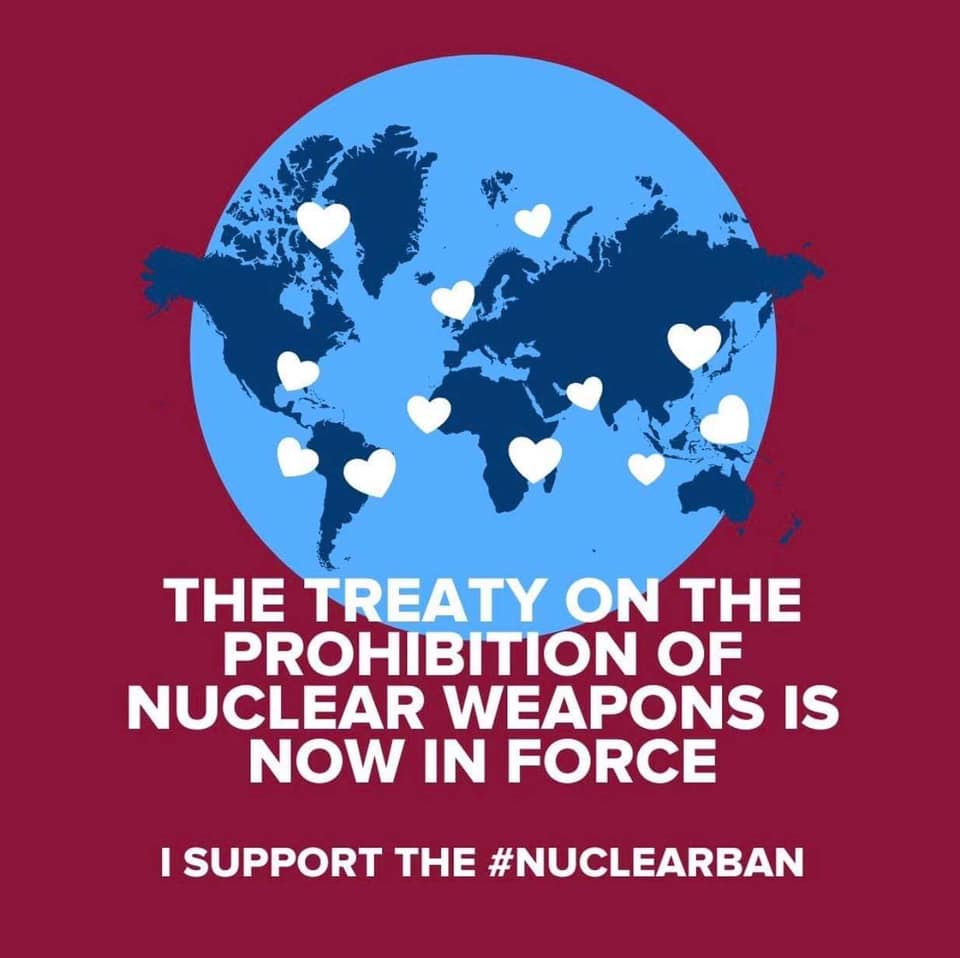
Anti-nuclear campaigners are urging the government to join over 90 countries and sign the Treaty on the Prohibition of Nuclear Weapons (TPNW) before the next election, a step that would see Australia abandon a key pillar of the US alliance by removing itself from America’s “nuclear umbrella” in the Asia-Pacific.
Labor’s national platform commits the party to signing and ratifying the treaty – which prohibits member states from participating in any nuclear weapon activities – but only after certain conditions are met.
Prime Minister Anthony Albanese has been a strong supporter of signing the treaty, describing the idea as “Labor at our best”.
The US strongly opposes the treaty and has previously urged friendly nations not to support it, on the grounds it would undermine peace and security.
……………………… A spokeswoman for Foreign Minister Penny Wong said the government will consider the treaty “systematically and methodically as a part of our ambitious agenda to advance nuclear non-proliferation and disarmament”.
“There are a number of complex issues to be considered,” she said.
…………………………………….. Gem Romuld, Australian director of the International Campaign to Abolish Nuclear Weapons, said “if the government is committed to non-proliferation and disarmament, it will sign the TPNW during this term of government”.
“That would be warmly welcomed by countries across the Asia-Pacific, most of which have already signed the treaty, as well as most of the Australian public,” she said.
Romuld acknowledged ratifying the treaty would represent a “big change for Australia, ending a practice we have had in our security policy for a couple of decades” by prohibiting Australia from hosting American assets armed with nuclear weapons, such as B-52 bombers.
………….. Romuld said the AUKUS pact – under which Australia will acquire a fleet of nuclear-powered submarines – does not prevent the government from signing the treaty. “In fact it only underlines the importance of it,” she said.
………………….
Labor MP Josh Wilson, the chair of the joint standing committee on treaties, said the TPNW represented a “much-needed jolt of momentum in the global nuclear disarmament effort”.
Foreign Investment Review Board grants initial approval for Norwegian energy giant’s role in proposed 1GW offshore wind project off north-east Tasmania. The post Norway oil giant cleared to collaborate on massive offshore wind farm in Bass Strait appeared first on RenewEconomy.
New South Wales had a bumper solar month in March, showing off its energy generation chops as the grid prepares for a major coal exit this month. The post NSW solar plants top generation charts as coal heads for the exit door appeared first on RenewEconomy.
Gupta finally delivers on green steel promise, phasing out coal at Whyalla Steelworks and replacing it with renewable-powered technologies. The post Gupta to stop use of coal in steelmaking at Whyalla, use wind and solar instead appeared first on RenewEconomy.
UK tin miner proposes big renewable park next to Australian project, and using mostly solar to power crushing operations during the day. The post Solar crusher: Tin producer wants new Australia mine to run on renewables only appeared first on RenewEconomy.
Deterrence cannot fail and is therefore not a foundation for peace
By Linda Pentz Gunter
Arguments around nuclear deterrence can become quickly convoluted. But the basic premise, according to those who advocate it, is that we are safer with nuclear weapons than without them. The possession of nuclear weapons by the world’s major powers, they say, has kept the peace. The lethality of nuclear weapons is such that they will inevitably never be used, thus preventing nuclear war, the argument goes.
To the rational ear this sounds breathtakingly illogical. But try tangling with the deterrence crowd and both sides will quickly find themselves tied up in a semantic knot of double and triple negatives.
However, it’s all really quite simple, or it seems so when listening to Austrian diplomat Alexander Kmentt explain it. Kmentt, one of the chief architects of the UN Treaty on the Prohibition of Nuclear Weapons (TPNW), just has a knack for framing the argument against deterrence both clearly and compellingly. Here is how he puts it:
“I can’t prove that deterrence doesn’t work. And I can’t prove that it does. But the price of being wrong if it doesn’t work is too high. It cannot fail.”
Kmentt was addressing an audience of European representatives of International Physicians for the Prevention of Nuclear War at their January 2023 conference in Hamburg, Germany. (I was also a presenter there so enjoyed the privilege of hearing Kmentt’s talk, which was delivered live streamed.)
This rationale makes sense. For deterrence to work, it must be 100% foolproof all the time. But anything governed by human beings — and technology invented by them — can guarantee no such thing. And given the price of failure, the choice is obvious: deterrence isn’t worth the risk.
There is a solution to all this and it is contained in the TPNW, of which Kmentt, and many others, can be so rightfully proud. You can indeed guarantee zero chance of a nuclear war if there are zero nuclear weapons in the world. “With the TPNW, deterrence was rejected,” Kmentt said. A first. In another first, “it is the first treaty that recognizes the injustices done.”
Those injustices are invariably meted out to smaller nations, and it was they who lined up in significant enough numbers to both sign and then ratify the TPNW. “If deterrence fails, small states are the collateral damage,” Kmentt pointed out.
In fact, the TPNW is so innovatory — Kmentt referred to it as “an avant-garde treaty”— that it departed from all earlier treaty scripts by encouraging full inclusion and participation. Framing it was “open to outside voices, to civil society and to academia,” Kmentt told the Hamburg audience. “There were observers.” This set it apart from the halls-of-power treaties that preceded it.
And it remains an open process. “We are clear that we are welcoming to whoever wants to engage with us on arguments around the treaty,” said Kmentt. “If countries didn’t show up, it was not a reaction to something we did.”
There has been —and remains — as Kmnett noted, considerable opposition toward the TPNW, particularly from the nuclear weapon countries. The U.S. Ambassador to the UN at the time, Nikki Haley, now apparently running for president on the Republican ticket, was so frightened by the Treaty that, as ICAN reported, “on the first day of treaty negotiations, she hosted a press conference outside the room where negotiations were to take place, criticizing the pursuit of a prohibition treaty.”………………………………… more https://beyondnuclearinternational.org/2023/04/02/the-cost-of-being-wrong/
“At best, they’ll end up with a small amount of various types of waste before the project is terminated, that will just create a bigger disposal hazard. And if it’s stuck in the province of New Brunswick, it will be their problem. But there’s zero chance of this cockamamie contraption being useful for generating electricity, or treating radioactive waste in a sound way.”
Less than a kilometre from the western shore of the Bay of Fundy, the Point Lepreau Solid Radioactive Waste Management Facility temporarily houses about 160,000 spent fuel assemblies from New Brunswick’s only nuclear power reactor. Moltex Energy, a Saint John-based startup, proposes to recycle that radioactive waste into fresh fuel for a new 300-megawatt reactor called the Stable Salt Reactor-Wasteburner, or SSR-W.
Moltex promises these facilities will greatly diminish the waste inventory of NB Power, the province’s primary electric utility, beginning in the early 2030s, while at the same time producing electricity. Critics, however, warn the resulting wastes would be harder to dispose of than the assemblies themselves.
Criticisms notwithstanding, Moltex’s proposal appears to be gaining momentum. It has partnered with SNC-Lavalin Group, which holds a minority ownership stake and provides many of Moltex’s 35 employees through secondments – a vote of confidence from a company with deep roots in Canada’s nuclear sector…………….
Premier Blaine Higgs hailed Moltex in a speech in February, stating his government’s support “is positioning New Brunswick as a leader in development of new nuclear.” Mike Holland, Minister of Natural Resources and Energy Development, has extended what he described as “unwavering commitment to seeing this project become a reality.” The province has already supplied $10-million toward that end, while the federal government, through its Strategic Innovation Fund and other channels, has provided $50.5-million.
What these supporters have signed up for, however, isn’t entirely clear. Moltex’s technologies are embryonic; emphasizing that fact, partners that would play crucial roles in implementing them refused to discuss the implications with The Globe and Mail. Citing the need for commercial confidentiality, Moltex chief executive officer Rory O’Sullivan acknowledges the company hasn’t revealed many details about its reprocessing technology (known as Waste To Stable Salts, or WATSS).
Critics, though, say they’ve seen enough to recognize WATSS as merely the latest variations on nuclear waste reprocessing experiments dating back decades. Those experiences revealed reprocessing to be not a solution, they claim, but a curse.
About the size of a fire log, fuel assemblies from Canada’s CANDU reactors consist of rods known as “pencils” that are welded together; each contains cylindrical uranium pellets. Highly radioactive upon removal from a reactor, assemblies are stored in pools of water for about a decade before being warehoused at nuclear power plants in shielded containers. There are now about 3.2 million spent assemblies, which if stacked like cordwood would fill nine hockey rinks up to the boards……………..
WATSS would produce new wastes. By mass, the largest would be leftover uranium plus the metal cladding from CANDU fuel bundles, Mr. O’Sullivan said. This would be placed in the DGR, but in volumes greatly reduced than CANDU fuel bundles.
Then there’s fission products, a term encompassing hundreds of substances produced by nuclear fission inside a reactor. Though some are stable, others (such as cesium, technetium and strontium) are radioactive. These would be contained in salts that could be placed in canisters the same size as CANDU fuel bundles, facilitating storage in the DGR; Mr. O’Sullivan said they’d remain radioactive for up to 300 years………….
critics accuse Moltex of misleading the public. Gordon Edwards, a nuclear consultant and president of the Canadian Coalition for Nuclear Responsibility, said the company’s claim that the fission products would remain radioactive for only three centuries is “outrageous.”
“There are several radioactive materials which are very, very long-lived in the fission products, that have half-lives of not just thousands, but millions of years.”
The leftover uranium would contain leftover plutonium and fission products: “Experience has shown that this uranium is not clean, it’s contaminated,” he said. “You can’t just separate all of the fission products.”
WATSS wouldn’t significantly reduce storage volumes, Mr. Edwards added, as it’s the heat generated by radioactive waste – not the physical space occupied – that determines how large a DGR must be.
Ed Lyman, director of nuclear power safety with the Union of Concerned Scientists, has studied nuclear fuel reprocessing technologies since the 1980s. He said Moltex’s proposal is a variation on schemes that have been explored over many decades.
“All of the available evidence in the whole history of technology development in this area, as well as attempts to commercialize reprocessing in various ways, points to the fact that this is not going to work,” he said.
“At best, they’ll end up with a small amount of various types of waste before the project is terminated, that will just create a bigger disposal hazard. And if it’s stuck in the province of New Brunswick, it will be their problem. But there’s zero chance of this cockamamie contraption being useful for generating electricity, or treating radioactive waste in a sound way.”…………………
M.V. Ramana, a professor at the University of British Columbia’s public policy and global affairs school who researches nuclear issues, said Moltex’s $500-million estimate is highly optimistic. He pointed to Portland, Ore.-based NuScale Power, an early SMR developer, which spent US$1.1-billion over more than two decades developing what is essentially a scaled-down version of light water reactors common in the U.S.
As a molten salt reactor, the SSR-W should be far more difficult to license, Prof. Ramana said. Only two such reactors have ever been built, the last one closing in 1969, and neither generated electricity commercially.
Additionally, a sister company of Moltex, called MoltexFlex, is marketing another molten salt reactor in the Britain. (The companies share key personnel.) And Moltex must separately develop and license the WATSS process…………………..
“While we’re in early discussions with Moltex, they are still in the development phase, so we don’t have sufficient data at this time to respond to your technical questions about fuel waste,” NWMO spokesperson Russell Baker wrote in an e-mail.
All that adds up to a heap of unanswered questions. But having already spent $50-million on the project, Prof. Ramana said the federal government will be under considerable pressure to contribute more. He questioned the due diligence it has conducted to date.
With money and regulations on the table for renewable energy, the EU has become entrenched into two solid blocs with different stances on nuclear power.
With both a package of incentives for green technology and revisions to the Renewable Energy Directive on the table, the fight in Brussels over the place of nuclear power in the ‘green,’ ‘sustainable,’ ‘clean’ energy landscape—and its corresponding regulation—has intensified.
The bloc’s energy ministers met last week to prepare their negotiating points with the EU Parliament over changes to the Renewable Energy Directive. Prior to the March 28th Council meeting, energy ministers pow-wowed in competing breakfast gatherings—one for the French-led nuclear alliance and the other for the Austrian-organised Friends of Renewables group, Euractivreports.
Nuclear alliance
At the end of their meetings, the nuclear alliance sent out a press release to notify the media—and presumably, both the Commission and their rivals on the EU Council—that they had agreed that nuclear energy was indeed “strategic” in achieving the EU Commission’s environmental goals. This is the opposite position to the one the Commission has taken in the recently proposed Net Zero Industry Act (NZIA), a set of incentives meant to counter U.S. green tech subsidies.
Under French leadership, the nuclear alliance (consisting of Bulgaria, Croatia, the Czech Republic, Finland, Hungary, the Netherlands, Poland, Romania, Slovakia, and Slovenia) first met in February while the Commission was still preparing the NZIA. Its goal was to promote nuclear power as a low-carbon source of electricity and work on “common industrial projects.”
In mid-March, the Commission presented the NZIA draft, but with nuclear power excluded from the list of “strategic” technologies that would qualify for incentives. The one exception was “cutting-edge nuclear” technology, such as small modular reactors (SMRs) which could qualify for some investment incentives. The alliance then met again in March, just before the meeting of energy ministers on March 28th, and announced that they had “fully recognised that nuclear is a strategic technology for achieving climate neutrality.”
The pro-nuclear breakfasts were attended by Italy and Belgium, though only as observers. The two countries made it clear they had not signed on to any agreed position with the group, though they have reasons for desiring a favourable status for nuclear energy.
Belgium, for its part, has had to retract plans to start shutting down the country’s six nuclear reactors. After announcing the closure of a set of nuclear power plants by 2025, the public outcry forced the energy ministry to instead grant them a ten-year extension. ………………..
Friends of renewables
The Friends of Renewables—Estonia, Spain, Germany, Denmark, Ireland, Luxembourg, Portugal, Latvia, and Lithuania, with Austria as leader—are a clear counterweight to the nuclear alliance.
The compromise
After the breakfast gatherings, the two groups had to come together with the rest of the bloc’s member states for the official EU Council Meeting to settle on a negotiating position for the updates to the Renewable Energy Directive (RED).
The nuclear sticking point was whether hydrogen produced using nuclear power should be included in renewable fuel targets. After hours of back and forth, they agreed to label nuclear-produced hydrogen as “low carbon,” in other words, dirtier than ‘green’ hydrogen but better than the ‘brown’ hydrogen linked to fossil fuels.
Nuclear power enters into the debate about renewables in the question of hydrogen gas. Making the gas ‘green,’ a process of separating the hydrogen from water molecules, requires an energy source. When that source is considered ‘green,’ such as solar or wind power, the hydrogen is considered ‘green.’
Negotiators for the EU Parliament then also made room for nuclear power in the Renewable Energy Directive (RED), admitting that it has a “role” to play in reducing carbon emissions and is in a category of its own in the spectrum of environmental friendliness.
The RED now recognizes “the specific role of nuclear power, which is neither green nor fossil,” French MEP Pascal Canfin, chair of the Parliament’s Environment Committee, who participated in the negotiations, tweeted…….
The political agreement reached by the Council and Parliament calls for doubling renewable energy output by 2030.
“The agreement raises the EU’s binding renewable target for 2030 to a minimum of 42.5%, up from the current 32% target and almost doubling the existing share of renewable energy in the EU. Negotiators also agreed that the EU would aim to reach 45% of renewables by 2030,” the Commission said in a statement about the political agreement on the RED.
‘Renewable’ energy currently makes up just over 20% of the bloc’s energy mix.
Further room was made for nuclear by provisions in the agreement by giving member states two options to calculate achieving certain targets: either emission reductions or renewable energy output. This is an advantage for countries like France that have substantial nuclear capacity, as carbon dioxide is not the major by-product of nuclear power production. https://europeanconservative.com/articles/news/nuclear-tug-of-war-intensifies-in-brussels/
David Noonan will speak on public interest concerns over the new Roxby Downs Indenture Act 2026 on BHP copper-uranium mining and ore processing in SA, and on how AUKUS may face SA with a High-Level nuclear waste agenda.
Dr Jim Green will discuss international developments in the field of nuclear power including ‘small modular reactors’ and Generation 4 ‘advanced’ nuclear reactor concepts.