Auxstralian Foreign Minister Bob Carr gets the prize for hypocrisy about Julian Assange
 Yes indeed – or is it just stupidity? – I don’t think so. It’s the public who are stupid, thinks Carr.
In today’s Age, Bob Carr is quoted: “I’d just say again – if America were interested in Julian Assange they could have sought his extradition from the UK at any time in the last two years.”
So Carr is continuing the Australian Government’s disgraceful line ‘ WE DON’T KNOW NUFFINK ABOUT USA PLANNING ESPIONAGE CHARGES AGAINST JULIAN ASSANGE’
Carr surely knows full well that it is a relatively easy matter for the USA to get Assange extradited from Sweden, but it would be a difficult and embarassing matter for USA to try to extradite him from Britain.
If the Justice Department were actually to issue charges against Mr. Assange while he was still in Britain there could be potentially a decision for the UK government whether to extradite him to Sweden or to the United States, and that could get to be a complicated clash between the two different requests which would put the UK government in a difficult position. – John B. Bellinger III on Fox News
Sweden has not opposed extradition to the US since 2000, SvD, 22 December 2011 . in Assange’s case, he will be put in detention indefinitely upon arrival. Having Assange in custody since 7 December 2010 in the UK (house arrest) and then in Sweden facilitates the extradition procedure once it is put in motion by the United States (although there are suggestions that a sealed indictment has already been issued).
Decision on Ecuador asylum for Julian Assange to be stated soon
 Ecuador grants Assange asylum: report August 15, 2012 – Megan Levy WikiLeaks publisher Julian Assange will be granted political asylum in Ecuador, according to an official in the South American country, British media is reporting.
The Melbourne man, who is wanted in Sweden over sexual assault allegations, has been holed up at Ecuador’s London embassy since June 19, when he officially requested political asylum.
Officials within Ecuador’s government told The Guardian newspaper in London that president Rafael Correa had agreed to give Assange asylum. “Ecuador will grant asylum to Julian Assange,” an official in Ecuador’s capital Quito told the newspaper. Continue reading
Australian government bureau reports that wind and sun will be the cheapest energy technologies
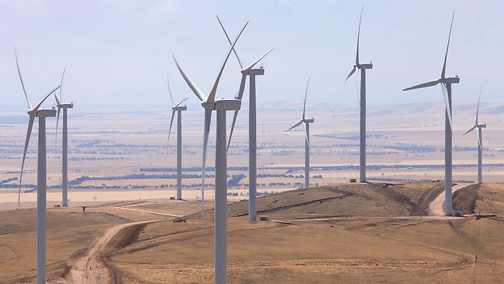 The turning point for renewables has arrived http://www.abc.net.au/environment/articles/2012/08/13/3565263.htm ANDREW BRAYABC 13 AUG 2012 Wind is predicted to be the cheapest form of energy by 2020.
THE BUREAU OF RESOURCE AND ENERGY ECONOMICS provides the Federal Government with all it wants to know about energy. Under the leadership of Energy Minister, Martin Ferguson, it is the last word on energy thinking in Canberra. In its Draft Energy White Paper last year it painted a rosy future for coal, gas and oil, with only a bit part for renewables.
Their message has been simple – when you want real energy, dig it out of the ground.
But recently it did something no one had ever imagined. It covered its latest report (pdf), , the Australian Energy Technology Assessment (AETA), not with pictures of massive coal loaders but with pictures of solar panels.
It was a declaration by this most conservative of government bureaucracies that renewable energy will become Australia’s energy source of choice, not because it is clean, safe and popular – all of which are true – but because it is cheap. The report slashes previous estimates of the cost of a whole range of renewables technologies and in some cases doubles the predicted cost of coal-fired generation. Continue reading
Hackers attack Australian spy agency website August 10, 2012 (CNN) — Australia’s national intelligence agency acknowledged Friday that its public website may have encountered problems after hackers said they had subjected it to a sustained campaign of cyber attacks.
The Australian Security Intelligence Organization “is aware that there may have been some technical issues with its public website,” a spokesman for the organization said…. The hackers, who appeared to have links to the loose collective Anonymous, said they had been launching attacks on the ASIO site and those of other Australian government agencies over the past few days, according to Twitter accounts under the namesAnonymous Australia and OperationAustralia.
In recent years, Anonymous has been involved in some of the most high-profile cyberattacks on the Web — hobbling the websites of governments and businesses, hacking into sites to reveal private data and, along the way, getting dubbed cyberterrorists by the authorities in the United States and elsewhere.
The network’s motto is “We are Legion,” and it describes itself as “a decentralized network of individuals focused on promoting access to information, free speech, and transparency.” http://edition.cnn.com/2012/08/10/world/asia/australia-hacking/index.html
I hope we can now trust Tim Flannery on energy issues for Australia
Well – I don’t know if we can, but I hope so. Flannery was chosen as Climate Change Commissioner because he’s been very outspoken on that issue. Good, but also perhaps, chosen because he was toeing the political Establishment line. (Labor being pretty watery about nuclear power, Liberal being all for it.)
Tim Flannery’s credentials as an environmentalist would be improved if he completely repudiated his 2006 statements on nuclear power:
“Over the next two decades, Australians could use nuclear power to replace all our coal-fired power plants. We would then have a power infrastructure like that of France, and in doing so we would have done something great for the world, for whatever risks go with a domestic nuclear power industry are local, while greenhouse gas pollution is global in its impact…..” (The Age 30/5/06)
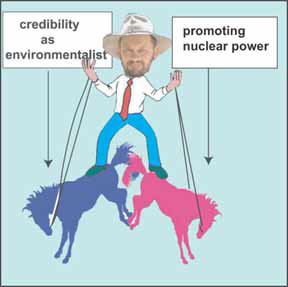
However, there is hope that Flannery has learned something, in addition to these, his later comments:
“Why should we take the most expensive option in this country, which has always been recognized as having the most expensive and difficult option.
We are going to see a whole lot of other technologies and innovations which are now well under way which we could use instead of nuclear power……. Such as concentrated PV technology, geothermal technology, wave power, wind power.” 20 June 2010
In 2012 a tipping point in the change to renewable energy for Australia
 We’ve hit energy tipping point: Flannery THE AUSTRALIAN, AAP August 14, CLIMATE change campaigner Tim Flannery says 2012 will be seen as a tipping point in the fight against rising carbon dioxide levels.
Advances in clean energy technologies, increasing global investment, the drop in price of those technologies and growing public support point to the dawn of the clean energy era, Australia’s chief climate commissioner says.
“Global investments in renewable power and fuels has increased six fold since just 2004, standing today at about $257 billion,” Professor Flannery told a Committee for Economic Development of Australia function in Melbourne on Tuesday.
“We’re seeing investment in renewables now outpacing those of fossil fuels. “Some of these trends have only become evident in the last 12 months. I don’t think they’re going to go away and I think we’ll see this as the moment when things really started to move.”
Prof Flannery said the 75 per cent drop in the cost of producing solar panels over the past four years, and the subsequent take-up rate in Australian homes was evidence of the change locally….. “(Look at) Germany, with it’s 25 gigawatts of solar power, where the very best sunlight you get in Germany is about as good as our worst here in Australia – we have huge potential in that area.” http://www.theaustralian.com.au/news/breaking-news/weve-hit-energy-tipping-point-flannery/story-fn3dxiwe-1226450269594
AUDIO – Australia using less electricity, renewables increasingly supplying baseload power
 Electricity demand falling in Australia ABC Radio David Mark reported this story on Monday, August 13, 2012 Listen to MP3 of this story ( minutes) MARK COLVIN: A new report shows demand for new electricity generation in Australia is slowing down.
Across the country the demand for new baseload power generators has been pushed back by around four years. What’s more, that baseload power is being increasingly supplied by renewables like wind and gas, which produce less CO2 than coal.
One expert in the electricity market says reasons for the reduced demand include greater efficiency in electronic goods, consumer education and an increasing number of rooftop solar panels.
David Mark reports. DAVID MARK: There’s a strange disconnect going on in the debate about electricity prices in Australia. We’re all paying more for our electricity. And we’re being told we have to because of the need for more infrastructure. And yet…
HUGH SADLER: For the last four or five years we’ve seen no growth inthe consumption of electricity in Australia. ….
http://www.abc.net.au/pm/content/2012/s3566840.htm
How the ALP government betrayed Australians on Muckaty nuclear waste dump plan
 The first thing that happened subsequent to the Rudd Government taking office after the 2007 election was that radioactive waste management issues were mysteriously taken out of the science portfolio, where they had been right through the period of the Howard government and well before, and given to Martin Ferguson in the resources and industry portfolio. To transfer radioactive waste management from the science portfolio to the resources portfolio was to give it to somebody with absolutely no expertise, no subtlety and no willingness to follow through with the ALP’s election commitment.
THIS LAND IS NOT NOWHERE; THESE PEOPLE ARE NOT NO-ONE, Right Now, By Scott Ludlam , 13 Aug 12, This article is part of our August theme, which focuses on the environment and human rights. Read more articles on this theme.
The government is attempting to force a nuclear waste facility on to Muckaty Station, a cattle station 120 kilometres from Tennant Creek in the Northern Territory, in direct violation of the commitments the ALP made in the run-up to the 2007 election. The proposal is strongly contested and the subject of a Federal Court challenge in which Traditional Owners argue they were not consulted by the Northern Land Council. They also argue that the proposed site is not one the Commonwealth can negotiate with one group of Owners given that at least five groups have interconnected and interwoven responsibility there. Matters do not reach the Federal Court on a whim; the Muckaty case goes to the heart of respect for Aboriginal land rights, and whether Australia will violate the UN Declaration on the Rights of Indigenous Peoples that prohibits storage of disposal of hazardous materials in the lands or territories of indigenous peoples without their free, prior and informed consent……
[In 2005] the ALP condemned the nuclear dump legislation, with MPs and Senators accurately describing it as extreme, arrogant, heavy-handed, draconian, sorry, sordid, extraordinary and profoundly shameful. The ALP took a very clear and unequivocal position on this issue into the closing months of the 2007 election campaign.
The failure of the Committee to visit Muckaty or hold a hearing in Tennant Creek undermines the accuracy of claims about the process engaging all stakeholders.
The party’s platform of that time reflected that Labor was “committed to a responsible, mature and international best practice approach to radioactive waste management in Australia” and would “establish a process for identifying suitable sites that is scientific, transparent, accountable, fair and allows access to appeal mechanisms.” There was also a commitment to “international best practice scientific processes to underpin Australia’s radioactive waste management, including transportation and storage.”
That clear and sound position taken by the ALP makes their actions in office all the more bitterly disappointing. Continue reading
Uranium exploring companies in Australia deserting an economically sinking ship
 Marketing mavericks turn heads at Diggers & Dealers meet THE AUSTRALIAN BY: ROBIN BROMBY The Australian August 13, 2012 “….. Uranium? Head for the hills. Forget about it. The spot price is down to $US49.25 a pound.
Joe Gutnick’s Top End Uranium (TEU) is flicking the switch to precious gems exploration, just the latest of many uranium explorers heading for the doors.
In this case, it cites constant delays in getting access to its ground as the reason, but you would have to be a uranium true believer to put another dollar into the ground right now.
As Warwick Grigor at Canaccord Genuity points out in his Friday note, prices of uranium companies are being reduced to shell levels.
He cites companies with advanced projects such as Uranium SA (USA) with $3 million in the bank and a market cap of $8m, while Bannerman Resources (BMN) has cash of $9m and market cap of $27m…..”
http://www.theaustralian.com.au/business/opinion/marketing-mavericks-turn-heads-at-diggers-dealers-meet/story-fnciihm9-1226448709580
Success of wind and solar energy in South Australia
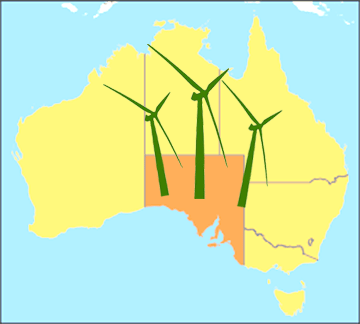 SA shows wind and solar make energy cleaner and cheaper, REneweconomy, By Giles Parkinson 13 August 2012As Europe has looked towards its biggest and most successful economy Germany to lead the way into green energy, Australians are getting a glimpse into its own grid of the future in the state of South Australia – arguably the advanced economy with the highest wind energy penetration, and now with the highest penetration of rooftop solar PV, in the world.
The latest South Australian Electricity Report (SAER), released by the Australian Energy Market Operator last week, gives some fascinating insights into how wind and now solar PV are changing the nature of the local grid – and providing the state with cleaner, greener and cheaper energy.
For a start, in 2011/12, wind overtook coal as the second biggest producer of energy in the state.
But while solar PV is not included , here’s another interesting set of statistics. South Australia has had the biggest reduction in energy demand compared to forecasts of just a year ago – down 10 per cent from last year’s predictions. Industry demand has fallen, but it still represents growth of 5.4 per cent. The biggest change has been in residential demand, which has fallen 7 per cent. It just so happens that South Australia has the highest penetration of rooftop PV of all the NEM states, meaning – as AEMO states – that ‘”less electricity is being supplied from the grid.”
Indeed, by the end of 2012, two out of five houses in the state had installed rooftop solar PV – more than double the national rate ….. Another interesting snippet from AEMO’s report is that rooftop solar – contrary to some opinion – is helping to meet peak demand….. http://reneweconomy.com.au/2012/sa-shows-wind-and-solar-make-energy-cleaner-and-cheaper-39021
Australian company Mantra Resources has to pay tax bill, for Tanzania uranium mine to go ahead
Tanzania: Uranium Project Licence Shelved Till Tax Bill Paid, Beyond Nuclear 12 Aug 12, Dodoma – A SPECIAL mining licence to allow Russian firm, Uranium One start mining at Mkuju River in the Selous Game Reserve buffer zone, will not be issued until Australian Mantra Resources pay over 180 million US dollars (approx. 292.12bn/-) in taxes, the Parliament was told.
The Hibakusha of Japan, and of indigenous peoples, victims of nuclear testing
the world is still full of hibakusha who can testify to the rippling consequences of radiation exposure on health, family and community.
Nuclear testing hibakusha who have been removed from their home communities have suffered the social breakdowns
They often define themselves in relation to the colonial power that irradiated them, i.e., they are victims of French nuclear testing, of Soviet nuclear testing, of American nuclear testing
The late Mrs Milpuddie and her [Aborignal] family were found sleeping in a bomb crater. The people were taken, stripped and scrubbed. Their dogs were shot. Another family were ordered to walk to Western Australia, and ordered not to leave the track. Obeying those orders, the adults died of thirst. Only two children arrived alive.
 Hibakusha: Hiroshima, Nagasaki and Beyond . Dr Bo Jacobs 11 Aug 12, http://www.dianuke.org/hibakusha-hiroshima-nagasaki-robert-jacobs/ Hundreds of hibakusha gather in Hiroshima today, and in Nagasaki on 9 August. Many more will stay away from such commemorations, preferring to spend these anniversaries in private. Almost all of these hibakusha were children when their families were attacked with nuclear weapons: and it is these grown children who remain to bear witness.
While over 70,000 people were killed in Hiroshima on the day that the US dropped an atomic bomb on the city center in August 1945, even more people became survivors of that attack. Many tens of thousands would die in the coming weeks, months and years, but some would live long and full lives. Their lives would forever be marked by this experience. Many have never shaken the trauma of expecting that they would die, having watched their family and their friends die, having
seen an endless horizon full of the dead and dying and the corpses of people and animals burned beyond recognition, and of seeing their homes and city disappear into fire and rubble.
Beyond the epidemiological and psychological affects on the hibakusha, the social impacts were often as devastating. Experiencing discrimination in marriage and employment, many were also plagued by their own worries about whether to have children, and by anxieties that every subsequent cold or flu that they or their children experienced might be the first signs of an impending fatal illness. In a sense the nuclear attacks on Hiroshima and Nagasaki never ended. Continue reading
Australian uranium miner Paladin lost $39 billion in 9 months
 Uranium mine lost K39 billion in 2011 , The Maravi Post, 10 Aug 12 BLANTYRE–The Kayekelera uranium mine in Karonga, which is operated by Paladin Energy Limited of Australia, lost K39 billion in nine months of operation ending March 2012 due to fluctuating prices of the commodity on the international market, the company’s top official has said.
Greg Walker, general manager for international affairs, told the Daily Times Business that the loss was a result of the historic earthquake in Japan that produced a Tsunami in March last year. Spot price for uranium oxide dropped from $75 (some K21, 000) to $47.50 (K13, 000) after the closure of Fukushima nuclear plant in Japan.
Walker said now the price is at $49.50 -K14,000 – saying this was below the direct cost of production at Kayelekera, the country’s biggest investment. Walket told the daily that Paladin have bankrolled $145 million–K41 billion- to keep the mine afloat… http://www.maravipost.com/malawi-news/society/1486-uranium-mine-lost-k39-billion-in-2011.html#.UCbaJ6FlT4Y
Rare Earths Reprocessing in Australia
Note – I am not opposed to the mining and reprocessing of rare earths. I recognise that they are a necessary “lesser evil” in the development of modern and renewable technologies. BUT – rare earths reprocessing does produce toxic radioactive wastes, and the disposal of these wastes is an important issue that must be adressed, and clearly shown [ rather than spun] to the public. – Christina Macpherson
 Whilst working with Alkane on a pilot rare earths processing plant, ANSTO has previously partnered with BHP Billiton at the Olympic Dam mine, Energy Resources Australia at the Ranger uranium mine, and a number of other Australian-based miners.
Chalmers marked final government approvals as other major hurdles beyond the research with ANSTO.
And while so far steering clear of local opposition, the company remains mindful of the importance of keeping those outside the industry on side.
All eyes on ANSTO, Australian Mining, 10 August, 2012 Andrew Duffy “….. On a tour of its ANSTO pilot plant Alkane managing director Ian Chalmers told Australian Mining the company [ Alkane Resources ] was aiming to be producing rare earths by 2015…..
The company also runs tours for schools and interested community members to ensure everyone’s well informed.
Chalmers told Australian Mining Alkane’s close relationship with the community had been part of the reason why the company had avoided the difficulties faced by Lynas. Lynas has faced significant community opposition to its rare earth
processing plant in Malaysia, and protestors have been the source of ongoing delays, cost blowouts, and multiple court battles. ….
while the company’s community and environmental relations are a focus, the research at its ANSTO plant is all about the science behind rare earths processing. Continue reading
Lynas rare earths project in trouble: investment advice to dump Lynas
Analysts recommend investors dump Lynas Australian Mining, 10 August, 2012 Andrew Duffy Foster Stockbroking has recommended investors sell shares in Lynas because the company’s rare earths processing plant in Malaysia is likely to face further delays. In an investor note today Foster said approval of the Lynas Advanced Materials Plant had been “a drawn out saga” and the upcoming Malaysian election would force further delays.
“Appeals by local groups and the opposition party regarding the environmental impacts of the plant have resulted in the LAMP becoming a politically sensitive issue and delayed a final decision on issuing the licence,” Foster analysts said…..
http://www.miningaustralia.com.au/news/analysts-recommend-investors-dump-lynas?fb_ref=.UCX0ch5fn6U.like&fb_source=home_oneline
1 This month


Help Aunty Sue Protect Her Land and Sacred Sites From Destructive Rocket Testing.
.

Australians deserve the truth
about
AUKUS – https://aukuspublicinquiry.com/

PETITION – To: Prime Minister Anthony Albanese and the Australian Labor Government

of the week – Australians for War Powers Reform (AWPR)
To see nuclear-related stories in greater depth and intensity
 Antinuclear