In Canberra 80.000 homes to be powered by wind energy
 Wind energy to power 80,000 Canberra homes Kirsten Lawson Chief Assembly reporter for The Canberra Times, 12 Mar 14, Wind energy is set to power 80,000 Canberra households within six years as the ACT government announces details on Thursday of an auction for huge wind farms in the region.
The government will sign 20-year deals with successful bidders, who will get a guaranteed price for the energy they supply.
The news will energise wind farms at different stages of approval and construction that have been waiting for a guaranteed buyer for the energy. But it is also set to galvanise anger in country areas that will host forests of wind turbines powering the capital…..http://www.canberratimes.com.au/act-news/wind-energy-to-power-80000-canberra-homes-20140311-34kox.html
Wind and solar energy make economic and scientific sense
 Audio: Renewable energy finally makes economic sense, ABC Radio National 3 March 2014 Critics says renewable energy cannot supply a reliable base-load of electricity, a claim rejected by author Mark Diesendorf. In this opinion piece, he
 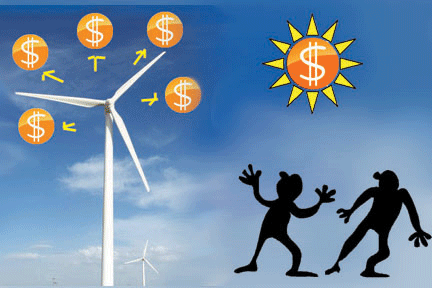 argues that wind, solar and other technologies are not only better for the environment, they make economic and scientific sense as well.You may have recently heard the following common claim repeated by aproponent of nuclear power: renewable energy cannot supply ‘base-load’ electric power. This misleading claim is based on the false assumption that the only way to supply base-load electricity demand is via coal and nuclear power stations.
Liberal leader in Tasmania will fight Abbott govt’s push to remove Renewable Energy Target
 As Rare as Tassie Tiger: Coalition leader advocates renewable energy REneweconomy By Giles Parkinson on 5 March 2014 Last weekend was an exciting one for the Australian renewable energy industry: a sighting as rare as the Tasmanian Tiger, an Australian conservative political leader willing to talk out in support of renewables. They were thought to be extinct.
Tasmania’s Liberal leader Will Hodgman, seeking to get elected in a state poll on March 15, told The Australian on the weekend that he would fight Tony Abbott’s attempts to dilute or remove the renewable energy target.
He planned a “strong” push to ensure RET changes did not stymie the state’s key wind and hydro energy sectors.
Naturally, his position was welcomed by the Clean Energy Council, which pointed out that renewables will be a useful hedge against surging gas prices, and the current review is causing uncertainty for investors that want to back major solar, wind, bioenergy, hydro and other projects.
“Mr Hodgman clearly recognises the benefits renewable energy has brought to Tasmania,” CEC CEO David Green said in a statement. “The Apple Isle sources the majority of its power from renewables such as hydro, wind and solar.”
That Hodgman’s position is at odds with his colleagues on the mainland could be explained by the fact that, unlike other states such as Victoria, NSW, Queensland, and Western Australia, Tasmania is not beholden to a powerful domestic fossil fuel industry. It is no accident that the areas with the most progressive renewables policy, Tasmania, South Australia and the ACT, are those where the fossil fuel industry is non existent or not powerful………. http://reneweconomy.com.au/2014/rare-tassie-tiger-coalition-leader-advocates-renewable-energy-28150
Australia’s government sets out to derail Renewable Energy
Australian Government ‘Derailing’ Renewables –http://www.energymatters.com.au/index.php?main_page=news_article&article_id=4200 1 March 14 The Australian Government’s approach towards renewable energy has been a major factor in Australia slipping in Ernst & Young’s (EY) latest renewable energy rankings.
According to the latest Renewable energy country attractiveness index (RECAI), Australia has dropped two places to eighth position. The nation’s highest ranking was no.4.
“Government measures to scrap carbon pricing and clean energy funding are derailing the country’s progress to create an economically viable renewables market,” states the report.
“September’s Liberal/National Party Coalition election victory prompted a dramatic policy U-turn, with proposed legislation to abolish carbon pricing and the US$9b Clean Energy Finance Corporation, and increasing speculation over the scaling back of the national Renewable Energy Target. Australia’s attractiveness therefore remains in limbo.”
However, it also notes elsewhere in the report:
“Troubled markets such as Spain and Australia could see resurgence in project activity as solar and wind applications become economically viable without subsidization.”
Adjustments to the technology weightings that better reflect the increasing impact of solar power have created significant movement in the latest index. The top 10 countries are as follows – figures in brackets show previous rankings:
2. China (2)
3. Germany (3)
4. Japan (5)
5. UK (4)
6. Canada (8)
7. India (9)
8. Australia (6)
9. France (7)
10.South Korea (10)
Looking ahead, EY says with renewable energy now a truly global market; stakeholders must also think globally. It also believes continuous innovation in generation technologies and supporting infrastructure will drive cost efficiencies and provide significant opportunities in all markets.
While financing of renewable energy project is no longer the exclusive realm of banks and utilities and there are significant amounts of capital to be accessed, “creative solutions and new conduits must be identified to open up the finance markets once again.”
Established in 2003, the quarterly RECAI ranks 40 countries on the attractiveness of their renewable energy investment and deployment opportunities.
The latest RECAI can be downloaded here.
Need to educate public and politicians on the facts of the Renewable Energy Target
 What You Can Do About Australia’s Renewable Energy Target,Energy Collective, February 16, 2014 “…….Step 8 is to repeatedly focus on this one, simple, crucial fact courtesy of the AEMC:
The SRES is virtually the only scheme that supports PV and in 2013/2014 adds around $0.005 to the average cost of electricity (assuming $0.27kWh ave) and is already declining. Therefore, removing or changing the SRES will have absolutely no meaningful impact on the price of electricity but will have an enormous impact on one of the fastest growth industries in the country.
Educate politicians.
Motivate consumers.
Support your advocates.
The RET and SRES Fact Pack:
I have compiled all the great facts that many people and organisations have put together below Continue reading
Huge losses for Australian coal and gas company, as demand falls, and solar power rises
Massive losses hit Energy Australia as demand falls, solar soars REneweconomy, By Giles Parkinson on 28 February 2014 EnergyAustralia, one of the big three utilities in the country, has slumped to a loss of $350 million for calendar 2013 after slashing the value of its Yallourn brown coal generator, as well as some of its gas-fired generation assets.
The write-down came as the company, owned by Hong Kong based CLP Holdings, returned a profit of just $18 million (down from $236 million in 2012) for the year from its portfolio of coal and gas generation and its large retail customer base – a result it blamed mostly on an “unprecedented” fall in demand, and the popularity of solar PV. Continue reading
A boost for wind energy as ACT plans big renewables projects
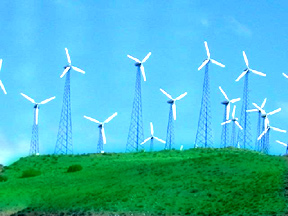 Clean energy boost stirs stalled wind farms, Canberra Times, March 1, 2014 Kirsten Lawson Chief Assembly reporter . The ACT government’s planned roll-out of large-scale clean energy projects is set to give new life to stalled wind farms near Canberra.
Infigen Energy, the company that runs the Capital 1 wind farm near Bungendore, already has approval for another 41 wind turbines at the site, generating about 100 megawatts of energy. General manager of development David Griffin confirmed his company hoped to take part in an auction expected later this year to win the right to supply the ACT with renewable energy for a guaranteed price over 20 years.
A second big project, near Collector, was approved last year for 55 wind turbines, generating 187 megawatts, and run by Ratch-Australia (80 per cent Thai owned, 20 per cent Transfield). Ratch could not be reached on Friday.
Environment Minister Simon Corbell announced a vast increase in the ACT’s commitment to renewable energy last week, more than doubling the cap on feed-in projects to 550 megawatts, with the bulk of the funded projects in wind farms around Canberra.
Solar would make up most of the rest, but it is undecided whether solar projects outside the ACT will qualify…….http://www.canberratimes.com.au/act-news/clean-energy-boost-stirs-stalled-wind-farms-20140228-33rrx.html
ACT to keep electricity prices low by extending solar and wind energy
 ACT extends renewables FiT to 550MW to drive big solar, wind, Reneweconomy, http://reneweconomy.com.au/2014/act-large-scale-fit-solar-wind-26551 By Sophie Vorrath on 27 February 2014
Auxstralia’s peak medical research body gives wind farms a clean bill of health
Link between wind farms and health problems rejected by research review SMH, February 24, 2014 Tom Arup Environment editor, The Age There is no reliable or consistent evidence that wind farms directly cause human health problems, a major draft review by Australia’s leading medical research body has found.
The hotly anticipated study by the National Health and Medical Research Council, has also called for further research into the issue after it identified only a handful of studies into the issue it deemed credible enough to be considered under the review.
Anti-wind farm campaigners claim turbines can cause a wide range of ailments including, headaches, insomnia, and dizziness, sometimes dubbing the symptoms as “wind farm syndrome.”
These have been widely rejected by the industry and many public health researchers.
Abbott’e review panel is stacked against renewable energy !
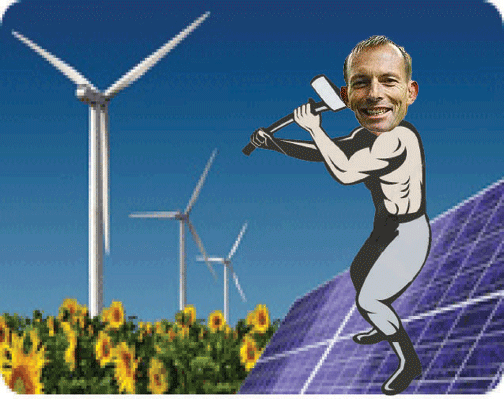 Renewable Energy Target Review Panel – Further Doubts http://www.energymatters.com.au/index.php?main_page=news_article&article_id=4191 25 Feb 14, The Federal Government promised an open and transparent RET review – but to some it’s appearing as a rigged game from the get-go.
The Sydney Morning Herald reports former Caltex chairman and climate change sceptic Dick Warburton, who is leading the panel, has declined to comment on whether he or his family hold any interests in fossil-fuel companies that might benefit from a reduction in the Renewable Energy Target.
It’s also been revealed that while Environment Minister Greg Hunt said all panel members had completed private interests declarations, “as is required to identify potential conflicts of interest,” Shirley In’t Veld, said she had not been asked to make such a disclosure.
Professor Ross Garnaut, economist and former advisor to the Labor Government, believes the Climate Change Authority should be carrying out the Review. According to RenewEconomy, Professor Garnaut believes the current panel is “comprised of people who have neither the independent status, nor the professional capacity of the executive in the CCA”.
Greens Leader Senator Christine Milne has labelled the Review a “hatchet job” and an “anti-renewable energy review”. Others have expressed similar sentiments.
The Small-scale Renewable Energy Scheme (SRES), a component of the RET, will have zero net cost impact on household power bills. Even so, the continuation of the program after the Review is anything but assured given the circumstances under which the Review is occurring; including recurring negative signals from Prime Minister Abbott.
The Review is already having somewhat of a dampening effect on Australia’s renewable energy industry, with some large scale projects being put on hold until the results are in and actions decided.
If the RET is abolished, up to 6,750 solar PV jobs could be lost and foregone nationally in under 5 years says the Australian Solar Council. If the RET remains unchanged, approximately 30,000 more jobs in the renewables sector will be created and another $18.7 billion in investment will occur.
South Australia gets wave energy unit to power 1,000 homes
 $7m wave energy unit heads to Port MacDonnell http://www.abc.net.au/news/2014-02-24/7m-wave-energy-unit-heads-to-port-macdonnell/5279420 24 Feb 2014, A 20 square metre wave energy unit will be towed from Adelaide to its position off South Australia’s south-east coast today.
The $7 million unit, developed by wave energy company Oceanlinx, will be tugged to Port MacDonnell. CEO Ali Baghaei says the unit will produce enough electricity to power 1,000 homes. He says the unit was meant to be connected to the grid last year but it was delayed.
“It’s been delayed because of weather and obviously it’s very important that we ensure that the unit commences its journey of four to five days during the best weather window period, as much as we can predict of course, hence why we have to assess the weather report and see what the tide master’s opinion is of the journey and so forth,” he said.He says it is a unique opportunity for South Australia.
“I believe that certainly this is the first of its kind, it’s the largest of its kind in the world, it’s one megawatt power and hopefully we will be able to demonstrate that successfully within coming months,” he said.
Energy Efficiency Target (VEET) Scheme saved Victoria from power blackouts
 Mixed Greens: Climate youth want 100% renewables in 10 years, REneweconomy, By Sophie Vorrath on 10 February 2014″……Power outages, sparked by the periods of extreme heat that have characterised Victoria’s 2013-14 summer, would have been much more common but for the contributions of energy efficiency, a new report has found. The report, released today by the Energy Efficiency Certificate Creators Association (EECCA), found that the Victorian Energy Efficiency Target (VEET) Scheme helped reduce peak demand by 187MM over the January heat wave. “Without the contribution from the VEET, the demand at 4pm on 16th January would have been 10,427 MW exceeding the previous electricity peak of 10,415 MW on 29 January 2009 in the lead up to the Black Saturday bushfires,” the report says. As well as saving over $500 million in the reduction of Victorian household and business energy bills, the report says the energy efficiency scheme reduced stress on infrastructure during the hot spell and likely reduced the prevalence of system black outs. Continue reading
Renewable Energy Target – a small cost for a big gain
this time, the renewable industry has grown and is planning to fight back with a marginal seats campaign and a public appeal to save the current Renewable Energy Target.
 Is $15 a year really too much to pay for renewable energy? The Conversation, AUTHOR Dylan McConnell Research Fellow, Melbourne Energy Institute at University of Melbourne,11 Feb 14 Australia’s Renewable Energy Target looks likely to be weakened or even axed, with the Prime Minister saying the scheme needs to be reviewed because it is causing “pretty significant price pressure”.
But does $15 a year sound like a “pretty significant” cost to you? Continue reading
Australia’s solar energy up against attack from Tony Abbott
Australia’s solar industry prepares for battle, pvmagazine 06. FEBRUARY 2014 | BY: EDGAR MEZA The government of Prime Minister Tony Abbott looks set to gut the country’s Renewable Energy Target program. Critics accuse Abbott of having misrepresented his stance on renewables. Australia’s renewable energy sector is feeling increasingly threatened by the government of Prime Minister Tony Abbott.
In a report on Thursday in U.K. newspaper The Guardian, opposition Labor Party environment spokesman Mark Butler took Abbott to task. Butler accused the prime minister of having pretended to support the renewables industry before the election but said he was now “launching a full-frontal attack” on the sector…….
The Labor environment spokesman said Abbott had taken control of a scheduled review of the country’s Renewable Energy Target (RET), adding that the current ruling coalition may reassess the program due to increases in power prices.
Butler said Labor would continue to oppose the repeal of the country’s carbon tax when parliament resumes this month and added that the party was also preparing “to ramp up a community campaign in support of renewable energy.” The renewable energy sector has become increasingly alarmed at the possibility of the government drastically reducing or even abolishing the RET.
The Australian solar council has already launched a “save solar” campaign out of fear the government review will immobilize the industry by eliminating the target, which requires 45,000 gigawatt hours of power to be sourced from renewables by 2020 and provides a subsidy to people who install solar systems. http://www.pv-magazine.com/news/details/beitrag/australias-solar-industry-prepares-for-battle_100014143/#ixzz2se7wYtKC
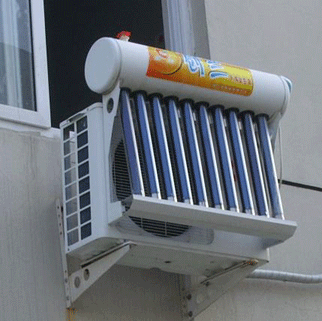
Solar air conditioning, solar power the clean way to keep cool
 Over one million Australian homes now have solar and our power pricing doesn’t handle them well either
under the status quo, those without air conditioning and with solar are being slugged unfairly.
Matthew Warren: The way we pay for electricity is out of date and urgently needs reform MATTHEW WARREN THE ADVERTISER FEBRUARY 03, 2014 THE recent intense heatwave across south-eastern Australia stretched many things to breaking point.Heatwaves provide a rare, but important examination of the power system.On a normal summer’s day in South Australia the peak load is around 1890 megawatts. In the heatwave it topped 3000 megawatts for almost three days straight. That put the network right at the edge of its capacity.
There is one key reason for these spikes in demand: increased deployment of airconditioners. On the hottest of days they are all turned on at once and this sends demand skyrocketing……
A large part of your household power bill is to pay for these infrequent events. It would make sense if those households with large air conditioners paid more than those who have only a small unit or none at all.
But they don’t. Continue reading
1 This month

of the week – Australians for War Powers Reform (AWPR)
To see nuclear-related stories in greater depth and intensity
 Antinuclear