Grusha Leeman: Submission to Senate – Australia is much too hot for safe nuclear power – let’s not dither with the nuclear distraction

Grusha Leeman. Environment and Other Legislation Amendment (Removing Nuclear Energy Prohibitions) Bill 2022 Submission 136
Retain the ban on nuclear energy.
It is heartwarming to know there is serious consideration being given to replacing the climate destroying fossil fuel power methods, but going back to old failed methods is not the best answer for this sunny windy country.
Australia is much too hot for safe nuclear power
We are in a time of climate crisis. Extreme weather events are inevitable and increasing. We know there will be more heatwaves and droughts and some will be more intense. As nuclear power plants consume a lot of water for cooling, the Australian climate is simply not conducive for safe nuclear power. Nuclear power plants are vulnerable to water stress, the warming of rivers, and rising temperatures, which weaken the cooling of power plants and equipment. Nuclear reactors in an increasing number of countries 1 are being shut down during heatwaves, or see their activity drastically slowed. Overheating can present a major safety risk. We can’t be spraying water on the walls of our nuclear power plants to cool the insides during a heatwave when we are also deep into a drought. As the lakes and rivers that typically supply cooling water become hotter thanks to climate change — and as droughts dry up some water bodies — nuclear power plants aren’t viable. We cannot thermally pollute our seas either. Hotter seas kill the plankton, the seagrasses and the mangroves. Sea Level rise and higher intensity storms mean situating vulnerable nuclear power plants on the coast is becoming less attractive.
We need power that is stable to function during heatwaves. Coal, gas and nuclear are notorious for failing that requirement.
Nuclear is much too expensive.
To protect the climate, we must abate the most carbon at the least cost and in the least time. We must quickly
replace our climate destroying fossil fuel plants with clean electricity. To produce stable affordable electricity we must recognise that the economic factors relating to nuclear rule it out as an option.
Not only is nuclear power greatly more expensive compared with other forms of power, it is essentially
uninsurable. Nuclear power plants depend on large government subsidies to be built, and never has nuclear
energy been profitable. On top of the initial capital costs, the cost of maintaining and decommissioning the plant, there’s the endless safe storage of the radioactive waste. Safe disposal facilities don’t come cheap and nowhere in the country are they wanted.
It is feasible that if we finally got a carbon price, nuclear powered electricity could be better able to compete, butmthe insurance risks would need to be borne by the public as none of Australia’s major insurance agencies are willing to provide cover for nuclear disasters. Indeed, if nuclear power operators were to adequately insure against the risk of nuclear accidents, the insurance premiums would make nuclear power completely uneconomic.
As the CSIRO’s GenCost 2021-22 report points out, solar and wind are the lowest cost way of producing electricity in Australia even when factoring in storage. In addition, whilst renewables are getting cheaper all the time, the costs of building and operating nuclear power plants are increasing.
We would still need to import the fuel rods.
There are currently only a few countries that are allowed to process the yellowcake into nuclear fuel rods and
Australia is likely to continue to be excluded. This would mean we would need to export our raw uranium and then import it once processed into fuel rods at an exorbitant price hike. Just because we have a resource doesn’t mean it will be economic to utilise it.
Nuclear energy is too slow
Stabilising the climate is an urgent emergency. Given the urgency of climate change, we need effective solutions now. It takes only a few years to set up a major wind or solar project, whilst nuclear power is slow. Setting up new plants takes about a decade, but some time blowouts have been extraordinary.
Also we are still waiting for long ago promised new technologies. We can’t afford to wait any longer.
Hypothetical new nuclear power technologies have been promised to be the next big thing for the last forty years, but in spite of massive public subsidies, that prospect has never panned out. That is also true for Small Modular Reactors (SMRs).
Uranium is finite and will run out……………………..
The nuclear fuel cycle produces greenhouse gases
While minimal greenhouse gases are created in the operation of a nuclear reactor, the mining, processing and
transport of uranium and the generation of nuclear waste all produce large amounts of carbon dioxide.
Nuclear power is unhealthy
Uranium mining causes lung cancer in large numbers of miners because uranium mines contain natural radon gas, some of whose decay products are carcinogenic. Uranium miners die of lung cancer at six times the expected rate. Clean, renewable energy does not have this risk because (a) it does not require the continuous mining of any material, only one-time mining to produce the energy generators; and (b) the mining does not carry the same lung cancer risk that uranium mining does.
The nuclear industry already has an immense radioactive waste legacy.
The storage and disposal of nuclear waste pose a serious risk. Waste from nuclear power plants is highly
radioactive and very difficult to dispose of safely. It can take up to 100,000 years for it to become safer. There is currently no agreed international solution for the long-term storage of high-level nuclear waste. Already there are hundreds of radioactive waste sites in other countries that must be maintained and funded for at least 200,000 years.. The more nuclear waste that accumulates, the greater the risk of radioactive leaks, which can damage water supply, crops, animals, and humans.
Nowhere in Australia is a nuclear waste dump wanted and it is unconscionable to inflict such a burden on unborn future generations along with our climate legacy.
Nuclear brings a scary weapons proliferation risk………………….
Meltdown risk is unacceptable.……………………………….
Conclusion: leave the uranium in the ground.
Australia has abundant safe and cheap renewable resources like solar and wind. As we face an increasingly urgent need to take action on climate change, we must focus on solutions that are scalable, cost-effective, and safe.
According to the Climate Council, Australia is one of the sunniest and windiest countries on earth, with enough renewable energy to power resources to power our country 500 times over. Compared to nuclear power plants, we can build large-scale wind and solar farms in Australia cheap and fast.
Frankly, pursuing nuclear power is just a waste of time and resources in Australia’s race against climate change. We need to focus on renewable energy if we’re going to make a dent in our emissions.
Let’s not get distracted by the nuclear debate. There is a very real risk that the delay and distraction posed by
dithering with old failed technologies like nuclear will mean a failure to advance a just energy transition. https://www.aph.gov.au/Parliamentary_Business/Committees/Senate/Environment_and_Communications/Nuclearprohibitions/Submissions
Greens support Barngarla people’s opposition to Kimba radioactive waste dump set to open after 2030
ABC North and West SA / By Nicholas Ward https://www.abc.net.au/news/2023-04-21/greens-affirm-nuclear-dump-opposition-at-kimba-visit/102252440
Greens senators travelled to Kimba on South Australia’s Eyre Peninsula this week to hear from farmers and First Nations groups opposed to the national radioactive waste management facility proposed at Napandee.
Key points:
- Calls are growing for the federal government to drop court action against a First Nations group opposing a nuclear dump
- The local Native Title chair says the government is “not being truthful” about listening to Aboriginal voices
- Greens senators say intermediate-level waste must stay at Lucas Heights until a permanent storage solution is found
SA senator Barbara Pocock said the federal government’s process to determine the site for permanent low-level and temporary intermediate-level waste storage was flawed.
“It didn’t listen to First Nations people, it hasn’t listened to local farmers in the community, and it’s not an appropriate site for intermediate-level waste coming out of Lucas Heights [in Sydney],” Senator Pocock said.
“It results in the double-handling of highly toxic intermediate-level waste, which will be temporarily stored at Kimba, and future generations are going to have to find a long-term solution.
“Bearing in mind the history of nuclear testing in our state, it’s especially important that we … can find a safe long-term solution, not a temporary solution.”
Calls to listen to Aboriginal voices
Jason Bilney is chair of Barngarla Determination Aboriginal Corporation (BDAC), which is fighting the federal government in court to block the current proposal.
He said the government’s continued legal action showed a lack of commitment to listening to Aboriginal voices.
“They’re breaking First Nations hearts by continuing down this path of the Liberals and outspending us 4: 1 in court to put a nuclear waste dump on our country,” Mr Bilney said.
“What does that say about the Statement from the Heart, let alone constitutional recognition?
“It’s about truth-telling and yet they’re not being truthful about listening to our voice.”
Mr Bilney welcomed the senators’ visit to Kimba and said proponents of the waste dump needed to speak honestly about its impact on Barngarla culture.
“It’s always good to come out on country and actually see for themselves where the site is and meet us on country. It’s a very positive step,” he said.
‘Don’t need a court to tell us’
BDAC holds native title over large areas of the Upper Spencer Gulf and Eyre Peninsula, including around Kimba, but not at the specific location of the proposed radioactive storage site at Napandee.
The Greens’ spokesperson for First Nations, Science and Resources, Senator Dorinda Cox, said that did not delegitimise Aboriginal concerns about its placement.
“The Barngarla people have stories, know the songlines, know the importance of birthing places, know the importance of country and practice of their culture in a very strong and traditional way still,” Senator Cox said.
“I don’t think we need a court to tell us that, and unfortunately that is a process they are pushed into.
“There was no free, prior, informed consent.”
Waste at Kimba ‘not expected before 2030’
The Australian Radioactive Waste Agency (ARWA) is overseeing site preparation works at Napandee, while awaiting final approvals to begin construction of the waste facility.
“Construction of the facility can only commence after all necessary siting, construction, nuclear, and environmental regulatory approvals are received,” an ARWA spokesperson said.
“The facility is not expected to be operational before 2030.”
Penny Wong’s World View: AUKUS All The Way

Australian Independent Media, April 19, 2023, Dr Binoy Kampmark
If anyone was expecting a new tilt, a shine of novelty, a flash of independence from Australian Foreign Minister Penny Wong’s address to the National Press Club on April 17, they were bound to be disappointed. The anti-China hawks, talons polished, got their fill. The US State Department would not be disturbed. The Pentagon could rest easy. The toadyish musings of the Canberra establishment would continue to circulate in reliable staleness.
In reading (and hearing) Wong’s speech, one must always assume the opposite, or something close to it. Whatever is said about strategic balance, don’t believe a word of it; such views are always uttered in the shadow of US power. From that vantage point, Occam’s Razor becomes a delicious blessing: nothing said by any Australian official in foreign policy should ever be taken as independently relevant. Best gaze across the Pacific for confirmation.
………….. Like a lecture losing steam early, she finally gets to the point of her address: “how we avert war and maintain peace – and more than that, how we shape a region that reflects our national interests and our shared regional interests.” It does not take long to realise what this entails: talk about “rules, standards and norms – where a larger country does not determine the fate of the smaller country, where each country can pursue its own aspirations, its own prosperity.”
That the United States has determined the fate of Australia since the Second World War, manipulating, interfering and guiding its politics and its policies, makes this statement risible, but no less significant. We are on bullying terrain, and Wong is trying to pick the most preferable bully.
She can’t quite put it in those terms, so speaks about “the regional balance of power” instead, with Australia performing the role of handmaiden. ……..
It takes one, obviously, to know another, and Senator Wong, along with Prime Minister Anthony Albanese, have shown little resistance to the very binary concept they supposedly repudiate. Far from opposing it, we might even go so far as to see their seduction by US power as a move towards the unitary: there is only one choice for the Canberra cocktail set.
……… Wong is keen to point the finger to one great power’s behaviour: unstainable lending, political interference, disinformation, reshaping international rules and standards.
Finally, the dastardly feline is out of the bag – and it is not the United States. “China continues to modernise its military at a pace and scale not seen in the world for nearly a century with little transparency or assurance about its strategic intent.”
….
Assange imprisonment has gone on for too long: Foreign Minister Penny Wong
Bendigo Advertiser, By Andrew Brown, April 17 2023
Foreign Minister Penny Wong has called for the extradition case against Julian Assange to come to an end.
Senator Wong said the legal case and imprisonment of the WikiLeaks co-founder has been going on for too long.
Mr Assange has been imprisoned in the UK for more than four years and faces extradition to the US on espionage charges.
Appeals to stop his extradition are currently before the UK courts.
Speaking at the National Press Club, Senator Wong said the government would continue to press for Mr Assange’s release…………………………………
Last week, almost 50 Australian MPs and senators signed a letter to US Attorney-General Merrick Garland urging him to end the pursuit of the WikiLeaks co-founder.
Advocates have urged for Prime Minister Anthony Albanese to raise the issue of Mr Assange during upcoming meetings with US President Joe Biden and UK Prime Minister Rishi Sunak. https://www.bendigoadvertiser.com.au/story/8161607/assange-imprisonment-has-gone-on-for-too-long-wong/?src=rss
Monica Leggett, in a powerful Submission, calls on all Australian MPs to reject nuclear power

Environment and Other Legislation Amendment (Removing Nuclear Energy Prohibitions) Bill 2022 Submission 134
My first employment, after completing my PhD in surface physics from Southampton
University, was to work as a research officer at Berkeley Nuclear Research Laboratories.
These were located adjacent to the Berkeley Nuclear Power Station. This gave me a lifelong interest in the industry and the controversies associated with it.
I find it hard to believe that the issue of Nuclear Power in Australia has come back to the
Senate. From an energy point of view it is unbelievable that a country with such
abundant sources of renewable energy should even contemplate using nuclear energy.
Nuclear power is the most expensive, inflexible, complex and socially problematic source
of energy. All that massive infrastructure with its associated safety and security
measures built just to boil water.
Re-engineering a nuclear bomb to generate heat in a controlled and safe manner may
have been an extraordinary feat of engineering and optimism in the 1950s, but technology
has moved on. Nuclear Power is an inappropriate, unnecessary and potentially
dangerous choice for Australia for the reasons outlined below.
1 Too slow and too expensive
Nuclear power has never been cheap despite the initial vision of nuclear energy as “too
cheap to meter”. It has very large upfront costs, is plagued by delays and cost over-runs.
While the costs of renewables are decreasing, the cost of nuclear is increasing.
The high profile and controversial nature of nuclear power would divert attention, funds
and focus from renewables to nuclear. The world cannot afford any more delays in
reducing carbon dioxide emissions.
2 Lessons from recent world-wide extreme weather events
The impacts of global warming can no longer be dismissed as a future problem. Records
are now being broken on a regular basis. The last two years have been particularly brutal
with extreme temperatures, intense wild fires, droughts and floods across the world.
Using only historic data to predict future weather is no longer sufficient. This would have
a very major impact on site selection, the safe operation and emergency planning for any
nuclear power plant.
3 Unacknowledged social impacts
The presence of a nuclear power station in an area would alter the risk profile of the area
for those in the vicinity and pose an additional psychological stress on residents. In
addition to bush fire and flood preparedness plans, residents would need to have nuclear
accident preparedness plans. These are not necessarily compatible. Local authorities
would need response plans for minor and major nuclear accidents.
If the power plant site is in a country area, which is likely, then there is an additional
problem. Country areas, in WA for example, rely on a large volunteer component in fire
and ambulance services. Will volunteers wish to serve in an area which includes a
Nuclear Power Station? How will they be protected? How will they be trained?
4a Adverse environmental impacts – normal operation
The environmental case for nuclear power appears to be based on its low carbon dioxide
emissions while operating without incident, compared to the carbon dioxide emissions
from a fossil fuel plant. This is correct but incomplete. It compares one yet-to-be-built
working nuclear power plant with an operating fossil fuel power plant. But their life cycles
are very different. The public relations material ignores some or all of the emissions from
the following:
- Site preparation
- Construction
- Water supply
- Storage of spent fuel rods
- Decommissioning including the treatment of the highly radioactive pressure vessel
and shielding (while the reactor is operating, the fuel vessel and shielding are
constantly under neutron bombardment from the core, hence becoming highly
radioactive). - Long term storage and monitoring of radioactive waste.
4b Adverse environmental impacts – accidents
In the case of a major nuclear accidents (e.g. Chernobyl and Fukushima) all energy
benefits while operating became insignificant compared to the energy used to deal with
the aftermath of the accident. These include the energy costs of making the reactor safe
and monitoring it for an innumerable years, site and area rehabilitation, relocating
residents and broader health costs.
The probability of a weather related nuclear accident has been made greater by the
changes in climate with extreme weather events more likely.
Accidents release radioactive isotopes into the environment. These can expose plants
and animals to external radiation. If ingested, then they can be absorbed into body tissue
and irradiate the body from inside.
Our environment is under enormous threat from human impact and climate change. It
does not need another threat.
5 Security issues
The war in Ukraine has brought into sharp focus, the reality of having a nuclear power
station in a country when under attack . It is not an asset that adds to a country’s
security, so why would we choose to have nuclear power stations that we do not need?
In addition, the presence of enriched uranium in the country broadens the range of
possible terrorism threats. Extra security then becomes an added expense for the
taxpayer.
6 Ethical issues – intergenerational equity and resource sharing
Should a nuclear power station be built and assuming the station is accident free, then
the current population would get the advantage of the power generated. Future
generations would be bequeathed the costs. They would inherit responsibility for decommissioning (if not already done) looking after the waste, maintaining its security
from terrorists and monitoring containment, all the while living with the impacts of climate
change. This lacks intergenerational equity and is not acceptable.
Uranium is a finite resource. As world citizens with an abundant supply of renewables,
we should not be using Uranium for our power. Uranium should be reserved for countries
that have few or no alternatives.
If we with our enormous renewable resources choose to use nuclear, what message
about renewables are we sending to our Pacific neighbours? What message does it send
about our concern for their wellbeing if they could be down-wind from a possible nuclear
accident?
7 Conclusion
Nuclear Power is an inappropriate and unnecessary choice for Australia. It fails on
economic, social, and environmental grounds and is ethically indefensible. I call upon all
politicians to reject nuclear power https://www.aph.gov.au/Parliamentary_Business/Committees/Senate/Environment_and_Communications/Nuclearprohibitions/Submissio
Professor George W Burns Submission to Senate – Keep the Nuclear Prohibitions, in the immediate and long-term interests of all Australians… and of the planet
Environment and Other Legislation Amendment (Removing Nuclear Energy Prohibitions) Bill 2022 Submission 127
I am deeply concerned about the proposed Removing Nuclear Energy Prohibitions Bill
Australia needs effective climate action but nuclear power would slow the transition to a low-carbon
economy. It would increase electricity costs and unnecessarily introduce the challenges and risks
associated with high-level nuclear waste management and the potential for catastrophic accidents,
with profound intergenerational implications for Australians.
My concerns as an Australian citizen are that:
Nuclear is the most expensive energy option.
Nuclear is slow. It can take decades to build and would require a decade or more to develop the
legislative framework.
Nuclear is dangerous. Either through human error, disaster, or as a military target the catastrophic
consequences of a nuclear disaster would permanently pollute.
Nuclear is unwanted. There is long standing popular opposition to nuclear power in Australia
because of the issues above as well as the unsolved problem of nuclear waste and the link to nuclear
weapons
Alternatives like renewables, storage and energy efficiency are faster, cheaper, more deployable and
enjoy much more public support
I trust the Inquiry will act in the immediate and long-term interests of all Australians…and of the
planet. https://www.aph.gov.au/Parliamentary_Business/Committees/Senate/Environment_and_Communications/Nuclearprohibitions/Submissio
Friends of the Earth comments accuse the Australian Government Industry Department of blatant racism in its Kimba nuclear waste dump plan.

Comments on: Guidelines for the content of a Draft EIS National Radioactive Waste Management Facility, SA EPBC 2021/9128 April 2023
RIGHTS OF TRADITIONAL OWNERS
Recommendation #1: The Guidelines must require the proponent (the Australian Government Department of Industry, Science and Resources) to explain how the nuclear dump/store proposal complies with the United Nations Declaration on the Rights of Indigenous Peoples, in particular Article 29.2:
“States shall take effective measures to ensure that no storage or disposal of hazardous materials shall take place in the lands or territories of indigenous peoples without their free, prior and informed consent.”
Of course it is common knowledge that the proposal is a gross violation of Article 29.2 and that the nuclear dump/store is unanimously opposed by Barngarla Traditional Owners. Nevertheless, the proponent must be asked to explain its position and its crude racism.
Recommendation #2: The list of documents in section 3.5.1 of the Guidelines should also include the United Nations Declaration on the Rights of Indigenous Peoples.
Recommendation #3: The Guidelines mention a “process for ongoing consultation with FirstNations people”. The proponent should be required to declare whether or not it reservesthe right to ignore the rights, interests and recommendations of the Barngarla Traditional Owners in future just as it has ignored and overridden unanimous Barngarla opposition to the nuclear dump/store proposal.
Recommendation #4: The proponent should be required to discuss the adequacy of the
National Radioactive Waste Management Act (NRWMA) and in particular to provide
justifications for each of the following provisions of the Act:
- The nomination of a site for a radioactive waste facility is valid even if Aboriginal
Traditional Owners were not consulted and did not give consent. The NRWMA states that
consultation should be conducted with Traditional Owners and consent should be secured ‒
but that the nomination of a site for a radioactive waste facility is valid even in the absence
of consultation or consent. - The NRWMA has sections which nullify State or Territory laws that protect the
archaeological or heritage values of land or objects, including those which relate to
Indigenous traditions. - The Act curtails the application of Commonwealth laws including the Aboriginal and Torres
Strait Islander Heritage Protection Act 1984 and the Native Title Act 1993 in the important
site-selection stage. The Native Title Act 1993 is expressly overridden in relation to land
acquisition for a radioactive waste facility.
Recommendation #5. The proponent should be required to explain why it rejects the SA
Government’s policy that Traditional Owners should have a right of veto of nuclear waste
sites. SA Labor’s Deputy Leader (and now Deputy Premier) Susan Close noted in September
2020 that: “South Australian Labor is calling on the Federal Government to halt its plans to
dump nuclear waste at Kimba. … SA Labor has consistently expressed its concerns about the
site selection process and the lack of consultation with native title holders. … This was a
dreadful process from start to finish, resulting in fractures within the local community over
the dump. The SA ALP has committed to traditional owners having a right of veto over any
nuclear waste sites, yet the federal government has shown no respect to the local
Aboriginal people.”
FEASIBLE ALTERNATIVES
Recommendation #6. The Guidelines should require discussion on the ‘feasible alternative’
of targeting states/territories which do not have legislation prohibiting a nuclear
dump/store such as the one proposed. The current proposal requires the Commonwealth to
override the SA Nuclear Waste Storage (Prohibition) Act 2000.
Recommendation #7. The Guidelines state that the no-action alternative should be
discussed “if relevant”. The term “if relevant” should be removed and the proponent should
be required to discuss the no-action alternative since it is in fact a viable alternative.
Recommendation #8. The Guidelines should explicitly require the proponent to consider the
option of abandoning the plan to store intermediate-level waste (ILW) and Kimba since an
overwhelming majority of ILW is currently store at ANSTO’s Lucas Heights site with no
practical or legal obstacles to ongoing storage. The plan to move ILW to Kimba is absurd: it necessarily entails double-handling; and it entails moving waste from a site with strong
security and an abundance of nuclear experts to a site with weaker security and a dearth of
nuclear experts … for no reason whatsoever let alone a good, compelling reason.
It should be noted here that ARPANSA plans separate assessments of the proponent’s plans
for disposal of lower-level wastes and storage of ILW. Further, in its March 2022 Regulatory
Assessment Report approving ANSTO’s new ILW Storage Facility at Lucas Heights to 2037,
the ARPANSA CEO states that a “clear net benefit must be provided by the licence applicant
to support a licence application”. It is implausible that the proposal to move ILW from Lucas
Heights to Kimba would meet this net-benefit criterion. Thus DCCEEW must be alert to the
misinformation and obfuscation that the proponent may present to justify ILW storage at
Kimba instead of Lucas Heights, and DCCEEW must ensure a full evaluation of alternatives to
ILW storage at Kimba.
Recommendation #9. Further to the above recommendation, the proponent should be
required to consider the option of abandoning plans for ILW storage at ANSTO and instead
working on a consolidated plan for deep underground disposal (or deep borehole disposal)
of both ILW as well as high-level nuclear waste from nuclear submarines.
TRANSPORT OF SPENT FUEL REPROCESSING WASTES
Recommendation #10. The proponent should be required to thoroughly consider
transportation of waste products arising from reprocessing of spent research reactor fuel.
There is no logical reason or justification for this omission
Professor Chilla Bulbeck’s submission to Senate warns on the costs of nuclear power – financial, safety, security and more
Environment and Other Legislation Amendment (Removing Nuclear Energy Prohibitions) Bill 2022 Submission No 126
AUSTRALIA DOES NOT NEED TO EXPOSE OURSELVES TO THE DANGERS OF NUCLEAR ENERGY
Interestingly, attitudes to nuclear energy align with attitudes to climate change. Climate change deniers tend to approve of nuclear energy, and oppose renewable energy.
Scientists who accept the reality of climate change and the risks associated with nuclear energy oppose it as a ‘solution’ to the climate.
These are the reasons for retaining our ban on nuclear energy and our focus on clean, cheaper renewable energy:
Nuclear is the most expensive energy option
can take decades to build nuclear reactors and would require a decade or more to develop the legislative framework
Nuclear is dangerous. Either through human error, disaster, or as a military target the catastrophic consequences of a nuclear disaster would create permanent pollution.
Nuclear is unwanted. There is long standing popular opposition to nuclear power in Australia because of the issues above as well as the unsolved problem of nuclear waste and the link to nuclear weapons.
Alternatives like renewables, storage and energy efficiency are faster, cheaper, more deployable and enjoy much more public support
The Prime Minister agrees: “Nuclear power has never overcome the dangers that we have seen played out around the world time after time.
The arguments against nuclear energy are laid out cogently by Professor Ian Lowe, most recently in Long Half-Life which puns on both the interminable time nuclear remains dangerous in our environment and the steadfast opposition by ideologues to the facts about nuclear energy and its dangers. https://www.aph.gov.au/Parliamentary_Business/Committees/Senate/Environment_and_Communications/Nuclearprohibitions/Submissio
Submission to Senate exposes the fake charity group behind the pro nuclear propaganda.

Environment and Other Legislation Amendment (Removing Nuclear Energy Prohibitions) Bill 2022 Submission No. 118 (Name Withheld)
Don’t let the nuclear lobbyists scuttle the clean energy movement to line their bottomless pockets
Senate members may not realise that hundreds of submissions to lift the ban on nuclear power in Australia have come from a so-called environmental protection organisation, RePlanet. This group has broadcast a lengthy pre-prepared submission, advising that lodging it (by simply giving a name and an email address) will “help Australia’s federal politicians understand that there is strong public support for lifting the ban on nuclear energy so that it may be used as part of the clean energy transition”.
This lobby group argues that nuclear has the lowest lifecycle environmental impact, provides reliable 24/7 clean energy, has a very small land use footprint, and provides high paying, long term employment.
Nothing could be further from the truth, on all counts – including ‘strong public support’.
Nuclear’s environmental impact is horrendous (Three Mile Island, Chernobyl, Windscale, Fukushima). It is demonstrably the dirtiest and most dangerous of all forms of energy. Its land use footprint and the employment it provides are irrelevant – a solar panel on a rooftop has a very small footprint, and projects designed around genuinely clean green energy conversions will provide countless high paying long-term job opportunities.
Please don’t be swayed by the hundreds of submissions from this source. Australians on the whole are moving to renewable energy, voting with their rooftops. RePlanet is trying to infiltrate genuine groups caring for the future of this planet. We succumbed to the oil barons’ promises a hundred years ago, and lost an amazing electric car industry.
Don’t let the nuclear lobbyists scuttle the clean energy movement to line their bottomless pockets https://www.aph.gov.au/Parliamentary_Business/Committees/Senate/Environment_and_Communications/Nuclearprohibitions/Submissio
Submission to Senate – a trenchant critique of Australia’s pro nuclear fringe
Environment and Other Legislation Amendment (Removing Nuclear Energy Prohibitions) Bill 2022 Submission No. 125 (Name Withheld)
Here we find ourselves with yet ANOTHER inquiry into nuclear power in Australia.
This time the timing couldn’t be better – with all the issues created by nuclear power on full display in Europe.From the extreme example of nuclear power plants being used as a weapon of terror by invading forces (Zaporizhzhia) leading to the unforgettable front page headline on The Weekend Australian of March 5-6, 2022, “Nukes fear: ‘End of Europe'”.
To the more mundane but economically crippling complete failure of the French nuclear power industry during a major European energy crisis caused by the Russian invasion of Ukraine – resulting in the introduction of a new French law requiring all car parking spaces with a capacity of over 80 cars to install solar panels resulting in the potential capacity addition of 11GW. With around half of the French nuclear fleet out of commission, wholesale prices have soared to over Euros 1000/MWh.
However, even these issues won’t soften the enthusiasm of the nuclear fringe – so we have to go through this inquiry process once again. Thank God the country doesn’t have bigger issues to deal with……… https://www.aph.gov.au/Parliamentary_Business/Committees/Senate/Environment_and_Communications/Nuclearprohibitions/Submissio
Timothy Clifford – Submission – Australia has the opportunity to become a clean energy superpower – nuclear is unviable and a distraction.
Submission No. 122 To: Committee Secretary, Senate Standing Committees on Environment and
Communications
Submission: The Environment and Other Legislation Amendment (Removing
Nuclear Energy Prohibitions) Bill 2022
I am writing as I was extremely concerned to learn that several politicians are
pushing for the removal of the Nuclear Energy Prohibitions Bill. I am strongly
opposed to this as nuclear energy is not a viable solution both in a financial and
technological sense and presents a huge risk for current and future Australians.
Everyday Australians are currently feeling the pressure of energy price
increases due to our ageing infrastructure, a result of political inaction for over
a year. Renewables are here, they’re cheaper than all other forms of energy
and have virtually no environmental impact when compared to fossil fuels or
nuclear. Considering nuclear energy will only slow the transition to renewables
and lead to further increases in energy bills for Australian families.
It’s true that sunshine and wind can’t be dug up, which is likely why some
politicians and their millionaire mining donors are so against them.
The proponents of nuclear talk about futuristic, modular reactors. These are
nowhere near being commercially available and it’s unclear if they ever will be.
Even if we assume they will be at some point, the issues around nuclear waste
and security threats remain and these will only increase as climate change
grows more extreme
Our own climate science and policy experts, Climate Council, have already
ruled out nuclear energy as a viable solution – “Nuclear power stations are
highly controversial, can’t be built under existing law in any Australian state or territory, are a more expensive source of power than renewable energy, and present significant challenges in terms of the storage and
transport of nuclear waste, and use of water.”
Let’s listen to the experts, not a
group of self-interested politicians and lobbyists.
I strongly urge members of the senate to decouple Australia’s energy resources
from dangerous, polluting, finite resources and focus our efforts on natural, clean, infinite renewables. We have the potential to be a clean energy superpower, strengthening our economy, security and environment for
Australians now, and in centuries to come. https://www.aph.gov.au/Parliamentary_Business/Committees/Senate/Environment_and_Communications/Nuclearprohibitions/Submission
Helen Bradbury – Submission – nuclear power not only useless against climate change, but also becomes a serious risk in extreme weather events.

Environment and Other Legislation Amendment (Removing Nuclear Energy Prohibitions) Bill 2022 Submission No. 103
Australians do not need or want Nuclear Power in this country.
Australia needs FAST transition to renewable energy & going down the nuclear energy path is expensive, slow & delays our country’s path to a better energy solution to assist in delaying climate change. The delays in regulating & building nuclear power will seriously delay actions that can mitigate climate change issues.
With floods & fires recently all over Australia (& extreme weather events World wise)we need alternative power solutions Immediately!
Nuclear Power is 5 times more expensive to establish than renewable energy infrastructure
It is a serious risk during 1 in 100/ climate change weather events( floods/fires etc).
We don’t need nuclear power. Australians need renewable energy infrastructure to be encouraged & built.
Saul Griffith “The Big Switch” author has worked in the US but now lives back in Australia & is the man to speak to. ( listen to his Radio National interview) we need renewables.
Nuclear power is risky, very slow to provide an energy solution and very expensive to build, operate and the … https://www.aph.gov.au/Parliamentary_Business/Committees/Senate/Environment_and_Communications/Nuclearprohibitions/Submission
ACTU digs in on nuclear-free policy in headache for Labor over Aukus subs
Coalition seizes on Michele O’Neil’s comments, claiming they send a ‘confusing signal’ on $368bn nuclear submarine acquisition
Paul Karp Guardian, 28 Mar 23
Australian unions have restated their position in favour of a “nuclear-free defence policy”, creating a headache for the Albanese government over the $368bn Aukus nuclear submarine acquisition.
The position, restated by Australian Council of Trade Unions president, Michele O’Neil, on Tuesday, was seized on by the Coalition, which claimed it sent a “confusing signal” for Labor and its industrial wing to be divided on nuclear submarines.
Since the deal was announced earlier in March, the Albanese government has faced criticism from former prime ministers Paul Keating and Malcolm Turnbull, and former Labor ministers Doug Cameron, Gareth Evans, Kim Carr and Bob Carr.
The Labor caucus has united behind the government’s position, with only MP Josh Wilson expressing public concerns, despite many unions opposing the nuclear submarine acquisition.
Asked if she would have preferred the purchase of conventional submarines, O’Neil told the National Press Club that the ACTU had “a longstanding policy of opposition to nuclear power, nuclear waste and proliferation”.
“We also have a longstanding policy position that supports a nuclear-free defence policy.
“These are not positions that have been developed in the last weeks and months. They are decades long and our position hasn’t changed.”………………………………………….. https://www.theguardian.com/world/2023/mar/28/actu-digs-in-on-nuclear-free-policy-in-headache-for-labor-over-aukus-subs
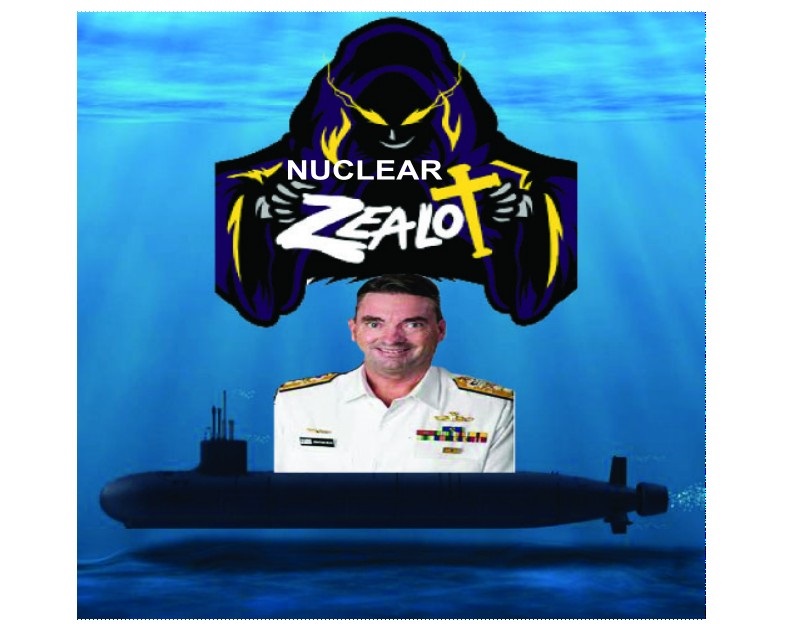
Omigawd! Nuclear zealot Jonathon Mead is to get his own little government department nuclear supergroup
While the exact contours, structure and mandate of the group are yet to take shape, the role of this new organisational arrangement bears examination. Driven by the complexities of nuclear technology, the group’s remit reaches outside conventional defence policy domains into areas such as education and industrial policy that are usually led by domestic policy agencies at the federal and state level.
Planning for Australia’s nuclear submarine ‘supergroup’ , 30 Mar 2023, |Hugh Piper, The Strategist,
“………. With the nuclear-powered submarines to be acquired under the AUKUS partnership, Australia has set itself perhaps the most ambitious public-procurement undertaking in its history. To match the scale of this venture, according to a report in The Australian, the submarine taskforce led by Vice Admiral Jonathan Mead will evolve and grow into a new ‘a stand-alone group inside Defence that will draw personnel from across the government’.
In public-service speak, a ‘group’ is usually the largest organisational unit in a federal government department, headed by a deputy-secretary-level public servant or a three-star military officer. That the submarine acquisition is being elevated to this level reflects the magnitude of the enterprise and the fact that it will become a permanent and dominant feature of the Australian defence organisation for decades to come.
Equally interesting, though, is the scope of this new group in Defence. The Australian described it as a multiagency group ‘responsible for all elements of the program, including safety, non-proliferation and regulatory measures, international engagement, education and training, industry development and project management’. Its head will have ‘a direct reporting line to Defence Minister Richard Marles’.
While the exact contours, structure and mandate of the group are yet to take shape, the role of this new organisational arrangement bears examination. Driven by the complexities of nuclear technology, the group’s remit reaches outside conventional defence policy domains into areas such as education and industrial policy that are usually led by domestic policy agencies at the federal and state level.
Defence will have to acquire new policy capabilities to tackle these issues—but also develop networks and institutional relationships with a much wider range of domestic stakeholders. Moreover, the government will need to decide the exact limits of Defence’s policy leadership. Education and industrial policy are, for instance, intrinsically linked to labour and innovation policy.
The reported scope of the group also includes policy domains and functions that the Department of Foreign Affairs and Trade would conventionally lead, namely international engagement and non-proliferation. For Defence instead to take leadership of these areas would mark a fundamental shift in the division of labour in Australian foreign policy.
………………………… There needs to be room for proper consideration of broader foreign policy equities within a structure that is unapologetically mission-focused on delivering defence capability. As the mixed reaction in the Indo-Pacific to AUKUS has demonstrated, Australia can’t assume an overall permissive environment for its strategic policy, so diplomacy is as vital to manifesting the submarines as building a nuclear industrial base. These risks are, however, manageable through effective governance.
…………..There’s also speculation that it could have its own budget line separate from the rest of Defence https://www.aspistrategist.org.au/planning-for-australias-nuclear-submarine-supergroup/
Diana Rickard Submission – Australia’s nuclear bans reflect public rejection of the nuclear industry, and support for clean renewables.
Submission No 74. against Environment and Other Legislation Amendment (Removing Nuclear
Energy Prohibitions) Bill 2022
Nuclear Power is not needed in Australia. Germany is decommissioning its last two nuclear reactors.
There is enough science and technology to provide reliable and sustainable renewable energy for
industrial and residential needs in Germany and in Australia, we have more than enough sunlight,
wind and water to provide clean and sustainable energy for our needs.
- Our legislative prohibitions reflect public and community concern over and rejection of
nuclear power and nuclear waste storage in Australia. - Australia does not need reactor meltdowns, fires and explosions as happened at
Chernobyl and the Fukushima Daiichi nuclear power site. We have inherited colonial
nuclear bomb testing sites and uranium processing sites that still need rehabilitating
costing billions of dollars and these weapon testing sites have caused sickness and
permanent disability to people caught up in their poisonis a disgrace that should not be
repeated. - There is still no permanent nuclear waste disposal facility operating anywhere in the
world for high-level nuclear waste generated by nuclear power reactors. - Uranium mined in Australia is used for failed nuclear reactors and weapons proliferation
overseas and the international safeguards system has not been funded anywhere near
what it would take to avoid or even monitor this. We should avoid further
contamination from dirty and dangerous nuclear power plants in Australia adding to this
problem. - Talk of AUKUS nuclear powered submarines and B52s carrying nuclear weapons while on
Australian soil makes me very uneasy that we could become a military target. The risk of
reactors becoming military targets (as has been the case with research reactors in the
Middle East on multiple occasions) remains a serious concern. - Many countries do not have clear and unambiguous rules governing nuclear power and
nuclear waste. This is despite the fact that inadequate regulation is widely accepted as a
main cause of the Fukushima disaster. In a country like Australia where a national motto
in the 1980s was ‘ Near enough is good enough’ followed by ‘Where the bloody hell are
you?’ hardly shows our commitment to clear, accountable and sustainable rules-based
governance on vital issues, does it? - If we remove prohibitions to nuclear power, we would then need significant reforms in
existing legislation not designed to deal with nuclear power. We would then need a
massive increase in government resources as well as recruiting an appropriately skilled
and capable workforce. - With resources concentrating on getting nuclear power right, essential resources to help
us tackle human-induced climate change, secure a national renewable energy policy and
deliver modern environmental protection legislation would be lost.
Australia is suffering massive infrastructure, livelihood and life loss due to climate change floods that
should be once in a hundred years but are happening regularly. Our environment is suffering
through massive landclearing by other than small, family farmers or miners.
We cannot trust our future to greedy people and foreign corporations with no care except to make
short-term profit even when it destroys our national interest and iconic environment.
Nuclear power plants are unsustainable, corporately owned and dirty. Renewable energy can
operate independently of large, asset-greedy business interest and can be installed on homes and in
small paddocks. Renewable energy belongs to the people and does not harm the environment as
surely as nuclear energy does. https://www.aph.gov.au/Parliamentary_Business/Committees/Senate/Environment_and_Communications/Nuclearprohibitions/Submission
1 This month

of the week – Australians for War Powers Reform (AWPR)
To see nuclear-related stories in greater depth and intensity
 Antinuclear