|
Nuclear power in Australia not realistic for at least a decade, Ziggy Switkowski says
Expert who led 2006 review says ban on nuclear should be lifted, but much more overseas evidence is needed on small modular reactors, Guardian, Adam Morton Environment editor@adamlmorton, 29 Aug 2019 It will be about a decade before it is clear whether small nuclear reactors are suitable for Australia and would take about 15 years to bring a plant online if a decision was made to build one, one of the country’s leading experts has said.
But Ziggy Switkowski, who headed a 2006 review of nuclear power for the Howard government, said the technology had no chance of being introduced unless Australia had a coherent energy policy.
“Can you graft a long-term commitment to nuclear energy on to a currently unconfirmed national energy policy? The answer to this is no, in my opinion,” he told the first hearing of a parliamentary inquiry into what would be necessary to develop a nuclear power industry
The inquiry was called by the energy minister, Angus Taylor, following calls from backbench MPs for nuclear to be reconsidered. Taylor said there were no plans to drop the existing moratorium on nuclear energy but it was government’s role to plan for the decades ahead.
Switkowski said though nuclear power had “no social licence at this time” the legislative ban against it should “absolutely” be abolished. “We really should not be making decisions in 2019 based on legislation passed in 1999 reflecting the views of 1979,” he said.
He reiterated his belief that the window for large-scale nuclear plants had closed, a view shared by Taylor, but said he believed there would be an opportunity for small modular reactors, known as SMRs, of between 60 and about 200 megawatts.
He said they were most likely to be successful in regional communities with about 100,000 people or in powering mining or desalination sites. “But we won’t know until the SMRS are deployed in quantity [overseas],” Switkowski said. “That’s unlikely to happen for another 10 or so years.”
He listed the positives and concerns associated with developing a nuclear industry. The disadvantages included that, given historic disasters at Three Mile Island, Chernobyl and Fukushima, “the possibility of catastrophic failure in a nuclear system is non-negligible”.
He said conventional nuclear reactors were “now very expensive”, partly due to safety requirements in the wake of the Fukushima disaster. Nuclear powerwas the most capital-intensive energy technology and took the longest to recoup investment. Unlike with solar and wind energy, there did not appear to be economies of scale – the cost of nuclear electricity grew as technology advanced. Switkowski said as far he was aware, no coherent business case to finance an Australian industry had been presented. Any business case would require significant government support.
“Given that Australia would begin from a standing start, the first reactor of any commercial scale would take about 15 years to reach normal operation and generate revenues,” Switkowski said.
Based on experience overseas, he said it was more likely that 15 years would be an underestimate than an overestimate of how long it would take. He said the commercial and political risks of developing an industry over what could be more than five political cycles were substantial…….
The inquiry by the standing committee on the environment and energy is due to report back later this year. https://www.theguardian.com/environment/2019/aug/29/nuclear-power-australia-not-realistic-decade-ziggy-switkowski
|
|
August 31, 2019
Posted by Christina Macpherson |
AUSTRALIA - NATIONAL, politics |
Leave a comment

The push for an Aussie bomb It took former PM John Gorton almost three decades to finally come clean on his ambitions for Australia to have a nuclear bomb. THE AUSTRALIAN, By TOM GILLING 30 Aug 19,
In December 9, 1966, the Australian Government signed a public agreement with the US to build what both countries described as a “Joint Defence Space Research Facility” at Pine Gap, just outside Alice Springs. The carefully misleading agreement expressed the two countries’ mutual desire “to co-operate further in effective defence and for the preservation of peace and security”.
Officially, Pine Gap was a collaboration between the Australian Department of Defence and the Pentagon’s Defence Advanced Research Projects Agency, but the latter was a red herring meant to conceal the real power at Pine Gap: the Central Intelligence Agency….the truth was that the Joint Defence Space Research Facility was joint in name only and its purpose was not (and never would be) “research”. It was a spy station designed to collect signals from US surveillance satellites in geosynchronous orbit over the equator. ……
The building of an experimental reactor at Lucas Heights in Sydney’s south was supposed to be the first step in a nuclear program that within a decade would see the development of full-scale nuclear power reactors. ……
During the 1950s Australian defence chiefs lobbied vigorously for an Australian bomb. When it became clear that the prime minister, Robert Menzies, had reservations, they went behind his back. Menzies did agree, however, to let Britain test its nuclear weapons in Australia — a decision, according to historian Jacques Hymans, taken “almost single-handedly… without consulting his Cabinet and without requesting any quid pro quo, not even access to technical data necessary for the Australian government to assess the effects of the tests on humans and the environment”……….
Gorton’s political reservations about the non-proliferation treaty masked a deeper fear: that signing the treaty might cause Australia’s nascent atomic energy industry to be “frozen in a primitive state”. Gorton and the head of Australia’s Atomic Energy Commission, Philip Baxter, were both committed to pursuing the development of an Australian bomb. Scientists at the AEC worked with government officials to draw up cost and time estimates for atomic and hydrogen bomb programs. According to the historian Hymans, they outlined two possible programs: a power reactor program capable of producing enough weapons- grade plutonium for 30 fission weapons (A-bombs) per year; and a uranium enrichment program capable of producing enough uranium-235 for at least 10 thermonuclear weapons (H-bombs) per year. The A-bomb plan was costed at what was considered to be an “affordable” $144 million and was thought to be feasible in no more than seven to 10 years. The H-bomb plan was costed at $184 million over a similar period.
Aware of opposition to any talk of an “Aussie bomb”, Gorton carefully played down the military aspect and argued instead for the economic benefits of a nuclear power program. ………
a US mission did visit Canberra at the end of April 1968. Officials from the AEC had impressed the US visitors with “the confidence of their ability to manufacture a nuclear weapon and desire to be in a position to do so on very short notice”.
The Australian officials, they said, had “studied the draft NPT [non-proliferation treaty] most thoroughly… the political rationalisation of these officials was that Australia needed to be in a position to manufacture nuclear weapons rapidly if India and Japan were to go nuclear… the Australian officials indicated they could not even contemplate signing the NPT if it were not for an interpretation which would enable the deployment of nuclear weapons belonging to an ally on Australian soil.”
Eighteen months after Rusk’s fractious visit to Canberra, Gorton called a general election. He declared his commitment to a nuclear-powered (if not a nuclear-armed) Australia, announcing that “the time for this nation to enter the atomic age has now arrived” and laying out his scheme for a 500-megawatt nuclear power plant to be built at Jervis Bay, on NSW’s south coast. While the defence benefits of such a reactor were unspoken, there was no mistaking the military potential of the plutonium it would be producing.
The Jervis Bay reactor never got off the drawing board, although planning reached an advanced stage. Detailed specifications were put out to tender and there was broad agreement over a British bid to build a heavy-water reactor. A Cabinet submission was in the pipeline when Gorton lost the confidence of the party room and was replaced by William McMahon, a nuclear sceptic who moved quickly to defer the project.
It would be another 28 years before Gorton finally came clean on the link between the reactor and his ambition for Australia to have nuclear weapons. . In 1999 he told a Sydney newspaper that “we were interested in this thing because it could provide electricity to everybody and… if you decided later on, it could make an atomic bomb”. Gorton did not identify who he meant by “we” (although Philip Baxter was almost certainly among them) but Gorton and those who shared his nuclear ambitions were unable to win over the doubters in his own government.
Australia signed the non-proliferation treaty in 1970 but even as it did so it was clear that Gorton had no intention of ratifying the treaty. Australia would not ratify it until 1973, and then only after McMahon’s Coalition government had lost power to Gough Whitlam’s Labor Party. As well as ratifying the treaty, the Whitlam government cancelled the Jervis Bay project that had been in limbo since McMahon became prime minister. And with that, Whitlam effectively ended Australia’s quixotic bid to become a nuclear power.
Australia never got its own bomb, although as late as 1984 the foreign minister, Bill Hayden, could still speak about Australian nuclear research providing the country with the potential for nuclear weapons. The Morrison Government is unlikely to let the nuclear genie out of the bottle, with a spokesperson from the Department of Defence telling The Weekend Australian Magazine that “Australia stands by its Non-Proliferation Treaty pledge, as a non-nuclear weapon state, not to acquire or develop nuclear weapons”. ….. https://www.theaustralian.com.au/weekend-australian-magazine/gorton-and-the-bomb-australias-nuclear-ambitions/news-story/00787e322a41d2ff37a146c86a739f02
August 31, 2019
Posted by Christina Macpherson |
AUSTRALIA - NATIONAL, history, politics, secrets and lies, weapons and war |
Leave a comment
 Nuclear inquiry told “firmed renewables” cheapest and best option for future https://reneweconomy.com.au/nuclear-inquiry-told-firmed-renewables-cheapest-and-best-option-for-future-58109/ , Sophie Vorrath 29 August 2019 A mix of distributed renewable energy generation and firming technologies including battery storage and pumped hydro remains the best path forward for Australia’s future grid, experts have told the federal government’s inquiry into nuclear power.A panel including representatives from Australia’s energy market regulator (AER), rule maker (AEMC) and operator (AEMO) faced questions on Thursday from the House of Representatives Standing Committee on the prerequisites for nuclear energy in Australia. Established by the federal Coalition and chaired by Queensland LNP MP Ted O’Brien, the Committee aims – according to O’Brien – to answer the three main questions of whether nuclear is “feasible, suitable and palatable” in the Australian context.
But in a hearing in Sydney on Thursday morning, it heard that nuclear power just doesn’t stack up against firmed renewables – already at price parity with new-build coal and gas and “well and truly” on track to becoming the lowest cost generation form for the National Electricity Market.
Nuclear power, meanwhile, was around four times more expensive – $16,000/kW for the still mainly conceptual Small Modular Reactor technology – and not fit for purpose on a rapidly changing Australian grid.“Unfirmed renewables are effectively the cheapest form of energy production today,” said Alex Wonhas, the chief system design and engineering officer at the Australian Energy Market Operator.
“If we look at firmed renewables, that current cost is roughly comparable to new-build gas and new-build coal, but given the learning rate, this will well and truly become the lowest cost generation form for the NEM.
“There is a certain amount of energy that we expect renewables to deliver,” Wonhas added. “But we will need dispatchable resources, and generators that can respond quickly.
“I don’t think we want many more plants that have a very stable output profile. We’re looking for plant that can increase and decrease rapidly and respond to market.”Pushed on the challenges to the grid of “intermittent renewables” by O’Brien, Wonhas was upbeat in his outlook. “There’s actually a whole suite of different technologies that we can draw upon, in the case of firmed renewables,” he told the Committee.“Gas is an effective firming option, but there’s a whole range of other technologies out there – such as solar thermal, that are dispatchable.” He also added pumped hydro and battery storage.
“We are quite fortunate that we have many different technology options available that we can use to build Australia’s future generation system.”
And nuclear, it is becoming blindingly clear, is not one of them.
Even Ziggy Switkowski, who headed up the Coalition’s last big excursion into nuclear power, was unequivocal on that.
“The window (in Australia) is now closed for gigawatt-scale nuclear,” he told the Committee on Thursday, noting that current large-scale versions of the technology had failed to find anywhere near the same economies of scale that had been enjoyed by solar and wind.
“Nuclear power has got more expensive, rather than less expensive,” he added, while also noting that the time required to develop new nuclear projects could cover at least five political cycles. There is no business case, and no investor appetite.”
Switkowski told the Committee that the only hope for nuclear in Australia hinged on the future of Small Modular Reactors – which, as Jim Green explains here, are currently “non-existent, overhyped, and obscenely expensive.”
Current costs for SMR generation, as modelled by the AEMO and CSIRO, are estimated at $16,000/kW, which as Committee member and Labor MP Josh Wilson pointed out, is more expensive than large-scale nuclear by at least 50 per cent, and four or five times higher than capital cost of new solar wind. And while other technologies are modelled to see a decrease in their cost over time – solar thermal and storage, for example, at $7,000/kW is expected to fall to around half that in 2050 – SMR nuclear costs stay flat in AEMO/CSIRO modelling out to 2050.
August 29, 2019
Posted by Christina Macpherson |
AUSTRALIA - NATIONAL, politics |
Leave a comment
 Dave Sweeney, 27 Aug 19, It was a big weekend of Labor politics with state conferences in both WA and Queensland.
In WA the following motions were adopted on Sunday 25/8:
WA Labor is committed to implementing a best process and practise approach to uranium assessment and regulation. We urge federal Labor – and the federal government – to reflect this on a national level and retain the long standing and prudent nuclear action trigger for uranium mining and the clear prohibition on nuclear power in the federal EPBC Act (1999) during the current EPBC review process.
WA Labor commits to rigorous scrutiny of any further approvals or applications by any of the four WA uranium mine proposals approved under the previous government. WA Labor will apply the highest regulatory standards to any project and will work with affected communities and key stakeholders including trade unions and workers in order to reduce risks.
WA Labor welcomes the resolution passed unanimously by the 2018 National Labor Conference committing Labor in government to sign and ratify the United Nations Treaty on the Prohibition of Nuclear Weapons and calls on the Australian Government to sign and ratify the Treaty as an urgent humanitarian imperative.
Queensland Labor reaffirmed their clear policy opposition to uranium mining and also adopted a wider nuclear free position on Sunday:
In order to protect human health and Queensland’s unique natural values, Queensland Labor affirms its commitment to ensuring that Queensland remains nuclear free.
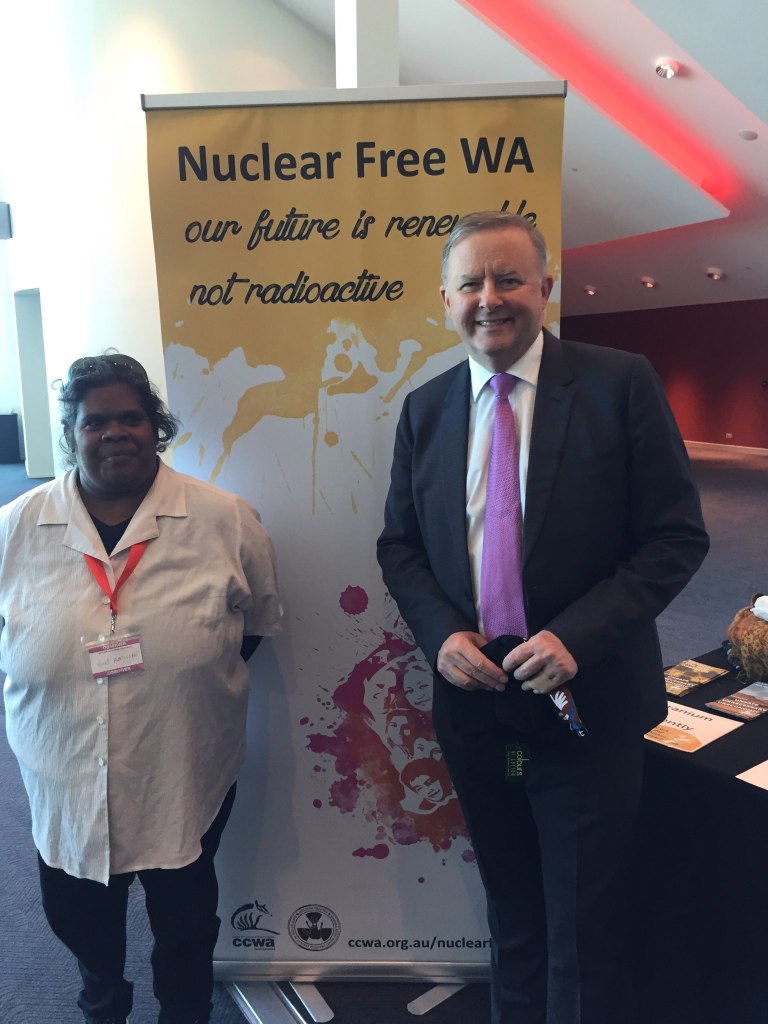
There was a good presence and profile (WA) and support at both events – see attached pic from WA with Leader of the Opposition Albanese and Yeelirrie defender Vicky Abdullah – a massive shout out to KA, Vicki, Mia, along with Piers and the wider crew from CCWA. The WA nuke free team did a superb job of putting the issue strongly on the radar at Conference. Thanks also to our comrades and champions in Labor and the progressive trade unions.
August 27, 2019
Posted by Christina Macpherson |
politics, Western Australia |
Leave a comment
|
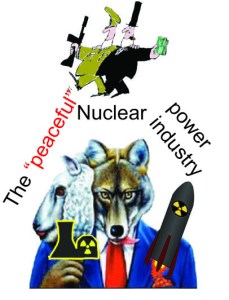 Is the push for nuclear power a covertpush for nuclear weapons? https://reneweconomy.com.au/is-the-push-for-nuclear-power-a-covert-push-for-nuclear-weapons-95422/ Mark Diesendorf & Richard Broinowski, 26 August 2019 Is the push for nuclear power a covertpush for nuclear weapons? https://reneweconomy.com.au/is-the-push-for-nuclear-power-a-covert-push-for-nuclear-weapons-95422/ Mark Diesendorf & Richard Broinowski, 26 August 2019 
A recent push for nuclear power in Australia has been promoted by the usual public advocates and amplified by the Murdoch press.The arguments are predictable both in their optimism and inaccuracy: nuclear power reactors are claimed to be safe and cheaper than electricity generation from wind and sun; new generation mini-reactors are claimed to be even cheaper and safer and can be adapted to power a factory or a town.
Australia has uranium, and can easily acquire the technology.
Advocates for nuclear power are calling for ‘informed’ public debate to quell public fear about nuclear power. In reality, informed public debate has been going on for some time. The latest iteration was the South Australian Royal Commission of 2015-16, which found that “nuclear power would not be commercially viable to supply baseload electricity to the South Australian subregion of the NEM from 2030 (being the earliest date for its possible introduction).”
But advocates are not deterred, claiming, despite the evidence to the contrary, that nuclear power is cheaper and cleaner than other forms of electricity generation.
The fact is that electricity from new wind and solar farms is much cheaper than from nuclear power stations. According to the multinational investment consultancy, Lazard,the costs of energy from on-shore wind farms in the USA are in the range 29-56 USD per megawatt-hour (US$/MWh), from solar farms 36-46 US$/MWh and from conventional nuclear 112-189 US$/MWh.
In Australia, the CSIRO and the Australian Energy Market Operator have jointly found that the cost of a wind or solar farm in 2020 will be approximately half of that from new coal-fired power stations, and about one-fifth of that from nuclear power in the form of the non-commercial small modular reactors currently being promoted by nuclear enthusiasts.
Adding sufficient storage to solar and wind to provide equivalent dependability of supply to base-load coal and nuclear will lift the cost of wind and solar in 2020 to equivalence with new coal, but nuclear is still at least 2.5 times the cost of wind and solar.
In 2019 the German Institute for Economic Research found that of 674 nuclear reactors built for electricity generation since 1951, all suffered significant financial losses. The (weighted) average net present value was around minus 4.8 billion Euros. The Institute concluded that “nuclear energy has always been unprofitable in the private economy”. So why were 674 reactors built around the world, and why do nuclear advocates want more?
One motivation has been to facilitate the covert development of nuclear weapons. It is well documented (e.g. here and here) that India, North Korea, Pakistan and South Africa all used civil nuclear power to assist their respective covert developments of nuclear weapons, while the UKused its first generation nuclear power stations to supplement weapons-grade plutonium it produced in military reactors.
Other countries began, then discontinued, nuclear weapons programs based on civil nuclear technology: Argentina, Australia, Brazil, Libya, South Korea, Taiwan (twice) and possibly Algeria. Iran is currently engaged in that process.
Today, the UK government is offering to pay the developers of the proposed Hinkley C nuclear power station approximately double the wholesale price of electricity, increasing with inflation, for 35 years.
Andy Stirling and Phil Johnstone from the Science Policy Research Unit at University of Sussex speculate that this huge subsidy is motivated by the wish to keep the nuclear industrial sector technically capable of servicing submarine reactors that carry UK’s Trident nuclear missile delivery system.
There are two main pathways to nuclear explosives –either by enriching uranium in the isotope U235 or extracting plutonium Pu239 from spent reactor fuel.At various times Australia has flirted with both. In the 1960s, under the Gorton government, Australia started to build a nuclear power station at Jervis Bay with the purpose of producing electricity for the grid and Pu239 for nuclear weapons.
The program was abandoned by the Liberal Party when it feared its ambition to acquire nuclear weapons would become known and result in an electoral liability. Another attempt, secretly to enrich uranium, was made between 1965 and the early 1980s by the then Australian Atomic Energy Commission (now the Australian Nuclear Science & Technology Organisation –ANSTO).
Australia ratified the Treaty on the Non-Proliferation of Nuclear Weapons (NPT) in 1973 and the Comprehensive Nuclear Test Ban Treaty in 1998, but in the early 2000s pressure was again exerted on the government by elements in the foreign policy and security establishment to revive a nuclear weapons program.
In a 2007 article “Creative and uncomfortable policy choices ahead”, Martine Letts, then Deputy Director of the Lowy Institute, concluded that “a thorough nuclear policy review should also consider which strategic circumstances might lead to Australia’s revisiting the nuclear weapons option”.
The same year, Robyn Lim, a former Acting Head of Intelligence in the Office of National Assessment wrote that “ [we] live in an uncertain world, and must avoid having our uranium enrichment options closed off”.
In 2009, the Australian Strategic Policy Institute joined the discussion, with a report by Rod Lyon, director of its Strategy and International Program. He was quoted on the ABC and in the Canberra Times(15/12/2009) as saying ‘nuclear hedging’– maintaining or appearing to maintain capabilities to acquire nuclear weapons in a relatively short time – would be prudent, a capability available within 10 or 15 years.
More recent advocates have included Hugh White, who in a 2019 article in Quarterly Essay, reopened discussion on whether Australia should have its own nuclear deterrent. His concern was stimulated by indications that the USA was developing a more isolationist foreign policy. Defence strategist Paul Dibb has recommended that ‘Australia should at least be looking at options and lead times’.
Peter Layton, a retired RAAF Group Captain who taught at the US National Defense University, expressed concern in a Lowy Institute article about the costs of nuclear weapons and their delivery systems and recommended that Australia should seek to acquire US or British nuclear weapons.
Stephen Fruehling, an academic in the Strategic and Defence Studies Centre at ANU, considered the possibility of developing nuclear weapons to create a defensive moat around the country to deter invasion by sea. He favoured the uranium enrichment pathway to the nuclear explosive.
Meanwhile, supporters of nuclear power for Australia are becoming more vocal. They include the Federal Minister for Energy & Emissions Reduction, Angus Taylor, the Institute of Public Affairs, the Business Council of Australia and several members of the Coalition Government – all supported by the Murdoch media (especially The Australian). None has yet publicly advocated the development of nuclear weapons.
Building a nuclear power station used to be an effective cover for a nuclear weapons program. Today, however, with renewable electricity from wind and solar PV being so much cheaper than nuclear electricity, the credibility of nuclear power as an alternative to fossil fuels has become very low.
Furthermore, a global over-capacity in uranium enrichment since nuclear electricity generation peaked in 2006 makes uranium enrichment for an Australian nuclear program even less credible. In the words of Rod Lyon, an Australian enrichment capability would also be a strategic signal. This is also the view of John Carlson, former Director-General of the Australian Safeguards and Non-Proliferation Office.
If Australia follows the nuclear path, it provides our neighbours – especially Indonesia, Singapore and Malaysia – with an incentive to follow. The proliferation of nuclear power in South East Asia
would signal the start of a regional nuclear arms race, making the neighbourhood less safe than ever.
Dr Mark Diesendorf, a renewable energy researcher, was trained as a physicist and is currently Honorary Associate Professor at UNSW Sydney.
Richard Broinowski is a former Australian diplomat and immediate past president of the New South Wales branch of the Australian Institute of International Affairs. He is the author of ‘Fact or Fission? The truth about Australia’s nuclear ambitions’,and ‘Fallout from Fukushima’.
|
|
August 26, 2019
Posted by Christina Macpherson |
AUSTRALIA - NATIONAL, politics, weapons and war |
1 Comment
 Nuclear energy policy emerges as Queensland election issue, SMH, By Tony Moore, August 25, 2019 Nuclear energy has emerged as a 2020 Queensland election issue after Labor confirmed its anti-nuclear stand amid a new investigation into nuclear power led by three Queensland federal LNP MPs.Labor’s 2019 state conference on Sunday cemented the party’s opposition to the energy source after three high-profile federal Liberal National Party MPs recently triggered the first federal government inquiry into nuclear power in a decade.
Queensland Labor immediately questioned the LNP’s nuclear power policy before Opposition Leader Deb Frecklington on Sunday afternoon issued a single line statement rejecting nuclear power.
“The state LNP does not support nuclear power in Queensland,” Ms Frecklington said.
Three high-profile Queensland federal MPs – Senator James McGrath, Bundaberg-based MP Keith Pitt and Sunshine Coast MP Ted O’Brien – quietly re-opened a federal government inquiry into nuclear power, which began quietly on August 7.
Mr O’Brien is chairing the House of Representatives Standing Committee investigation into nuclear power, which will receive submissions until September 16.
He said nuclear power had evolved over the past 20 years and it was time to look again.
“The committee will look at the necessary circumstances and requirements for any future government’s consideration of nuclear energy generation, including using small modular reactor technologies,” Mr O’Brien said.
“It will consider a range of matters including waste management, health and safety, environmental impacts, energy affordability and reliability, economic feasibility and workforce capability, security implications, community engagement and national consensus.”
The Labor conference several times highlighted clear policy differences between Labor and the LNP in the 12-month run down to the 2020 Queensland election.
On Sunday ALP delegate Ali King, from the United Voice union, received unanimous support for the party to reconfirm its opposition to nuclear power in Queensland.
Since the (May) federal election we have seen an emboldened LNP federal government flirting with every policy fantasy of the hard right,” Ms King told the conference.
“The most disturbing of these is their insistent push towards imposing nuclear power on a reluctant Australia.”
Ms King claimed nuclear power was “now a central plank of the LNP’s hard-right policy platform”, but questioned why it was being explored……
August 26, 2019
Posted by Christina Macpherson |
politics, Queensland |
Leave a comment
 First views to federal inquiry give tick to nuclear power, The pro-nuclear power camp is slightly ahead in the first batch of views presented to the federal inquiry. Nuclear backers lead charge in new probe Chris Russell, The Advertiser, August 23, 2019
Nuclear power can operate safely and Australia should pursue the technology, a slight majority of initial submissions to the Federal Government’s inquiry into the issue recommend.
However, nearly as many submissions urge against nuclear power, saying it is dangerous and uneconomic.
“There is no business case for nuclear in Australia,” University of Adelaide Professor Derek Abbott argues.
“From an engineering viewpoint, the modern grid in fact needs energy sources that can rapidly respond to changing demand.
“(It) … would be a poor investment in a technology that will be largely redundant in the modern grid.”
Fellow South Australian Denys Smith, a retired analytical chemist, says that having plentiful power would support desalinating water, a hydrogen industry, mineral processing and manufacturing.
“Involve the public in the nuclear power debate as SA did during the royal commission in 2016,” he suggests.
“Information and facts change attitudes.”
The two SA submissions are among the first 17 to be published by the Standing Committee on the Environment and Energy, which is holding an inquiry into The Prerequisites for Nuclear Energy in Australia.
Nine submissions were in favour and seven against, with one recommending a focus on thorium rather than uranium-fuelled reactors.
The inquiry, which was established this month on instruction from federal Energy Minister Angus Taylor is open for submissions until September 16.
It will then hold hearings and request further evidence.
In his submission, Notre Dame University Professor Keith Thompson tells the inquiry nuclear power could assist Australia to fulfil an “altruistic obligation to the world to develop its agricultural potential”.
In contrast, Richard Finlay-Jones, from EcoEnviro consultants, says nuclear will not solve price and reliability issues and that “Australia has such rich renewable energy resources that it has the potential to generate power for all of southeast Asia”.
The first submissions are from individuals, with organisations likely to lodge comprehensive documents nearer to the closing date.
The inquiry must take regard of SA’s 2016 Royal Commission into the Nuclear Fuel Cycle – which found generation was not commercially viable for SA alone but should be considered nationally – and the 2006 Switkowski review.
Mr Taylor has asked the committee to report by the end of the year.
August 26, 2019
Posted by Christina Macpherson |
AUSTRALIA - NATIONAL, politics |
Leave a comment
Labor urges more action to protect the Amazon, SBS, Labor is urging the Morrison government to do all it can to encourage Brazil to protect the Amazon as international leaders discuss the issue at the G7 summit. In a joint statement, Labor’s foreign affairs spokeswoman Penny Wong and climate change spokesman Mark Butler said the rainforest fires are increasingly occurring at an alarming rate.
“The Amazon has often been described as the world’s lungs. Its protection matters to the whole international community,” they said.
“We call on the Morrison government to do everything they can to encourage Brazil to respond to this rapidly worsening global disaster.”
They said failure to defend against or prevent these fires stands to derail any international efforts against climate change…….https://www.sbs.com.au/news/labor-urges-more-action-to-protect-the-amazon
August 26, 2019
Posted by Christina Macpherson |
AUSTRALIA - NATIONAL, climate change - global warming, politics |
Leave a comment
Submission 11 Keith Thompson (Strange and wonderful arguments) Minimises the importance of Chernobyl and Fukushima disasters.
(Get nuclear power for Australia) by creating wealthy and attractive research prizes to completely eradicate these risks. …
For example, if the Australian federal government created an all comers $10m or $100m prize that invented ways to use all existing nuclear power production waste so that there was none left, I believe that universities and private engineering businesses all over the world would be motivated to engage with the problem. Smaller subsidiary prizes for dealing with parts of that nuclear waste could be crafted to be similarly motivating. I expect that with such incentives, the waste problem could be solved within ten years but would certainly be resolved within fifty years. …
The destructive effects of nuclear power. In one sense this criticism of nuclear power is the response of an ostrich to the unknown or danger. If Newton had stopped pondering gravity because it might lead to the discovery of powered flight and the loss of life in aircraft accidents, or the possibility of anti-gravity and power more destructive than that which we are now considering, we would never have learned how to fly or otherwise stood on the shoulders of his discovery. …
August 25, 2019
Posted by Christina Macpherson |
AUSTRALIA - NATIONAL, politics |
Leave a comment
SUBMISSIONS SO FAR PUBLISHED (I’ll be analysing these as they come in, and also publishing this on the page more https://antinuclear.net/submissions-to-2019-inquiries/
1. FEDERAL. Inquiry into the prerequisites for nuclear energy in Australia (Submissions close 16 September 2019
Don’t let’s forget – some submissions are “confidential” – (quite likely a few from nuclear companies )
Pro nuclear
Submission 1 Gavin Brown
Submission 8 Ian Fischer
Submission 10 Paul Myers
Submission 11 Keith Thompson
Submission 12 Barry Murphy
Submission 14 Terry Ryan
Submission 15 Denys J Smith
Submission 17 Terje Petersen (same as his submission to NSW Inquiry)
Submission 18 Allen Tripp
Anti nuclear
Submission 2 Jonathan Peter
Submission 3 Glenda Maxwell
Submission 4 Paul Savi
Submission 6 EcoEnviro Pty Ltd – Richard Finlay-Jones
Submission 7 Derek Abbott
Submission 9 David Gates
August 24, 2019
Posted by Christina Macpherson |
Submissions Federal 19 |
Leave a comment
|
All the evidence suggests that this isn’t serious exercise. Rather it’s something intended to appease the National Party or troll the Greens, depending on where you are coming from.
Still, it’s a Parliamentary inquiry on an important issue, so I decided to take it at face value and make a submission. My central recommendation is a combined policy
- Introduce a carbon price, rising gradually to $50/tonne of CO2
- Repeal legislative bans on nuclear power
I’m pretty confident this package will have close to zero supporters in Parliament, but it ought to appeal to two groups.
First, anyone who seriously believes that nuclear power should be adopted as a response to climate change. That’s a small, but non-empty set, since most nuclear fans are climate deniers. But for those people, it should be obvious that nuclear power is never going to happen except with a carbon price high enough to wipe out coal, and compete with gas.
Second, renewable supporters who want action now, and are prepared to give nuclear a chance in 15-20 years time if it’s needed. The carbon price would push a rapid transition to solar PV, wind and storage, and would be neutral as between these technologies and nuclear. On present indications, that would be sufficient to decarbonize the electricity supply at low cost. But if a fixed-supply technology turned out to be absolutely necessary, one or two nuclear plants might possibly happen.
I looked over the other submissions. The anti-nuclear ones raise the obvious points about waste, accident risk and proliferation.
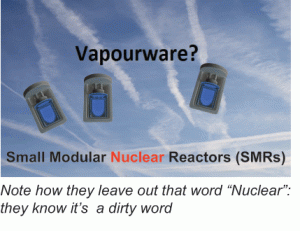 What’s striking about the pro-nuclear submissions is the absence of any mention of existing technologies or the main alternative, small modular reactors, on which I spent a fair bit of time.Rather, the nuclear fans are talking about vaporware such as thorium, Gen IV and even Gen V, described by Wikipedia as ‘ reactors that are purely theoretical and are therefore not yet considered feasible in the short term, resulting in limited R&Dfunding. ‘ What’s striking about the pro-nuclear submissions is the absence of any mention of existing technologies or the main alternative, small modular reactors, on which I spent a fair bit of time.Rather, the nuclear fans are talking about vaporware such as thorium, Gen IV and even Gen V, described by Wikipedia as ‘ reactors that are purely theoretical and are therefore not yet considered feasible in the short term, resulting in limited R&Dfunding. ‘
|
|
August 24, 2019
Posted by Christina Macpherson |
AUSTRALIA - NATIONAL, politics |
Leave a comment
Deputy PM apologises for telling Pacific it will survive climate change as workers ‘pick our fruit’ ABC , By political reporter Matthew Doran 23 Aug 19, Deputy Prime Minister Michael McCormack has apologised for comments about Pacific islanders being able to survive the ravages of climate change by taking fruit-picking jobs in Australia.
Key points:
- Pacific countries want Australia to do more about climate change as they face rising sea levels
- Nationals leader Michael McCormack said last week they would survive because they “pick our fruit”
- He has has offered an apology for the comment “if any insult was taken”
Mr McCormack made the comments last Friday as he sought to dismiss criticism levelled at Prime Minister Scott Morrison following the Pacific Islands Forum (PIF), at which leaders claimed Australia was ignoring the threat climate change posed to the survival of vulnerable low-lying island nations.
[I] get a little bit annoyed when we have people in those sorts of countries pointing the finger at Australia and say we should be shutting down all our resources sector so that they will continue to survive,” he said.
“They will continue to survive, there’s no question they will continue to survive, and they will continue to survive with large aid assistance from Australia.
“They will continue to survive because many of their workers come here and pick our fruit.”
On Thursday he apologised…….
‘Appropriate from a drunk in a bar, not from a leader’
The PIF meeting in Tuvalu saw Mr Morrison pressure fellow leaders to water down the PIF’s final declaration, removing references to cutting carbon emissions by phasing out coal.
Former president of Kiribati Anote Tong said he could not understand how Mr McCormack thought it was a smart comment to make.
“If you’re drunk, and in a bar, it would be an appropriate place and time to make the comment. But if you’re speaking as a leader, really it is not appropriate,” he said.
Tuvalu Prime Minister Enele Sopoaga, who hosted the Pacific Islands Forum, said the comments made Pacific Islanders sound like “paupers” who were begging for Australian support. https://www.abc.net.au/news/2019-08-22/mccormack-apology-pick-our-fruit/11438312
August 24, 2019
Posted by Christina Macpherson |
AUSTRALIA - NATIONAL, climate change - global warming, politics |
Leave a comment
 Well – I am not able to read any submissions to FEDERAL. Inquiry into the prerequisites for nuclear energy in Australia . But I have read all the 11 submissions so far published to New South Wales Inquiry into Uranium Mining and Nuclear Facilities (Prohibitions) Repeal Bill 2019. https://www.parliament.nsw.gov.au/committees/inquiries/Pages/inquiry-details.aspx?pk=2525&fbclid=IwAR2JjKI28uB4TZIJ38uZRlnQTmCQ3e7QyXk0 . They mostly pretty much read as if they were about setting up nuclear power in Austra ply using the same story to send to the Federal Inquiry. So there’s a hint – a way to save time?
Another hint – some writers are using some or all of their own previous submissions to the 2016 South Australian Nuclear Fuel Cycle Royal Commission.
In the next days and weeks Antinuclear. net will analyse submissions, as they appear on government websites.
August 22, 2019
Posted by Christina Macpherson |
AUSTRALIA - NATIONAL, politics |
Leave a comment
 It’s hard to grasp it all, with 4 nuclear Parliamentary submissions going on at the same time, and with short deadlines.
I am attempting to make sense of it all, starting with the Federal one FEDERAL. Inquiry into the prerequisites for nuclear energy in Australia (Submissions close 16 September 2019 https://www.aph.gov.au/Parliamentary_Business/Committees/House/Environment_and_Energy/Nuclearenergy?fbclid=IwAR0Sw4LB2qdcxSI6U6l67lI7Mwz9IEWw7_0RIq3mtN-nfpkfBn4z2VkQGog
A submission can be sent in hard copy by post, or online. It’s quite a performance to send a submission online, but well worth doing. One can refer to any or all of the Terms of Reference.
a. waste management, transport and storage,
b. health and safety,
c. environmental impacts,
d. energy affordability and reliability,
e. economic feasibility,
f. community engagement,
g. workforce capability,
h. security implications,
i. national consensus, and
j. any other relevant matter
Best to write your own submission, but there is also the option of using Friends of the Earth’s pro forma submission.
The Committee of Inquiry may publish submissions, but people (and nuclear companies) can ask for their submissions to be confidential.
August 22, 2019
Posted by Christina Macpherson |
AUSTRALIA - NATIONAL, politics |
Leave a comment

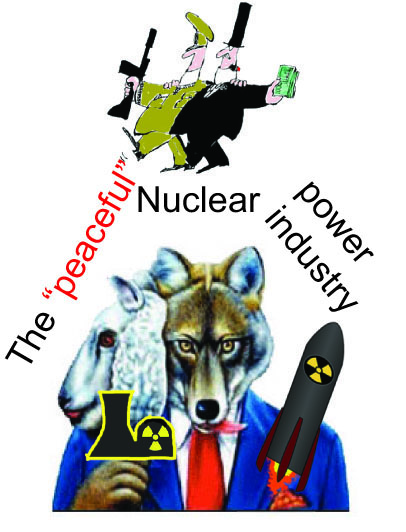

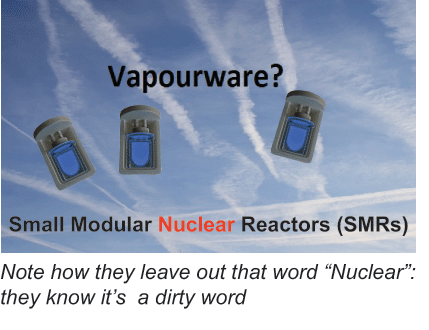 What’s striking about the pro-nuclear submissions is the absence of any mention of existing technologies or the main alternative, small modular reactors, on which I spent a fair bit of time.Rather, the nuclear fans are talking about vaporware such as thorium, Gen IV and even Gen V, described by Wikipedia as ‘ reactors that are purely theoretical and are therefore not yet considered feasible in the short term, resulting in limited R&Dfunding. ‘

 Antinuclear