South Australian Parliament Bill to protect whistleblowers
 SA parliament to debate whistleblower laws https://www.news.com.au/national/breaking-news/sa-parliament-to-debate-whistleblower-laws/news-story/8f7d5ba0d9a0fba3619d027096423c6c
A law shielding South Australian journalists from liability for refusing to reveal their sources has passed state parliament’s lower house.
Laws to strengthen protection of whistleblowers have passed South Australia’s lower house of parliament.
The Liberal government on Wednesday passed legislation to shield journalists from criminal or civil liability if they do not disclose the identity of their sources when the information is in the public interest.
The proposed legislation would make the default rule that journalists cannot be compelled to answer a question or produce a document that may disclose the identity of an informant.
No clear meaning of “broad community support” – the fatal flaw in Australian government’s push to impose a nuclear waste dump
 Brian Cant Elected member District Council of Kimba, Submission RE: SITE SELECTION PROCESS FOR A NATIONAL RADIOCTIVE WASTE MANAGEMENT FACILITY IN SOUTH AUSTRALIA (Submission no. 49)
(b) How the need for ‘broad community support” has played and will continue to play a part
in the process
The definition of “broad community Support” has consistently been one of the most significant points of contention since the NRWMF project was announced, not just in Kimba, but from every corner of Australia.
One constant throughout the process has been criticism from both sides about a lack of clarity from the Department about how ”broad community support” would be defined, and subsequently measured, during the consultation process.
As a result, this uncertainty has exacerbated community angst on what was already an
emotive subject. It is possible that the community stress could have been either minimised or
avoided altogether had the Department identified defining “broad community support” as a
project priority from the outset.
Adnyamathanha Traditional Land Association again confronts Resources Minister Matt Canavan on nuclear waste dumping
AdnyamathanhaTraditional Land Association (ATLA) RNTBC Email ceo@atla.com.au ICN 3734 ABN 14 146 238 567 PO Box 4014 Port Augusta 5700 Ph 0429900222 29/5/2018
 To. Minister Canavan PO Box 6100 Senate Parliament House Canberra ACT 2600
per email senator.canavan@aph.gov.au Minister Canavan [Minister.Canavan@industry.gov.au]
Dear Minister
I again write to you with regards to your departments treatment of ATLA.
I have already stated on numerous occasions, ATLA is the prescribed body corporate in terms ofour Native Title and we are an Aboriginal Regional Authority with the State Government and recognised as the peak organisation with regards to any heritage issues in our area. We are the representative body for Adnyamathanha people.
However, your department continues to use divide and conquer tactics with regards to the nuclear waste dump in our land.
We raised very grave concerns in relation to the Heritage Assessment and we had no choice but to pull out of this very early in the process. We have no faith in the process or the assessment and we will not accept any findings from this flawed non-inclusive process.
You visited our land recently and didn’t even contact ATLA.
It is not true that Bruce Wilson tried to contact me, I have had no communication with him in relation to your visit. The first I knew about you being here was when I was told you were meeting with individual Adnyamathanha people at Mamma Lou’s café in Port Augusta, that is only about 500 metres from my office in Port Augusta! You then added to the insult by entering our land with no contact with us.
I call on you as Minister to tell the truth and remove these lies from your website.
ATLA is a vital part of this whole process we are the Traditional Owners and we say NO!
Now you are going to hold some sort of vote for the people who live very close to Wallerberdina, however, this is Adnyamathanha land and ALL Adnyamathanha people must get the chance to vote.
I demand you include all Adnyamathanha people who are on the electoral roll in this vote!
This process has been flawed from the start, you continue to ignore our concerns and opposition to this dump and the very least you can do is include us in the vote. I believe there are at least 1500 Adnyamathanha people eligible to vote.
This is our land, ATLA is the peak body, show us respect as the Traditional Owners.
Please take action on this matter with some urgency and include Adnyamathanha people in the vote.
Yours sincerely
Vince Coulthard, CEO
Australians trust Labor more than Liberals, on energy policy
 Labor trusted more on energy: Newspoll https://au.news.yahoo.com/labor-trusted-more-energy-newspoll-190748195–spt.html
More voters trust Labor to deliver lower power prices and secure supply than the coalition, despite the Turnbull government’s National Energy Guarantee policy, a Newspoll shows.
The poll shows 39 per cent trust Labor, 37 per cent back the coalition, while 24 per cent remain uncommitted to keep prices down and secure supply, the Newspoll conducted for The Australian showed.
It comes as the federal government has pushed its NEG while facing mutiny in the partyroom over coal-fired power stations, such as Liddell.
The poll was conducted between May 24-27 and covered 1591 voters across regional areas and the major cities.
We’re on the frontline defending our lands against Adani
‘We the leaders of the Wangan and Jagalingou Traditional Owners.
We are the Traditional Owners of the land where mining giant Adani want to build the Carmichael coal mine.
‘Our people have said no four times to a miserly land deal offered by Adani in exchange for the destruction of our homelands. We have been opposing Adani and holding them off since 2012.
‘Our resistance has nothing to do with dollars. No amount of money or promises from a deceitful corporation can stop us standing strong in defence of Wangan and Jagalingou lands and waters and sacred sites.
‘But Adani are ruthless. They have used the dirtiest tactics to undermine our right to say no, and manufacture a phony “Indigenous Land Use Agreement”.
‘Right now we’re fighting against Adani’s shoddy tactics and their sham “agreement” in court.
The judge could hand down a decision any day now. But it won’t end there.
‘Can you sign our petition to stand with us against Adani?
‘We are willing to fight Adani all the way to the High Court to protect our environment and sacred sites.
We are working for a positive future for our people on our country. We won’t stand by and watch its destruction for coal.
‘Adani are relentlessly pressuring the Queensland government to clear our Native Title rights out of the way — and as the clock ticks and Adani gets more desperate, it will only intensify.
‘So we need to show Adani and our Governments that they can’t fake or force our consent.
‘We have never given our consent to Adani to destroy our country, and we never will.
Our land is our living law; we are connected to it through our ancestors and our culture. Without it we will cease to exist as a people.
‘Our people have been leading a courageous fight against a cashed-up mining giant with politicians in its pockets, and top end of town lawyers to argue away its collusion, bad faith and dishonesty.
‘We’re calling time on this. It’s time for Adani to walk away.
‘Sign our petition to tell Adani No means No. ‘Adani can’t keep bullying us, or pretending they have our consent. Consent is written in our hearts and minds, and the truth is we have said no. Time and again.. ‘And we shouldn’t have to keep saying it.
Adani haven’t been able to put money on the table for this project or even say when they’ll start digging. They’ve given nothing to our people, or to the people of Queensland and Australia, except a bunch of false promises. The smart money and honest commentators know Adani’s Carmichael mine is going nowhere.
‘But still our rights are at extreme risk. The Queensland Government could yield to this corrupt polluting corporation and “legally” rip up our Native Title, just so they can say they have their final “approval”.
‘We continue to hold the line and have many tens of thousands of supporters in Australia
and around the world, but we need more. We need to build a more powerful movement,
standing in solidarity with us, to take on Adani’s wealth, political influence and dirty tricks.
‘Sign our petition to support our fight against Adani.
‘We are in the fight of our lives. Adani have shown a relentless determination to use unjust legal maneouvres to trample our rights. But this fight is bigger than Adani. It’s about the rights that all Aboriginal people have to say no to dirty extractive industries that profit from our traditional homelands. It’s about our right under international law to be free from discrimination, and to choose our own economic future.
‘We have a vision for our people that’s sustainable. We want economic independence, and to make a future on our country that is respectful of the land and uplifting for our people.
We want to invest in solar energy and other new clean enterprises. We don’t want scraps from a corrupt corporation looking to profit from the permanent destruction of our culture, or meagre handouts and low paid dirty jobs that require us to give up our human rights.
‘When we say No to Adani, we mean No. We hope you’ll stand with us.
‘Support our fight: wanganjagalingou.com.au/our-fight/
‘Adrian Burragubba, cultural leader and senior spokesperson with Murrawah Johnson, Youth spokesperson and Linda Bobongie, W&J Council Chairperson
for the Wangan and Jagalingou Traditional Owners Council’ northcoastvoices.blogspot.com.au/2018/05/wangan-and-jagalingou-traditional.html
USA rejected Julian Assange’s offer to talk about Wikileaks and ‘Russiagate’
 US has no interest in hearing what Julian Assange can freely say about Russiagate – Max Blumenthal https://www.rt.com/news/428010-assange-russiagate-testimony-blumenthal/
Assange, who is currently incommunicado in the Ecuadorean embassy in London, reportedly offered – through an intermediary – to talk to US investigators about the release of DNC documents by WikiLeaks during the 2016 US election campaign. Continue reading
Submission: NO RADIOACTIVE WASTE ON AGRICULTURAL LAND IN KIMBA OR SOUTH AUSTRALIA.
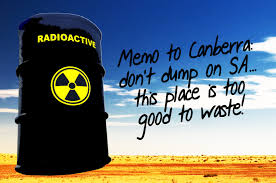 NO RADIOACTIVE WASTE ON AGRICULTURAL LAND IN KIMBA OR SA.SUBMISSION TO THE SENATE INQUIRY INTO THE SELECTION PROCESS FOR A NATIONAL RADIOACTIVE WASTE MANAGEMENT FACILITY IN SOUTH AUSTRALIA.“To campaign against any nuclear radioactive waste management facility in South Australia’s agricultural land and in particular the District Council of Kimba” Toni Scott Secretary No Radioactive Waste on Agricultural Land in Kimba or SA (Submission No. 46)
The No Radioactive Waste on Agricultural Land in Kimba or SA is a group of local residents, farmers and business owners opposed to building a Radioactive Waste Facility on prime farming land in Kimba. Our 240 financial members consist mainly of people from Kimba and the broader Eyre Peninsula.
We would like to thank the Senators that have given their time to investigate this process. Through our experiences with the process we conclude that the site selection process for the siting of a national radioactive waste dump is flawed, we have taken the time to outline some of our concerns and ask that you would consider our recommendations.
- The definition of Broad Community Support has been inconsistent throughout the process. We recommend that the Minister sets a % for broad community support.
- 2. We are strongly opposed to the siting of a Radioactive Waste Facility on Agricultural Land.
- 3. The process is divisive and lacks honesty, fairness and transparency.
Members of the No Radioactive Waste on Agricultural Land in Kimba or SA invite further consultation with your inquiry and would be happy to provide more information through a hearing.
ATTACHMENTS:
1.National Radioactive Waste Management Facility (NRWMF)
Phase 1 Summary Report April 2016
- National Radioactive Waste Management Facility Project Summary of engagement in the Kimba community December 2016 www.radioactivewaste.gov.au
- Declaration of Results. Distric Council of Kimba. National Radioctive Waste Management Project Ballot
- National Radioactive Waste Management Facility Phase 1 Summary Report. Kimba 2017
- Attachment A. Objectives and Criteria
- Code of Practice for the near surface disposal of radioactive waste in Australia (1992). Radiation health series No 35
- Low – Intermediate Level Radioactive Waste Facility Process Timeline NRWMF in Kimba
These attachments can be downloaded with this Submission No. 46 at https://www.aph.gov.au/Parliamentary_Business/Committees/Senate/Economics/Wastemanagementfacility/Submissions
Federal Government National Nuclear Waste Dump Selection Process – a B-grade horror movie plot.

Image courtesy Kim Mavromatis
Kim Mavromatis No Nuclear Waste Dump Anywhere in South Australia, 28 May 18 The Federal Government National Nuclear Waste Dump Selection Process for South Australia is like a B-grade horror movie plot.
Australian Federal Liberal Government’s Land Selection Criteria for a National Radioactive Nuclear Waste Dump proposed for South Australia :
· Nothing scientific about the land selection process – anyone can nominate their land, including Pro-Nuclear Ex-Federal Liberal politicians – and get paid 4 times what it’s worth.
· Doesn’t matter where the land is located.
· Don’t worry about your neighbours – their land will appreciate in value with a toxic radioactive Nuclear Waste Dump next-door.
· The majority of Aboriginal people, who say NO to a Nuclear Waste Dump, will be given the same amount of respect they received during British Nuclear testing at Maralinga and Emu Fields.
· Doesn’t matter if the region is a national icon and major tourism attraction.
· Don’t worry about seismic activity or if the area is prone to flooding.
· Doesn’t matter if the land nominated is in an important grain-growing region.
· Doesn’t matter that building a Nuclear Waste Dump facility in South Australia is against the law.
· You can trust politicians to keep their word – once in place the Nuclear Waste Dump won’t get changed from an Intermediate to High-Level Nuclear Waste Dump.
· Special Note : the new South Australian Premier Steven Marshall and the state Liberals said No to a Nuclear Waste Dump before the election.
· Most of the state won’t have a say in the Clayton’s consultation process – community support will only be solicited within a 50km radius of the Nuclear Waste Dump – and 2 million carrots will help bribe the locals.
· Don’t worry about Nuclear Waste accidents – there won’t be any and they won’t be catastrophic. It’s not irresponsible to ship nuclear waste half way across the country through populated Australian cities and towns, on busy public roads and highways, on ships and trains – no safety concerns – livelihoods won’t be lost – property values dive – who pays the insurance? – nothing to see here, move along.
· The Nuclear Waste Dump will be in operation for 100 years and monitored for 200-300 years, but don’t worry that Intermediate-Level Nuclear Waste can remain highly radioactive for 100,000 years and can be as hazardous as High-Level Nuclear Waste.
· Don’t worry that the temporary canisters holding the Nuclear Waste above ground are temporary because nothing is permanent.
· In 60 years, the nuclear industry hasn’t found a solution for Nuclear Waste, but she’ll be right mate, they’ll find a solution in the next 60 years.
· The Nuclear Waste Dumps proposed for South Australia are located near Kimba (Eyre Peninsula grain-growing region), 75kms from the Spencer Gulf coastline – and in the Flinders Ranges near Hawker (national icon and major tourism attraction), 29kms from Lake Torrens and 84kms north of Port Augusta.
Q&A
Q: Once in place how easy is it for politicians to change an Intermediate-Level Nuclear Waste Dump into a High-Level Nuclear Waste Dump?
A: Very easy.
Q: How long does it take High-Level Nuclear Waste to become harmless?
A: It never becomes harmless.
Q: Compare High-level Nuclear Waste (spent nuclear fuel) Radioactivity to Uranium ore?
A: After 30 years, High-Level Nuclear Waste is 10,000x more radioactive than uranium ore – after 140 yrs, 1,000x more radioactive – after 2,000 yrs, 100x more radioactive – after 43,000 yrs, 10x more radioactive – after 10 million yrs, same radioactivity as uranium ore (NWMO Nuclear Waste Management Org, Canada). https://www.facebook.com/groups/1314655315214929/
Yet another failure for Australian uranium company Paladin – Namibia uranium mine mothballed

Paladin mothballs Namibia uranium mine Crreamer Media’s Mining Weeekly 25TH MAY 2018
BY: ESMARIE SWANEPOEL CREAMER MEDIA SENIOR DEPUTY EDITOR: AUSTRALASIA ERTH (miningweekly.com) – Dual-listed Paladin Energy on Friday confirmed that its Langer Heinrich uranium mine, in Namibia, was being placed under care and maintenance, but said that the low-cost openpit operation would be one of the first to resume production when the uranium market normalised.
Paladin in April said that it was unlikely to resume physical mining activities at the mine despite the medium-grade ore stockpile currently feeding the processing plant set to be exhausted before mid-2019.
The ASX and TSX-listed company on Friday said that it had received consent from all the relevant stakeholders to place the operation under care and maintenance, and had now stopped presenting ore to the plant.
There would be a run-down phase of up to three months where various stages of the plant would be progressively suspended and cleaned, and during this time, there would be some continued production of finished uranium.
Paladin noted that once the run-down phase was complete, operations would have been completely suspended and Langer Heinrich would be under care and maintenance. ……http://www.miningweekly.com/article/paladin-mothballs-namibia-uranium-mine-2018-05-25
Adani coal mining company to pay for Isaac council staff working on Carmichael mine activities

Adani to pay for Isaac council staff working on Carmichael mine activities, ABC News 28 May 18  , By Josh Robertson and Emilia Terzon
A year on, the key goal of Uluru statement remains elusive
‘The statement is a proposal of constitutional reform that would establish
a constitutionally enshrined First Nations representative body to advise parliament
on policy affecting Indigenous peoples and
commit Australia to a process of truth-telling of its colonial history
through the establishment of a Makarrata commission.’
Calla Wahlquist
@callapilla 26 May 2018
‘While politicians have been demeaning it,
Aboriginal and Torres Strait Islander people have been having their own discussions.
‘The Uluru statement canvas, escorted by Uluru delegate and
Torres Strait man of Badhulgau and Kulkalaig heritage Thomas Mayor,
has traversed the northern half of the country and made its way down the east coast to Melbourne,
stopping in at community meetings, festivals, morning teas and business gatherings. …
‘It’s a slow, grassroots process, funded thanks to Mayor’s role as the
NT branch secretary of the Maritime Union of Australia
– although strictly it’s outside the union’s remit
– but the reception has been overwhelmingly positive.
‘“I still have hope because I’ve been travelling around with the Uluru statement
and everywhere I go there’s more and more support,” he said.
‘“I see momentum building.
And when you explain to people how many similar moments of hope
there have been throughout our history and how we have continued to struggle,
and how this particular time we’re not going to take no for an answer,
and how this statement is just going to keep travelling until we get what we seek,
I think that we can get enough pressure there so that
those aspirations can be achieved.”
‘Other working groups have been convened across the country.
On Saturday the statement and Mayor will be in Turnbull’s Sydney harbourside electorate of Wentworth,
one of the wealthiest in Australia, for a door-knocking campaign aiming to convince people to
lobby their local member to change his mind.
‘They will also aim to counter misinformation about the proposal,
which Mayor said is easily done once people hear the true intent
behind the proposed reforms. … ‘
Read more of Calla’s extensive, thought-provoking & interesting article:
www.theguardian.com/australia-news/2018/may/26/a-year-on-the-key-goal-of-uluru-statement-remains-elusive
South Australia’s No Dump Alliance sends a powerful submission opposing Federal nuclear waste dump plan for Flinders Ranges
The project has been framed by the government since its inception as a project where only local communities will be consulted.
Such an approach is untenable as this is a federal government initiative to develop a purpose built facility for the disposal and storage of Australia’s radioactive waste. This is a national issue that demands national attention and assessment. While it may be politically expedient, it is neither credible nor responsible for the federal government to treat this issue as a local government or community matter.
“The Adnyamathanha Traditional Lands Association remains totally opposed to the nuclear waste dump at Wallerberdina”
There is a strong risk that the waste could become stranded and forgotten about should future governments fail to find the finances or political will to dispose of the waste deep underground.
the residents who are in favour of the proposal have not been given full, complete and unbiased information to inform their decision.
No Dump Alliance submission into the appropriateness and thoroughness of the site selection process for a national radioactive waste storage facility Introduction .” Vince Coulthard, CEO of the Adnyamathanha Traditional Lands Association. (Submission No. 45)
The No Dump Alliance is a broad cross-section of South Australian civil society, including Indigenous, public health, trade union, faith and environment groups, academics and concerned individuals that formed in response to proposals to open South Australia up to international high-level nuclear waste importation and dumping. The Alliance also opposes the federal government’s continued push to establish a national nuclear waste dump and store in regional SA.
The No Dump Alliance supports local communities to voice their concerns, welcomes state government legislation that prohibits a nuclear waste dump in SA, and calls for a better process for the management of Australia’s nuclear waste. The No Dump Alliance welcomes this inquiry and the opportunity to contribute this submission. The Alliance also encourages the Committee to hold hearings in the regional areas of Hawker and Kimba to hear firsthand from the communities on the front line. The Alliance also welcomes hearings in Canberra to consider the views of national and state stakeholders and groups. This is a national project and is of national concern.
Spokespeople for the Alliance include Vivianne McKenzie from the Flinders Ranges and Peter Woolford, No Radioactive Waste Dump on Agricultural Land in Kimba or SA President and Jamie Newlyn from the MUA SA Branch.
The radioactive waste to be disposed and stored is both “low level” and “long lived intermediate level”. The latter must be managed safely for many thousands of years and current best practice to realise this is by deep geological disposal.
No Dump Alliance members have been closely involved with the current federal waste plan and process and concluded that the site selection process for a national radioactive waste storage facility at Kimba and Hawker in South Australia is flawed and neither appropriate nor thorough. We maintain that the current project should be discontinued.
The following specifically addresses the terms of reference.
- a)the financial compensation offered to applicants for the acquisition of land under the Nominations of Land Guidelines;
We believe that inviting private landowners to nominate their land for financial gain far in excess of the land value is a non- scientific way to determine a location for a national radioactive waste facility. We also believe that a single party nomination model cannot be credible considered to represent a ‘volunteer’ process.
- b) how the need for ‘broad community support’ has played and will continue to play a part in the process, including:
- i) The definition of ‘broad community support’
Since May 2015 the federal government and its DIIS representatives have consistently refused to define “broad community consent” in both public meetings and in writing. Members of our organisation have been told different definitions but none have been able to be confirmed in writing.
The figure 65% has been mentioned and we believe this figure was determined by the result in the flawed Orima telephone survey which purported to survey whether residents of the Flinders Ranges council district wished to proceed to Phase 2 of the site selection process.
A postal vote of Kimba council residents resulted in a 56.5% positive result to proceed to Phase 2, which is well short of the 65% previously mentioned. We reject the claim that this is broad community support, rather it is a sign of a much-divided community.
- ii) How ‘broad community support’ has been or will be determined for each process advancement stage. The figure 65% has been mentioned and we believe this figure was determined by the result in the flawed Orima telephone survey which purported to survey whether residents of the Flinders Ranges council district wished to proceed to Phase 2 of the site selection process. A postal vote of Kimba council residents resulted in a 56.5% positive result to proceed to Phase 2, which is well short of the 65% previously mentioned. We reject the claim that this is broad community support, rather it is a sign of a much-divided community. ii) How ‘broad community support’ has been or will be determined for each process advancement stage.
The NRWMF Community Sentiment Survey purported to survey whether residents of the Flinders Ranges council district (Hawker, Quorn and Cradock) wished to proceed to Phase 2 of the site selection process.
This telephone survey was incomplete and inadequate because it did not survey the entire population of the area and was biased because it only surveyed residents with landline telephones. The flawed survey only asked residents if they wanted to proceed to the evaluation of the site and not actually build a facility. Flinders Ranges council residents have not had an opportunity for a complete postal vote conducted by the AEC.
The Adnyamathanha people are the Traditional Owners of the Barndioota site and their representative body the Adnyamathanha Traditional Lands Association (ATLA) has repeatedly expressed clear opposition. The No Dump Alliance believes that it is critical that the views and position of the overwhelming majority of Traditional Owners are listened to and respected in relation to the appropriateness of a site.
A postal vote was held for the Kimba council region and resulted in a 56.6% positive result to proceed to Stage 2. This survey did not include the views of the Traditional Owners from the area who must be consulted and should have been consulted at the initial nomination.
We believe that both survey results were influenced strongly by the offer of $2 million to be spent in the community, and that this was an intentional and deliberate inducement to sway the community opinion towards a positive result.
Despite seeking clarification, we have not been able to ascertain what the procedure and process will be to evaluate whether there is broad community consent should the government wish the project to proceed from Phase 3 to construction.
- c) how any need for Indigenous support has played and will continue to play a part in the process, including how Indigenous support has been or will be determined for each process advancement stage;
The federal government has stated that no individual group will have a right of veto. The Citizen’s Jury into the former Weatherill state government’s international radioactive waste facility proposal found overwhelming support for the right of veto for Aboriginal people. Former Premier Weatherill wrote to Prime Minister Malcolm Turnbull on 24 October 2017 outlining concerns about a national nuclear waste dump and store plan and recommending that local Aboriginal people should have the right of veto over any dump being built on their lands. The relevant quote from Mr Weatherill’s letter is as follows:
“I recently met with Traditional Owners of the Adnyamathanha community who expressed deep concern about the proposed site at Hawker, and the potential impacts on Adnyamathanha Cultural Heritage”…….” This engagement process was insightful and highlighted the need for a bigger conversation about how Aboriginal people want to be seen, valued and recognised and on ‘unfinished businesses from the past. In particular, Aboriginal people’s history with the nuclear industry demonstrates a need for significant healing. In recognition, the South Australian government committed to provide a local Aboriginal community with a final right of veto over any future facility proposed on their lands. I recommend that the Commonwealth Government now consider adopting a similar policy position as part of the National Radioactive Waste Management Facility process.”
In the NRWMF community sentiments survey by Orima Research released in April 2016 it shows on page 60 of the report that 97% of Indigenous people opposed the facility at Barndioota.
The Orima report did not table any views of Indigenous people in relation to support for the project to continue.
The Adnyamathanha Traditional Lands Association (ATLA), composed of 23 different organisations and interest groups released a statement in May 2016 opposing a nuclear waste facility.
Recently on March 24, 2018 the ATLA board reaffirmed opposition with the passing of this resolution:
“The Adnyamathanha Traditional Lands Association remains totally opposed to the nuclear waste dump at Wallerberdina
This is our land, our culture and we must have veto over this toxic waste being dumped in our country. Udnyus come and go but we will be here forever. We say NO to the waste dump, for our grandchildren and their grandchildren and many generations to come.”
In the 2016/2017 ATLA annual report stated: “The National Waste Dump continues to be an issue and ATLA remains totally opposed to the waste dump at Wallerberdina. ATLA has been treated very poorly in this whole process and it has been a real struggle to ensure our voice is heard.”
The No Dump Alliance understands that ATLA was not approached or engaged until the NRWMF project was into stage 2.
Surveys are not assessing the views of Adnyamathanha people who live outside the region; with a significant part of the community living in Port Augusta and Adelaide.
- d) whether and/or how the Government’s ‘community benefit program’ payments affect broad community and Indigenous community sentiment;
We believe that the government has linked the project to the promises of jobs and community grants as an inducement to deliberately influence community consent. We believe this is intentional and deliberate, and designed to sway the community into returning a positive result towards the project.
There have been many discussions and assertions by local residents that they have decided to be in favour of the facility by the mere fact that the government says it will bring jobs and money. This is despite scant detail being provided by the project proponent about the employment and economic impacts of the planned facility.
- e) whether wider (Eyre Peninsular or state-wide) community views should be taken into consideration and, if so, how this is occurring or should be occurring; and
The project has been framed by the government since its inception as a project where only local communities will be consulted.
Such an approach is untenable as this is a federal government initiative to develop a purpose built facility for the disposal and storage of Australia’s radioactive waste. This is a national issue that demands national attention and assessment. While it may be politically expedient, it is neither credible nor responsible for the federal government to treat this issue as a local government or community matter.
The community to be consulted for the Barndioota facility was originally designated at a 50km radius around the dump, which was then extended to include Quorn and the whole Flinders Ranges council.
The community to be consulted for the Kimba facility was designated as residents of the Kimba council on the electoral roll.
The construction of a facility could have a significant impact on the reputation of either community, with a detrimental impact on the tourism and farming industries upon which the communities depend.
- f) any other related matters.
The radioactive waste facility is intended to dispose and store both “low-level” and “longlived intermediate level” radioactive waste.
The facility is intended as an “interim” location for the “long-lived intermediate level” radioactive waste, as world’s best practice currently views deep geological disposal as the preferred management option. The waste would be stored above ground, as the current government does not have a site or a process to determine a site to build its final deep geological burial facility. There is a strong risk that the waste could become stranded and forgotten about should future governments fail to find the finances or political will to dispose of the waste deep underground.
Our members and colleagues have attended many of the federal government’s presentations and have found them biased and flawed towards focus on the “low-level” waste, and with no attention given to the extremely long-term risks involved in the storage of “long-lived intermediate level” radioactive waste.
The presentations have also failed to acknowledge any terrorism risks of creation of a “dirty bomb” from the “intermediate” waste.
We therefore believe that the residents who are in favour of the proposal have not been given full, complete and unbiased information to inform their decision.
A decision this serious to accept the so-called “interim” storage of “long-lived intermediate level” radioactive waste that has implications for the future security of South Australia and should not be solely or primarily made by the small community of people who currently reside in the districts of the Flinders Ranges and Kimba councils. Such an approach also deeply disenfranchises communities along the extensive transport corridors any such facility would require.
Conclusion
The members of the No Dump Alliance maintain that the site selection process for a national radioactive waste storage facility at Kimba and Hawker in South Australia is flawed, and neither appropriate nor thorough. We share the view held by many civil society groups that the current project should be halted whilst a thorough national audit of radioactive waste is conducted with an independently assessed review of the range of options available to best manage Australia’s waste. Our members and spokespeople continue to witness and seek to highlight the high level of stress and pressure this plan is causing in the communities of Hawker and Kimba. In December 2017 the No Dump Alliance supported a ‘Don’t Dump on SA’ rally on the steps of Parliament House in Adelaide. Invited speakers made the following statements about support for the National Radioactive Waste Management Project:
“I was the member of parliament that tried to get the last dump on the road at Woomera. The Kimba experience has taught me a very great amount. Quite frankly, the government and ANSTO cannot be trusted with this job. They cannot be trusted with the management of nuclear waste.” Barry Wakelin, former federal Liberal politician. “
Last year we voted as the Uniting Church in SA to stand in solidarity with the Adnyamathanha people in opposing the placing of a nuclear waste dump on their land. We are here today renewing our commitment to that solidarity and to join with you as fellow South Australians in this resolve.” Dr Deidre Palmer, former moderator Uniting Church (SA)
“The Flinders Ranges is not the right place for any nuclear waste facility. The purported benefits of this dump, if realised, will equal only 1% of jobs in tourism and just 2% of one year of tourism income for the Flinders Ranges and outback. Any drop-in tourism will wipe out any possible economic benefit. Everyone, including the government and ANSTO (Australian Nuclear Science and Technology Organisation), agree that the Flinders is not suitable for long term disposal of intermediate level waste, but that is where it will be stored until another site is proposed, accepted and built. This may take decades or centuries and may never happen. We are creating a toxic legacy for our children and grandchildren. Safeguards and legislation put in place today will be brushed aside when it’s convenient for future governments. This can never be the right place to bring intermediate level waste.” Dr Susi Andersson, Hawker resident and local GP. “
We stand with Traditional Owners of this land, we stand with the farmers of this land”. Jamie Newlyn, Secretary of the Maritime Union of Australia SA Branch and No Dump Alliance spokesperson.
“The Flinders Ranges is an iconic area, people come from all over the world to visit. I’m saddened to hear that the government wants to spoil this beautiful, pristine area with a devastating piece of junk. We certainly understand that there has to be somewhere they can store it, but you don’t take a pristine area and destroy that. We ask that the state government stand with the Adnyamathanha community to stop this waste dump
Toni Scott asks: will the government hound the Kimba and Hawker communities until they support nuclear waste dumping?
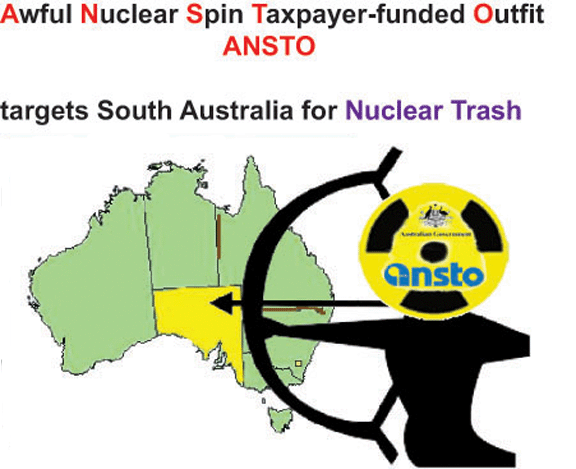
How many times can the Government come back to a community and hound them until they gain broad community support?
I recommend that for something as signiWficant as building a permanent facility hosting hazardous waste it is imperative to have broad community support of no less than 70% absolute majority (meaning 70% of those eligible to vote)
Toni Scott SUBMISSION TO SENATE INQUIRY INTO THE SELECTION PROCESS FOR A NATIONAL RADIOACTIVE WASTE  MANAGEMENT FACILITY IN SOUTH AUSTRALIA. (Submission No. 44, with 4 attachments) Thank you for the opportunity to present my views to the senate inquiry into the process for a national radioactive waste management facility at Kimba and Hawker in SA.
I am an active resident of the Kimba Community and am involved with many community organisations within the town. I own and operate a farming business with my husband, we have 3 small children and I also work part time in Administration at the local Hospital.
Over the past 2 years my husband and I have been involved with this process as direct neighbours of the first round of nominations at Kimba. We have found the process inconsistencies extremely frustrating and stressful.
I ask that you please take my views and recommendations into consideration and I would be happy to be called as a witness to provide further information in the form of a hearing.
- a) The financial compensation offered to applicants for the acquision of land under the Nominations of Land Guidelines;
All financial incentives been offered to individuals should be made available through public information including monies received through access agreements.
It is my view that communities should nominate to host the facility not individual land owners. This process could include local council coordinated public consultation including information from both sides of the argument prior to nominating, if there is broad community support from a town then the nomination is submitted instead of the other way around.
- b) How the need for ‘broad community support’ has played and will continue to play a part in the process, including:
- i) The definition of broad community support and
- ii) How broad community support has been or will be determined for each process advancement stage
The definition of broad community support is very vague. The Minister has refused to set a% of support required for the process to progress through the stages. I have submitted a freedom of information request asking for communication between the Department and Minister Canavan outlining information on how they intend to define broad community support. My FOI request was rejected and I am currently waiting for a case manager to follow up for me through the Australian Information Commission.
Phase 1 Summary Report 2016 ii – The independent Orima Survey indicated 51% of the Kimba Community was not opposed. 582 submissions were received and 80% of them were opposed.
– Summary of Engagement in the Kimba Community December 2016iii – This engagement was prior to the second round of nominations in Kimba. The Working for Futures group indicated to the department that there had been a large increase in support. Results showed there was in fact only a slight shift, of the 300 members that spoke to the Department 56% were supportive of a new nomination.
– Phase 1 Summary Report 2017iv – The Department received 112 written submissions from Kimba residents with 86% opposed. A total of 396 letters were received in relation to the Kimba nominations but for those from outside of the Kimba council boundary results were not reported on. This included letters from people only 20kms out of Kimba who fall outside the council boundary or land holders with property only 10km from nominated site but they fall outside of the council boundary.
AEC Results v– 56% voted yes to go through to stage 2 of the process this % is of those that voted (it is actually only 50% of eligible voters)
How many times can the Government come back to a community and hound them until they gain broad community support?
I recommend that for something as significant as building a permanent facility hosting hazardous waste it is imperative to have broad community support of no less than 70% absolute majority (meaning 70% of those eligible to vote)
- d) Whether and/or how the Governments community benefit program payment affect broad community and Indigenous community sentiment;
The $2 million dollar community benefit fund can only be seen as a bribe for people to vote to go through to the next stage. The Department representatives have encouraged people to dream about what the money could do for the community. Many of the projects they have suggested including improved phone and internet service and better health facilities are all things that our town like all other Australian Communities should be entitled to anyway.
- e) Whether wider (Eyre Peninsula or state-wide) community views should be taken into consideration and, if so how this is occurring or should be occurring;
I believe the views of those living close to the facility are ultimately affected the most and therefor their opinion is of the highest importance closely followed by people living or owning property in the community of where the land is nominated. I don’t believe the boundary should be measured by a council boundary it should be set by a radius and should be prioritised in the following order
– Neighbours within the 10km radius views should be of the highest ranking
– Residents & land holders within 50km of the property should all have the opportunity to vote.
– Residents of the Eyre Peninsula and communities along potential freight routes should be consulted and their submissions taken into consideration.
– South Australians should have the opportunity to have their say on the State Legislation prohibiting the building of any Radioactive Waste Facilities within our state.
- f) Any other related matters.
Community members find it very difficult to trust the process when time and time again issues of unfairness arise, I have many other concerns including but not limited to:
– In the National Waste Management Act 2012 it states $10 million will be credited to the host state or territory to be spent on health, education and infrastructure.
It should be the communities money not the state and the Community should decide if, when and how it is spent.
– Throughout this second consultation neighbours from the 10km radius have been disregarded and only those with an immediate fence line have been considered neighbours. This is inconsistent with our first round of consultation and with the consultation at Hawker.
– The Kimba Consultative Committee (which I am a delegate on) was supposed to consist of an even spread of people who are opposed, neutral and supportive of the facility. Unfortunately of the 15 committee reps only 4 people are opposed.
– The Community Liaison Officer was supposed to be a person with neutral views but to no surprise the Department employed a local who has been openly supportive of the facility. Community members who are opposed find it difficult to speak openly with the Liaison officer about their concerns.
– For a process to be considered truly transparent information such as nominated sites, nominator financial payments and information regarding processes around broad community support need to be made readily available to the public.
I strongly believe prior to a final community vote as to whether a facility is to be sited in a community, members of the community NEED to be given all the information in writing including:
- What percentage of support will be required for broad community support.
- Exactly what waste will be stored at the facility.
- What will the facility look like.
- What are the jobs that will be required to run the facility and exactly how many are there.
- How much money will the community receive and how will it be distributed.
i FOI Internal Review Letter
ii Phase 1 Summary Report 2016
iii Summary of Engagement in the Kimba Community December 2016
iv Phase 1 Summary Report 2017
v AEC report
Selection process for a national radioactive waste management facility in South Australia
The Custody Notification System saves Aboriginal lives. Why isn’t it national?
Gerry Georgatos @GerryGeorgatosle’ 14 Mar 2018
‘We know that notifying an Aboriginal legal service
when an Aboriginal person is arrested saves lives and costs little.
The lack of nationwide action is unacceptable
‘The CNS has been championed by the federal Minister for Indigenous Affairs, Senator Nigel Scullion.
We have had a number of conversations about the CNS and he gets it,
he understands the need for it to be rolled out nationally.
‘He saved the CNS in NSW and the ACT by funding it to mid-2019,
pulling together the $1.8m out of his portfolio,
even though it was the responsibility of other portfolio holders.
‘The CNS has also been championed by WA’s Senator Sue Lines
who knows how desperately her home state needs it.
‘The Western Australian state Labor party has committed to implementing the CNS when elected.
It is time every state and territory does the right thing and implements the CNS.
There is no greater legacy than to save lives.
‘I will wrap up with the words of members of Ms Dhu’s family. Uncle Shaun Harris said,
“We do not want this to happen to anyone else.
Our families are heartbroken and the pain has not left us.”
Ms Dhu’s mother, Della Roe, said,
“My daughter should be with us today.
Her loss haunts me each day and it will remain but it will give me
at least an ounce of peace to see the CNS implemented.”’
www.theguardian.com/commentisfree/2016/sep/15/the-custody-notification-system-saves-aboriginal-lives-why-isnt-it-national
Environmental Defenders Office shows up flaws in Department of Industry, Science and Innovation’s report on nuclear waste siting
 With all of the proposed sites there was strong opposition to moving onto phase 2 of the process. The two preferred sites chosen, both in South Australia, also had strong opposition, but the strong opposition was slightly less that the other three sites. Slightly less opposition cannot amount to ‘broad community support’.
Barndioota site:
The Phase 1 summary report also states that 65% of those surveyed were in support of progressing to stage 2. From our assessment of the raw data, this figure is incorrect. The data shows a figure of 51% of those surveyed being opposed to progressing to stage 2.3 Additionally, there was almost unanimous indigenous opposition to this site.
The Kimba site does not meet the Government’s criteria as having ‘broad community support’ and needs to be abandoned as a potential national radioactive waste facility
All Australians should have the right to have a say on this issue. Furthermore communities along any transport routes need to be informed of the risks and consulted in relation to the proposed sites before any site is chosen. This is an essential part of ascertaining support for the project .
Environmental Defenders Office. Melissa Ballantyne Coordinator/Solicitor Environmental Defenders Office (SA) Inc. Submission to the Senate Committee Inquiring into Site Selection for the National Nuclear Waste Facility (Submission No. 43)
The Environmental Defenders Office (SA) Inc (“the EDO”) is an independent community legal centre with over twenty-five years of experience specialising in environmental and planning law. EDO functions include legal advice and representation, law reform and policy work and community legal education. The EDO appreciates the opportunity to provide a submission to this Inquiry, which is seeking comment on a number of Terms of Reference.
The EDO submission relates to the following terms of reference: “The Government has stated that it will not impose such a facility on an unwilling community, with particular reference to:
.b) how the need for ‘broad community support’ has played and will continue to play a part in the process, including:
- The definition of ‘broad community support’ and ii) how ‘broad community support’ has been or will be determined for each process advancement stage …………..e) whether wider (Eyre Peninsular or state-wide) community views should be taken into consideration and, if so, how this is occurring or should be occurring; …….” 1. Broad community support
1 This month
25 October – Film –Britain’s Nuclear Bomb Scandal: Our Story – part of the Adelaide Film Festival,
Screening and Conversation
A screening of Britain’s Nuclear Bomb Scandal: Our Story (2024) followed by a talk with 2026 Bettison and James Awardee and Tradtional Owner Karina Lester in conversation with Simone Tur.
When: Sun 25 Oct, 12:00pm-Screening, 1:15pm-Talk
Where: The Mercury
Free admission, register below by clicking on BUY TICKETS and select free event tickets, at end of web page:
https://www.adelaidefilmfestival.org/program/2026/britains-nuclear-bomb-scandal-our-story
.

Australians deserve the truth
about
AUKUS – https://aukuspublicinquiry.com/

PETITION – To: Prime Minister Anthony Albanese and the Australian Labor Government

of the week – Australians for War Powers Reform (AWPR)
To see nuclear-related stories in greater depth and intensity

