Wind and hydro providing 100% renewable energy to Tasmania
Tasmania completely powered by renewable energy as rainfall boosts hydro dams ABC News 12 May 16, Tasmania is being completely powered by renewable energy for the first time this year, Hydro Tasmania says.
Key points:
- Sustained rainfall fills dams by more than 3 per cent over 10 days
- All diesel generators and gas power stations have been turned off
- Rough weather hampers repairs to Basslink cable
The state has been in crisis for several months with dam levels at record lows after unprecedented dry weather…….
Hydro Tasmania CEO Stephen Davy said the state’s emergency diesel generators had been switched off through the week and the gas fired Tamar Valley Power Station was turned off yesterday.
“The past 10 days have been very positive,” he said.
“We’ve had more rain than predicted and our storages have risen strongly.
“There’s currently enough hydro and wind energy available to meet all Tasmanian demand.
“For the first time in months, our island is being powered solely by renewable energy.”…..http://www.abc.net.au/news/2016-05-12/tasmania-completely-powered-by-renewable-energy/7408148
Nuclear dump site for a culturally and archaeologically significant area!
NASA scientist and European Space Agency dismayed at CSIRO climate research cuts
‘Dismay’: NASA scientist appeals to CSIRO not to cut global climate efforts, The Age, May 12, 2016 Peter Hannam Environment Editor, The Sydney Morning Herald
A top scientist from US space agency NASA has appealed to CSIRO to abandon plans to cut a key monitoring program that it says will undermine Australia and the world’s ability to monitor and predict climate change. Continue reading
Australian Greens solar policy

 Greens unveil solar policy http://www.examiner.com.au/story/3904209/greens-unveil-solar-policy/?cs=95 Georgie Burgess
 @georgieburgo May 13, 2016 The Australian Greens have released a policy that aims to encourage households to take up battery storage technology by introducing a 50 per cent refundable tax credit to assist with solar costs.
Tasmanian Greens Senator Nick McKim said the policy would support the more than 26,000 Tasmanians that have solar capacity installed, with $54 million to gain.
Under the policy, people would get up to half the cost of their battery storage system covered, up to a maximum of $5000 in the first year of the program.
The program would run for five years and the amount of the credit would taper off to $1,500 by 2021, reflecting the projected decline in battery storage costs.
A grant scheme would also be available for those on low incomes.
It’s expected up to 1.2 million Australian homes could be supported over the five years of the program.
Together, small household systems in Tasmania are generating approximately 81.5 megawatts of power, with more than 12 per cent of households using rooftop solar.
“The Greens battery storage policy will support the 26,529 Tasmanian households that already have solar capacity installed and encourage thousands more to shift to battery storage,” Senator McKim said.
“Tasmanian households could gain over $54 million in support for battery storage.
“Unfortunately, the energy crisis has exposed Tasmania’s vulnerability and our over-reliance on Basslink importing dirty power from the Latrobe Valley.”
Senator McKim said the policy would be a game changer for the state’s energy security and increase Tasmania’s reputation as a centre of renewable energy.
“The Greens are the only party with the courage and vision to propose sustainable solutions for Tasmania’s energy security.”
Earlier this week, Greens energy spokeswoman Rosalie Woodruff said the feed-in tariff decision by the Economic Regulator to pay solar PV owners 6.6c per kilowatt hour “is a slap in the face for solar owners and the installation industry”.
Can citizen’s juries make decision on Australia importing global nuclear wastes?
Citizen’s council to steer SA nuclear waste decision MEREDITH BOOTH THE AUSTRALIAN MAY 11, 2016
A system used to decide “tricky policy issues” such as how South Australians manage unwanted dogs and cats will be set up to decide the state’s nuclear future.
Labor Premier Jay Weatherill said a citizen’s jury of 50, chosen from 25,000 “everyday South Australians’’ in a similar way to how a jury is chosen for a criminal trial, will be formed next month to pose key questions raised by the Nuclear Fuel Cycle Royal Commission into the state’s further involvement in the nuclear industry.
A second jury of 350 would seek community feedback and report to the government by September, before a decision on a dump is made by November. Including an advertising campaign, the process would cost $1 million, Mr Weatherill said…..
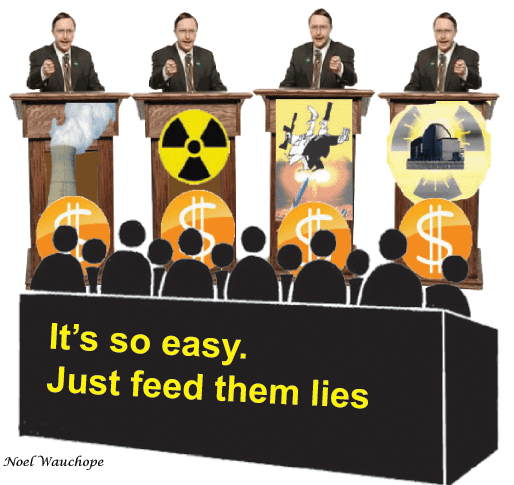
The Premier said it would be impossible to proceed with recommendations, which included expanding uranium mining and considering nuclear power, without strong community support. “This is going nowhere if it is going to be the subject of political controversy,” he said……
“No serious investor will co-operate with us, no international partner will want to be part of entering into what is a long-term, extraordinarily expensive set of investments if they don’t think the community is going to be able to deliver on them.
“This is a test of our democracy. Can we have a mature and reasoned debate about this issue and come up with a wise judgment,“ he said.
The government has recently used citizen juries on issues of dog and cat management and cycling laws, saying it develops independent views not dominated by lobbyists and activists.
But the nuclear question was “clearly a very significant decision to entrust to this process,’’ said University of Adelaide political analyst Clement Macintyre.
“It means that the decision is arms’ length from the government, and potentially politically safer for them,’’ he said.
Mr Weatherill’s openness to a nuclear dump has clashed with Labor’s national platform, which is strongly opposed to the importation and storage of nuclear waste. However, he said political consensus had to be achieved at state level before taking the question nationally. http://www.theaustralian.com.au/national-affairs/state-politics/citizens-council-to-steer-sa-nuclear-waste-decision/news-story/20e35875865926c8d1746ed9a55174b5
Long haul for South Australia nuclear waste dump project, and serious risks
Australians face big decision on nuclear waste dump, news.com.au MAY 10, 2016 ….. ” it’s not going to be an overnight fix for the state’s budget problems. A permanent facility would take 28 years to build, and this construction could only start once local residents were on board. The commissioner has suggested it could take 10 years to get this approval.
Even if an interim facility was built to take used fuel while the permanent version was under construction, this would still only be operational 11 years after a decision on the project was made.
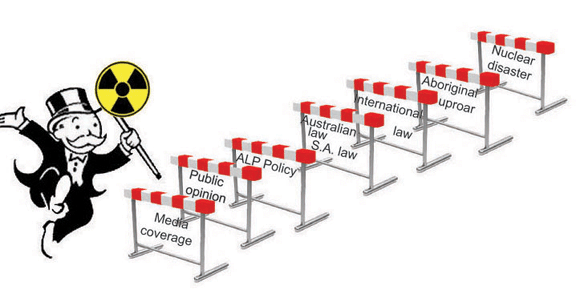
SAFETY ASPECTS
Used nuclear fuel, stored as a solid ceramic in metal cladding, generates heat and is highly radioactive and dangerous.
According to the commission, radiation levels reduce quickly during the first 30 to 50 years of storage and the most radioactive elements decay within 500 years. But less radioactive elements in nuclear fuel do require storage and isolation for at least 100,000 years.
The commission noted that the most serious consequences of disturbing nuclear fuel were linked to potential exposure to radiation.
And certainly nothing focuses the mind like considering the wasteland of Chernobylor Fukushima………
the difficulty of disposing of nuclear waste, even low-level waste, which needs be stored for up to a few hundred years, have been illustrated in the US and France.
America’s Waste Isolation Pilot Plant (WIPP) was compromised when a drum of radioactive waste burst open in the underground facility. Most disturbingly, the rupture was blamed on someone putting the wrong type of kitty litter in the drum, possibly due to a typo in a policy manual.
A WAR BEGINS
Conservationists have accused the commissioner of downplaying the risks of nuclear storage and have threatened to ramp up their campaign against the dump.
“We’ll be increasing our profile, our presence and our concerns,” Australian Conservation Foundation spokesman Dave Sweeney told AAP……..
Invitations will be sent this week to 25,000 people seeking an expression of interest in being part of a 400-person jury that will consider the state’s approach…….
Treasurer Scott Morrison said the Federal Government would work constructively with SA to address any issues arising out of the Royal Commission…….
Cameco uranium plan faces rocky road
 https://nuclearfree.wordpress.com/media/ , 11 May 16 Traditional Owners from the regions around the proposed Yeelirrie and Kintyre uranium operations in WA have today sent Cameco shareholders and stakeholders a clear message of opposition to any mining plans. The groups have released a joint statement to coincide with Cameco’s Annual General Meeting being held in Saskatoon, Canada.
Both communities have a long history of opposition to uranium mining plans at Yeelirrie and Kintyre, dating back to early uranium exploration in WA during the 1980’s. Both communities have also attracted the support of environment, social justice, union and health organisations and the state Labor and state and federal Greens parties in their fight against uranium mining.
“You can’t reverse what the old people have said before. We’re going to stop it” said Desmond Taylor, Karlamilyi Traditional Owner. “This is my spiritual birthplace, my dreaming place. Warturarra (the proposed Kintyre mine site) became my spiritual home; the bush food there became my totem. To mine there would take away my spirit and the totem, it will destroy the living things around it, that place would become empty.”
The joint statement is going to the Cameco Board, shareholders and major Canadian investors. It conveys the depth of the contest that company will face should it seek to advance uranium mining.
“Our country is special to us” said Kado Muir, a Yeelirrie Traditional Owner and Senate candidate for the National Party. “I’m not anti-mining I am speaking as a Traditional Owner communicating our view that Cameco and uranium mining are not welcome on our country. Uranium is different to other mining, because the risks remain for thousands of years. It is our responsibility to look after the land for future generations. We will continue to challenge the proposal to mine uranium at Yeelirrie.”
Members of the Parnngurr and Martu community will be walking from through the Karlamilyi National Park to the proposed uranium mine at Kintyre from the 4th – 12th of June in protest to Cameco and Mitsubishi’s uranium mine plans. See community interviews here.
The Walkatjurra Rangers and Yeelirrie Traditional Owners will also be walking in protest to the Yeelirrie uranium mine from the 7th of August – 7th September. This will be the sixth annual walk against uranium mining in the region. See community interviews here.
#NuclearCommissionSAust bizarre attack on renewable energy
 In its final report, the commission draws from the usual nuclear play-book on renewables: that wind and solar can’t do the job, that other renewable energy technologies are untested, and that renewables will require expensive and additional back-up power.
So far, South Australia has got to 50 per cent wind and solar without the need for any additional back-up power. Indeed, there is still surplus capacity.
Royal Commission wants rules changed on nuclear power in  Australia http://reneweconomy.com.au/2016/royal-commission-wants-rules-changed-on-nuclear-power-in-australia-28210 By Giles Parkinson on 10 May 2016 The Royal Commission on the Nuclear Fuel Cycle has concluded that nuclear power generation is not a commercially viable option for Australia, and won’t be until the 2030s – if at all, but it still wants governments to repeal laws that ban nuclear generation.
The main findings of the Royal Commission centred around the creation of a nuclear waste dump, despite widespread criticism of the move. That recommendation will be reviewed by the South Australia government over the course of the year.
But on the same day that the last coal-fired power generator in the state was closed down, the commission has also argued the case for nuclear, saying it “might” be needed post 2030.
The Royal Commission seems to accept that nuclear power is not just too expensive, but too big to fit into the South Australia market, and it would be too risky for the state to build “new generation” technology, such as the “generation IV” reactors often promoted in nuclear circles.
Yet, further into the report, it expresses support for small modular reactors, despite the fact that this technology will likely be even more expensive, due to reduced economies of scale, and forms part of the “new generation” technologies because the first of its kind are not likely to appear within the next decade.
The commission gives some bizarre interpretations in the state of the market, Continue reading
Paragraphs in the Royal Commission report that deserve scrutiny
 Michelle Drummond, South Australia, 11 May 16 After reading the summary of the report I wanted to highlight a couple of points that I see as being important, and worth consideration. Firstly it seems obvious to me that the dump is actually the wedge to introduce the rest of the Nuclear industry into Australia.
It is interesting that the opening statement highlights that being involved in Nuclear activities brings environmental, social, financial and safety risks.
In the next paragraph they talk about the 120 year life span of the project and ignore that there is still another 99,880 years to maintain the safety of the dump.
In paragraph 3 it is firmly stated there needs to be agreement by the South Australian Community (Citizens Jury now offered as the method for reaching agreement I have found that it is open to abuse, unless everyone is well informed across the topic.)
Paragraph 6 states that the government needs to pursue simplification of both state and federal legislation in regards to uranium mining.
Paragraph 8 is all about expanding mining, and exploration and removing barriers. At the end of this paragraph it was pleasing to see the idea that mining companies should be held financially responsible for remediation and decommission.
Paragraph 11 discusses the removal of legislation so that Australia could reprocess waste as well as storing it.
Paragraph 13 states that Nuclear power should not be discounted based on safety.
New report attacking environmental groups must be resisted
Green groups are united in calling for the PM and Minister Hunt to reject the report and a number of its recommendations. Any administrative changes to the Register of Environmental Organisations done before the federal election would confirm that the Inquiry was all about politics and not about good management of environmental groups.
 Malcolm Turnbull must reject anti-democratic attack on environmental groups, Independent Australia, Cam Walker 9 May 2016, Will Malcolm Turnbull follow Tony Abbott’s witch-hunt on environmental groups, which will see them lose charitable status for “civil disobedience”?
THE DISPROPORTIONATE influence of the fossil fuel and mining sectors over federal government policy is both well documented and long standing.
With the rise of the far right neo-liberal Abbott Government, the agenda of the Institute of Public Affairs (IPA) also became more influential after several years of being on the “outer” while the ALP was in power.
The IPA is well known for arguing against the environment movement and has campaigned against specific environmental policies like thecarbon tax.
Being fundamentally opposed to mainstream scientific positions on climate change and the work of the environment movement, the IPA has argued for the government to reconsider all funding which is provided to the environment movement.
This convergence of views – conservative MPs, right wing think tanks and influence by the fossil fuel sector – has led to a sustained attack on the environment movement in recent years.
One key aspect of this attack has been the House of Representatives Inquiry into the Register of Environmental Organisations. After narrative in the media and, we have to assume, lobbying by many in the mining and fossil fuel sectors, Minister for the Enviroment Greg Hunt initiated the Inquiry into the tax status of green groups. It was widely seen as being politically motivated. Continue reading
No national referendum on nuclear waste importing? Just shonky “citizen juries”
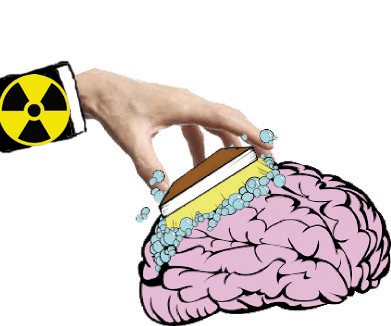 Citizen juries to weigh SA nuclear dump https://au.news.yahoo.com/sa/a/31561735/citizen-juries-to-weigh-sa-nuclear-dump/
AAP on May 10, 2016 South Australians will be asked to take part in citizen juries to help decide whether the state should host a high-level nuclear waste dump.
A jury of 350 voters will be asked to produce a report in November outlining the community’s views on the proposed dump and other nuclear issues, with the government to outline its decision by year’s end.
The government will also launch an advertising campaign encouraging people to “explore the facts” on the nuclear fuel cycle, Premier Jay Weatherill told reporters on Tuesday.
These are the recommendations of the Nuclear Fuel Cycle Royal Commission South Australia
Former Governor Kevin Scarce recommends go ahead for nuclear storage in SA The Advertiser, May 9, 2016 DANIEL WILLSSTATE POLITICAL EDITOR
“……..The recommendations
1. Simplify approvals for radioactive ore mining, ending the duplication at state and federal processes
2. Make more SA geophysical data available publicly to aid exploration.
3. Undertake more geophysical surveys areas where mineral prospectivity is high.
4. Commit to increased, long-term government spending to search for new mineral deposits.
5. Ensure the full costs of closing down radioactive ore projects are secured before mining starts.
6. Remove state and federal bans on uranium processing activities.
7. Promote commercialisation of more research at the SA Health and Medical Research Institute.
8. End a national ban on nuclear power so it can be used to cut Australia’s carbon emissions.
9. Develop a national energy policy that considers all technologies, including nuclear.
10. Work with the Federal Government to better understand available nuclear power options.
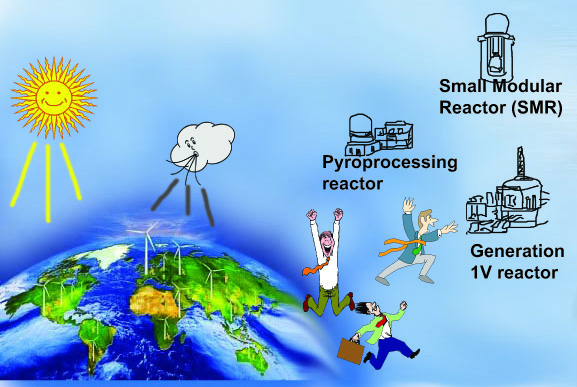
11. Pursue establishment of a used nuclear fuel waste storage and disposal facility in SA.
12. Abolish state laws preventing further taxpayer-funded investigations of the industry.
(Condensed from formal recommendations) http://www.adelaidenow.com.au/technology/former-governor-kevin-scarce-recommends-go-ahead-for-nuclear-storage-in-sa/news-story/c320cdebf7f0b3bc745ecb447abf9aef
Federal and South Australian govts underestimating people’s opposition to nuclear waste importing?
Fight looms over SA nuclear dump 9 News, 9 May 16 Environmentalists are threatening the fight of a lifetime over a proposal for South Australia to host a high-level nuclear waste dump.
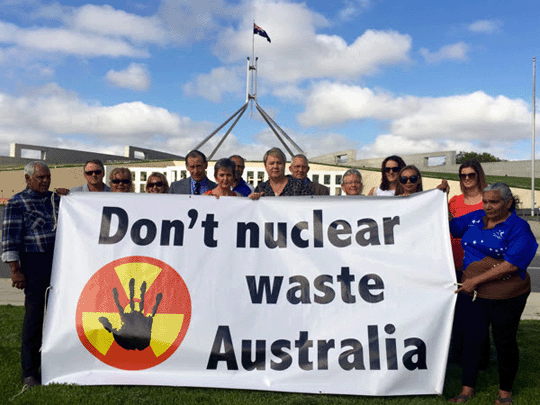
The state’s nuclear fuel cycle royal commission has called in its final report for SA to store the world’s nuclear waste in exchange for billions of dollars in revenue.
Royal commissioner Kevin Scarce on Monday said it could take up to 10 years to lock in public support for the proposed facility.
conservationists accused Mr Scarce of down-playing the risks of nuclear storage and threatened to ramp up their campaign against the dump.
“We’ll be increasing our profile, our presence and our concerns,” Australian Conservation Foundation spokesman Dave Sweeney told AAP. “It might include protests, it certainly will include boots on the ground. “This is a serious threat from a resourced and long-standing industry. We’re taking it very seriously.”
Premier Jay Weatherill said a nuclear dump would have “extraordinary” economic benefits but required broad community support, although this is unlikely to be sought through a referendum.
The government has promised to work with the state opposition and will outline its consultation process in coming days before deciding how to proceed by year’s end…..http://www.9news.com.au/national/2016/05/09/03/34/sa-nuclear-royal-commission-findings-due
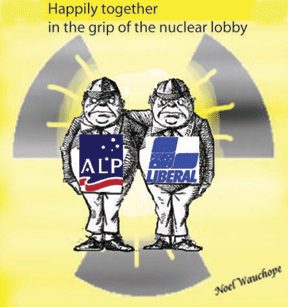
Both Labor and Liberal supporting South Australian nuclear waste dump importing
 SA nuclear royal commission sets 10-year timetable MEREDITH BOOTH THE AUSTRALIAN MAY 10, 2016
South Australians could be ready in 10 years to accept nuclear waste from overseas for storage, royal commissioner Kevin Scarce said yesterday following the release of his final report.
The report, released 14 months after Mr Scare’s appointment, made 12 recommendations. It said the state could “safely increase its participation in nuclear activities”, with a storage facility generating more than $100 billion over a 120-year lifespan.
But Mr Scarce said there would be “10 to 15 years, 10 years I hope, to get to a point where we’ll make a decision’’, with ongoing community support required and consultation to start as soon as possible through an independent agency.
“I would hope that if there’s strong social consent, we might get there faster,” he said. “We need to take the time to explain the steps, to explain the safety concerns.’’
At the same time, the agency should also determine general criteria for an appropriate dump site, he said.
Labor Premier Jay Weatherill said the commission’s findings had bipartisan support but required strong public approval. A community engagement process would begin “within days” to inform the government’s response by the end of the year…..
Opposition Leader Steven Marshall said both sides of politics would need to work together……http://www.theaustralian.com.au/national-affairs/state-politics/sa-nuclear-royal-commission-sets-10year-timetable/news-story/35c622dec6665e53850407ce47777041
Scarce Royal Commission Report urges nuclear waste dump – “as soon as possible”
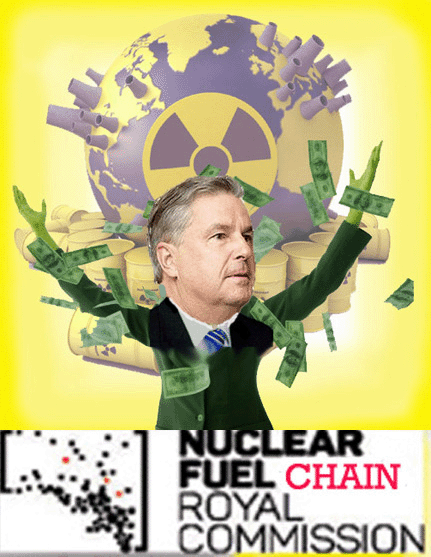 Scarce urges SA nuclear waste dump – “as soon as possible”, INDaily, SENIOR JOURNALIST Tom Richardson, 9 May 16
South Australia will take a leap into the unknown with a nuclear future firmly on the agenda, after the release today of the final report of the Scarce Royal Commission. The report emphasises the “safety” of increased participation in the nuclear fuel cycle – with a high-level global repository for spent fuel now a viable prospect – and the “significant and enduring economic benefits” to the local community.
“SA can safely increase its participation in nuclear activities,” the report summary begins – before again re-emphasising that a nuclear waste dump could generate a potential “$100 billion income in excess of expenditure”.
That would include a $32 billion reserve fund for facility closure and ongoing monitoring.
However, given the significance of the potential revenue and multi-decade timeframes under consideration, the commission – headed by former Governor Kevin Scarce – concluded such an enterprise “must be owned and controlled by the State Government”, and the wealth “preserved and equitably shared for current and future generations of South Australians”……
“The commission’s firm conclusion is that this opportunity should be actively pursued, and as soon as possible.”…..
His report concluded that “the risk of an accident occurring that could breach a cask of used fuel and cause radiation to be released is very low”……..
It also urges the Government to remove state prohibitions on the licensing of further processing activities, “to enable commercial development of multilateral facilities as part of nuclear fuel leasing arrangements” – and to push for similar removals at a federal level.
In a sign of further nuclear expansion in years to come, the report also recommends pursuing the removal of federal restrictions on nuclear power generation – “to allow it to contribute to a reliable, low-carbon electricity system, if required”.
The commission report was – like its February missive – bullish about the economic benefits of a waste dump, with its modelling estimating such as facility would grow the gross state product by “an additional 4.7 per cent – or $6.7 billion – by 2029-30”, adding 9600 full-time jobs to the workforce. http://indaily.com.au/news/2016/05/09/scarce-urges-sa-nuclear-waste-dump-as-soon-as-possible/
1 This month
17 October, Free Public Talk on Nuclear Issues in South Australia
David Noonan will speak on public interest concerns over the new Roxby Downs Indenture Act 2026 on BHP copper-uranium mining and ore processing in SA, and on how AUKUS may face SA with a High-Level nuclear waste agenda.
Dr Jim Green will discuss international developments in the field of nuclear power including ‘small modular reactors’ and Generation 4 ‘advanced’ nuclear reactor concepts.


Help Aunty Sue Protect Her Land and Sacred Sites From Destructive Rocket Testing.
.

Australians deserve the truth
about
AUKUS – https://aukuspublicinquiry.com/

PETITION – To: Prime Minister Anthony Albanese and the Australian Labor Government

of the week – Australians for War Powers Reform (AWPR)
To see nuclear-related stories in greater depth and intensity

