The Law and the Profits: Response to the Tentative Findings of the SA Nuclear Fuel Cycle Royal Commission
 Response to the Tentative Findings of the SA Nuclear Fuel Cycle Royal Commission A Submission by Paul Langley Nuclear Exhaust 16 Mar 16 “…..The Law and the Profits.
Nuclear nations all have their own laws regarding nuclear matters. For instance the United States has many laws, including the Atomic Energy Act, as currently amended, associated laws and regulations. It has long been an issue that the US Act prevents full disclosure regarding “special nuclear material” – that is plutonium and uranium as used and produced in a reactor. This matter has long been a concern in the US democratic setting. For instance, see CARDOZO LAW REVIEW, VOL 26, NO 4, MARCH 2005, PP. 1401-8.
The HLNW repository is promoted by the Royal Commission as being South Australian, owned by the government and benefitting the people of SA. To what extent then, in the course of contract negotiations, will the government and people of SA become beholden to the provisions of foreign laws regarding disclosure and other matters in regard a client nation’s HLNW? Will the contracts be commercial in confidence ? Will provisions alien to SA law be invoked in order to comply with contracted obligations? Will such provisions restrict our right to know and our freedom to speak? Will the full nature of the stockpile resident in the HLNW repository be secret in any way? Will the people be able to study each contract? What is an unclassified restricted document, and what happens if an ordinary person figures out it’s contents? ……..” https://nuclearexhaust.wordpress.com/2016/03/15/response-to-the-tentative-findings-of-the-sa-nuclear-fuel-cycle-royal-commission/
Gaining Public Trust: Response to the Tentative Findings of the SA Nuclear Fuel Cycle Royal Commission
Response to the Tentative Findings of the SA Nuclear Fuel Cycle Royal Commission A Submission by Paul Langley Nuclear Exhaust 16 Mar 16
“……..Gaining Public Trust. Relevant Safety Assurances made by nuclear “experts” in my life time.
In the 1980s, the government of South Australia returned ownership of the Maralinga Lands:
“In 1984, the South Australian Government returned the freehold title for the Maralinga Tjarutja Lands to its Traditional Owners. Concerns over radiological hazards prevented the handback of Section 400.” Source: “Maralinga Tjarutja Lands: handback of Section 400” , The Anangu Lands Paper Tracker, at http://www.papertracker.com.au/archived/maralinga-tjarutja-lands-handback-of-section-400/
As I recall at that time the then Premier, the Late John Bannon, visited the Maralinga Lands, along with Peter Burns and other ARPANSA scientists. Peter wrote a detailed description of the problem at Maralinga in a Saturday Advertiser centre page spread at that time. Mr. Bannon was appalled and surprised at the state of some areas of the lands and though the land was handed back, it was too dangerous to permit the owners to return on a permanent basis.
Full handback was not possible until the 21st century………..
For decades the relevant nuclear experts – especially those under Professor Titterton – had assured Australia and Australians that Maralinga was “perfectly safe”. From the 1950s until 1984. Many individuals who contested the opinion of these experts were threatened with jail for breaching the official secrets act. (Source: Mr Kevin Wakefield, Ex RAN, Monte Bello Island, Mr Terry Toon, Ex Maralinga, Mr Alan Batchelor, Ex Maralinga. Mr John Hutton, Ex Maralinga.) While some ordinary people knew the truth, they were not allowed to tell it. And when they did speak out, they received threats and disbelief. It is reasonable to think, given that the RAN surveyed the Monte Bello Islands until 1975, the same would be true of the Army and Maralinga. Everyone is a Sergeant Schulz on that one.
Well it was not perfectly safe. Was it? This is one of South Australia’s formative experiences with nuclear authorities. Professor Titterton remained entrenched at the Federal level as a nuclear safety “leader” until the era of the Whitlam government.
This is not ancient history. It is for some people like yesterday. The 1984 McClelland Royal Commission records an exchange between Titterton and the Royal Commissioner. In this exchange Titterton admits he could not disclose all he knew about safety to the Safety Committee due to the fact that he was constrained by the secrecy provisions of both the United States and Great Britain. Will history repeat in this regard? What will Jay not be able to say the people of South Australia? Will silence due to “American and British secrecy provisions” reign again? The Royal Commissioner McClelland found that some Australians in authority were akin to Fifth columnists acting more in the interests of foreign lands than they were towards Australia and its people.
This earlier Royal Commission also found that nuclear experts had stated to the effect that the critical interests of “a handful of natives” were not going to “stand in the way of the BritishCommonwealth of Nations.” (Royal Commission, Conclusions, 8.4.38 – 39). Saving the world required some local sacrifice. As far away from the North as possible. The ones closest in are the ones most affected. Shall we do it again Jay W.?
Nuclear history is the art of waiting for historic promises to be exposed for what they are at some future point……..
The proposed repository is a sociological experiment. It will take decades for it to provide the history lesson. A very costly higher education.
“Perfectly Safe”, in the History of South Australia, has been a nuclear science fiction, and anyone can prove it. It has never actually true, and contaminated land remains from the time when the owners were forcibly trucked off it in the 1950s. To be concentrated in camps near the Ceduna sub basin of the Bight Basin, which overlays, in part, the Gawler Craton. Such history lies beneath the apparently solid rock statement made by today’s youngster biologists who claim expertise as nuclear people……” .https://nuclearexhaust.wordpress.com/2016/03/15/response-to-the-tentative-findings-of-the-sa-nuclear-fuel-cycle-royal-commission/
AN ALTERNATIVE: Response to the Tentative Findings of the SA Nuclear Fuel Cycle Royal Commission
Response to the Tentative Findings of the SA Nuclear Fuel Cycle Royal Commission A Submission by Paul Langley Nuclear Exhaust 16 Mar 16
“……..An Alternative We are told Secure Base load Electrical Power is a certainty upon which our civilization rests. Not withstanding the constantly falling price of off grid generation and storage of domestic and industrial power.
As each day passes, alternatives grow in attractiveness. As usual old industries, such as nuclear industry, bemoan the competing technology as inadequate. The odds are by the time today’s five year child is twenty five they will generate, store and use their own off grid power simply, easily and at a cost that would make TEPCO and Westinghouse executives go green. At the moment though the nuclear industry remains a dedicated future-phobe. Those who call for a nuclear revival merely confirm, in the shrillness of their demands, the proven failures of the industry over time, all over the globe.
A large solar power plant, used for both day time power generation and day time sea water electrolysis, could provide 24 hour base load power. An onsite hydrogen fuelled generator station, generating at night or as required, fuelled by solar produced Hydrogen, could transform the SA economy. The benefits would not have to be weighted against risks spread population wide. This is 2016. Hydrogen is in daily use around the world. In SA there are potential energy sources as yet resolutely untapped.
A hybrid solar hydrogen power plant could be constructed with current knowledge and hardware. But of course, it would be an inappropriate icon in a state dominated by the nuclear promise.
A far thinking Parliament would not be bound to digging holes in the ground for a living. It might actually originate and facilitate something that actually could save the planet. Sadly it won’t. It does not have the creative will to do so. Such things would already be done if it had.
Such ideas are deemed crazy ones in the halls of nuclear power, in that place where thinking differently seems to be a sin against the prayer book of a compulsory religion.
No thanks, I do not wish to buy this product. It sucks very badly. Have you got anything else? Preferably something sensible and compatible with the future. Not some rust belt thing that the children of all tomorrows curse us for giving them. https://nuclearexhaust.wordpress.com/2016/03/15/response-to-the-tentative-findings-of-the-sa-nuclear-fuel-cycle-royal-commission/
Excellent previous submissions to #NuclearCommissionSAust
The website of South Australia Nuclear Fuel Chain Royal Commission, is not all that user friendly – hard to find the previous submissions. However they are at
http://nuclearrc.sa.gov.au/submissions/?query=&cat=View+all&search=Submissions&max_page_items=50&sort_by=
some of the best submissions are on THIS website, even if not complete.
Here they are, not in any particular order:
SUBMISSIONS FOCUSING ON NUCLEAR WASTE IMPORTATION
Sisters of St Joseph make a powerful case against radioactive trash dumping
NGOPPON TOGETHER INC – Management, Storage and Disposal of Wastes. also on impact of unclear waste import on Tourism etc
Christine Anderson – nuclear waste no bonanza for South Australia
Environmental Defenders Office (SA)
Noel Wauchope – Answer Points on Importing Nuclear Waste
BHP not interested in nuclear waste import
Bill Fisher spells it out on nuclear waste
Plans for radioactive trash dumping on Aboriginal land ?
West Mallee Protection – an Aboriginal Perspective
Clean Bight Alliance Australia
MORE GENERAL SUBMISSIONS
Josephite SA Reconciliation Circle
South AustraliaEnvironment Groups
South Australia Nuclear Royal Commission Issues Paper 4 – misleading and serious omissions
Dr Helen Caldicott’s Submission on all 4 Nuclear Royal Commission Issues Papers
Dr Caldicott’s submission concerning radiation
Medical Association for Prevention of War & Public Health Association of Australia
Annie McGovern Addressing questions of WATER
Construction Forestry & Mining. Also Uranium Free NSW.
Rebecca Keane Renewable Energy way ahead of nuclear
Electrical trades Union of Australia dispels the hype about Generation IV Nuclear Reactors
John Quiggan demolishes the case for Small Modular Nuclear Reactors in South Australia
Ally Fricker & Bob Lamb for ENuFF
Yurij Poetzl scrutinises Questionable Integrity of the Royal Commission
City of Port Adelaide Enfield notes poor prospects for New Nuclear Technology
Until 18 March, South Australia Nuclear Fuel Chain Royal Commission will accept responses to its Tentative Findings

It’s a well kept secret from the whole of Australia, but the nuclear lobby plans to invite in the world’s most toxic nuclear trash – to poor old South Australia – the State with the greatest potential to be a world – leading renewable energy hub.
This plan can be stopped – as it has been before.
One step in exposing and stopping this noxious plan by a few greedy people is to RESPOND TO the ROYAL COMMISSION’S TENTATIVE Findings. their Guidelines are here
It’s not that difficult. The Commission put up fewer obstacles this time. Say what you really think.
You can find good advice on sending a response at Action Australia
By the way, the COVER SHEET has to be signed, which implies that the comments should be posted. I am posting mine, but because of concerns about the postal service these days, I am sending it by email, too. It’s not as hard as last time – much as the Royal Commission would probably like to intimidate us all into not bothering. Please bother! Comments can be lodged via email to: enquiries@nuclearrc.sa.gov.au
South Australia to weaken Aboriginal Heritage Act -(nice for the nuclear industry)
 Aboriginal Heritage Act changes give traditional owners less say: Indigenous groups ABC News By Nicola Gage 10 Mar 16 Proposed changes to South Australia’s Aboriginal Heritage Act will reduce powers of traditional owners, according to Indigenous groups.
Amendments to the act were introduced to Parliament a fortnight ago and today passed the Legislative Council.
South Australian Native Title Services chief executive officer Keith Thomas believed amended language in the act would give traditional owners less say over their heritage. “This is going to help people who want to access lands and destroy heritage, rather than improving the protection of Aboriginal heritage,” he said.
There are tens of thousands of sacred Indigenous sites across South Australia, from ancient song lines and springs to burial grounds.
The act is in place to protect them from different activities, including mining operations. Mr Thomas said the proposed changes would make it harder to prosecute companies if they had disturbed a site without approval.
“At the moment they’re very concerning, because it’s diluting Aboriginal rights, whereas the Aboriginal Heritage Act should be strengthening Aboriginal rights to protect their heritage,” he said. Mr Thomas said the changes would also remove clause 6-2 in the act, which stipulates the minister must delegate his or her powers to the traditional owners of a site.
Aboriginal groups from Lake Torrens have been trying to use that clause over recent years to stop a mining operation from going ahead. “I think the amendments are being rushed through for some reason,” he said. “It means that the minister doesn’t have to delegate his powers and it paves the way for the miners to come back and have another go.”
Some Aboriginal groups said they had not been properly consulted over the amendments.
Traditional owner Karina Lester grew up on South Australia’s Anangu Pitjantjatjara Yankunytjatjara Lands and did not know the bill was in Parliament. “That was quite concerning for us as native title [holders] because we hadn’t been informed,” she said.”Therefore, we didn’t know what changes were being proposed.”…..http://www.abc.net.au/news/2016-03-10/changes-aboriginal-heritage-act-give-traditional-owners-less-say/7236302
Genetic damage to later generations from Maralinga radiation fallout
New generations of Australian families suffering deformities and early deaths because of ‘genetic transfer’,news.com.au MARCH 10, 2016 [EXCELLENT PHOTOS] PEOPLE who worked at Australian atomic bomb test sites claim they have produced generations of children with severe deformities and suffered a high number of stillbirths.
Documents obtained exclusively by news.com.au show hundreds of children and grandchildren of veterans exposed to radiation were born with shocking illnesses including tumours, Down syndrome, cleft palates, cerebral palsy, autism, missing bones and heart disease.
One veteran, who was posted to the Maralinga nuclear test site in South Australia in the 1950s as part of the British Nuclear Test (BNT) program, says the radiation contaminated his sperm and is to blame for the death of a child he never got to know.
But he is not alone, with the documents detailing a litany of miscarriages and stillbirths that has allegedly passed the devastation from generation to generation.
Australian ex-servicemen and their families originally made submissions to a Federal Government review in 2003 over deaths and disabilities they believe were caused by exposure to radiation from nuclear testing in South Australia and Western Australia in the 1950s and 60s.
The submissions were later compiled to use in a class action against the British Ministry of Defence, but the case was not allowed to proceed because it was deemed impossible to prove radiation caused their illnesses. Continue reading
Nuclear Royal Commission findings agree with French report: Nuclear power is prohibitively expensive
 The Nuclear Industry Prices Itself Out Of Market For New Power Plants, Climate Progress, BY JOE ROMM MAR 8, 2016 “……… in newly-released findings, South Australia’s nuclear royal commission found that the price of electricity from new nukes greatly exceeded not only business-as-usual projections for electricity prices but also prices in a “strong climate action” case. The Commission concluded “it would not be commercially viable to generate electricity from a nuclear power plant in South Australia in the foreseeable future.”
The Commission explicitly looked at plausible electricity prices for a new reactor in 2030 based on both current designs and possible fourth-generation ones, such as small modular reactors (SMRs). The Commission estimated the cost for the most viable nukes at US$7 billion for a typical large 1125-megawatt reactor and $2.8 billion for two 180-megawatt SMRs. The smaller SMRs would be providing electricity for a whopping US$0.17 a kilowatt-hour!
A study done for the Commission found that both large nukes and SMRs “consistently deliver strongly negative NPVs” (net present values) for both 2030 and 2050 — even for the strong climate action scenario. The Commission Chair noted that given how Australia’s National Electricity Market works, renewables are “the first energy that goes into the market” because they have the lowest costs.
The Commission’s findings are consistent with a 2014 Energy Policy study, “The cost of nuclear electricity: France after Fukushima.” Using cost data released by the French government after the Fukushima disaster, the study found the cost of French nuclear plants steadily escalated over the past four decades. Further, it projects “the future cost of nuclear power in France to be at least 76€/MWh (US$0.084/KWh) and possibly 117€/MWh (US$0.129/KWh),” which “compares unfavorably against alternative fuels,” such as wind……..”http://thinkprogress.org/climate/2016/03/08/3757281/nuclear-industry-prices/
Rail upgrade Adelaide to Tarcoola – convenient for the nuclear industry?
What’s the bet that today’s announcement by Turnbull of a plan to “bring forward by some years” the upgrading of 600km of rail line from Adelaide to Tarcoola just happens to fit in nicely with the Weatherill plan to expand the nuclear industry in SA.
South Australian Government pro-nuclear waste dump PR campaign set to roll
The Premier’s announcement today that the State Labor Government will move to repeal part of the 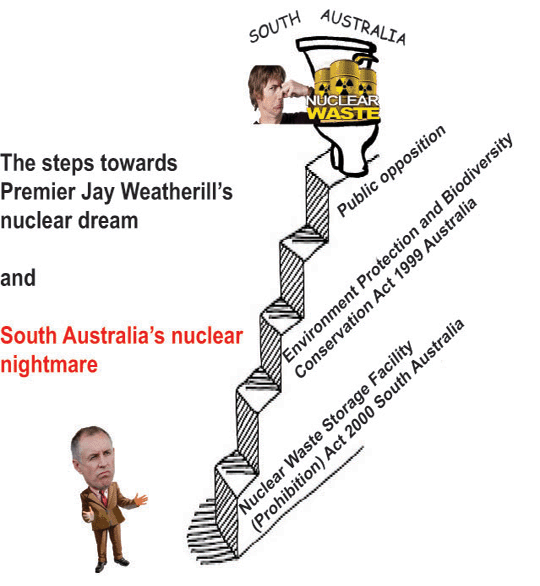 Nuclear Waste Storage Facility (Prohibition) Act 2000, indicates that a taxpayer-funded pro-nuclear waste dump public relations campaign is on its way.
The Government says the repeal is necessary in order to consult with the community over the Nuclear Royal Commission’s findings.
“That’s just not true”, according to SA Greens Leader and environmental lawyer, Mark Parnell MLC.
“The Act only prohibits the use of public money to “encourage or finance any activity associated with the construction or operation of a nuclear waste storage facility in this State”. It doesn’t preclude genuine public consultation that asks South Australians whether or not they believe SA should host a high-level nuclear waste dump. Genuine consultation with the South Australian community is allowed, even if it uses Government resources. What isn’t allowed is a biased or one-sided PR campaign that “encourages” the construction or operation of a nuclear waste dump.”
“If the Government’s intentions were honourable, it wouldn’t need to repeal this legislation.”
“What is most galling is that the Premier isn’t even prepared to wait for the Royal Commission’s final report in May before legislating to be able to spruik a nuclear waste dump. The Government had said it would wait until the end of the year before deciding what to do with the Royal Commission’s findings. Rushing now to repeal this legislation suggests that it’s mind might already be made up.
“If this legislation is repealed, the Government will be able to legally spend millions of dollars of taxpayers’ money to promote SA as the Nuclear Waste State. It will also be able to conduct detailed planning and design work for a nuclear waste dump, with only the final consent requiring Parliamentary approval,” concluded Mark Parnell.
South Australia nuclear law repeal opens door to taxpayer funded spin
Conservation Council of South Australia 7 Mar 16 The move by the Weatherill Government to repeal parts of the SA Nuclear Waste Storage Prohibition Act even before the Nuclear Royal Commission hands down its final report is deeply disappointing.
“This move is cold comfort for communities in Kimba and the Flinders Ranges who are currently in the frame for a national radioactive waste facility,” said Conservation SA Chief Executive, Craig Wilkins.
“With the Royal Commission months from handing down its final report, Premier Weatherill is clearly jumping the gun.
“The South Australian public now has every right to question how genuine the ‘listening’ process in response to the Royal Commission will be over the coming months.
“They will rightly be outraged if the Government intends to free up taxpayer funds to spin an unpopular nuclear waste dump proposal,” he said.
The object of the Nuclear Waste Storage Facility (prohibition) Act is to ‘protect the health, safety and welfare of the people of South Australia and to protect the environment in which they live by prohibiting the establishment of certain nuclear waste storage facilities in this state.’ The Act expressly bans the use of public money ‘for the purpose of encouraging or financing any activity associated with the construction or operation of a nuclear waste storage facility in this State’. This clause is now set for repeal.
Rose Lester, Yankunytjatjara Anangu woman said: “When many Anangu people have clearly expressed opposition to nuclear industry, weakening any protection is not a step in the right direction for reconciliation. It is very disheartening that people who don’t have strong connection to country change laws to suit their ideology rather than acknowledging and respecting the law of the land.”
South Australian Laws to be repealed to allow tax-payer funding for nuclear activity
 The State Government will move this week to repeal laws that prevents it from consulting on the merits of a nuclear waste storage facility once the Royal Commission hands down its final report to Government due in May.
Section 13 of the Nuclear Waste Storage Facility (Prohibition) Act 2000, states: “Despite any other Act or law to the contrary, no public money may be appropriated, expended or advanced to any person for the purpose of encouraging or financing any activity associated with the construction or operation of a nuclear waste storage facility in this State.”
Solar thermal power push to keep jobs in Port Augusta
 THE “dominoes” are lined up for Port Augusta to switch from coal-fired to solar thermal power generation and advocates are urging governments to summon the “political will” to secure the project….(subscribers only)
http://www.adelaidenow.com.au/news/south-australia/solar-thermal-power-push-to-keep-jobs-in-port-augusta/news-story/dd0e42df6d28e5e0bb5959966ac676be
Communities fight Turnbull government nuclear waste dump plan
Aboriginal woman Regina Mackenzie said the proposed Barndioota site in the Flinders Ranges threatened important cultural heritage sites. “There was no consultation whatsoever … we just feel it’s an attack on our belief system,” she said.
Greens nuclear spokesman senator Scott Ludlam said communities were told the dump would not be built if locals largely objected. “There’s strong opposition in all six communities [and] the government needs to abandon this idea,” he said.
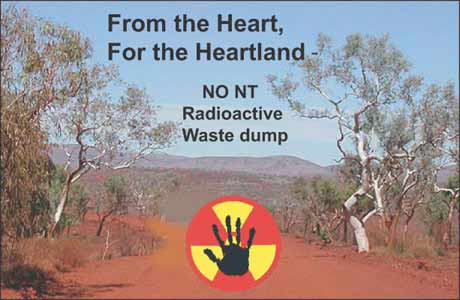 Nuclear waste dump: Sleepless nights, tears and stress as communities fight Turnbull government plan, SMH March 1, 2016 – Nicole Hasham Environment and immigration correspondent When Peter Woolford’s son died in a motorbike accident 12 years ago, the rural community of Kimba united to help the farmer and his wife through their personal cataclysm.
But that was then. Now, old friends in the community no longer speak, and people on the streets of the South Australian town are afraid to talk about the issue that has driven a wedge between neighbours: a proposed nuclear waste dump.
Cortlinye, near Kimba, is one of six sites across Australia the federal government has shortlisted to host the nation’s first permanent nuclear dump for low-level and intermediate waste.
The others are at Sallys Flat near Hill End in NSW, Hale in the Northern Territory, Pinkawillinie and Barndioota in South Australia and Oman Ama in Queensland.
If sites are approved, landowners who volunteered their property would receive up to four times the value of their land, and the community would receive about $10 million for infrastructure or services.
But this fight is “not about money”, said Mr Woolford, who was in Canberra on Tuesday with waste dump opponents from the other five communities to voice their concern. They say Resources Minister Josh Frydenberg refused to meet them, however they met other senior officials. Continue reading
Could renewable power be Port Augusta’s saviour?

THE “dominoes” are lined up for Port Augusta to switch from coal-fired to solar thermal power generation and advocates are urging governments to summon the “political will” to secure the project….(subscribers only)
http://www.adelaidenow.com.au/news/south-australia/solar-thermal-power-push-to-keep-jobs-in-port-augusta/news-story/dd0e42df6d28e5e0bb5959966ac676be
1 This month


Help Aunty Sue Protect Her Land and Sacred Sites From Destructive Rocket Testing.
.

Australians deserve the truth
about
AUKUS – https://aukuspublicinquiry.com/

PETITION – To: Prime Minister Anthony Albanese and the Australian Labor Government

of the week – Australians for War Powers Reform (AWPR)
To see nuclear-related stories in greater depth and intensity

