For unspoilt Tasmania, nuclear power is not a good look
Nuclear not for Tassie The Mercury – The Voice of Tasmania, 26 March 11, “……..If Tasmania is to become an island famed worldwide for its niche and high-quality food, fish and wine products; creative, scientific and artistic talent; unspoilt heritage and unique wilderness and tourism experiences, it is also worth considering that a nuclear power station may not be such a good look or brand fit. Continue reading
Antinuclear cry from the heart of Australia’s heartland
As for the business of the Australian Federal Government paying off an indigenous group to dump radioactive material on their land (Muckaty Station near Tennant Creek in the Northern Territory)…it’s such an appallingly low act…If nothing else, read your insurance policies. Do they specifically rule out claims against personal or property damage that is nuclear-accident related? Why?No insurance company or underwriters will touch it with a mile-long pole, because the potential cost of a nuclear disaster is unimaginably high….
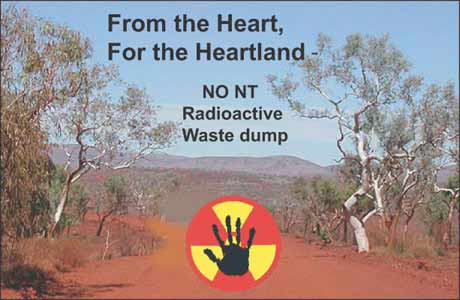
Nuclear power stations and nuclear waste dumps in outback Australia, Fiona Lake Australian Photographs, 24 march 11, Where should nuclear power stations and nuclear waste dumps be located, in Australia? In the heart of our largest city, Sydney. Oh but what if there is an accident? Well if there is any, any, chance of an accident – then we must not have a nuclear power station or nuclear waste dump in Australia at all. Continue reading
Grim outlook for nuclear radiation disaster, less bad for Australia
Dr Caldicott said any fall-out was unlikely to affect Australia, though the death toll in the northern hemisphere could be severe.
“Australia is probably not going to be affected by fall-out because the northern and southern air masses don’t mix.”
Caldicott: Japan may spell end of nuclear industry worldwide | Independent Australia, 16 March 11, – ‘The situation is very grim and not just for the Japanese people’ One person who is in no doubt about the seriousness of the incident is prominent anti-nuclear campaigner, Dr Helen Caldicott. Independent Australia spoke exclusively to Dr Caldicott yesterday as she was in transit to Canada to speak at a hearing into a proposal to build four new power plants in Darlington, Ontario. The situation is very grim and not just for the Japanese people,” said Dr Caldicott. Continue reading
Scott Ludlam quotes prestigious international medical group on danger of uranium mining
“I think we disregard [these health professionals] at our peril….[M]embers of parliament and advocates who are hitching their political fortunes to this most volatile and dangerous of industries, should be warned and should listen to the words of these health professionals. “…There are no second chances with this unforgiving technology. This is an industry that we should be getting out of rather than getting ourselves further into.”

Australian senator questions uranium policies; cites IPPNW resolution « IPPNW peace and health blog, February 25, by John Loretz Senator Scott Ludlam, a member of the Australian Parliament from the Green party, has been asking the government some pointed questions about the health and environmental effects of uranium mining. Continue reading
Arkaroola to be a National Park, perhaps not with uranium mining?
Clearly, there is overwhelming public opposition to mining in Arkaroola.
Editorial: Sentiment holds sway for Arkaroola | Adelaide Now, 18 Feb 2011, THE expected decision to declare the Arkaroola Wilderness Sanctuary a national park is a welcome move. Continue reading
South Australian facing opposition on Arkaroola uranium mining
The Arkaroola Wilderness Sanctuary is a recognised sanctuary under the South Australian National Parks and Wildlife Act and is an “Environmental Class A Zone” under the Development Act.
Uranium threat to pristine sanctuary, Green Left, February 13, 2011 By Sean Brocklehurst, Adelaide
“…..It isn’t often that socialists, Greens, Liberals and NGOs agree on an issue. But that is the case regarding uranium exploration in the Arkaroola region in the Flinders Ranges, 700 kilometres north of Adelaide. Continue reading
Uranium exploration: South Australian Government ignoring Arkaroola Wilderness
Time for ERA to shut down Ranger uranium mine
“It is time for ERA to end its increasingly ill-considered and desperate expansion plans and start a measured, costed and comprehensive clean up and exit from Ranger. Twelve weeks is a start, but the unique Kakadu environment needs more than a three month reprieve.”
Dave Sweeney 29 Jan 2011, The Australian Conservation Foundation has welcomed today’s confirmation of the suspension of mineral processing operations at Energy Resources of Australia’s troubled Ranger uranium mine in Kakadu. Ranger continues to be dogged by operational problems, including unresolved seepage from the tailings dam and the planned twelve week suspension seeks to reduce pressure on the under-performing tailings dam. Continue reading
Will South Australia sacrifice a national wilderness to a uranium company’s greed?
ARKAROOLA IS:
• on the Register of the National Estate
• a recognised geological monument,
• a Sanctuary under the National Parks & Wildlife Act
• an Environmental Class A zone under the Development Act
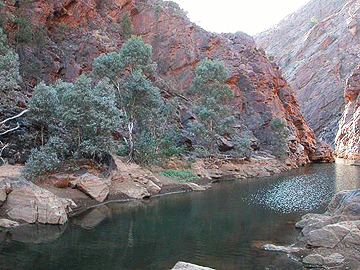
LET’S STAND UP FOR ARKAROOLA!, Amanda Rowe, 21 Jan 2011,
In 2007 mining company Marathon Resources had its exploration licence suspended after illegally dumping 22,800 bags of radioactive waste in Arkaroola Wilderness Sanctuary and stealing Fluorite from a site classified as a Geological monument. Continue reading
World renowned Arkaroola Wilderness still threatened by uranium mining
Arkaroola Wilderness Sanctuary director Marg Sprigg says the overhaul of the state’s mining laws has done little to beef up environmental protection. “Unless further conditions are imposed in any licence to explore for uranium within Arkaroola, bulldozers can again move in, carving tracks through fragile environments and flattening steep slopes to create closely spaced drilling pads,”
Arkaroola mining measures criticised, The Advertiser, ADAM TODD November 22, 2010 ARKAROOLA Wilderness Sanctuary is still under threat from miners despite new laws aimed at penalising those who breach exploration and mining licences, the sanctuary’s director says. Continue reading
50 years later, Rum Jungle uranium mine site still radioactive
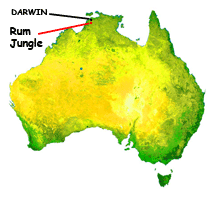
Recreation reserve closed due to radiation, ABC News (Australian Broadcasting Corporation), By Louisa Rebgetz Nov 12, 2010 A Northern Territory recreational reserve where a uranium mine once operated has been closed due to low-level radiation in the area. The Rum Jungle Mine, about 100 kilometres south of Darwin, operated in the early 1960s.The area was rehabilitated in 1991 before becoming the Rum Jungle South Recreation Reserve.The Department of Resources says tests at the waste rock pile at the reserve have detected low-level radiation……Recreation reserve closed due to radiation – ABC News (Australian Broadcasting Corporation)

Water use, radiation hazard, in Cameco’s planned Pilbara uranium mine
Cameco’s Kintyre Uranium Project report details risks to mine workers from radiation exposure, the potential for groundwater contamination and the spread of radioactive dust and its potential to endanger flora and fauna.

Radiation fear for Pilbara uraium mine workers * Narelle Towie, The Sunday Times November 08, 2010 A CANADIAN company plans to draw five million litres of water a day – two Olympic-sized pools – to operate a uranium mine on the edge of a Pilbara national park. Continue reading
BHP Billiton held accountable for environmental impacts of uranium mine expansion plan
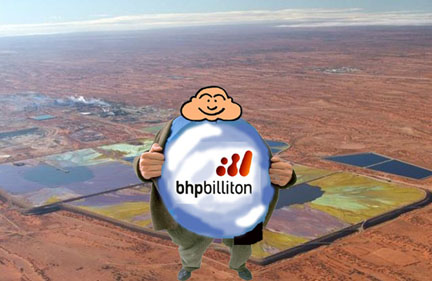
 Call on BHP to answer over Olympic Dam impacts, Australian Conservation Foundation, David Noonan, 16 Oct 10
- BHP must present feasible alternatives to prevent or reduce the impacts of the proposed Olympic Dam open cut mine in the next phase of the Environmental Impact Statement process, including: considering copper mining alone – without uranium exports; properly managing radioactive liquid wastes and tailings; using renewable energy for its large new electricity demands; and protecting the fragile gulf environment from impacts from the mine’s proposed water supply. Continue reading
Koongarra uranium mining would endanger precious wetlands
“Woolwonga is so valuable ecologically that we oppose in principle any mining development upstream of it,” the inquiry report said.
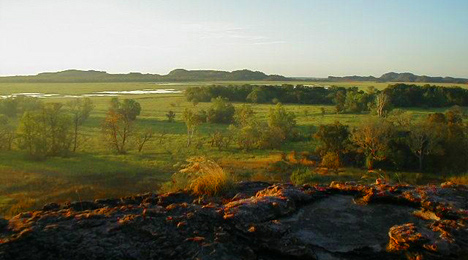
Rich uranium mine stays locked up, Northern Territory News, NIGEL ADLAM, August 11th, 2010 “….. The Fox Inquiry said in 1977 that Koongarra should not be mined as it is close to the internationally important Woolwonga wetlands. Continue reading
AREVA unhappy, Australia’s tourism happy, about Kakadu expansion
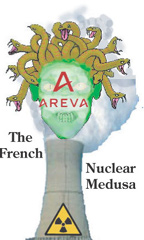 AREVA wants the Government to explain its decision and says it is now seeking legal advice…Meanwhile, Tourism Top End says it is hopeful Labor’s pledge to expand Kakadu will mean more areas will be opened to tourists.
Kakadu expansion plan bewilders uranium miner – ABC News (Australian Broadcasting Corporation), By Emma Masters, Aug 11, 2010 “….A French mining company seeking to exploit uranium-rich land surrounded by Kakadu National Park is calling for the Federal Government to explain why it has promised to stop future mining. Continue reading
1 This month


Help Aunty Sue Protect Her Land and Sacred Sites From Destructive Rocket Testing.
.

Australians deserve the truth
about
AUKUS – https://aukuspublicinquiry.com/

PETITION – To: Prime Minister Anthony Albanese and the Australian Labor Government

of the week – Australians for War Powers Reform (AWPR)
To see nuclear-related stories in greater depth and intensity

