Week to 4 May in climate and nuclear news
 Well, ya can’t get away from it. It’s always the pandemic! This week, the news moves on to considering the future. Biodiversity scientists warn that future pandemics are on the horizon, if we don’t stop our rapid destruction of nature. With increasing human population, encroaching on wild habitats, there’s increased risk of pathogens transferring between animals and humans.
But also, the pandemic is showing us how our trashed world can heal.
Amidst the continuing propaganda for the (still non existent) new “cheap ” small nuclear reactors, comes the sobering fact that the nuclear industry is in trouble, in this time of pandemic. It’s not just nuclear’s unique safety problem, but now the business problem. As wind and solar power thrive , nuclear power is going down the drain, with low prices and slumping demand.
A bit of good news – Hole in the ozone layer is now closed.
AUSTRALIA
Institute of Public Affairs (IPA) continues attacks on ABC .
Rampant, unmonitored use of water by Australia’s coal industry in time of drought!.
NUCLEAR. Australia: Epidemiology on nuclear radiation?
Flinders Local Action Group want a new process for disposal of Australia’s nuclear waste. South Australian group calls – ” No to radioactive waste on agricultural land in Kimba or South Australia.” Dr Helen Caldicott explains the (virtually eternal) problem of toxic nuclear waste. Beyond Uranium Canberra. Group calls for an end to Kimba waste plan, wants Inquiry into nuclear waste management.
CLIMATE Emissions Reduction Minister Angus Taylor, refuses to release findings of ‘expert panel’ into emissions reductions Australia’s govt betting on a fossil-fuel led recovery – despite expert advice on renewable energy. Why does the Morrison govt hear the experts on coronavirus, but ignore the experts on climate change?
RENEWABLE ENERGY
- AEMO lays out “action plan” to manage 75 pct wind and solar by 2025 . Another record month for rooftop solar, but Covid-19 likely to hit in May.
- Want an economic tonic, Mr Morrison? Use that stimulus money to turbocharge renewables. Paralysis by analysis: Absurd regulatory regime is burying energy transition. Major contractor quits Australia solar market after huge losses on projects. ARENA told to strengthen processes, as decisions on future loom. Deep dive: Why “step change” to high renewables grid will deliver low cost, reliable grid.
- South Australia winemaker completes shift to 100% renewables with solar car park.
- Zero contact and zero emissions: “Covid safe” electric taxis to launch in Sydney. Cherry Tree wind farm delivers first generation to Victorian grid.
INTERNATIONAL
The nuclear pandemic. Nuclear Issues and Epidemiology. Low Oil Prices May Kill Off The Next Nuclear Boom Before It Begins.
New START is the only U.S.-Russian nuclear treaty still in effect. Time to renew it.
Petersberg Climate Dialogue to be held virtually this year. Climate change: lakes and rivers will become drier, increasingly infectious and toxic.
Solar and Wind Cheapest Sources of Power in Most of the World Solar heating.
The week in nuclear and climate news – Australia

While we are preoccupied with the pandemic, global heating is not going away. Climate Change Made 2019 The Warmest Year On Record. Eleven of 12 hottest years have occurred since 2000, new climate report warns. What happens after coronavirus will determine our climate‘s future.
Coronavirus illustrates the unsafety of nuclear facilities. In the USA , and presumably in Russia and other countries, too, nuclear power stations have to be refuelled, a process that involves many hundreds of workers – a real problem for “social distancing”. Compare that situation with solar and wind power plants, where the fuel is delivered directly, all by itself – requiring no transport, no armies of workers.
That, and other considerations, such as astronomic costs, do not deter the American government, locked as it is in the embrace of the nuclear lobby. Now they are coming straight out with the admission, or perhaps the boast, that new nuclear reactors are essential for the nuclear weapons industry. I am sure that it is the same in Russia.
A bit of good news – For the First Time in 240 Years, White-Tailed Eagles Spotted Flying Over England
AUSTRALIA
Covid 19 shows that Australia’s security means a lot more than military preparedness.
Australia goes backwards in latest world press freedom index.
Investigative journalism – Australian govt’s devious ploy to further dispossess the Bangarla Aboriginal people.
Current Review of Environment Protection and Biodiversity Conservation Act (EPBC) ? – it’s all about promoting the polluters.
Another revolving door– Air Chief Marshal (ret’d) Mark Binskin AC straight into BAE warships maker.
NUCLEAR. Federal govt’s Kimba nuclear waste dump plan
Kimba community’s $20 Million dollars can only be accessed ONCE THE NUCLEAR DUMP IS UP AND RUNNING!
South Australia’s Greens fight to stop nuclear waste dumping on Kimba .
SUBMISSIONS
An initial brief look at the submissions to the Senate Nuclear Waste Bill Inquiry.
- In Kimba “Informed Consent” not possible, as the community was not properly informed.
- Geraldine Gillen: Napandee nuclear waste dump -illegal, damaging to agriculture’s image, unwanted, unnecessary.
- Susan Craig: South Australia’s $27.9 billion food, wine and tourism markets endangered by Kimba nuclear waste dump plan.
- Caring for South Australia reject nuclear waste dumping: it will jeopardise South Australian food production.
- Katrina Lester: major South Australian Aboriginal groups not consulted in Kimba nuclear waste dump decision.
- Ngoppon Together Reconciliation Group: Kimba nuclear waste dump opposed by Indigenous, and other South Australians.
- Annie McGovern: stop pretending that the Kimba nuclear waste dump is a”medical necessity”.
- Kim Mavromatis on Radioactive Waste Bill: community consent? transport dangers, on agricultural land. poor process.
- Brett Stokes: South Australian law has been repeatedly breached by the deceptive National Radioactive Waste Dump plot.
CLIMATE. Australia’s climate experts urge govt to use rebuilding economy to combat global heating. Planning for waterways – a vital need, as Australia’s river systems are affected by global heating.
No green new deal for Australia as Coalition tightens embrace of fossil fuels. Fossil fuel web leading Australia to a Deadly Recovery. Govt scheme to underwrite gas, hydro and coal power needs investigation – Zali Steggall. When Coalition spends big on oil, it misses a huge green economic opportunity for Australia. Emissions Reduction Minister Angus Taylor Taylor to loosen Australia’s lax fuel standards to support oil sector. Former PM Turnbull says his biggest leadership failure was on climate change
Queensland’s Supreme Court bars Aboriginal activists from Queensland’s Adani coal mine site.
RENEWABLE ENERGY. Australian rooftop solar continues to weather Covid-19 storm – at “very healthy levels”. South Australia could meet state Liberals’ 100 pct renewables target 5 years early. Australia’s main grid sets new milestone for negative prices over weekend. NSW government paves way for more – and bigger – rooftop solar systems. AEMO to resume new connections after solar constraints lifted in West Murray. On-site solar is key to cost competitive renewable hydrogen. Huge Dundonnell wind farm powers past 100MW-mark in Victoria. Wind and solar could play key role in future of Australia’s aluminium industry . ARENA makes case for more funding, points to jobs, costs and investment gains.
INTERNATIONAL
To save the planet, cultural, social and political transformation is essential; new technologies only part of the answer. Arctic marine life threatened as a result of Alaskan sea ice disappearing. International climate ministers meet to discuss green recovery post COVID-19. European Solar Generation Breaks Records, As Coronavirus Shutdowns Reduce Air Pollution.
Animals in radiation zones are not doing well.
Occupational Radiation Exposure: Serious Risks and Safety Solutions.
Animals in radiation zones are not doing well.
to April 20 – nuclear and climate news
Everything’s quieter, as we all batten down the hatches, and wait for that Covid 19 curve to flatten ….
The planet needs a green recovery. But are governments up for this? https://www.youtube.com/watch?v=Y1e7zXAGMKQ
Some bits of good news – Optimistic COVID Updates – Himalayan Mountaintops Visible for the First Time in 30 Years as Air Pollution Continues to Plummet in India.
AUSTRALIA
Coronavirus, climate change, and Australia’s national security.
Call for Australian government to delay review of its Environment laws. A brief Submission to the the Review of the Environment Protection and Biodiversity Conservation Act 1999.
Australia’s political revolving door between military industry and government – Reynolds and Reith.
NUCLEAR. Australian Radiation Protection and Nuclear Safety Agency (ARPANSA) is critical of Government propaganda on Kimba nuclear waste dump plan. Parliamentary committee finds that Kimba nuclear waste dump law may breach Indigenous human rights. 13 Australian peak Non Government Organisations seek stronger Environmental Law on Nuclear Issues. National Radioactive Waste Facility has strong community opposition – says Public Health Association of Australia. Uniting Church, South Australia, rejects National Radioactive Waste Bill as discriminatory against Aboriginal people.
CLIMATE. Bushfire Survivors for Climate Action taking legal action against NSW Environment Protection Authority. Amid climate change threat to the Murray Darling river system, the States haggle. Study finds that New South Wales rivers, lakes and lagoons are warming twice as fast as ocean. Climate Change Authority launches review into stalled Emissions Reduction Fund.
RENEWABLE ENERGY. Australia deploying new renewables at ten times global average. Australian renewables nudge milestone 25% share in last 12 months.
Rooftop solar owners are saving more while staying home. Australians installed 22,661 home battery systems in 2019 . Thousands rush to South Australia’s home battery scheme before subsidy winds back. South Australia Water to build solar farm on former oil refinery site. Australian scientists help unlock potential of flexible and wearable solar.
ARENA’s future clouded as Minister Angus Taylor fudges on board appointments “Performance issues” hobble output at ground-breaking solar farm.
INTERNATIONAL
2020 predicted to be Earth’s warmest year on record. Climate Change Multiplies the Threats of Infectious Diseases. To tackle the climate crisis, the world cannot return to normal after Covid-19. Changes for a low carbon economy are possible: we must advocate for this.
Artificial Intelligence in nuclear weapons and military systems.
To 13 April – climate and nuclear news
With the whole world in the grip of anxiety about coronavirus, and preoccupied with responding to the pandemic, climate scientists and activists ponder the opportunity to develop a green economy when it is over. And indeed, the global climate, and the world’s biodiversity are right now benefiting from the lockdown response. But, alas, the signs are already there, that, in recovering from the health crisis, governments are more likely to promote polluting industries and consumer spending, and to relax environmental safeguards. https://www.youtube.com/watch?v=0XhzBSMBpuY It’s too early to tell.
As for the nuclear lobby, it continues to battle bravely on, with propaganda about nuclear’s role in diagnosing COVID 19, and with promoting small nuclear reactors. Despite the nuclear industry’s present urgent problem with Coronavirus and staffing– or perhaps because of this, it is heavily promoting “clean”, “safe”, “cheap” nuclear power to Africa.
A bit of good news – Reports Find Social Restrictions Are Working to Curb New COVID-19 Cases From Italy to Seattle
AUSTRALIA
NUCLEAR. Josephite South Australia Reconciliation Circle’s advice to the Senate Inquiry on Radioactive Waste Bill. A flawed process- National Radioactive Waste Management- Submission from David Noonan. Bob Phelps’ submission: There is no valid case for the planned national nuclear waste facility at Kimba. Conservation Council of Western Australia stresses importance of submissions to strengthen environmental protection – especially to keep anti nuclear provisions.
CLIMATE. Coronavirus action: Australia’s moment to change course for a clean environment, slowing global heating. Calls for Morrison to end fossil fuel stimulus, redirect funds to clean tech. Big win for fossil fuels as regulators seek 12 month delay on 5-minute rule change.
RENEWABLE ENERGY. Australia renewables hit 50% of main grid’s net demand on Easter Saturday. Why Australia needs to aim for at least 75% renewables by 2030. Cleantech startups get a boost with ARENA funding for EnergyLab. W.A. to lead way in transition to distributed, renewable and equitable grid. New wind farm begins generating in Victoria. Australia’s clean energy transition delayed due to outdated electricity market design. AEMO declares system strength shortfall in Queensland after wind, solar curtailed.
INTERNATIONAL
The coronavirus pandemic, like other global catastrophes, reveals the limitations of nationalism.
Climate change could cause sudden biodiversity losses worldwide.
Ordinary people can beat the nuclear establishment: it’s been done before.
New START treaty must be extended, a U.S. – Russia nuclear arms race an intolerable threat to the whole world.
Nuclear Non-Proliferation in a Deadlock.
Nuclear fusion, too hot, too costly? And not ready before 2050.
UKRAINE. Chernobyl wildfires now ‘close’ to exploded nuclear reactor.
To 7 April – Nuclear and climate news
Global problems intertwine. Global heating contributes to epidemics of infectious diseases, by promoting the spread of disease vectors, like mosquitoes. There is no established link between covid-19 and climate change. However, the way we are altering the planet will make the spread of some diseases more likely. National responses to the coronavirus pandemic bring the opportunity to tackle climate change. To get a perspective – the climate crisis is a greater catastrophe than Coronavirus.
The current story of Captain Brett Crozier, captain of the nuclear aircraft carrier Theodore Roosevelt, illustrates the moral poverty of the secretive nuclear culture, and the moral poverty of USA’s nuclear commander-in-chief, Donald Trump. The ship, with nearly 5000 crew, had a number of cases of coronavirus. The captain wrote to the Navy, begging to have the sailors evacuated, a plea which was rejected. Later, the sailors were evacuated, but the captain was fired. President Trump explained that what Crozier did “was terrible” .
But that’s just one nuclear ship – what about the world’s nuclear ships and nuclear submarines? How safe are they, with warship crews now falling victim to COVID-19 ?
Some bits of good news – Another Roundup of Positive Updates on the COVID Outbreaks From Around the World. Earth’s Ozone Layer Continues to Repair Itself. (Also – if you can persevere with the video “Sam and the Plant Next Door”- it’s quite uplifting. )
AUSTRALIA
The importance of strengthening the Environment Protection and Biodiversity Conservation Act (EPBC). Submissions due by 17 April.
Doctors warn on coronavirus danger for Australian citizen, Julian Assange, imprisoned without conviction, in a coronavirus incubator.
NUCLEAR. Outlandish claims made by Byron Shire Councillors, (Greens!!) promoting mobile Small Nuclear Reactors.
CLIMATE. Finally, Australia’s energy network planning will include climate policies. Australia has what it needs to go “all in” and reach zero emissions by 2035. Under cover of pandemic, fossil fuel interests unleash lobbying frenzy. Sorry to disappoint climate deniers, but coronavirus makes the low-carbon transition more urgent. Big swings to the Greens in Brisbane wards elections.
RENEWABLE ENERGY. Northern Territory offers $6,000 grant for home batteries, cuts solar tariff. NT plans big battery in Darwin to cut gas costs and accelerate solar. NSW approves critical Snowy 2.0 factory as more energy experts call for project halt. Final Government approvals for core lithium to move on first lithium production in the NT. Solar constraints could be relaxed before end of April, clearing path for new projects. Rooftop solar charts another big month, but Covid-19 clouds future. How your home battery can help keep the grid stable and prices down.
INTERNATIONAL.
Despite propaganda from nuclear/coal front group, Breakthrough Institute, NOW IS the time to talk about climate change. The Climate Crisis Will Be Just as Shockingly Abrupt as the Coronavirus Pandemic.
Put people and health before nukes. New hypersonic weaponry complicates Nuclear Arms Control Regime. Noam Chomsky on the urgent need to eradicate nuclear weapons.
Covid 19 and government responses are affecting nuclear construction world-wide. The nuclear industry and the impact of coronavirus. A creeping catastrophe: the world’s nuclear reactors are getting dangerously old.
To 30 March – nuclear and climate news.
Yes, I know, it’s bad form to be writing about anything but the virus. But here goes, anyway. As to climate change, the current dread of the coronavirus feels awfully like a familiar version of the anxiety that many of us have felt about the climate crisis. There’s a bit of a silver lining, in that global greenhouse has emissions have dropped.
The pandemic, and its consequence – social isolation, have stalled industry, and are expected to wipe out global growth in renewables deployment in 2020.
The nuclear industry has put a bold face on it, claiming that construction of huge new reactor stations are essential, so that workers at UK’s Hinkley Point C build, and USA’s giant Vogtle nuclear build can count as “essential” so the building programmes can stay on track. But, even more remarkable, the USA nuclear industry uses coronavirus to gouge $billions of tax-payer money.
Anyway, what should we do about this truly awful global situation? I can think only of Voltaire’s famous advice – given by his fictional character Candide – “we must go and work our garden.” https://www.youtube.com/watch?v=fcTsMirQoG0&t=8s
A bit of good news – Chinese Company Ships Crates of Masks to Italy , Covered in Italian Poetry: We Are ‘Leaves of the Same Tree’
AUSTRALIA
A major scorecard gives the health of Australia’s environment less than 1 out of 10. With the pandemic, and the bushfires, we now must strengthen the Environment Protection and Biodiversity Conservation Act (EPBC). Webinar: Yeelirrie – A Case for Environmental Law Reform .
NUCLEAR. Nation Radioactive Waste Management Bill: Submission deadline extended to April 9. Submission re National Waste Dump Bill: Flawed process: the pretense that this National issue is just a Local issue. Nuclear front group Energy Policy Institute joins with NuScam to promote Small Nuclear Reactors to Australia.
CLIMATE. Environment department begins purging website of historical emissions data, projections. NSW approves coal mine expansion under drinking water catchment . Tax-payers funded MP Matt Canavan’s expensive trip to attend coalmine opening
RENEWABLE ENERGY. Australia’s newest and biggest wind farm sets benchmark for lowest price. Victoria council works around Covid-19 restrictions to approve 200MW solar farm. Big new solar farm in NSW begins production, on schedule for a change.
INTERNATIONAL
Action on Covid19 gives a lesson for action on climate change.
Pandemic brings a danger that is unique to the nuclear industry. Nuclear security must not be forgotten, even in times of pandemic.
With all eyes on pandemic, Nuclear Non Proliferation Treaty still needs attention.
Nuclear waste disposal: Why the case for deep boreholes is … full of holes.
How will the IAEA spin the mind-boggling costs of Small Modular Nuclear Reactors (SMRs)?
What to do, in the time of pandemic?
Yes, this is an aberration from the real focus of this website.
 BUT – we’re all going to have to deal with the time of pandemic.
The positives. Much kindness is going on – people offering help to the disabled, the elderly … the courage of health workers – the music – the balcony cheerers, the social networking, the chance to be still at home, and reflect.
The negatives. The vulnerable millions of the poor and crowded, in India, and elsewhere – the losses of jobs and income, the loneliness, the family stress, domestic violence, the “digital divide” – for those without smartphones and computers. The big corporations that will emerge as the winners.
What to do? Here’s my suggestion, (if you can) :
Nuclear, climate, Covid19 – a weird week of news
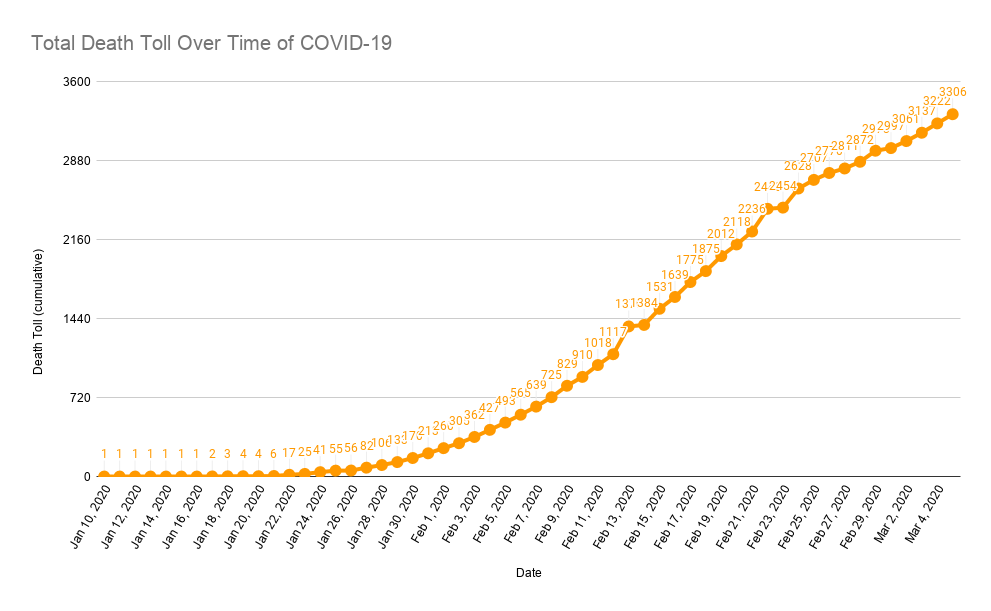
graph above refers to worldwide deaths
Events happen so quickly. It becomes important to know what news is true, and what is not. It is something of a crisis in journalism, – which analysis, which interpretation is credible? I try to follow articles that make sense, and come from reliable writers and journals. Reported numbers vary a lot – of those infected with Cov19, of the deaths. For one example – USA infection numbers are almost certainly far greater than reported, because of inadequate testing. In interpretation, Donald Trump’s phrase the “Chinese virus” feeds in to xenophobia, an unfortunate theme when global co-operation is needed, to combat a global epidemic. Politicians exploit false conspiracy theory that the coronavirus is a bioweapon.
What action is needed? I found this article, with its excellent graph, a reliable guide. It helped me to conclude that the drastic shutdowns and “social distancing”will have awful results, but that inaction on coronavirus would be worse.
Some bits of good news – 10 Positive Updates on the COVID-19 Outbreaks From Around the World
AUSTRALIA
The Morrison govt’s emergency measures are a massive subsidy to Australia’s largest corporations.
Doctors again call on Australian govt about Julian Assange’s precarious health, risk of coronavirus.
NUCLEAR National Radioactive Waste Management must come clean. Kimba is the start of continued high level nuclear waste dumping. A radioactive waste dump will NOT unite the Kimba community. It is not too late to tell the Australian govt “NO” to South Australia nuclear waste dump.
After backlash from colleagues, NSW Deputy Premier John Barilaro backs down from nuclear power support. A nuclear power station is inappropriate for the Central Coast. The lingering horror of the nuclear bomb tests at Maralinga.
CLIMATE. Zali Steggall holds fire on zero emissions climate bill amid Coronavirus chaos. Government advisory body tells Morrison to lift his game on climate. Plans to direct climate funds to coal plant upgrades rejected by panel. Victoria slammed for using misleading data to justify lifting of gas moratorium. Victoria lifts moratorium on onshore gas, but permanently bans fracking. Legal challenge about Adani’s planned water use for giant coal mine.
RENEWABLE ENERGY Solar, battery storage in demand as Coronavirus encourages shift to “self-reliance”. Forget toilet paper, consumers are panic buying solar. Morrison needs to be smarter, more creative, more sustainable with Covid-19 response. As economy stalls, the government should remap Australia’s energy landscape. Solar, batteries, micro-grids and ISP should be added to Covid-19 response. Brigalow, the little solar farm that could, sending power to grid in Queensland.
Wind industry calls on Victoria to set “bold” science-based emissions targets. Wind output overtakes hydro power for first time in Tasmania. Australia’s first offshore wind farm gains ground with new contract. Huge Dundonnell wind farm begins production in Victoria.
INTERNATIONAL
Coronavirus Covid-19 Testing Per Capita By Country; The US Near The Bottom; India Worse
Tokyo Olympic Games‘ costly chaos: they can’t be held in 2020.
“Balance” a dangerous practice – journalists presenting as equal -Trump’s and scientists’ opinion on coronavirus science.
Coronavirus threatens nuclear power plants with staff shortages, possible shutdowns.
Destruction of habitats, loss of biodiversity, bring pandemics.
Impact of coronavirus is curbing greenhouse gas emissions.
Paul Ehrlich on Coronavirus and the growthmania that drives environmental destruction. Bill McKibben on the Virus and the Climate Movement. Global warming influence on extreme weather events has been frequently underestimated. Coronavirus Halts Street Protests, but Climate Activists Have a Plan.– Ozone-depleting chemicals appearing again in the atmosphere.
Nuclear Power Plants: Tritium is a lot more hazardous than they say. Dr Ian Fairlea on Epidemiological Evidence of Cancer Risks.
“Peaceful” and military nuclear reactors always inextricably linked. Nuclear-powered submarines – fraught with legal and political problems. New research on the global climate impacts of a small nuclear war. The catastrophic danger to nuclear weapons complexes, of climate change’s extreme weather.
A new low-cost solar technology for environmental cooling.
The week in nuclear, climate, and coronavirus news
Awareness about infectious diseases seems to have faded, up until suddenly just lately. It really is a long time between epidemics, and now we have a pandemic. The quickly spreading Coronavirus disease is being handled differently, according to each country. Climate scientist Paul Beckwith explains this, and warns on the necessity of urgent action. Another excellent resource is Corona Virus – With Dr. John Campbell. There is also the inhumane theory of “herd immunity”, being recommended by some as a strategy for Britain.
Climate scientists are bemoaning the slowness to take action on the coronavirus, but, even more so, the continuing slowness to act on global heating.
A bit of good news – One Million ‘Wonder Plant’ Seedlings Are Planted in Wales to Fight Climate Crisis—and Create Healthy Seas
AUSTRALIA.
Coronavirus spreading – Federal and State governments taking appropriate action .P.M. Scott Morrison a bit slow to cop on, and, Trump-style, inclined to use the occasion as a PR pitch.
Australian defence officials and politicians, like Christopher Pyne, rotate quickly between government and weapons industry jobs.
Australian govt rejects a report that recommends nuclear submarines.
NUCLEAR
- Australia to feature at Fukushima in the opening Olympics event.
- Small Nuclear Reactors, like large ones, are out of the question for Australia, due to staggering costs. Small nuclear reactors, (just like large) can survive only with massive subsidies.
- Time that Australia closed the door on the dangerous distraction of nuclear power. Fact-checking the false nuclear claims of NSW Deputy Premier John Barilaro. New South Wales National MPs embrace nuclear industry, other MPs are shocked. Nuclear lobbyists have got into the ears of NSW’ National Party. Melinda Pavey National Party MP wants Small Nuclear Reactors for the Riverina. Labor MP Yasmin Catley stands up for New South Wales nuclear ban laws. Call to Premier Gladys Berejiklian to stand up for a nuclear-free New South Wales.
- This week’s uranium report- prices fall again, Australia’s “nuclear future” going nowhere.
- Australian government manipulates the National Radioactive Waste Management Act so as to prevent an Appeal. – ANSTO lies about necessity of nuclear reactor: Nuclear medicines are being made in Adelaide, without dirty nuclear reactor. Submissions due by Thurs 26th March to Senate Nuclear Waste Inquiry. Court dismisses Aboriginal group’s appeal to stop the Kimba nuclear waste dump.
CLIMATE. Global heating is intensifying a rare natural phenomenon that brings severe drought to Australia. Climate change fuelled Australia’s devastating Black Summer – Climate Council Report. The climate denialist spin machine – the “Anti-Greta” in Australia. NSW Environment Minister Matt Kean contradicts the Coalition party line – wants climate action and NO nuclear.
RENEWABLE ENERGY. Rooftop solar unstoppable as market breaks “all previous records” in February . NSW unveils two new renewable energy zones in $11 billion Net Zero strategy. Major clean energy industry events postponed in response to Coronavirus. Regional community solar and storage projects win NSW government grants. Australian researchers smash efficiency record for ‘tandem solar cells’. Major solar farm and battery approved for New South Wales coal country.
INTERNATIONAL
Polar ice melting at an accelerating rate. The planet’s largest ecosystems could collapse faster than we thought.
Global response to Covid-19 is rapid. Response to climate change is too damn slow. Coronavirus poses threat to climate action.
Bulletin of the Atomic Scientists warns on doomsday. Hypocrisy: new commitments to Non-Proliferation of Nuclear Weapons (NPT) include push for nuclear power.
Nuclear modernisation, cyber operations, raise a dilemma for nuclear deterrence.
Investigative journalism – Fukushima, and the ocean’s history of nuclear waste dumping.
Tritium – more hazardous than gamma rays and most X-rays..
Nuclear and climate news in International Women’s Week
The nuclear industry took the opportunity to push itself as an equality-for-women campaigner. Also, in the media, parents were warned to see that their girls got STEM skills (Science Technology Engineering Maths), or else they’d be jobless dropouts.
Now I too believe that these skills are important. But I deplore the downgrading of the so-called “soft” studies, that is going on at the same time. With the crises facing the world now, surely for decision-making, we need people with knowledge of languages, history, sociology, ecology. On the health effects of nuclear radiation, and of global heating, the “soft” sciences of biology and genetics are essential. And, as social commentator Eva Cox has pointed out, the occupations with social values of caring and nurturing ought not to be downgraded and poorly paid, in comparison with the techno world and competitive occupations with macho values.
While climate and nuclear threats are the focus of this newsletter, the reality is that the planetary mess is made of many interconnecting factors, in the unsustainable economy of “endless growth”. A big reminder – investigative journalism – Planet Plastic.
A bit of good news -Farming in the Forest: A Chance to Reverse 1,000 Years of Destructive Land-Use Practices
AUSTRALIA
The demonisation of Julian Assange: Former foreign minister Carr calls on the Australian govt to intervene. Government’s latest pressure on the ABC is slammed by Paul Keating.
NUCLEAR.
- Liberal-National Coalition in nuclear disarray. New South Wales South Coast to become a nuclear wasteland? That’s the plan of the National Party. Nature Conservation Council says the Nationals’ support for nuclear power is a “dangerous and expensive distraction”. Conservative push for nuclear power will drive a wedge into the Coalition. Nuclear free has served NSW well and should remain- Australian Conservation Foundation.
- New South Wales upper house Inquiry, stacked with pro nuclear people, recommends lifting nuclear bans. New South Wales National Party will support Latham’s nuclear power bill, says Barilaro. Liberals coy about nuclear power, Premier Gladys thinks “it doesn’t matter to the people of New South Wales”.
- investigative journalism – Flinders University, South Australia: collusion with nuclear power promotion, Prof Pam Sykes, and the scam of “hormesis”,
CLIMATE. Christiana Figueres– “Australia, you’re not ‘meeting and beating’ your emissions targets” Global heating is causing a decline in River flows in Murray Darling Basin. Kyoto carryover is “legally baseless”, international law experts warn Morrison government. Cosy little cocktail party for Liberal and Labor MPs, with coal industry bigwigs.
RENEWABLE ENERGY. Morrison to cancel Australia’s participation in the Energy Transition Hub. CSIRO spin-off, Windlab, looks to Africa after “year of frustration” in Australia. Solar farms to carry cost of Territory government’s glacial pace on grid reform. Schletter Australia has partnered with SCP ‘Solar Car Parks’ to launch the HELIOPARK range of Solar Car Ports for the Australasian market. Tasmania sets world-leading target of 200 per cent renewables by 2040. Home battery boost as Victoria expands rebate, NSW launches interest-free loans.
INTERNATIONAL
Why don’t we treat the climate crisis with the same urgency as coronavirus?
Investigative journalism – Big Oil and Big Soda and plastically polluted Planet Earth.
The Nuclear Non Proliferation Treaty – now more important than ever.The Threat of a Nuclear War Between the US and Russia Is Now at Its Greatest Since 1983.
A sceptical look at NuScam’s small nuclear reactor plans.
As March begins – nuclear and climate news
This week there’s quite a lot of news about nuclear weapons development. Nobody seems very interested – all same-same? Weapons anxiety fatigue? UN disarmament chief hopes upcoming conference will address current nuclear challenges. Some experts think that the subject should get a mention in the USA 2020 election race.
The Coronavirus has gripped the media – with climate change taking a back seat. Bad though that epidemic is, global heating also moves on inexorably.
a bit of good news – Designer Works to Erect First Modern Village to Generate its Own Electricity–and Food–in 100% Sustainable Loop
AUSTRALIA
NUCLEAR.
- Keeping Australia nuclear-free: national campaign meeting in Melbourne.
- Investigative journalism – Legislation banning nuclear power in Australia should be retained. Small Nuclear Reactors- the dying nuclear industry targets Australian tax-payers. No advantage in ‘new’ back-to-the-future nuclear reactors for Australia. Is the real motive military? Busting the lies of the Australian Government about “new” nuclear reactors – Waste management considerations.
- Part 1 of A Study of the “Report of the inquiry into the prerequisites for nuclear energy in Australia” Australian Parliamentary Committee 2020. — The Industry Push to Force Nuclear Power in Australia.
- Australia’s early nuclear history – a scandalously crooked co-operation with Britain.
- In Victoria the goal of the nuclear lobby is to remove Victoria’s Nuclear Activities (Prohibitions) Act.
- Kimba nuclear waste dump – a total mishandling of the truth from Australian government. Greens Senator Hanson-Young calls for Senate Nuclear Waste Inquiry to meet in Whyalla, South Australia. Whyalla urgently needs a policy to prevent becoming the radioactive trash port. Barngarla Aboriginal Corporation lobby Senators– to oppose Bill to set up Kimba nuclear waste dump. The Kimba nuclear waste dump will take a huge toll on the Murray River’s water.
CLIMATE
- Australia’s disappearing beaches, as global heating causes sea level rise.
- Global heating, rising seas, and the plight of Torres Strait Islanders.
- Greens leader Adam Bandt introduces Climate Emergency Bill.
- #ScottyFromMarketing a ‘predatory’ centrist on climate policy with no plans for meaningful emissions reduction. #ScottyFromMarketing dodges the question of how much “climate business as usual will cost the economy.
- Queensland energy minister “deeply concerned” over Coalition plans for new coal generator. Greens seek laws to block Adani, Clive Palmer’s Galilee coal mines.
- Darebin Council, Melbourne – a world first on Climate Emergency.
- So-called ‘Ethical’ super funds invest in coal, oil, gas.
- Former UN climate chief receives human rights award from Sydney Peace Foundation.
RENEWABLE ENERGY Australia could soon export sunshine to Asia via a 3,800km cable . Why an Australian mining giant chose wind and solar over gas for $1 billion project. Australia’s first detailed database on household solar, batteries and EVs goes live. Victoria energy efficiency market rides wave of optimism, NSW hopes to follow. Industry joins call for ARENA funding extension, as Energy MinisterTaylor ducks commitment. Sydney Gay and Lesbian Mardi Gras 2020 – 100% carbon-offset in partnership with Powershop.
INTERNATIONAL
Coronavirus – right-wing media reactions and conspiracy theories.
The Planet Is Screwed, Says Bank That Screwed the Planet. USA fails to stop G20 finance ministers and central bank governors‘ warning on climate change.
Nuclear testing left a signature of radioactive carbon all around the world. The Castle Bravo bomb and its effects on the soldiers, and on the planet.
A Brief Study of Molten Salt Reactors.
Climate action? – you simply couldn’t build enough nuclear reactors.
Antarctic ice walls protect the climate..
Keeping Australia nuclear-free: national campaign meeting in Melbourne
 29 February, Melbourne. Anti nuclear campaigners from South Australia, Western Australia, Queensland, New South Wales, Northern Territory and Victoria met today, to discuss the progress of the movement. The Australian Conservation Foundation and Friends of the Earth were prominently represented, among other environmentalists, and representatives from indigenous groups, churches, human rights, and medical organisations.
There was an atmosphere of quiet optimism. The Federal Government, in its Inquiry into nuclear power, has concluded that conventional nuclear reactors are definitely not an option for Australia. Due to their escalating costs, and long delay in building, they are recognised now as a failed technology.
Another encouraging factor for the nuclear-free movement is the fact that Western Australian uranium projects at Kintyre and Yeelirrie are at a standstill, with little likelihood of going ahead.
The federal government’s plan for a radioactive waste facility at Napandee, South Australia faces hurdles, with its plan for dual facilities . Low level waste burial and above-ground temporary storage of intermediate level wastes do not meet standards for international best practice.
Participants returned to their home States with renewed confidence in their work of informing and encouraging local communities in seeking a clean, nuclear-free environment.
This week’s climate and nuclear news – Australia
When their finances are affected by climate change, the guys at the top at last start to pay attention. G20 finance ministers and central bank governors met in Saudi Arabia, and sounded the alarm over the climate emergency, despite U.S. objections. Leaked report for world’s major fossil fuel financier says Earth is on unsustainable trajectory.
Of course, nuclear weapons tensions are always there, particularly as regards USA and Iran. However, when it comes to the so-called “peaceful nukes”, things are very quiet. All that continues is an endless stream of “journalism” promoting Small Modular Reactors (they leave out that unpopular word ‘Nuclear’). This hype resembles the early 2000s hype about the “nuclear renaissance’ and is sounding more and more hollow.
A bit of good news – All Australian Bushfires in NSW Have Officially Been Contained Thanks to Week of Heavy Rain. Australian Soldiers Are Using Their Time Off to Care for Koalas Displaced by the Fires.
AUSTRALIA
Immoral and illegal spying on Julian Assange and his lawyers – MP Andrew Wilkie calls on Australian government to act. Investigative journalism – How will Julian Assange’s extradition case proceed in court?
NUCLEAR. Bill in Australian Parliament names South Australia as the Nuclear Waste State.– Greens in the Senate will oppose bill to storage nuclear waste at Kimba farm.- Barngarla Aboriginal people take legal action against Australian govt’s planned Kimba nuclear waste dump. Correcting the propaganda: Australia’s nuclear medicine DOES NOT NEED a national radioactive waste dump.
What was #ScottyFromMarketing planning, with U.S. military, at PineGap?
No place for nuclear energy in Australia: Labor’s Josh Wilson spells it out. Labor’s Chris Bowen: Renewables make much more sense than ‘nuclear fantasy’. Frank Simpson warns against the pollution of Victoria’s agricultural land by thorium/uranium mining.
CLIMATE. Australia the ‘poster child’ for climate change inaction. Australia’s emissions flat, but climate politics hit new low over zero carbon target. Conflict in the COALition over climate change and emissions reduction. Religious leaders urge ScottyFromMarketing to move Australia away from fossil fuels. #ScottyFromMarketing ‘s hypocritical ploy to do nothing effective against climate change.
Divisions within both Liberal and Labor parties over Coal. Labor leader Albanese delivers half a climate policy with “no cheating” – but no interim targets, either. Labor set to reaffirm net zero emissions commitment, oppose funds for coal power.
RENEWABLE ENERGY. Solar thermal energy the way forward for Australia- says nuclear expert. Ikea to offer home solar systems in Australia, starting this year. Heavens to Betsy! Murdoch media suddenly discovers that wind and solar power are great for Australia! Western Australia “uniquely” placed to be microgrid superpower, says report. Tasmania’s Granville Harbour wind farm now sending power to the grid. “We have the technologies now”- Cannon-Brookes busts open Coalition myth. Sydney research hub to accelerate energy storage technologies.
INTERNATIONAL
All the world is betraying the world’s children, the World Health Organisation has found.
A war correspondent turns to today’s war on climate change, as he studies Antarctica.
Scientists warn on the seriousness of the collapse of many insect species.
Climate denialists using bots on Twitter to get their message across.
Reprocessing is NOT a solution to the nuclear waste problem. Small nuclear reactors are no better than large ones.wastes.power imports.
To 19 February – Climate and Nuclear News Australia
Climate change is, as always, the big news this week. Some climate models now predict unexpected , unprecedented spike in global temperatures. Can the insurance industry afford the rising flood risk?
Giant iceberg ‘calves’ from Antarctic ice shelf.
The nuclear connection is significant for the UK, too, as sea level rise threatens its new nuclear projects, at Sizewell, Hinkley Point C, as well as existing nuclear reactors and waste facilities at Sellafield and Drigg. https://www.youtube.com/watch?v=6tesHVSZJOg
There are many organisations worldwide, that are pushing for, and working on, action to slow or stall global warming. Global Optimism is the latest example, in which Christiana Figueres features, with her new book “The Future We Choose”
AUSTRALIA
MPs Andrew Wilkie and George Christensen to UK to help free Julian Assange.
CLIMATE. For Australia “business as usual” on climate change will cost many $billions. Climate change extreme weather making parts of Australia uninsurable. Reserve Bank says climate change already having profound impact on Australian economy.
New Resources Minister Keith Pitt ignores renewables, pushes for more coal, gas and uranium exports. Australia has done little on emissions, and is not planning much in next decade. #ScottyFromMarketing ‘s bushfire inquiry studiously ‘ignores’ carbon emissions. Coal miners given free ride under Morrison government emissions “caps”. Zali Steggall’s climate Bill, Labor’s befuddlement on coal.
NUCLEAR.
- 143 Anti-Nuclear, 10 Pro Nuclear Submissions (published) to Victorian Parliament. Due by 28 February 2020- Submissions to the Victorian Parliamentary Inquiry into Nuclear Prohibition.
- Risk that Environment Protection and Biodiversity Conservation (EPBC) Act could be changed to promote nuclear power.
- Greens’call for Australia as nuclear-free zone is defeated in the Senate. Labor stays strongly against nuclear power, despite pro nuke push from one union.
- Australian public unaware of the dangers of small nuclear reactors.
- Nuclear waste dumping: as the Baldock family sells farming land, is the agricultural market for Kimba now stuffed up? Australian government pushes on with nuclear dump, tramples on indigenous rights . South Australia’s grain exports could be at risk, if Kimba nuclear waste dump goes ahead.
- Media coverage of Kimba nuclear waste dump is found wanting. Controversial legislation for Kimba nuclear waste dump is tabled in Federal parliament. Whyalla is targeted for nuclear waste shipments and should have a right to refuse untenable plans. History of Australia’s govt move towards importing nuclear waste.
- NukeMap – what if Australian cities were hit by a nuclear bomb.
RENEWABLE ENERGY Australia’s global opportunity to lead on solar power. Senate backs Greens call for ARENA funding extension as money dries up. #ScottyFromMarketing and his crew – blind to the economics of renewable energy.
Australia must learn to mine rare earths responsibly. Greens leader Adam Bandt seeks new deal with “renewable mining and manufacturing” sector. Holden brand killed off as GM switches focus to electric vehicles.
South Australia’s renewable energy future hampered by lack of electricity infrastructure. Queensland researchers smash solar efficiency record for ‘quantum dot’ solar cells. How rooftop and big solar are pushing coal out of daytime energy market. Wind and batteries saved the day when storm cut South Australia adrift. Australian ‘Solar Skin’ invention could power cities and vehicles of the future.
INTERNATIONAL
#WETOOARE PROTESTERS FREE JULIAN ASSANGE
189 nuclear and radioactive material incidents in 2019.
Radioactive material ‘a magnet for groups with malicious intent’, warns UN nuclear watchdog chief.
Hysteria isn’t killing nuclear power. – It’s the very real dangers and catastrophic costs. Uranium prices at rock bottom- doesn’t help the struggling nuclear industry.
This week in climate/nuclear news Australia and beyond
I never want to minimise the nuclear perils. But, it is a dying industry, and can look irrelevant as news about the climate crisis continues to be revealed.
One thing about nuclear power – the mainstream media continues to mindlessly hype the industry as the climate solution, while in fact nuclear is the third highest carbon emitter after coal-fired plants and natural gas. Even if they were “zero carbon”, nuclear reactors would never be installed in time to make a difference.
CLIMATE – where to start? Combined environmental crises could trigger ‘global systemic collapse‘, scientists warn. Some climate modelling is now predicting an unprecedented and alarming spike in global temperatures — perhaps as much as 5 degrees Celsius. Ya know that things are getting serious when it hits industry and markets – The northern hemisphere winter has been unusually mild: That’s making life difficult for oil and gas traders,
Antarctica posts a record high temperature. Arctic ice melt is changing ocean currents . Coronavirus likely to be connected to climate change – bats the likely first vector. Fires and floods: Australia already seesaws between climate extremes – and there’s more to come. Delhi’s disaster – disappearing water supplies.
A little bit of good news – Nuclear energy exhibit to be closed, turned into clinic for doctor-hungry Yamaguchi town
AUSTRALIA
NUCLEAR.
- Philip White shows folly of nuclear activities for Victoria: Submission No.112. SUBMISSIONS 122 Australians want Victoria’s Nuclear Prohibition Laws to stay. Victorian govt Nuclear Inquiry – published Submissions strongly anti -nuclear. My Submission to INQUIRY INTO NUCLEAR PROHIBITION (focussing on thorium etc). Victoria’s Nuclear prohibition laws Inquiry – these are the Committee Members.
- Liberal MP Katie Allen touts nuclear energy for Australia. Climate action distracted by talk of uncosted, unbuilt, unproven and unpalatable technologies such as nuclear. Coalition nuclear stooge MPs line up to push for removing Australia’s prohibition on nuclear activities. Know your Federal govt pro nuclear stooges.
- The sorry Kimba nuclear waste saga– Michele Madigan spells it out (and it’s not over). The shambles of the Australian government’s Kimba nuclear waste dump plan. Kimba nuclear waste deal makes the “sports rorts” look like petty cash. ANSTO Senior Nuclear Officer Admits Admits ANSTO reclassifies High Level Wastes as Intermediate Level. Bangarla legal case: voting manipulation brought about “Yes” vote for Kimba nuclear waste dump ballot. Nuclear Stigma is, and will continue to be the cancer that erodes Kimba future. Kimba nuclear waste dump: PM and South Australia Premier Marshall must step in.
Flooding events highlight the danger to proposed uranium mining sites Yeelirrie and Wiluna.
CLIMATE.
- Australians will cringe, when our govt gives its climate-denialist policy in Glascow. Australian Parliament and its coal-smudged deals.
- #ScottyFromMarketing appoints nuclear-coal enthusiast as Australia’s new resources minister. #ScottyFromMarketing “won’t be bullied” by climate science.
- Liberal politicians jump on the climate bandwagon to promote nuclear power. Coalition compares wind and solar to “dole bludgers”, pushes for coal, nuclear.
- Zali Steggall , independent MP for Warringah, luring Liberals towards climate action. Adam Bandt, The new Australian Greens leader looks to hopeful action on climate catastrophe. Bandt vows to hold torch to Coalition on climate.
Coalition hands out $4 million to pursue new coal generator in Queensland. Private investors won’t touch new Coalition-backed coal plant, Labor says.
Why can’t the Australian government do the right thing by the persecuted Julian Assange?
RENEWABLE ENERGY – lotsa news – check out reneweconomy.com.au
INTERNATIONAL
Climate emergency plans must have a ‘no new nuclear’ clause.
Nuclear power went backwards in 2019, and the outlook is bleak.
Nuclear power and harm to animals.
Permafrost thawing -“fast and dramatic, affecting landscapes in unprecedented ways.ar compensation claims from Tahiti.
1 This month
17 October, Free Public Talk on Nuclear Issues in South Australia
David Noonan will speak on public interest concerns over the new Roxby Downs Indenture Act 2026 on BHP copper-uranium mining and ore processing in SA, and on how AUKUS may face SA with a High-Level nuclear waste agenda.
Dr Jim Green will discuss international developments in the field of nuclear power including ‘small modular reactors’ and Generation 4 ‘advanced’ nuclear reactor concepts.


Help Aunty Sue Protect Her Land and Sacred Sites From Destructive Rocket Testing.
.

Australians deserve the truth
about
AUKUS – https://aukuspublicinquiry.com/

PETITION – To: Prime Minister Anthony Albanese and the Australian Labor Government

of the week – Australians for War Powers Reform (AWPR)
To see nuclear-related stories in greater depth and intensity

